Shut-down Crisis Reveals Desperate Need for Longterm Overhaul of our Nation’s Transportation Program
March 1, 2010By Transportation for America
With jobs, the economy our quality of life in the balance, Congress must act now on authorization.
As the national transportation program faces fiscal uncertainty today following Sen. Jim Bunning’s (R-KY) refusal to extend legislation to fund transportation and other national programs on Friday, James Corless, campaign director of Transportation for America, released the following statement:
“The problem is not simply that one Senator was able to thwart a crucial, timely vote. That lone Senator was able to shut down our nation’s transportation program only because Congress has left this essential underpinning of our economy on life-support for far too long. The highway trust fund we created to build the interstates in the 1950s simply is not up to the job of building and maintaining the system we need for the 21st century. This is not a backburner issue, even if Congress has been treating it as one.
“While we lurch, from extension to extension, with our transportation program teetering on the brink of insolvency, the rest of the world is not standing still. China is building a $500 billion rail network. Canada, whose hockey team just beat us for the gold medal, is beating us in building efficient urban transportation networks, even as our public transportation systems are being forced to slash service in the face of Congressional inaction.
“American jobs – millions of them — are relying on the authorization of our transportation program. Americans everywhere depend on an efficient, safe and accessible network of roads and transit systems to get to work each day. If we are going to right this economy permanently, Congress must quickly address our nation’s outdated transportation program and ensure stable funding levels for public transportation, including operating assistance for struggling systems, for the repair and maintenance of our highways and bridges, and a robust investment in projects that will make our communities sustainable for the long haul.”
James Corless is the Campaign Director of Transportation for America.
Opposition to Senate extension results in looming shutdown of federal transportation programs
February 26, 2010By Stephen Lee Davis
| Do you live in Kentucky? Call Sen. Bunning’s State HQ and tell him to end his roadblock. Click here for more information on making a call. |
At a point in history when American trust in Congress is at or near all-time lows, it’s probably not a great time to interrupt regular programming to announce that a single Senator kept the Senate from passing an emergency one-month extension of the current transportation bill before adjourning today, leaving it to expire over the weekend and threatening the flow of money to transportation programs — federal and state.
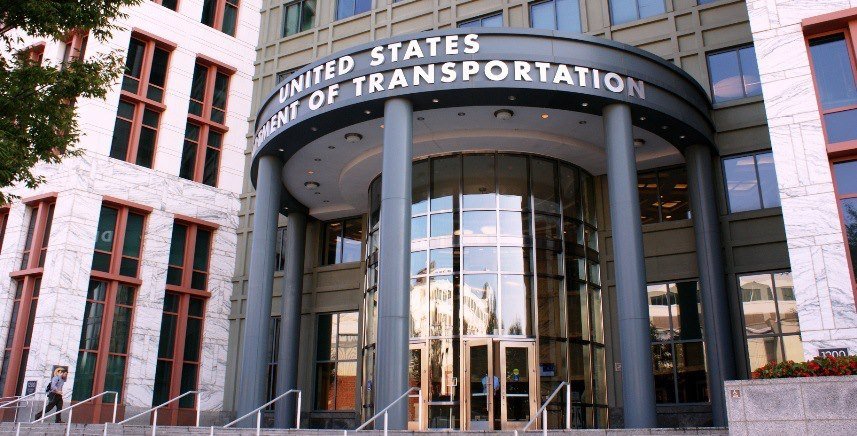
The transportation bill, which has already been extended four times since its initial expiration in 2009, funds federal and state transportation programs. Which means that come Monday or Tuesday (it’s uncertain which at this point), federal transportation agencies from the Department of Transportation to the Federal Transit Administration will be furloughing employees and in a state of near shutdown.
Perhaps most importantly, and of much greater concern to most people than the fact that federal transportation officials in D.C. might be sent home for a few days, the government checks that go out every two weeks to state departments of transportation to reimburse them for their ongoing contracts for transportation projects will not be sent out on Monday as usual, regardless of what happens Monday, according to several of our sources.
As Elana Schor (@eschor) pointed on Twitter this afternoon, this means “$184 [million] per day in lost transpo reimbursements for road repairs, bridge building, and transit.”
Chairman Jim Oberstar held a press conference to talk about the issue this afternoon, calling Sen. Jim Bunning’s obstruction “astonishing” and comparing it to the government shutdown of 1995. He detailed the specifics of what will happen at federal and state transportation agencies as the flow of money that funds highway and bridge repair, transit agencies and programs will shut off Monday. Later this afternoon, he said in a press release on Facebook that “I find it outrageous that one senator can kill a piece of legislation and cause chaos for our cities and states. Thanks to this one person’s intransigence, Minnesota will not be reimbursed for its federal share of highway projects until we get this mess sorted out.”
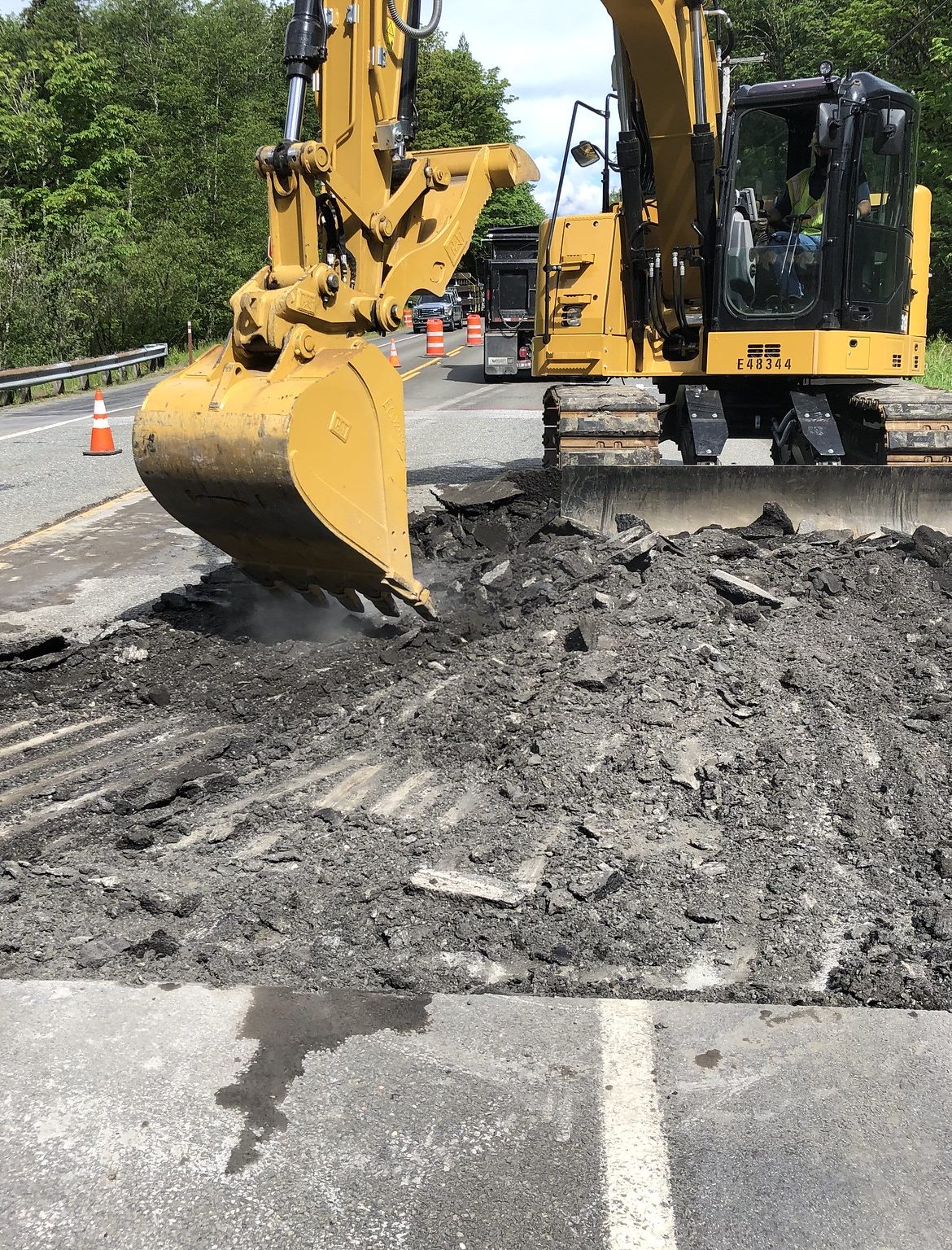
He points out that some states may have to suspend work on projects — something that Missouri has already done by announcing that they won’t open up several new projects for bid next week with their funding stream so up in the air.
As usual, Elana Schor at Streetsblog DC has some of the most thorough coverage of the issue, though it is making headlines in Politico, CQ and other outlets.
We’ll have more intel and reaction on Monday, and hopefully news about a solution to the bill’s expiration.
Have you seen an announcement (like Missouri’s) in your state of halted projects, delayed contracts, or furloughed workers? Let us know in the comments.
Transportation a Key Point of Compromise for Senate Jobs Bill
February 25, 2010By Transportation for America
Bipartisan passage accompanies strong vote for transportation reform
WASHINGTON D.C. – Following the bipartisan passage of the jobs bill in the Senate this morning, James Corless, campaign director of Transportation for America, released the following statement:
“Today’s bipartisan passage by the Senate of a $15B jobs bill came with a clear indication of the significance of transportation for the American public. Central to the Senate compromise was the caveat put forth by Senator Voinovich (R-OH) that Senate Majority Leader Harry Reid (D-NV) submits a comprehensive transportation bill by year’s end, recognizing the long-term economic significance of prioritizing our national transportation program.
“While this bill extends the existing transportation bill through 2010, it does not offer financial support for longer term infrastructure projects. We therefore stand ready to support Chairman Boxer (D-CA), and Senator Voinovich’s (R-OH) leadership in creating a bi-partisan long-term, transformational transportation bill in the near future as it will serve as a strong indicator that the American public can expect Congress and the Administration to viably reshape our transportation infrastructure.
“If given the opportunity to move ahead with additional job creation measures, Congress can work to save and create thousands of jobs in 2010 by increasing funding levels for public transportation, including operating assistance for struggling systems, as well as investing in a robust package of pedestrian, bicycle, livable community and transportation technology projects as we have proposed. These investments would put people back to work immediately and improve access and safety for those still looking for ways to get to their jobs.
“In order to encourage long-term economic stability and ensure that additional jobs are not lost, Congress needs to address our nation’s outdated transportation program and finalize a fully transformational transportation bill.”
Sen. Reid promises Sen. Voinovich to move a full six-year bill in 2010?
February 22, 2010By Stephen Lee Davis
Republican Senator George Voinovich from Ohio might be looking to put a little public pressure on Majority Leader Harry Reid in a release touting the Ohio Senator’s vote in favor of moving the Senate jobs bill forward late Monday.
In a statement posted on his site, Voinovich explains his reasons for supporting the jobs bill in the Senate, touting the job-creation benefits of investing in transportation. But it also appears that the Senate leader let Sen. Voinovich know that he’d bring a six-year bill to the Senate floor for a vote in 2010:
“I spoke to Majority Leader Reid prior to this vote and he assured me that he understands the importance of a surface transportation reauthorization bill,” Sen. Voinovich continued. “I reiterated that it is the best way to create jobs, provide an immediate stimulus to the economy, rebuild our nation’s infrastructure and reduce our carbon footprint. Leader Reid gave me his commitment that he will bring the reauthorization of a multi-year surface transportation bill to the floor for a vote this year. I look forward to working with Senator Reid, Senator Boxer and others to do so as soon as possible so we can put Americans back to work.”
Updated: Here’s Elana Schor’s take over at Streetsblog DC. No comment still from Sen. Reid, but she notes that this makes 2 comments in a week about a 2010 vote in the Senate.
T4 jobs proposal would create nearly half a million jobs, according to Economic Policy Institute
February 17, 2010By Sean Barry
![]() |
| Photo: Dan Burden |
The Economic Policy Institute ran the numbers on Transportation for America’s jobs proposal and concluded that our plan for increased transportation spending would create 480,000 jobs.
The Senate’s first jobs bill currently has no money for transportation, other than a transfer of general fund dollars to cover the looming gap in the Highway Trust Fund while extending the transportation bill (SAFETEA-LU) until the end of the year. (Senate Majority Leader Harry Reid is said to be planning several separate bills, one of which may focus on transportation).
Our proposed package for Congress directs $34.3 billion toward a mix of public transportation, highways and bicycle and pedestrian projects, closely resembling EPI’s own plan. Our proposal contains roughly $16 billion for transit, $8.1 billion for the Surface Transportation Program (highways), $9.8 billion for competitive grants (like the TIGER grants announced today) and $1.5 billion for Active Transportation such as bike and pedestrian facilities to make walking and biking safer and more attractive.
(View the full detailed T4 America proposal here.)
According to EPI’s analysis, the Transportation for America proposal is especially strong at job creation for low-wage earners and Americans without a college degree. The plan is also effective at creating jobs for African-Americans and Hispanic workers, two demographic groups that have borne a disproportionate share of the economic downturn’s effects.
Ethan Pollack, a policy analyst for EPI, characterizes T4 America’s approach as “a well-tailored package of transportation investments” that can “help put people back to work.” The EPI numbers do not account for the increased consumer spending that will result from these newly employed Americans.
As the U.S. Senate continues to piece together its job-creation legislation, we encourage members to strongly consider substantial investment in infrastructure repair and money to keep transit systems running. Jobs legislation continues to create an opening for increased accountability and benchmarks for federal transportation policy, laying the foundation for more jobs and greater prosperity down the road.
For information about EPI’s report and to obtain a complete copy, click here: http://www.epi.org/publications/entry/ib271/
FAQ: Transportation bill expires, emergency extension passed
October 1, 2009By Stephen Lee Davis
![]() |
| The Senate Garage Fountain (Olmstead Fountain) and the US Capitol Originally uploaded by kimberlyfaye |
UPDATED: We posted a similar question-and-answer document covering the specific issue of rescissions. Read that here.
As you may have read on Streetsblog Capitol Hill, where Elana Schor has been closely tracking the inexorable march toward expiration of the old transportation bill (SAFETEA-LU), the Senate passed an emergency one-month extension of the current law last night, just hours before the deadline.
There have been a lot of questions flying around today, so we’re going to try to post some simplified answers to clear up any confusion. Federal transportation policy is not the simplest code to decipher, but we’ll try our best to start with the basics.
The short explanation?
The Senate failed to pass an extension of their own to match the House’s recent 3-month extension before the transportation bill expired last night.
To prevent transportation spending from stopping entirely, Congress added a one-month extension of current transportation law to a last-minute bill (a Continuing Resolution) that keeps the federal government from shutting down in case they don’t pass the required individual spending bills for the next year. The one-month Continuing Resolution did not address the scheduled loss of $8.7 billion in transportation funds that will be taken from states, starting today.
Click through the jump below if you want much more detailed information.
(Continue Reading)
You helped save funding for transit, safe walking and biking
September 29, 2009By Stephen Lee Davis
Two weeks ago, we were successful in beating back a handful of dangerous amendments to the yearly transportation budget in the Senate that would have broken federal promises to fund crucial, long-planned public transportation, passenger rail and bike/pedestrian projects.
In less than 48 hours, supporters like yourselves sent more than 10,000 messages to your Senators in opposition of these dangerous amendments. Your quick action was instrumental in letting the Senate know that it’s important we continue funding alternatives to driving that can help us use less oil, cut our emissions, bike and walk safely and reduce the amount of time we spend in congestion each day.
Sen. McCain had a slew of amendments that would have removed previously obligated funds for critical transit projects across the country. Sen. Bond reportedly had an amendment in hand to strip out high-speed rail funding. And Sen. Coburn proposed an amendment that would have removed the requirement that states spend a small fraction of their transportation funds on the kinds of investments that make biking and walking safer and more available.
We thank you all for your speedy action on these amendments. Your voices are regularly being heard on Capitol Hill! Keep it up.
Reason Online: climate bill must do more for clean transportation
September 29, 2009By Stephen Lee Davis
UPDATED: A Reason representative wrote us to note that Shirley Ybarra “updated her post to better clarify her position that infrastructure projects that improve mobility should be the transportation sector’s top priority.” Of course, T4 America believes that improving mobility and decreasing emissions can go hand in hand, with the right investments.
With the Senate Environment and Public Works Committee expected to release their version of the climate bill tomorrow, we’re all anxiously waiting to see what the bill will do to reduce emissions from transportation. The U.S. transportation sector produces one-third of our carbon emissions, yet the House’s version of the climate bill allocated only an optional one percent of cap-and-trade revenues to cleaner transportation options that can help us cut transportation emissions.
Will the Senate bill be better? We think so, but the Reason Foundation, a free-market think tank, wrote that it should be if we’re going to seriously tackle transportation emissions:
The funding allocations are not expected to be released until closer to the committee markup date. This could well be another contentious issue. For the transportation sector to play a greater role in reducing emissions and fuel consumption, the Senate bill will need to dedicate far more than 1% of its revenues to advance clean transportation projects.
We agree wholeheartedly, and have been urging the Senate to adopt a plan that would raise that number from one percent to 10 percent.
One percent won’t cut it if we’re really going to tackle a sector that generates a full third of our emissions. We’ve been supporting a proposal in the Senate (CLEAN-TEA) that would direct 10% of the funding towards public transportation, passenger rail, affordable neighborhoods around transit stops, and neighborhood improvements that increase safety for cyclists and pedestrians.
It’s going to be difficult to reach our climate goals if we don’t give states and localities to tools they need to make a dent in the emissions that come from transportation. Having just a tiny share of revenue going to clean transportation is like asking a carpenter to build a house without a hammer. It might be possible, but it’s significantly more difficult.
You can still call your Senator today and tell them that the Senate climate bill needs to invest in a cleaner transportation system. Find their phone numbers and brief talking points right here.
House Republicans opposing 3-month extension, Senate Republicans possibly supporting it
September 23, 2009By Stephen Lee Davis
UPDATE #2: The House passed the 3-month extension of the transport bill under suspension of the rules yesterday, with a 335-85 vote in favor of the extension.
UPDATED: The bill will likely be voted on today under suspension of the rules, and there will be at least some GOP opposition to it. Elana Schor at Streetsblog reports that “Brad Dayspring, a spokesman for House Minority Whip Eric Cantor (R-VA) said Cantor would join Minority Leader John Boehner (R-OH) and Rep. John Mica (FL), senior Republican on Oberstar’s committee, in opposing the three-month extension.”
Rep. Jim Oberstar’s plan to introduce and/or pass a 3-month extension of the expiring surface transportation bill has hit a snag. According to the subscription-only email service Transportation Weekly, House Republican leadership has decided to oppose the bill, creating a roadblock for passing it today as planned under suspension of the rules, which requires a 2/3 vote and therefore some Republican support.
The 3-month extension (H.R. 3617) has been removed from the scheduled votes for today according to Transportation Weekly, noting that the reason for opposition isn’t exactly clear just yet:
Republicans have not yet made a public announcement as to what their objections to the three-month extension are, but one GOP staffer said that there should be a longer extension until the Democrats take the issue of a gasoline tax increase to pay for House Transportation and Infrastructure Chairman James Oberstar’s (D-MN) $450 billion, six-year bill off the table. Therefore, this could represent a real breaking point between Oberstar and his ranking Republican, John Mica (R-FL), who has so far been in lockstep with Oberstar (at least in public)…
To add to the confusion, The Journal Of Commerce reported yesterday that momentum might be building for a a shorter extension in the Senate, where all signs thus far have pointed toward passing the 18-month extension that the Obama administration prefers.
In the face of insistence by leaders in the House of Representatives to extend soon-to-expire federal highway programs by only three months, some senators are beginning to move away from plans for an 18-month extension…
…“There’s some movement, I think, toward a short-term extension” in the Senate, said Sen. John Thune, R-S.D. Thune is not only part of the Senate Republican leadership team as chief deputy whip but also ranking minority member on the surface transportation panel of the Commerce, Science and Transportation Committee.
So to summarize, the Democrats in the House want to pass a 3-month extension. The Republicans in the House are now opposing that, potentially leaning towards an 18-month extension. The Democrats in the Senate want an 18-month extension. The Republicans in the Senate are now leaning towards a shorter extension, possibly 3 months.
There are still several other ways for Rep. Oberstar to get his bill passed in the House without that Republican support, and it’s not certain at all that House Republicans would actually vote against it if push came to shove. Same goes for the Senate.
Stay tuned.
Transportation for America Voices Support for Senator Dodd’s Livable Communities Act
August 12, 2009By Transportation for America
Bill helps cut traffic congestion, reduce emissions and oil consumption, protect green spaces, revive urban centers and create more affordable housing
| CONTACT: Cosabeth Bullock 202-478-6128, 202-904-7466 cbullock@mrss.com |
Washington, D.C. — James Corless, director of Transportation for America, released the following statement in response to Senate Banking, Housing, and Urban Affairs Committee Chairman Dodd’s (D-CT) introduction of the Livable Communities Act:
“Last week’s introduction of the Livable Communities Act emphasizes a growing demand from the American people to reshape our communities and transportation options to meet our evolving needs. Americans spend nearly two-thirds of their income on the combined costs of housing and transportation, and are looking for affordable options to live closer to their jobs, schools, and amenities. Senator Dodd’s measure would help Americans find a way out of traffic congestion, reduce emissions and gasoline consumption, protect green spaces, revive urban centers and create more affordable places to live.
“The act aligns with an overarching goal of the Transportation for America campaign — to integrate housing and commerce with a safe, clean and smart transportation system that provides real, affordable options for all Americans. In order for the upcoming transportation bill to be truly effective, Congress must evaluate the current system with an eye towards creating a system that will work for everyone.”
The Act authorizes $400 million in competitive grants to plan for livable communities, integrating transportation, housing, economic development and environmental needs. It authorizes $3.75 billion over three years for implementation of projects promoting sustainable development by creating and preserving affordable housing in neighborhoods with access to jobs and served by transit; improving public transportation; creating safe places for walking and biking; redeveloping brownfields; and fostering revitalization. It also creates an inter-departmental council to coordinate among transportation, housing and urban development and environmental agencies, and creates an office of sustainability at HUD.