New York Times shines a spotlight on Trump’s transit intransigence

The Trump administration has made history…as the first to not approve or advance a single transit capital project in their first year and a half in office. Considering what we heard directly from USDOT Secretary Duffy last week, no one should believe that’s a coincidence. 

For decades now, Congress has provided funding each year—more than $4.2 billion per year during each year of the IIJA—to cover half or less of the costs of the capital improvements involved in building new transit service or dramatically improving or expanding existing service in communities across the country, with locals picking up the larger share of the tab. If your community is building a new light rail line, bus rapid transit expansion, or commuter rail, they have likely tapped this program. But since taking office, the administration has held the program hostage, failing to sign a grant agreement for a single one of the transit projects currently in the development process. 

Earlier this week, the New York Times took note and spoke to T4America and others about this unprecedented slowdown: (Gift link, we hope)

But since President Trump returned to office, the Federal Transit Administration has not signed a single new agreement under the program, known as Capital Investment Grants. Large projects ready to enter the final phase of the program’s yearslong pipeline have stalled there. The administration also tried halting payments to the New York and Chicago projects, forcing courts to intervene. …“It’s hard to look at the last year and see anything other than a deliberate slowdown of these grants,” said Steve Davis, director of the advocacy group Transportation for America.

While Trump’s USDOT slowed down transit grants during his first term, a new wrinkle this time has been the Office of Management and Budget’s move to firewall the transit capital funds provided by Congress over the last two years and not “apportioning” them to USDOT so they can be spent.  “More than $7 billion hasn’t been obligated to any project,” wrote Emily Badger and Alicia Parlapiano for the Times. More than $5 billion of that total has been earmarked for next fiscal year, though that’s still no guarantee it would get spent—it would still have to be apportioned to USDOT once October 1 gets here.

The long and short of this move is that, even if USDOT wanted to sign a grant agreement for one of these transit projects and get it moving tomorrow, there’s a chance that they wouldn’t be able to because OMB is holding onto the money—USDOT simply doesn’t have the money in hand. Transit expert (and T4America alum) Sarah Kline told the Times just how shocking this new move is: “I have never seen a situation where the F.T.A. says, ‘Oh, we don’t need $5 billion because we’re not going to have projects ready for that.”

What’s the end goal here? 

A statement from FTA had the expected platitudes about these projects just working their way through the federal pipeline before being ready to sign grant agreements. But you don’t have to squint too hard to see the endgame: 

The first Trump administration proposed ending the program, and just last year, USDOT floated a proposal to end all federal funding for transit—which was quickly shot down by the top Republican on transportation in the House, who said “I’m just not interested.” And then just last week, USDOT Secretary Sean Duffy sent a letter to the Senate to put the administration’s transportation priorities to paper for a long-term replacement for the IIJA. Take a wild guess on one of their top priorities:

We propose eliminating the Mass Transit Account and consolidating all Federal fuel tax revenues into the Highway Account. This will re-establish a direct user-pays model and address the Fund’s looming structural deficit.

Considering all these data points, it’s not too hard to believe that they would like for Congress to end this program and shift the $2-4 billion in annual transit capital spending over to the highway side to “advance the president’s vision for a bold transportation future,” whatever that entails.

As we’ve noted before, if your primary goal is shoring up the Highway Trust Fund by eliminating all other spending in the federal program, you will completely erode the broad, bipartisan coalition required to pass a long-term transportation law. They could propose ending everything else other than highway formula programs, and you’d still need billions in deficit spending to cover a highway program that still wouldn’t be paying for itself.  Why support a deal when only the priorities of a small minority are included? And make no mistake, the support for transit is bipartisan. 

Whatever the reason these transit projects are frozen, the unfortunate reality is that it’s the people in local communities who are paying and will continue to pay the price:

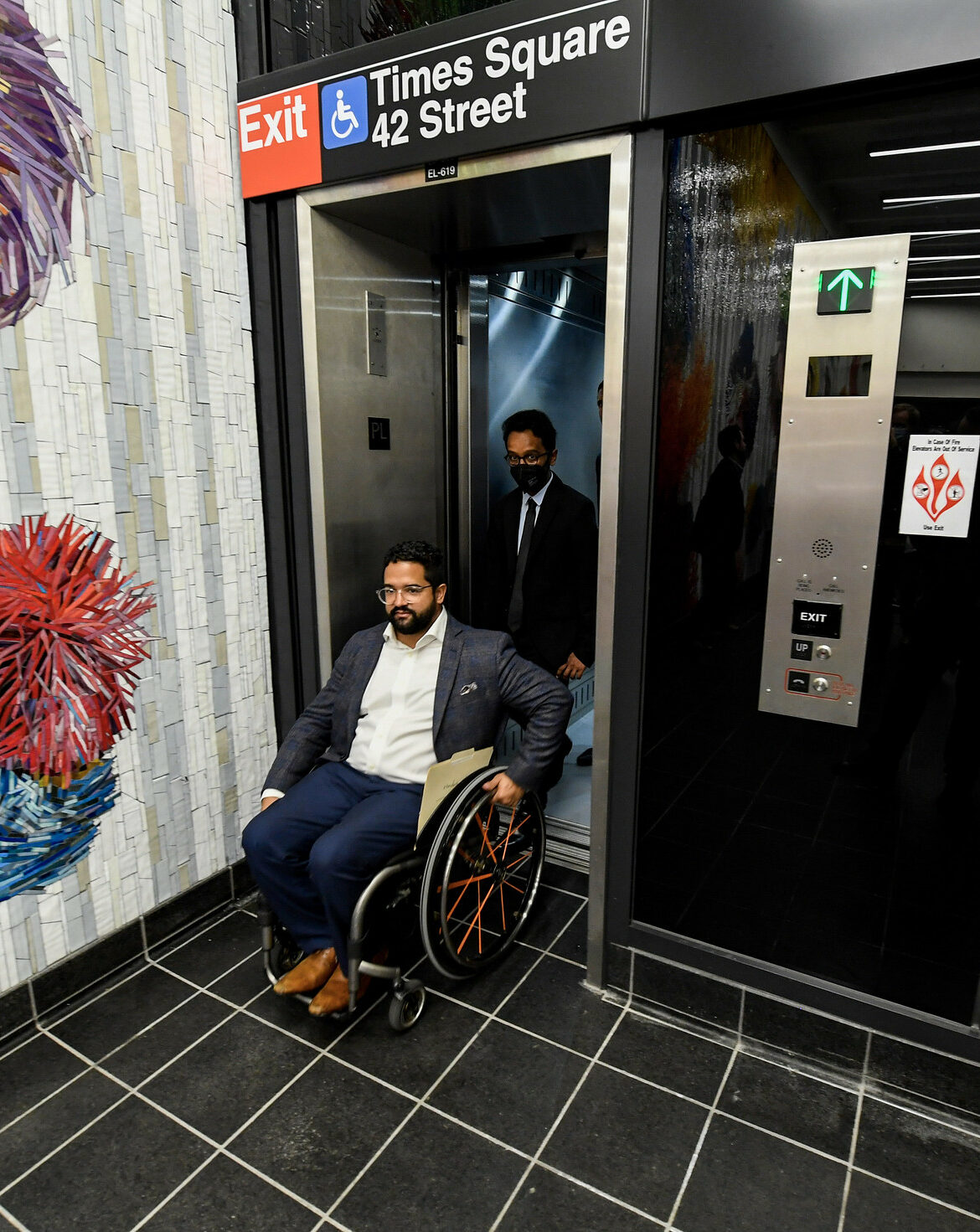
And any unspent grant money is something tangible not built — a subway station without elevators for accessibility, a bus line without dedicated lanes for faster travel, a commuter rail that can’t carry enough trains.

H/t to Emily Badger and the New York Times for their work to spotlight this important story.

USDOT’s historic failure to advance any new transit projects in 14 months may be a sign of things to come

As in their first term, it appears the Trump administration is again attempting to slow down or stop transit capital expansion projects across the country. Unlike those previous attempts in 2017-2018, from which they ultimately relented, they are employing new methods to flout the will of Congress on transportation yet again. Yet somehow, leaders from both parties are clamoring to send the administration more money via reauthorization.

The backstory 

During the first Trump administration, T4America’s Stuck in the Station raised the alarm about USDOT failing to advance transit capital expansion projects for which Congress was appropriating billions of dollars. During that time, USDOT publicly insisted they were faithfully advancing transit projects, but by 2018, USDOT had awarded less than 20 percent of the $2.3 billion Congress had appropriated for this specific purpose. “Future investments in new transit projects would be funded by the localities that use and benefit from these localized projects,” they said when defending their request for zeroing out the program in the president’s budget back in FY18.

After embarrassing hearings and public events where the FTA administrator had to answer for the slowdown, warnings from the Government Accountability Office that they were running “the risk of violating federal law,” and the unprecedented move by Congress of requiring FTA to obligate 85 percent of the transit capital program funds by the end of 2019, the administration finally relented and started signing grant agreements late in the first term. 

This time around, the Trump administration appears to be taking that hostility to a new level by tapping some novel mechanisms to achieve the same ends.

Considering the sorry state of transit in this country before these slowdowns and how the lack of quality transit affects mobility, the economy, and access to opportunity, alarm bells should be ringing big time on Capitol Hill. Consider the state of U.S. transit, via Yonah Freemark at the Urban Institute:

In 1990, 4 of the world’s 14 longest metro networks—or those that include monorail, subway, elevated, and automated light metro—were located in the United States. Today, not a single U.S. network sits on that list. Over the past few decades, the U.S. has not expanded its urban railway systems to keep up with population growth. Compared with other wealthy nations, where transit is much more available, a smaller share of our population has easy access to a subway or elevated station. Without transit alternatives, most Americans have little choice but to drive expensive, polluting cars. And those without access to a car might not have a safe, reliable way to get around. The lack of investment in urban rail contributes to the high carbon dioxide emissions from the U.S. transport sector. It’s also left people in the U.S. spending a large share of their income on transportation, as many Americans struggle with the high costs of living.

As oil prices have continued to climb and new cars are reaching astronomical prices, the administration has responded by making electric cars more expensive, seizing the ability for cities to decide how to keep people safe on their streets and roads, and, as we will chronicle here, slowing down badly needed new transit projects. 

Some quick background on federal transit funding: 

Broadly speaking, transit gets federal dollars in two ways:

1) The most consistent source is annual formula dollars from the Highway Trust Fund (specifically the Mass Transit Account), which are used for capital expenses like buying new railcars or buses, making track upgrades, upgrading electrical equipment, or repairing/upgrading other aspects of hard transit infrastructure. Larger transit agencies get this money directly each year based on their population and levels of transit service, while smaller agencies might get it through their state DOT. But this money is not sufficient to cover the kind of big capital expenditures involved in building new transit service. To support these kinds of projects, money comes from… 

2) The transit Capital Investment Grants program, which comes from discretionary spending each year. The five-year authorization (like the IIJA) sets the basic levels, but unlike the trust fund formula money that flows automatically, appropriators in Congress have to set aside this money each year. There are three types of projects: New Starts for big multi-year projects, typically light or heavy rail; Small Starts, typically for bus rapid transit projects; and Core Capacity for doing things like costly capacity expansions on existing transit lines. 

Transit agencies apply and then wind through a (too long, complicated, and onerous) process within FTA to tick a million boxes and receive a grant agreement in which USDOT agrees to give X transit agency Y amount of dollars over a certain number of years to cover a share of the costs—typically no higher than 50 percent but more often closer to 30 or 40 percent. (Contrast that with the 80-90 percent of highway costs that are covered by the feds.)

The money appropriated by Congress each year is always intended to cover a mix of 1) payments for multi-year projects already approved by FTA, and 2) a suite of new transit projects expected to be approved for construction and funded over the next year. 

And this is where new problems are starting to arise.

An unprecedented slowdown in transit construction grants

The Trump administration is the first administration in at least three decades to fail to approve a new transit project in its first year, as noted back in early March by Yonah Freemark for Urban. Since taking office in January 2025, USDOT has not signed a single full-funding grant agreement for a new metro, light rail, or bus rapid transit line. This is even slower than their progress in the first term. 

While it may be true that transit projects are just simply not ready to sign an agreement and proceed to construction, it’s hard to believe that not a single project was ready to go over the last 14 months. It’s also important to remember that successfully shepherding projects through the federal process quickly and successfully is FTA’s mission.

Tracking the “pipeline” of projects

USDOT is required by law to issue a report by February (which is always late) detailing the ratings for all transit capital projects in the pipeline, a list of projects with recommended funding amounts, and an overview of the program’s next three years. It’s incredibly striking to see the evolution in the detail FTA provides in this annual report to Congress over the last few years.

Here’s what the detailed page of projects and budget requests looks like in the report from the last year (FY25) of the Biden administration, for which they requested a total of ~$4 billion for the upcoming fiscal year to cover five ongoing projects with full funding agreements, plus five new New Starts projects and ten Small Starts projects slated for approval—mostly BRT projects.  (p. 4 in the March 2024 report)

Screenshot from FY25 FTA Report

We would compare that to the same page in this year’s FY27 report from Trump’s USDOT, but it doesn’t actually exist. This is what the comparable page looks like from this year’s report

Screenshot from FY27 FTA Report

Just by comparison, even in last year’s report—the first issued after taking office—the administration was requesting a typical amount of money for projects likely to be getting approved: 

  • $1.4b for existing New Starts grant agreements, and $2.4 billion for new grant agreements for New Starts, Core Capacity, and Small Starts transit capital projects “that may become ready for a construction grant agreement” in the year ahead. They even listed 15 separate projects that may become ready.

Fast forward a full year later, after not signing a single grant agreement or awarding a single dollar of that $2.4 billion to any of those 15 projects, here’s their request for the upcoming fiscal year from this year’s report:

  • “$1.202 billion for existing FFGAs and other projects that may become ready for construction funding during FY 2027”

Keep in mind that Congress has now appropriated nearly $6 billion for advancing these transit projects. $1.2 billion—their request for the year ahead—is basically what is needed to fulfill their existing contractual agreements to ongoing projects with grant agreements. While they mention “projects that may become ready for construction,” they are requesting only enough money to fulfill current obligations.

New strategies to stonewall transit projects 

Despite the polarization, Congress has continued to provide USDOT with billions for transit construction each year. But this is where some of the newer shenanigans are emerging. 

Even though Congress has appropriated more than $6 billion for ongoing and new transit capital projects, the Office of Management and Budget has employed a new strategy of apportioning only a fraction of that amount. (Simply put, apportionment means transferring it into the USDOT bank account.) While it’s relatively normal for OMB to make available only what’s needed for payments in any given year, or even by month, in this case, they’re holding back far more than is normal. 

Without those funds available to them, USDOT couldn’t approve a new transit project if it wanted to.

Though Congress was expecting USDOT to spend roughly $2.4 billion on new projects expected to sign a grant agreement during this current fiscal year, OMB has sent (apportioned) just $500 million more than the $1.2b they owe to ongoing projects. That means OMB is stonewalling $4.9 billion that Congress has appropriated. While OMB may just be holding onto those funds until USDOT is ready to approve a project or shifting them into the next fiscal year, it could also represent a new tactic for stalling out new transit expansions for the duration of this administration. 

If USDOT doesn’t sign grant agreements, there are points of pressure that Congress can tap, as they did back in 2018-2020. But if USDOT doesn’t have the money available in its bank account, that’s another thing entirely. This issue has been popping up elsewhere, as it’s become a new form of rescissions from the administration. 

It certainly appears that the administration is laying the groundwork to stop all transit capital construction in this program.

Is Congress asleep at the switch?

It’s been fairly shocking to share these developments on Capitol Hill and be met with looks of surprise from various offices. Members should be livid, raising the alarm on another way that the administration is flouting Congress’s duly passed laws and budgets. Instead, Democrats on the House transportation committee are rolling ahead to support a reauthorization proposal that will look a lot like the expiring IIJA—at the precise moment that the administration is failing to faithfully implement the existing bipartisan bill, and their negotiating partners on reauthorization are silent about it.

Why strike a bipartisan deal when it’s only your priorities that get cast aside the next day? Why negotiate in good faith with those who are not doing the same?

It’s time to call a few committee hearings, send some letters to USDOT, and mandate more information about the progress of transit projects in the pipeline. Congress needs to wake up and remember that they make the laws, and the executive branch implements them. If they allocate money to advance and approve new transit projects, that needs to happen, or someone at USDOT needs to explain why it’s not.

The truth is that when transit projects get artificially slowed down by bureaucrats and political appointees in Washington, it’s not the political opposition that pays the price. It’s the taxpayers who have to pay inflated costs for needlessly delayed projects, and the riders who have to wait for new or expanded transit service that will improve connections and access where they live—those who are again going to be stuck in the station.

Yes, even the suburbs want more transit

Photo: Adam E. Moreira / Wikimedia Commons

More often than not, transit is viewed as a public good reserved for bigger cities like New York, Chicago, Boston, and Washington, DC. However, scores of suburban communities have invested in transit to give residents more affordable and reliable ways to reach jobs, services, and other important destinations. 

A misconception about suburbia

While the United States does not have a formal definition of the “suburbs,”  many Americans live in communities that could fit this description. Broadly speaking, suburbs are areas on the outskirts of a bigger city or town center. They are primarily made up of single-family homes and often separate housing from other land uses such as shopping and jobs. Suburbs typically have a reputation for being cheaper than cities, offering more space and a higher quality of life, and overall are seen as more desirable than cities. However, these residential communities are not always a white-picket-fence utopias they are assumed to be. 

There’s a stereotype that poverty persists more heavily in cities, but there are more people in poverty in the suburbs than in their urban counterparts. In 2015, there were 16 million poor households in the suburbs, outnumbering the number of poor households in cities by 3 million. Many broad factors contribute (land-use development, economic growth, population trends, etc.), as well as the prevalence of low-wage service jobs in suburban areas, a lack of public transit investments, and the cost of owning and maintaining a car. This does not mean that the increase in poverty in the suburbs over the years is exclusively due to the price tag on driving a car and low-wage jobs. However, it is a factor that needs consideration when discussing affordability. The suburbs are facing their own unique poverty challenges, and driving down transportation costs must be a factor in providing economic relief. 

The suburbs are also losing their reputation as a cheaper alternative to cities. On a price-per-square-foot basis, suburban homes are more expensive in just over half (53 percent) of the 100 largest metros. The trend is not limited to large, coastal metro areas. Even smaller metropolitan areas in the Midwest are seeing higher prices in their suburbs. For example, in Toledo, Ohio, homes in the urban core average about $114,144, while homes in the suburbs average $299,569, more than double the price of homes in the city.

Even if households can find cheaper housing in the suburbs, those savings can quickly disappear once the cost of owning a car is factored in. Communities across the country are feeling the effects of the affordability crisis, and transportation is the second-largest household expense after rent or mortgage payments. Owning a car costs roughly $13,000 annually—about 17 percent of the typical household budget—once insurance, gasoline, oil changes, maintenance, and repairs are included. In contrast, the 2024 average annual cost of transit is about $1,131 a year or roughly $94 a month.

Transit is needed everywhere, including the suburbs

People in all types of places want transit—not just big cities. In 2024, 46 of 53 ballot measures to raise funds and taxes for transit projects passed, an 86.7 percent success rate, showing strong voter support for transit investment across the board. These wins include suburban communities like Flagstaff, AZ, where voters extended their existing sales tax rate with an additional  0.205 percent to fund fleet electrification, expanded service hours, and improved frequency. In Owosso, MI, residents also approved a measure to secure funding for operational expenses around public transit. 

On top of these wins, access to public transportation remains one of the top considerations for potential homebuyers and renters, because transit offers both cheaper transportation costs and reduces environmental impacts. When suburban areas invest in transit, those communities benefit from stronger connections to jobs, services, and important destinations. 

Voters in the City of Bellevue, a suburb of Seattle, WA, supported regional transit funding ballot initiatives in 2008 and 2016 that included the East Link Extension, a 14-mile light rail track that added ten stations and provided service every eight minutes during peak hours.  The project connects Bellevue to the broader Seattle region and reflects the enthusiasm suburban residents have for better connectivity. As a result, Bellevue has expanded economic opportunities and boosted its appeal as a destination for talent and investment

Getting suburban transit right means households can choose to go without a second or third vehicle and save thousands in monthly car payments. It also means safer options for teenage travelers and an alternative to growing traffic congestion. But successful suburban transit depends on reliable, frequent service that people can actually use. An example of successful suburban transit can also be found outside the United States. Brampton, Ontario, Canada, a low-density suburb outside Toronto, increased bus ridership to over 200,000 average weekday riders by focusing on frequency and reliability. Brampton Transit originally considered building an expensive light rail line, but instead upgraded existing bus service to a high-frequency network. With reliable all-day service across the city, residents could depend on transit even during busy periods. The result was a 288 percent ridership growth from 2004 to 2018.

Looking ahead

With traffic congestion worsening, the ongoing road safety crisis, and increasingly expensive vehicles, suburban residents need more options for getting around and reaching key destinations. Urban, suburban, and rural communities all benefit greatly from frequent and reliable transit service, which lowers transportation costs and leads to better connectivity to services and jobs. The upcoming surface reauthorization presents an opportunity to expand these options for communities of all sizes. T4America is calling for reforms to invest in more transportation options for communities of all types to help address the affordability crisis, improve connectivity, reduce congestion, and drive down emissions. 

A transportation two-fer: Save the highway trust fund and reduce emissions 22%

With only three real possible options to stave off the looming bankruptcy* of the nation’s transportation trust fund, a Senator has proposed choosing one of them: scale the nation’s transportation program down to the size of the revenues users pay into it. 

*No, the trust fund can’t actually go bankrupt—“insolvent” is the technical term. But for everyday people who cannot spend more money than they have, understanding it as “bankruptcy” is more helpful.

As we noted a few months ago, the nation’s transportation trust fund is in existential trouble. And it has been since 2008, when Congress started bailing it out with your general tax dollars. They’ve now poured in somewhere around $275 billion to cover the huge gap between how much Congress keeps spending on transportation and the far lower amount the gas tax brings in each year. And here we are again, back at square one, with the trust fund needing a massive bailout to cover a gap that will soon reach $40 billion annually.

There are three main options for tackling this problem: 1) (Continue to) deficit spend and bail it out, with every single taxpayer picking up the tab on top of whatever they pay at the pump. 2) Increase the gas tax (or create another tax) to raise revenues. 3) Live within our means by cutting spending down to the amount of revenue brought in each year. 

Spend what we have, nothing more

#3 is the path that Senator Mike Lee (R-UT) has attempted to forge with a simple new bill. 

His Balance the Highway Trust Fund Act would prohibit USDOT’s annual obligations (i.e, spending) for federal-aid highway programs from ever exceeding gas tax receipts to the highway account in any given year. To put that in real terms, CBO figures show that 2025’s highway spending was about $58.5 billion, which exceeds the $38.9 billion in gas tax receipts that were brought into the highway account by about $19.7 billion. So this bill would reduce highway spending by $19.7 billion.

The bill would do the same thing for transit, limiting annual obligations from the Mass Transit Account to the net gas tax receipts for each fiscal year. CBO estimates that amount would average about $5.75 billion annually during the next five-year reauthorization.

It’s debatable whether or not Sen. Lee is serious about advancing this proposal, given that he introduced it with no co-sponsors and no apparent media push (he’s proposed similar bills before). But this is, in fact, the only formal proposal in Congress right now aiming to deal with the looming bankruptcy of the highway trust fund. 

But that’s not the only way to categorize this proposal.

This is also technically the most ambitious climate bill in this Congress

As we’ve pointed out repeatedly over the last few years, the IIJA supercharged highway spending and massively increased overall transportation emissions, empowering state DOTs to commit to long-shelved or dormant expansion projects. Our Fueling the Crisis analysis showed that the IIJA could cumulatively increase emissions by nearly 190 million metric tonnes over baseline levels by 2040, largely due to all the added driving from the IIJA’s massive increase in unaccountable highway spending. That’s akin to nearly 50 coal-fired power plants running for a year. All this despite the hefty praise it received from the environmental world.

That analysis has likely only gotten worse, as many of the “good” programs for reducing emissions in the IIJA have been slashed or eliminated outright by the Trump administration, like electric vehicle charging infrastructure and grants for local projects focused on reducing driving or improving access. 

Here’s where the implications of Sen. Lee’s proposal get interesting.  

Assuming we scale down the size of the highway and transit programs to what the gas tax actually brings in, it would potentially reduce net emissions from the Highway Trust Fund’s programs by nearly 24 million tons. That’s a 22 percent reduction compared to simply extending the bill and getting the same outcomes.  

To emphasize: right-sizing the federal program would deliver more progress on emissions from transportation than any other climate bill that’s been proposed in this Congress. 

Sen. Mike Lee, accidental climate advocate? 

Compare those reductions to the potentially enormous growth in emissions likely to result if groups like AASHTO get their way and see the next reauthorization start at the same level of funding as in the IIJA (plus inflation).  Remember: their starting point is $400 billion over five years for the highway-only programs, which is somewhere around over $210 billion more than the gas tax will bring in over those five years! If Congress did roll over and decide to hand state DOTs another $210 billion of your money on top of what you pay at the gas pump, emissions would rise dramatically. 

The elephant in the room: transit funding

Unlike other proposals to kick transit out of the trust fund to try and save money, it’s notable that Sen. Lee is proposing to scale down the highway and transit programs in the same way: lowering spending on each one to the level of what the gas tax brings in. Nearly 3 cents of the 18 cents per gallon gas tax goes directly into the Mass Transit Account, and this bill would not change that—he’s not arguing to end federal support for transit funding.

As with highways, it would mean a significant cut in federal transit spending (a 66 percent reduction in federal funds, causing pain and fiscal ruin for transit systems across the country—especially smaller ones. 

But consider the position a proposal like this puts most transit advocates in: most will be loudly opposed to this proposal, even when it would massively reduce emissions from highway-related spending and finally end the runaway growth of the unaccountable highway program. We transit advocates get backed into a corner on proposals like Senator Lee’s because transit funding is inextricably tied to highway funding.

And so transit advocates will continue to have no choice but to be boosters for an enormous highway program, just to keep transit funding at the same paltry level that’s far less than what we need to truly invest in the rest and build a world-class system for all of our cities, big and small. The structure of this program requires transit advocates to essentially back AASHTO’s fever dream of deficit spending on historic funding for highways, more flexibility, and even less oversight. 

That’s the high price of keeping transit funding at the same levels.

People who believe that we need more and better transit in this country should not have to hold their nose and swallow insane amounts of unaccountable highway funds that undermine our transit investments. They should not have to support bank-breaking reauthorizations paid for by their grandchildren just to prop up a system that delivers such terrible results on safety, maintenance, and access to other options for getting around.

Especially when there is growing evidence that the Trump administration is killing grants for transit-related projects or failing to advance transit capital projects with money set aside by Congress. (Some breaking news we hope to expand on in the coming weeks: Trump’s USDOT has advanced zero new transit capital investment grants in the last 13 months, a new record for slowness.) 

All of this points to an uncomfortable reality that has been looming for years, and which transit advocates (including ourselves) need to eventually grapple with: The federal Highway Trust Fund is not a long-term, stable solution for funding transit in this country, and the time has come to have a conversation about other mechanisms for funding transit in the future. The future of transit needs to stop being tied to the fate of a supercharged highway program that is producing terrible results for taxpayers.

Sen. Lee’s proposal reduces the size of a program that produces bad outcomes. What we need instead is a smarter, virtuous funding mechanism that, for each dollar invested, supports good investments across all modes. 

Because the damage being done by this federal transportation program—funded by immense deficit spending for 18 years now—is too great to ignore. 

What’s in the tangled FY26 transportation spending bill? 

With the Senate passing a new FY26 appropriations package with contentious funding for the Department of Homeland Security removed, Congress looks likely to soon pass a funding bill including fiscal year 2026 Transportation-Housing and Urban Development appropriations after a brief partial government shutdown. Here’s what’s inside the compromise:

Last week, Congress looked like it was on track to pass a package of fiscal year 2026 funding bills, including the Transportation-Housing and Urban Development (THUD) bill, ahead of the January 30 deadline to avoid a government shutdown. After passing in the House on January 22nd, it looked like it was on its way to passing in the Senate, up until federal agents employed by the Department of Homeland Security (DHS) killed another American in Minneapolis. In response, Senate Minority Leader Schumer vowed to withhold Democrats’ votes for DHS funding unless new reforms to hold the agency accountable are included in law. With DHS funding tied together with several other “must-pass” funding bills in H.R. 7148 (THUD among them), Congressional leaders were in a difficult position to avoid a shutdown. However, late on January 29, Congress and the White House announced a deal to keep the government open by separating out the DHS bill and extending funding at current levels for two weeks to negotiate a deal on DHS accountability. 

Congress now has to thread the needle to pass the funding packages on time, and there’s a chance there will be a brief  government shutdown over the weekend as Congress negotiates policy provisions with holdouts (all outside of the scope of the THUD bill). Whatever funding package passes, and whenever it does, will likely contain the following fiscal year 2026 transportation funding details.

What’s in the bill, though?

When it comes to topline funding numbers for USDOT, the bill is a bipartisan compromise. However, it’s important to evaluate how this Congress got to those toplines. 

While the Senate’s draft of the bill won out over the President’s and the House’s preferences for drastic cuts and potentially harmful policy riders, not every program or grantee was so lucky. Over $2.3 billion in Infrastructure Investment and Jobs Act funding was either rescinded or shuffled around in the bill, undermining trust and confidence in the supposed certainty expected with a five-year surface transportation reauthorization bill. 

Transit 

The bill provides $16.7 billion for the Federal Transit Administration (FTA). As expected, $14.6 billion would go to the Mass Transit Account for transit formula grants. On top of the formula grants, there is $211 million for Transit Infrastructure Grants. $147 million is for “Community Projects” earmarks proposed by members of Congress. This is a major increase over 2025, since last year’s funding bill included no money for earmarks. However, like with other areas in the bill, that increase is from rescinded and reprogrammed funding— in this case, nearly $10 million for ferry programs, $40 million from FTA oversight funds, and $138 million from the Federal Railroad Administration’s oversight and technical assistance funds from the Federal-State Partnership for Intercity Passenger Rail Program. 

Congress falls especially short in supporting transit when it comes to the Capital Investment Grant program, which is intended to build out America’s project pipeline of major transit infrastructure improvements. The bill provides only $1.7 billion for the program, about $500 million below the funding levels set last year. It’s not all bad news, though, as some $194 million in old grant funding is repurposed exclusively for transit projects to support the FIFA World Cup and 2028 Olympics (fulfilling a wish of T&I ranking member Rep. Rick Larsen)—but again, that’s all old money. Overall, the bill cuts transit funding when you discount expected Mass Transit Account funds. 

Passenger rail

The bill “provides” the FRA $2.9 billion for FY26, but Congress once again reached this top line by using various transfers of funding for the Federal-State Partnership program and CRISI grants. The bill took $150 million from IIJA advanced appropriations for the Federal-State Partnership Program, instead allocating $110 million to CRISI grants and $40 million to FY26 Federal-State Partnership Program projects. Compared to previous bills for fiscal years 2024 and 2025,  the FY26 bill flips the script on how funding is distributed between Amtrak’s National Network and Northeast Corridor.  The bill provides $850 million for the Northeast Corridor (a decrease of $291 million relative to FY25) and $1.57 billion for the National Network (an increase of $291 million relative to FY25). 

Pulling from old, unobligated funding sources—includinga grant the administration cancelled for California High Speed Rail—the bill permanently rescinds nearly $1 billion in unobligated funds. This includes roughly $2 million in rail funding left over from appropriations made in the 109th through 114th Congresses, $14 million in Maglev grants from the 116th Congress, a massive $929 million made for California High Speed Rail from the 111th Congress, and finally $20 (yes, $20) for Amtrak funds originally appropriated in 1996, sending these funds back to the treasury.

Highway programs

Federal Highway Administration programs are funded at $65 billion, with $62.6 billion for highway formula programs and $2.4 billion for general fund programs. This is a major $1.34 billion increase over last fiscal year, and that increase mostly comes from $1.3 billion in reprogrammed funds. 

National Electric Vehicle Infrastructure (NEVI) program funds are among the funds being traded for highway program earmarks in the bill. This comes after a judge recently ruled in favor of states seeking to use NEVI after funds were frozen by the administration at the start of last year. Over $503 million in NEVI funds that would have gone to state DOTs as formula funds are rescinded—but notably, this rescission is made in proportion to how much a state has obligated out of their first fiscal year of IIJA funding. That means states that were slower to obligate this funding for building electric vehicle charging infrastructure will lose more than those that moved fast. While that may potentially be a silver lining for state DOTs still eager to build out new electric vehicle chargers, EV adopters are losing out across the country as plans for a comprehensive national charging network are being surrendered to highway program earmarks. We estimate what that might look like here

On top of that formula cut, $300 million will come out of NEVI’s little-discussed 10 percent discretionary grant set-aside for localities and states. Since the set-aside program was used to increase Round 1B and Round 2 Charging and Fueling Infrastructure Program funding awards, existing awardees under that program could be affected. The Charging and Fueling Infrastructure Grants program is among those we previously noted were slow to obligate under the Trump administration, with some funding at risk of expiring or already expired, so it’s likely these grantees never had a chance to spend their funding down. SMART grants, which funded things like advanced traffic signal management and autonomous and connected vehicles project pilots, were also slashed by over $200 million, likely affecting existing awardees. 

Some oversight and common sense

In response to USDOT’s disruptive implementation of programs during its first year under President Trump’s second term, many of Congress’s policy provisions in the bill focused on improving transparency and oversight of the agency. Among other changes detailed below, the bill would require DOT to deliver Congress status reports on grants that have been awarded but not obligated—a huge issue throughout this past year since the administration took office and began either canceling or slow-walking grants that they don’t like. 

While the only thing in this country stronger than law is the Trump administration’s willingness to bend (or break) it, the bill makes great efforts, especially given the composition of this Congress, to bring some much-needed transparency to DOT’s policies, processes, grant cancellations, organizational changes, and available data. 

USDOT would be required to be more transparent in its actions, including by giving Congress advance notice before making cancellations, compiling details on cancelled or impacted grants, and putting together a report on the grant review backlog, including findings on how staffing reductions may have played a role in worsening delays. This backlog update requires a status update of all awarded but not obligated competitive grants and earmarks—something we’ve specifically advocated for with Congress over the past year. Additionally, old Notices of Funding Opportunity, grant award lists, and guidance from the administration must be kept online for at least ten years to ensure continuity between administrations.

One positive in the highway program is $30 million for reconnecting communities projects that lost their grant funding under the One Big Beautiful Bill Act. Unfortunately, those funds come at the expense of other rescinded programs and are available only for a handful of very large awards over $145 million. Additionally, the excessive 40 percent planning set-aside for the Safe Streets and Roads for All (SS4A) grants is reduced to 30 percent, freeing up millions for useful capital projects. (The final year of SS4A grant funding will open up this spring, with a likely June application deadline for implementation and planning/demonstration grant applications.)

Standing issues

So, while Congress seems to have threaded the needle to avoid another shutdown, the baggage from the previous shutdown remains unresolved. The Gateway Tunnel project, the largest transit project in the United States and an economically critical infrastructure connection in the Northeast Corridor, remains frozen at the President’s behest, with little justification. Obligation rates for competitive grant programs that the administration dislikes remain low. 

If Congress fails to meet the deadline to pass the appropriations bills required to keep the government open, it’s not unlikely that the Trump administration will once again look to transportation program funding as another lever to pull to increase the pressure on Congressional Democrats to reach a deal. It certainly would not be the first time the administration has used the threat of withholding transportation funding to pressure states and federal funding recipients to conform to its priorities. 

New report: World-Class American Transit

New analysis shows U.S. transit falls far short of global peers and what it would take to close the gap.

Achieving world-class service would require nearly tripling the national transit fleet

WASHINGTON, D.C., January 14, 2026 — Transportation for America today released a new report, World-Class American Transit, which, for the first time, details the level of investment needed to create world-class transit service in each of the 452 U.S. urbanized areas with populations over 50,000. These communities are home to more than 230 million people, representing nearly 65 percent of the U.S. population.

The analysis finds that a $4.6 trillion investment across all levels of government over 20 years ($230 billion per year) would be required to build, operate, and maintain a transit network that approaches the level of service within a cohort of 17 global cities with world-class transit systems. While that represents a significant increase in current spending, it still falls short of the $6.3 trillion the U.S. is expected to spend on highways over the same period.

“Americans deserve top-quality transit,” said Beth Osborne, President and CEO of Smart Growth America. “Right now, most of the country has infrequent, unreliable transit service that doesn’t go to all the places people need to go. Not even New York City reaches the level of the places we studied. But if we triple our investment in transit, every single city over 50,000 people—over 450 communities—can have top-notch transit service connecting them to necessities and opportunity. It just requires a sustained commitment to frequent, reliable transit service, and a willingness to stop governing as if Americans should settle for less.”

To establish a benchmark for world-class service, we evaluated a diverse global set of 17 cities and found that each urban area’s transit fleet scaled with population, averaging over 130 transit vehicles in service per 100,000 residents. In comparison, the analysis finds that on average, American cities operate just 27 transit vehicles per 100,000 residents, offering just a fifth of the service provided by our peers. 

To approach world-class transit service over the next 20 years, the report finds the United States would need to:

  • Nearly triple the number of transit vehicles in service, investing $180 billion to add roughly 115,000 buses and rail vehicles.
  • Invest more than $859 billion to build more than 7,500 miles of dedicated transit right-of-way, allowing service to operate reliably and independently of traffic. 
  • Running the new expanded vehicle fleet at reliable and frequent levels would require doubling the annual investment in transit operations to $170 billion by 2045.
  • To eliminate the existing transit repair backlog and to keep pace with the operation of new services, an additional $403 billion would be required to maintain the new assets acquired in this scenario.

Federal policy has consistently prioritized highways, with transit receiving less than one-third of federal transportation spending since 1956. Since the 1980s, federal transportation funding has followed a roughly 80/20 split: 80 percent for highways, and only 20 percent for transit. 

“Americans should be able to rely on transit that gets them where they need to go, when they need to be there,” said Steve Davis, Interim Director of Transportation for America. “Good transit saves families money and provides vital access to jobs, housing, and opportunity. We also need dramatic changes in how we plan, build, and operate transit, but this report starts to show the level of commitment required to finally deliver the kind of transit Americans deserve.”

While the report focuses on the investment required to reach a new world-class transit benchmark, the analysis finds that investing in world-class transit would pay for itself in household savings. By modestly reducing the need for car ownership, Americans could save more than $5.4 trillion over 20 years, even without accounting for broader economic, environmental, and public health benefits.

This report establishes a clear benchmark for world-class transit and provides a number to get there, giving advocates and decision-makers a concrete target at both the national and local levels. It does not prescribe a specific funding source. Instead, it sets a credible baseline for the scale of investment needed as lawmakers discuss the next federal surface transportation and question the future of the Mass Transit Account.

Future analysis will build on this foundation by identifying funding options and advancing the policy reforms needed to ensure Americans have transit that is not just better, but truly world-class.

###

T4America statement on USDOT proposal to eliminate federal transit funding

press release

Washington, D.C. (November 17) — In response to reports from Politico that the Trump administration is proposing to eliminate federal transit funding and the flexibility states have to determine how to spend their own formula dollars, Steve Davis, Director of Transportation for America, offered this statement: 

“This short-sighted proposal will annihilate state and local transportation budgets, strand millions of Americans who depend on transit every day in red and blue states alike, produce chaos and increase congestion, seize control from states, and utterly fail to actually solve our most pressing long-term transportation funding issues. The highway formula program alone spends $20 billion more than what the gas tax brings in every year—stealing transit funds won’t change that. Eliminating federal transit funding would cut the transportation options millions depend on and leave families paying even more just to get to work, school, or anywhere else they need to be. This unserious idea should be dead on arrival in Congress, as was a similar proposal in 2012 that was booed out of the room.  

The FHWA proposal says that “highway funds should be spent on highway projects,” but gas tax dollars haven’t been exclusively “highway” funds since 1982, when the federal gas tax was raised from 4 to 9 cents and 20 percent of all gas tax funds were permanently devoted to transit. This historic practice—enshrined in a bipartisan deal approved by President Ronald Reagan—has continued for 43 years with broad support in Congress and amongst stakeholders, including the association representing state departments of transportation (AASHTO). 

So who would bear the burden of this change? Everyday Americans of nearly every stripe, in communities of all sizes. Hospital workers who use transit to get to their jobs so they can care for us. Millions of rural and urban households without any access to a car. Millions who depend on transit to get them somewhere vital, in cities and towns small and large. Millions of older Americans who can no longer drive. And millions of others who benefit from the trips and cars that transit removes from the road. This proposal would take away travel options from everyday Americans, erode the significant local and national economic benefits of transit, and instead reward those who want to build more highways, no matter the cost.

Any state or country that wants to compete in the modern world is investing in transit. Even highway-happy Texas provides nearly 230 million transit trips for riders each year and is planning for more urban and rural transit as well as intercity connections. We should be building out transit in this country with the same gusto we built the highway system.

A silver lining is that this kind of insanity from the administration should put a nail in the coffin of the “business-as-usual” bipartisan approach to reauthorization. The federal transportation program has produced terrible results for decades, with unsafe, crumbling roads and unrelenting congestion, all while taking more than $275 billion from taxpayers to do it because Congress keeps spending more than the gas tax brings in. The trust fund is broken and beyond repair, and it’s time to stop propping up a program that’s failing both to pay for itself and deliver on its promises.  This proposal piles insult on injury as the administration continues to systematically pull funding from local transportation priorities for things like transit and the safety of people walking and biking.

No one in Congress should be willing to negotiate with partners sitting on their hands as the administration takes a blowtorch to their constitutional power of the purse and to the last bipartisan authorization passed in 2021. We’re encouraged to hear Rep. Rick Larsen, the minority leader on the House Transportation and Infrastructure committee, call this proposal “harebrained.” But members like Rep. Larsen—who have made it clear that their top priority is passing a largely status quo bipartisan bill—should now be asking themselves: Why spend political capital to help negotiate and pass a bill where my priorities are either going to be targeted today, or eliminated tomorrow?”


###

Fare free transit is great, but reliable services are better

Transit riders representing a range of ethnicities board a bus in the state of Washington

Politicians are talking about the cost of transit–a valid and important issue impacting transit ridership. NYC Mayor-elect Zohran Mamdani utilized his campaign platform to shed more light on the policy idea. However, what people really need to increase their use of transit is reliable, frequent services. The concept of fare free transit is bold and has real benefits, but transit services need improved outcomes not measured exclusively by reduced costs.

Are the benefits of fare free transit what riders are looking for?

Fare free transit is not an unattainable goal for communities. In fact many cities across the country have experimented with removing fares including Albuquerque, NM, Tuscon, AZ, Boston , MA, and Denver, CO. Removing fare costs is a fundamental good that can make a huge difference for low-income transit riders that rely on these services multiple times a day. Lowering or fully removing the costs of services will also encourage ridership as studies across cities and states have reported, with a prime example being the City of Lawrence, Massachusetts that removed bus fares for two years in 2019 and increased ridership by 20 percent. Beyond the up front costs, fare free transit can also reduce “dwell time” or the amount of time it takes for passengers to pay and board. An analysis conducted by Merrimack Valley Planning Commission found that when their transit services went fare free, their dwell time decreased by half.

Despite these benefits, there are some disadvantages worth mentioning when considering removing fares for riders. Innately, if fare costs are removed, there is a loss of revenue for transit services. In 2024, the average U.S. transit agency funded 13 percent of operating expenditures through fares, so the removal of that revenue source would make an impact. The effect is even greater for larger transit agencies like for Miami-Dade Transit where farebox revenue generates 33 percent of operating costs. This means that removal of fares for riders would leave a large revenue shortfall for agencies and create the need to find additional funding elsewhere. Fare free transit may also negatively impact rider experience. Some studies have found that fare free systems see increases in vandalism, theft, and other public safety issues, but the correlation and potential ways to mediate these noted shifts require additional research.

Overall, removing the direct costs to transit riders should not be overlooked as a meaningful way to improve transit access. However, if local, state, and federal leaders are looking to improve livelihoods, they must build their transit systems and supporting policy platforms on what outcomes are most desired when it comes to improving transit services. Would you rather have a free bus that comes every 30 minutes or pay $2 for a bus that will come every 8 minutes? If the conversation is about the financial cost of transit to the rider, then time is money too. Infrequent fare free transit devalues low income people’s time by failing to account for the opportunity cost of their time waiting for a bus or train. Removing fares for transit users can thus improve transit affordability, but other improvements can meaningfully improve the usability of transit and increase ridership–particularly increasing frequency and improving reliability.

The benefits of reliability and frequency

Beyond reducing the direct cost to riders of transit, what riders overwhelmingly need is reduced travel times and increased reliability and frequency of services. A report conducted by Transit Center found that the two most important determinants of rider satisfaction were service frequency and travel time. Transit riders have also stated that whether the bus reliably arrives on time is the most important factor influencing their decision to ride transit. Reliable, timely service must thus be a core priority for transit systems and policymakers.

Reliable transit is vital for proper access to jobs, schools, community and healthcare resources. When transit services are sporadic and undependable, it interferes with riders’ ability to get to work, class, and doctor’s appointments on time. From a business or private sector perspective, unreliable transit can impact labor productivity by causing workers to be late and lead to a loss of profitability. On a personal level, poor transit schedules can increase stress and anxiety by not getting to their destinations in a timely manner.

Local leaders who want to be serious about improving transit for communities need to be as focused on reliability and frequency of service as they are on direct affordability. A major obstacle that slows down reliability is limited transit operations funds and lack of operators. Although the federal government has provided some funding opportunities for capital transportation projects, states and local governments are typically left to scramble for money for operations. Transit operating costs are the everyday expenses incurred by transit agencies such as paying workers, fueling and repairing equipment and other overhead expenses. Establishing a federal stream of funding to support transit operations, as recommended in T4A’s policy recommendations for upcoming transportation legislation, would provide needed relief for state and local governments while also improving services for individuals by increasing frequency and providing longer hours of service.

Any improvement to transit services is a win for everyone, but local and federal leaders should focus attention on what riders need just as much, if not more, than fare free transit: reliable and frequent transit.

Steven G. Bradbury, transit and Vision Zero opponent, named Deputy DOT Secretary nominee

Though transportation has often bridged party divides, just two weeks into President Trump’s second term there are numerous signs that this trend may shift. As General Counsel for USDOT during Trump’s first term and a current Distinguished Fellow at the Heritage Foundation, Steven Bradbury has made clear his dislike of public transportation, clean energy reform, and pedestrian safety efforts. His key role in authoring Project 2025’s Chapter 19 on transportation helps clarify his views on American transportation.

President Trump’s choice for Deputy DOT Secretary authored the transportation section of Project 2025, which calls for ending federal support for transit projects, Vision Zero, and fuel economy standards. Photo courtesy of Transport Topics.

Hostile towards transit

While DOT’s mission is to connect communities, increase accessibility, safety, and promote mobility choice, Bradbury has called for the opposite. In Project 2025, he proposed completely abolishing all federal funds for new transit and major improvements or expansions. Abolishing transit Capital Investment Grants (CIG) would cut billions from major transit agencies across the U.S. and hobble efforts to build new transit, expand transit, or make substantial core improvements to existing transit. It is interesting, however, that he has not called for the end of federal transit formula funding. Still, the demand for expansions and improvements is likely to grow, as transit usage is finally growing post-pandemic.

Transit is already severely underfunded, particularly compared to highways, yet Bradbury wants to “move away from using the Highway Trust Fund to prop up mass transit.” Never mind that the Highway Trust Fund has been subsidized by all taxpayers with general fund dollars to the tune of more than $275 billion since 2008. While motorists benefit every day from subsidized roads, he seems to think transit riders should not receive the same treatment.

Electric vehicles are in his crosshairs, too

Bradbury has attacked all things emissions-regulating, launching an attack against electric vehicles. He criticized the Biden-Harris administration’s “radical EV goals,” claiming Corporate Average Fuel Economy (CAFE) standards, which aim to lower emissions harmful to health and the environment for new cars, will only force lower-income families to drive older, unsafe cars.

The claim that older cars are dangerous is an old argument that was more true before safety regulations put into place 15 years ago requiring backup cameras and high crashworthy standards. It also seems to ignore the danger caused by brand new SUVs and trucks with huge front blind zones and hood heights so tall that crashes hit pedestrians in the head and chest making them 45 percent more likely to kill.

He seems to think speed is more important than safety

Despite the number of people killed while walking increasing 75 percent since 2010, he wants to abolish Vision Zero as a federal policy, calling it an approach “actively seeking congestion for automobiles to reduce speeds.” T4America’s top priority is Safety over Speed, whereas Bradbury wants to “refocus the FHWA on maintaining and improving the highway system.” Apparently, “improving” does not include safety improvements. (We wonder what his position would be on creating a requirement for states to spend formula dollars on repairing their roads and bridges before making costly expansions?)

USDOT has already shut down the National Safety Council’s Road to Zero program on the grounds that it violates one of President Trump’s executive orders, though it is unclear which one. This administration has been focused on ending vehicle efficiency, diversity, climate and environmental justice programs, but this is the first piece of evidence that USDOT may view saving lives as a partisan cause. 1

While Bradbury won’t be running USDOT, his appointment to this top post is a decent signal that we should expect to see USDOT either slow down or completely halt all grants for new transit projects (ramping up what we saw in the first Trump administration), an assault on electrification overall, and every effort made to roll back any modest improvements on prioritizing safety.

Five for ’25: What to expect on transportation in the new year

January will bring in a new presidential administration and a new Congress for the run-up to the reauthorization of the country’s transportation law in 2026. Though uncertainty prevails as power and leadership shifts in Washington, there are a few things we’re expecting to see in 2025. Here are five:

  1. The status quo trade groups will start producing their (typical) wish lists for the next five-year reauthorization
  2. The trust fund that pays for transportation will inch closer to bankruptcy
  3. Expect policy moves like ending federal funding for transit, or slowing down transit capital spending
  4. Discretionary grant programs will fund different winners
  5. Existing or pending regulations will be repealed or shelved

1. Trade groups will assemble their (typical) wish lists for the 2026 reauthorization

If you can believe it, we’re already nearing the end of the “infrastructure law” passed by Congress in November 2021. The five-year Infrastructure Investment and Jobs Act (IIJA) will expire on September 30, 2026, so the incoming Congress will hold hearings and develop a proposal for the bill to replace it. That means that the big-monied machine of trade groups and interest groups, which count on perpetually increasing federal infrastructure dollars, are already spinning up their efforts.

You can already see some of their letters calling for more funding for the same programs and same results. In the new year, the transportation policy/funding “wish lists” will start to emerge from groups spanning the spectrum from old-guard trade groups like the American Association of State Highway and Transportation Officials (AASHTO), which represents the interests of state DOTs, to groups like the American Highway Users Alliance (founded by GM!), which are primarily interested in building more highways in all places. (Your grandkids can worry about the maintenance.)

AASHTO is already halfway through their timeline for the next reauthorization though one can already predict what they’ll be asking for in the next five year authorization, as it’s changed very little:

  1. More money distributed to state DOTs through guaranteed formula programs
  2. More flexibility to states in how those funds are spent
  3. No requirement to produce any particular outcome — no reward for performing well and certainly no punishment for doing poorly

To be fair, our platform is pretty simple too, but instead of focusing on money, ours is focused on common-sense outcomes that have broad and significant support from the people who depend on our transportation network: Stop expanding at the expense of repair, make safety the actual top priority, and prioritize investing in the transportation we’ve neglected for over 50 years.

Unlike a platform of “give state agencies more taxpayer money without any accountability,” our priorities have broad support with the taxpayers who cover the full cost of this program…which brings us to #2.

2. Without further giveaways from taxpayers, the transportation trust fund will inch closer to insolvency

The most important thing to understand about funding for transportation is that the bedrock idea of “the user pays” for the transportation system through fuel or gasoline taxes has been dead for a long, long time. The federal program currently spends ~$20 billion more per year than the gas tax brings in. Because the gas tax has not changed for more than three decades as the fuel efficiency of vehicles has improved and inflation has reduced purchasing power, the highway “trust fund” has stayed solvent only because we have taken more than $280 billion in extra tax dollars from all Americans since 2008—whether they drive or buy gas or not.

This is why the Congressional Budget Office currently projects that in 2028 the federal government will only bring in enough funding for the Highway Trust Fund to cover a fraction of the transportation program authorized in the IIJA. And it’s why the first thing you’ll hear Congress (and most transportation industry groups) talking about in 2025 won’t be policy, or outcomes, or accomplishing anything specific with this $500B program. Instead, the reverberating refrain will be the need to “find more money.” (We’ll have more on the trust fund in a future post but this short explainer by the Peterson Foundation is a great place to understand the history and where things currently stand. But notice that the cities they list as the most congested are some of the best places.)

The two bookend options for addressing this structural imbalance are:

Take billions more from all taxpayers or rack up debt to prop up a federal program that is failing to move the needle on repairing our crumbling infrastructure, reducing congestion, reducing emissions, and improving safety,

OR

Scale the program down to the size of what the gas tax brings. This second option has been suggested before, including a 2014 proposal by Senator Mike Lee (R-UT) and 28 Senate Republicans to defund the nation’s transportation system—except for a small interstate maintenance fund—and leave it to states to make up for the lost funding.

3. Transit could face significant cuts (only partially because of the looming insolvency)

About 20 percent of the federal highway trust fund goes to transit each year. This 80/20 split was conceived during the Reagan Administration in the 1980s as part of a compromise to raise the gas tax. To get support, a deal was made to devote a portion of the increase to transit and provide stable support. (Imagine a day when members of Congress and advocates would demand bold change in policy and approach before they supported more funding for the existing program.) This funding split has become the historical practice, supported in a bipartisan fashion over the years. But not always.

When the Republicans controlled the House during the Obama administration in 2012, they proposed addressing a funding shortfall for highways by kicking transit out of the trust fund for what eventually became the MAP-21 two-year authorization law in 2012. T4America organized opposition from an enormous spectrum of more than 600 groups, from chambers of commerce to labor, and the proposal was abandoned in the face of bipartisan opposition when it was clear it would fail on the House floor. (However, MAP-21 was only two years long instead of the usual five because there wasn’t enough support for the additional deficit spending needed to cover a longer bill.)

There certainly could be a similar proposal in the next year, though it’s worth noting that this idea did not resurface during the last Trump administration.

Another possible development is a repeat from the first Trump administration: using their authority to call for needless and repetitive studies or analysis to slow down the process of awarding transit funds, costing local communities millions in delays (all while calling for relaxation of federal community protection regulations to speed highway projects). A different Congress could also certainly decide to cut the funding for expanding or building new transit, which is almost entirely discretionary rather than protected like formula programs.

(This was our progress report on awarded transit funding a year and a half into Trump’s first term—less than a third sent to projects in the pipeline.)

4. Changes to competitive grant programs

Every administration puts their own stamp on discretionary programs by choosing who/where to award them within the criteria created by Congress. For example, during the last Trump admin, the RAISE program shifted toward projects that states could fund but had deprioritized (largely rural road projects and fewer multimodal projects) rather than encouraging more innovative and multimodal projects. This will almost certainly be the case once again.

There has also been some chatter about de-funding some competitive programs in the next Congress, many notable ones are likely to survive as T4America Director Beth Osborne notes in this Q&A with David Zipper from November:

Switching toward highways, Project 2025 proposes terminating competitive grant programs like RAISE that allocate billions of dollars to state and local governments for high-priority projects. How realistic is that?

I don’t think Congress will let the Trump administration get rid of competitive programs, because legislators get so much credit for that spending. Federal formula programs just go to the states, and the states do what they want. But for the competitive grant programs, Congress gets a notification about new awards, and they have three days to do whatever event around them that they wish. Basically, Project 2025 was suggesting that Congress never get credit for federal spending in infrastructure again. Maybe that sounded good to the Heritage Foundation, but there’s a lot of Project 2025 that is divorced from the reality of how anything happens in the real world.

Some are also concerned that grants announced but not locked in by a grant agreement or obligated (meaning legally committed) could be revoked. The Trump Administration might try to do that for grants to projects they don’t support. But to do that, they would have to let the Congressional delegation know that a project they likely announced is now being taken away.

Congress could also look to unobligated funds to pay for the next transportation bill or a tax bill, and this has happened in the past with unspent earmarks. But generally this has occurred only after communities have had many, many years to spend their funding and it has become clear that they are unlikely to get their projects into the ground. One risk is that a Republican Congress decides to defund a program, like the passenger rail program, by saying the funding isn’t moving and needs to be put to a different priority that can use that money now.

5. Administrative actions will stop and change

USDOT has a lot of latitude to create and enforce rules and regulations to improve the effectiveness and safety of the transportation system, so it’s reasonable to expect that many good existing or pending rules will be shelved or reversed.

First, NHTSA’s proposal to create new requirements to finally consider the safety impacts of larger vehicles on people outside of the vehicles is almost certainly not going to be finalized. It will either be pulled completely or weakened. Second, Corporate Average Fuel Economy (CAFE) standards which require more efficient vehicles will likely be frozen or even rolled back. (There are already a number of loopholes which allow automakers to trend toward larger, fuel-inefficient trucks and SUVs.)

And third, while companies are currently testing autonomous vehicles with almost no oversight in several states, we could see a resuscitation of the AV Start Act (read our archives here), the industry-led move to codify that practice into law nationwide. That would usher in widespread testing of autonomous vehicles across the country with almost no guardrails to ensure their safety, no requirement to collect and report data on their performance, no notifications to the public about when and where those tests are happening, and no oversight other than the voluntary oversight of the manufacturers and testers.


There will certainly be some negative developments over the next two to four years that we will need to organize and fight. And some hoped for actions that will not come to pass. But anyone who thinks that Republicans seizing control of the presidency and Congress means only a destructive reauthorization in 2026 fails to understand that past few reauthorizations—including the IIJA—that caused plenty of damage were fully supported by the majority of Democrats and how programmatic changes were put in place by the Biden administration over the last 4 years (check out Fueling the Crisis; additional analysis that will be out in the next few weeks). As we said during negotiations over the IIJA, Democrats and Republicans regularly join forces “to undermine their own goals for the sake of ‘bipartisanship,’ consistently passing bills that make U.S. transportation inefficient, expensive, unsafe, unsustainable and in poor condition. They both favor flexibility and deference over accountability for good outcomes and guaranteeing the taxpayer a good return for their investment.”

There will almost certainly be some negative developments ahead but on the whole, expect the same status quo to prevail. Which is not good news either.

Voters across America show support for more transportation options

Throughout the United States, various measures for funding transportation improvements were approved, advancing efforts to invest in the rest at the local level.

An electric Central Ohio bus arrives at a stop with a nearby bikeshare station
Columbus, Ohio voters supported funding for improved bus service in the recent election. (Central Ohio Transit Authority)

In addition to the presidential, Senate, and House races that occurred during this tumultuous election cycle, American voters recently decided on a variety of transportation and housing measures for their communities. (See our recent post on success for transit in Nashville here.) No matter the outcome of the federal elections, these measures represent a desire to invest in the rest of our transportation system and secure more travel options. Here are four major highlights from the many measures that were voted for around the country.

Columbus, Ohio

Issue 47 raises the sales tax for the Central Ohio Transportation Authority (COTA) from 0.5% to 1% in order to fund LinkUs. The plan calls for 45% more bus service, the creation of five bus rapid transit (BRT) lines to create faster and more efficient bus service. This includes dedicated lanes, priority at signals, and 14 new bus routes. The plan would also provide eight new COTA//Plus zones, which provide subsidized rideshare in neighborhoods of Columbus without bus service.

Money from the new sales tax will also be used for pedestrian infrastructure to support walkable neighborhoods near the new transit lines. LinkUs will create opportunity and access for Columbus, which is expected to grow to over three million residents by 2050.

Durham, North Carolina

The Durham Streets and Sidewalk Measure authorizes the city to issue $115 million in bonds for street and sidewalk projects. This money will be used in a variety of projects, such as adding 12.4 miles of sidewalk, repaving an estimated 100 miles of streetscape, and continuing an ongoing project to pave the remaining 10.5 miles of unpaved streets in Durham. The success of this measure shows that voters in cities like Durham understand that fixing it first is vital to support a well-functioning transportation network.

A yellow line metro train arrives at an underground station
WMATA Yellow Line at L’Enfant Plaza Station. (Photo by author: Maxwell Reinisch, Transportation for America)

Fairfax County and Arlington County, Virginia

Both the Fairfax County and Arlington County transportation bond measures provide millions of dollars of bonds for public transit. Fairfax County provided $180 million in bonds for the Washington Metropolitan Area Transit Authority (WMATA) to assist with capital costs of acquiring land for transportation facilities, new train cars, and more. Arlington County also provided $72 million in bonds, including $44.3 million in funds for WMATA capital improvements, $22 million for improving local streets, and $1.5 million for sidewalk and curb maintenance, and $1.3 million for street lighting and miscellaneous transportation projects.

WMATA has made great strides in recovering ridership since the onset of the COVID-19 pandemic, and these funds will allow WMATA to keep providing frequent, reliable service throughout DC and its surrounding counties.

Denver, Colorado and surrounding counties

Measure 7A allows the Denver Regional Transportation District (RTD) to collect and reinvest revenue from sales tax above the originally approved levels in 1999. Removing the limits from decades prior allows the RTD to continue to improve service for the Denver Metropolitan Area for the three million residents in Boulder, Broomfield, Denver, and Jefferson Counties as well as portions of Adams, Arapahoe, Douglas, and Weld Counties, which rely on RTD’s bus, light rail, and regional rail lines.

Why it matters

Municipalities around the country voted to invest in the rest in this last election, including funding for a more balanced transportation system that designs streets for safety over the speed of private automobiles.

While not every transit or transportation investment measure was passed, the majority were approved by voters. And where transportation measures failed, like in Charleston County’s Special Sales and Use Tax ballot measure, voters rejected funding for projects that would have gone to a highway expansion and negatively impacted the local environment.

It is important to acknowledge the progress that forward thinking communities in the country have made towards making our transportation system more equitable and sustainable for everyone. When determining how to support our nation’s transportation system, we hope that the incoming administration takes note of these trends.

Perseverance pays off for Nashville

A purple WeGo Nashville bus travels down a city street

After well over a decade of effort, fast-growing Nashville finally passed a transit funding referendum, proving that patience, perseverance and learning from mistakes leads to success.

A public bus in Nashville, TN (WeGo Transit)

The November 2024 elections will leave a lot to unpack in the coming weeks and months. So it’s understandable that you might have missed that Nashville’s $3.1 billion “Choose How You Move” transit referendum passed resoundingly on Tuesday with 66 percent support. This half-cent sales tax increase for consolidated Nashville-Davidson County will fund bus rapid transit expansion, transit service and the construction of 86 miles of sidewalk, as well as safety improvements and Nashville’s first opportunity to meaningfully invest in smart traffic signals.

Nashville’s success comes after many years of work and a previous loss at the ballot box.

Back in 2015, Transportation for America (alongside TransitCenter) led a Transportation Innovation Academy with leaders from Indianapolis, Raleigh and Nashville to share knowledge, visit cities with inspiring success stories, and help develop the local leadership to advance their transportation and transit plans. Key business leaders from each region participated, along with mayors and city/county council members, real estate pros, housing industry experts and local advocates.

Both Indianapolis and Raleigh went on to pass transit funding measures in 2016. But Nashville’s first attempt—the “Let’s Move Nashville” referendum—failed hard in May of 2018, with 64 percent opposition. TransitCenter’s in-depth analysis of the ballot measure’s failure identified several key factors: The measure was developed in an insular fashion within the mayor’s office without broad community input, rushed forward without solid plans or robust public engagement, took African American support for granted, and failed to prioritize improving the city’s limited bus service.

This time was different!

Strong leadership and a good plan

Mayor Freddie O’Connell took ownership and took the lead, developing a plan that distributes benefits across the county. This included an emphasis on bus service that could deliver more transit to more neighborhoods, and synergistic improvements such as sidewalk infill, traffic signal upgrades and safety improvements that directly benefit non-transit riders.

Passengers in a shaded bus stop board the bus in Nashville, which is driving in a designated lane
Passengers make use of public transit in Nashville (Choose How You Move)

A large, diverse coalition of support

The Nashville Area Chamber of Commerce, a Transportation for America member, was a leading supporter just as they were in 2018. “This significant vote represents decades of work and is a triumph for Nashville’s future,” said Ralph Schulz, President and CEO of the Nashville Area Chamber of Commerce. “Mayor Freddie O’Connell deserves a great deal of credit for building a broad coalition of partners and developing a plan that people could get behind. With this investment, the Nashville region is now prepared to better capitalize on the opportunities it can provide its residents.”

The Chamber was joined by leading community groups. Supporters included the Urban League of Middle Tennessee, Nashville Organized for Action and Hope (NOAH), and Shift Nashville, a coalition of three leading voices on racial justice, Tennessee Immigrant and Refugee Rights Coalition, Equity Alliance and Stand Up Nashville, announced their strong support for the measure in August.

In the campaign to win the ballot measure, the only substantive opposition was from a small anti-tax group “Committee to Stop an UnFair Tax.” This was in contrast to the 2018 measure, which had significant opposition from local and national conservative groups, as well as the Black faith community, who weren’t engaged on the substance of the plan nor brought into the process early enough. The campaign’s catchy but simple core message of “sidewalks, signals, service and safety” helped convey the broad benefits of the measure.

“For the first time in our city’s history, we will have dedicated revenue for transportation improvements, and that’s going to allow us to finally chip away at our traffic and cost of living issues,” said Mayor Freddie O’Connell. “We all deserve more time with our friends and family and less time just trying to get to them. Throughout this process, Nashvillians have been clear. They want to be able to get around the city we all love more easily and more conveniently.”

More good news

The money that will result from this successful ballot measure is paired with some encouraging policy developments in the city. Mayor O’Connell issued an executive order on Complete Streets and the city has adopted a Vision Zero Action Plan that will guide investments. T4America’s sister program at Smart Growth America, the National Complete Streets Coalition, has been working with Nashville’s department of transportation to train their staff and others on Complete Streets and Vision Zero implementation. Earlier this year, Nashville and the Tennessee Department of Transportation participated in Smart Growth America’s Complete Streets Leadership Academy, during which they developed quick-build demonstration projects to improve street safety while strengthening their approach to community partnerships.

Nashville is one of the fastest growing regions in the nation, but with infrequent and unreliable transit service and scores of city streets lacking sidewalks entirely, their approach to transportation has been stuck in the past. Voters were ready to do something. And on Tuesday, patience, perseverance and learning from past mistakes paid off.

Four ways our federal leaders can invest in the rest

Photograph of a street facing the U.S. Capitol with bike lanes down the middle and pedestrians utilizing a crosswalk

While we might have the most extensive highway infrastructure in the world, the U.S. is delivering pitifully poor results compared to our peers when it comes to cost, efficiency, emissions, and safety. What can Congress and USDOT do to invest in the rest?

Under federal transportation policy, funding for highways greatly outpaces transit. Worse, it is hard to overstate how little of total funding has been allocated to building sidewalks and bike routes. For Americans who are unable to drive or lack regular access to a car, the lack of alternative options has very real consequences. In addition, when we fail to invest in opportunities to walk, bike, and take public transit, communities lose out on the wide-scale benefits these options provide. Multimodal transportation investments that make transit and walking more practical options for people promote ecologically and fiscally sustainable options for economic development.

Our system today costs us much more than we think, with poor outcomes for all users, including public health and climate outcomes, which have a disproportionate impact on Black and low-income communities historically marginalized from transportation decision-making. We continue to invest in road capacity expansions as our go-to strategy to alleviate congestion or drive economic growth, despite proof that this strategy does not work. As a result, cities remain locked in a Sisyphean strategy that continues to leave us stuck in traffic, even after COVID-19, with more remote work options than ever.

A bar chart compares transit funding with highway funding in federal investments from 1991 to 2021. In every bill except the 2021 ARP that only funded transit ($31B), highway spending dwarfs transit spending, with the largest discrepancy appearing in the IIJA ($432B for highways and $109B for transit). Cumulative spending since 1991 is also significantly higher for highways than transit, with cumulative spending by 2021 reaching $1413B for highways and $359B for transit.
Across recent major bills, federal investment in highway programs has vastly outpaced investments in transit.

Instead of continuing oversized investments in the bloated federal highway program that fail to deliver results, the next transportation reauthorization bill needs to invest in the rest to build a world-class, multimodal transportation system. Here are some steps Congress and USDOT can take to get started.

1. Fix the data

We need quality data to make quality decisions. Transportation generates plenty of opportunities to collect data, from vehicular speed and throughput to how many miles of bike lane are being built. However, ensuring data quality matters much more than raw quantity of measures alone. While we have plenty of data-oriented solutions and measures to advance and plan specific transportation projects, the data underlying our system is full of holes.

Right now, it’s difficult for policymakers and advocates to determine how we are spending our money and to identify the actual effects of spending trends. Critical performance measure data tracked by the Federal Highway Administration can take years to update or be presented incomplete, missing data entirely. But even quality data is insufficient when we interpret it through the same old flawed processes that take us to the same old conclusions that lead us to the same bad outcomes.

We need better information to make better decisions at the federal, state, and local levels. Practitioners should have access to tools that effectively model and account for induced demand, land use changes, greenhouse gasses, and access to jobs and services in ways that can inform investment decisions away from strategies that have not worked in the past. Current and planned transportation investments should be reported on a more standardized basis in order for state advocates to understand where their funds are actually going.

2. Better utilize federal programs

The transformative investment levels required to provide a world class transportation system won’t be met with small, individual discretionary grant programs alone. The real workhorses of the federal transportation program—the Surface Transportation Block Grant and National Highway Performance Program—often provide a significant portion of federal funds for states to invest how they see fit, which almost always means building more roads. Spending on new road capacity is delivering diminishing returns and should be rededicated to opportunities to take public transit or walk, bike, and roll.

Under the Infrastructure Investment and Jobs Act (IIJA), there are many programs available to create more transportation options. However, finding and applying for these funds can be a strain on communities. Congress should consider consolidating the number of programs and expanding the size of smaller programs that provide funding access for local communities to address local safety, access, and resilience priorities. In implementing these federal programs, USDOT should streamline grant applications for smaller localities and jurisdictions while continuing to provide specialized assistance and relevant application information for lower resourced communities.

3. Fund transit operations, and use funding to boost frequency

When properly supported, transit provides immense value to communities and users from all walks of life. Unfortunately, transit has received significantly less support over the years compared to highway projects.

In order to unlock the transformative economic, climate, and equity benefits that transit can bring to a region, transit service needs to be frequent and provide access to jobs and services. We can do this by helping to fund transit operations and structuring federal grant programs to provide a pathway for transit agencies to reliably increase service and frequency to get people where they need to go.

Pairing the above with walkable, denser development around transit and a method to raise revenues that captures the value transit brings to a region could help advance investments in building out our transit systems, making them even more valuable resources.

4. Build out the passenger rail network

The IIJA is proving to be a launchpad for a passenger rail revival in the United States. There’s no doubt we’ve come a long way. However, as projects develop, there’s still much more work to be done and it takes a long time to bring a train up to top speed. If we want to build off our successes, reauthorization should ensure that we don’t stop building our rail network commitments now. Continuing our investments in national connectivity, and service is the best path forward to a strong national rail system. Learn more about how federal leaders can help advance passenger rail here.

The stakes

Congress and USDOT can play a major role in supporting a multimodal, world-class transportation system. Providing a floor for consistent investment in transit and active transportation infrastructure will be vital in ensuring that every American can reach their destinations safely, conveniently, and efficiently.

It’s Invest in the Rest Week

Click below to access more content related to our third principle for infrastructure investment, Invest in the Rest. Find all three of our principles here.

  • Four ways our federal leaders can invest in the rest

    While we might have the most extensive highway infrastructure in the world, our system is delivering pitifully poor results compared to our peers when it comes to cost, efficiency, emissions, and safety. What can Congress and USDOT do to invest in the rest?

  • Week Without Driving showcases the need to invest in the rest

    Last week, Transportation for America joined organizations and advocates nationwide in the Week Without Driving challenge. During this week, all Americans, including transportation practitioners and policymakers, are encouraged to travel without a car, allowing them to experience local barriers to walking, biking, and taking public transit firsthand.

  • Time to tip the scales in favor of more transportation options

    For decades, federal highway funding and funding for all other types of transportation (public transit, opportunities to walk and bike) have been severely unbalanced. In order to reduce greenhouse gas emissions, pedestrian deaths, and traffic, the Department of Transportation must invest in more transportation alternatives.

Week Without Driving showcases the need to invest in the rest

A cyclist passes a bus stop in San Diego, CA as an American flag waves high above his head.

Last week, Transportation for America joined organizations and advocates nationwide in the Week Without Driving challenge. During this week, all Americans, including transportation practitioners and policymakers, are encouraged to travel without a car, allowing them to experience local barriers to walking, biking, and taking public transit firsthand.

For decades, our policies and investments have prioritized creating transportation infrastructure that is primarily oriented around the movement of people in cars. This focus has come at the expense of all other ways to travel, and everyday people pay the price.

This is why many advocates and organizations, including Transportation for America, chose to participate in the national Week Without Driving, which challenges people to spend a full week getting around to work, the grocery store, and all other activities, without using a car.

For individuals in transit-friendly and walkable neighborhoods, the Week Without Driving challenge was hardly a challenge at all. Many went about their daily routines or had fun exploring the other travel options in their area. But for the majority of Americans, who live in neighborhoods designed for cars at the expense of the safety and mobility options of everyone else, it’s not as easy as putting down the car keys and choosing another way to get around. Not being able to drive has consequences for travel time, as well as the comfort and safety of a trip. And this is not an accident—it’s a product of years of funding and policy decisions that focused on vehicle speed, rather than the far more important measure of how well our system is getting people where they need to go.

For a third of Americans, traveling without a car isn’t a choice, it’s an everyday reality. Yet many people who regularly drive are unaware of the need for more options. For some, it is an insurmountable challenge to get from Point A to Point B without a vehicle. Hostile walking and biking infrastructure, and unreliable transit frequency and coverage are only a few of the barriers cited by participants in going car free. Poorly maintained conditions of sidewalks and incomplete networks of paths also prevent pedestrians from safely crossing busy roadways and major arterial roads.

The impact isn’t felt equally

Every traveler has had the experience of not being able to drive at some point, for a variety of reasons (including when your car has to be taken in for repairs). However, the burden is felt most by people who are unable to drive regularly, if at all, including young adults, elderly folks aging in place, people with disabilities, and those who cannot afford the exorbitant costs of having a car. Barriers to access for a car are also particularly exacerbated in rural areas and low-income communities.

Everyday travel would look vastly different if the amount of funding we dedicate to expanding roadways and highways was instead used to build out the other transportation options that have been neglected for far too long. Not only would this increase the mobility options available for communities, it would also generate environmental, health, and public safety benefits writ large. We hope this year’s Week Without Driving helped decision-makers envision the transportation network Americans need.

At T4A, we believe it’s time to invest in a complete and comprehensive transportation network that empowers people to get wherever they need to go conveniently and efficiently, regardless of the mode of transportation they choose. That’s why one of our three guiding principles for the next federal investment in transportation infrastructure is Invest in the Rest. Learn more about this principle and why it matters here.

It’s Invest in the Rest Week

Click below to access more content related to our third principle for infrastructure investment, Invest in the Rest. Find all three of our principles here.

  • Four ways our federal leaders can invest in the rest

    While we might have the most extensive highway infrastructure in the world, our system is delivering pitifully poor results compared to our peers when it comes to cost, efficiency, emissions, and safety. What can Congress and USDOT do to invest in the rest?

  • Week Without Driving showcases the need to invest in the rest

    Last week, Transportation for America joined organizations and advocates nationwide in the Week Without Driving challenge. During this week, all Americans, including transportation practitioners and policymakers, are encouraged to travel without a car, allowing them to experience local barriers to walking, biking, and taking public transit firsthand.

  • Time to tip the scales in favor of more transportation options

    For decades, federal highway funding and funding for all other types of transportation (public transit, opportunities to walk and bike) have been severely unbalanced. In order to reduce greenhouse gas emissions, pedestrian deaths, and traffic, the Department of Transportation must invest in more transportation alternatives.

Building housing near transit takes change at every level
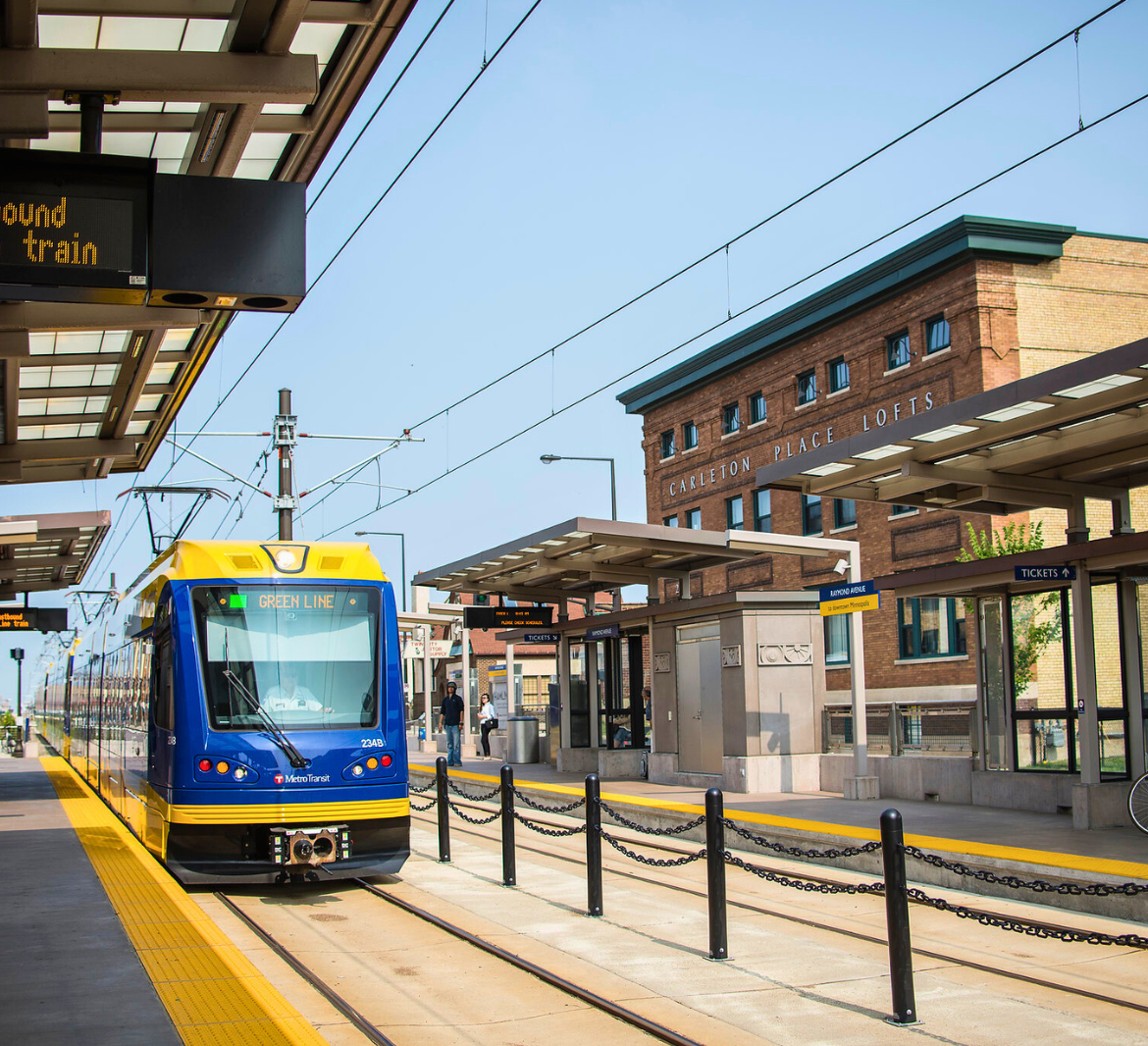
An eastbound Green Line train pulls into a station alongside apartment buildings.

Advancing equitable transit-oriented development requires all hands at the community level, but leadership at the state and federal level can also help propel change.

An eastbound Green Line train pulls into a station alongside apartment buildings.
Development near the Raymond Avenue station in the Twin Cities. (Source: Eric Wheeler, Metro Transit)

Public transportation and housing work in tandem. People want to live in walkable areas that are close to frequent transit stations to move around quickly. Equitable transit-oriented development (ETOD) helps meet this desire by maximizing the amount of residential, business and leisure spaces within walking distance of public transportation.

Locating public transit near everyday destinations promotes ridership and makes it easier for people to travel without needing a private vehicle. It’s a vital component to establishing well-connected communities and promoting economic growth. However, it’s difficult to build any form of transit within one mile of residential spaces.

On June 26th, 2024 the Future of Transportation Caucus hosted a congressional briefing focused on equitable transit-oriented development. Here are a few of the barriers to ETOD that came up during the briefing.

Local legislation can restrict development

Principal Research Associate from the Urban Institute, Yonah Freemark explained during the briefing that many localities have land use policies that restrict dense and mixed use buildings near transit.

Additionally, zoning laws in many cities have been stagnant in updating their codes. Planning Manager for the City of Columbus, Alex Saursmith, highlighted this point with his own city, where the zoning code has not been updated in 70 years. Currently, only 6,000 housing units can be constructed every 10 years, despite Columbus being one of the fastest growing cities in the country.

ETOD is also more financially effective than supporting continued road-building by prioritizing development density. It better maintains and maximizes the benefits of existing infrastructure. As LOCUS Chair Alecia Hill explained, state legislators should have an economic financial incentive to promote equitable transit-oriented development. When a lack of housing supply coupled with a lack of transportation options drives up household costs, residents are the ones who pay the price.

Transportation costs are the second largest expense category, behind housing, for most households. When households are already severely economically constrained, the costs of housing and transportation can be particularly difficult to meet. Renters that are cost-burdened or severely cost-burdened can spend greater than 30 or 50 percent, respectively, of their gross income on housing costs, according to the Joint Center for Housing Studies of Harvard University. The Bureau of Transportation Statistics found that households with income lower than $25,000 who own at least one vehicle spent 38 percent of their after-tax income on transportation in 2022.

Community voices are key

Community input is a foundational factor to rally support for more housing and transit. It’s important for citizens to have an opportunity to provide input early and see how their concerns will be addressed.

Sometimes, residents oppose new housing development for a variety of reasons, ranging from a fear of losing a community’s identity to a fear of increased traffic or reduced property values. Practitioners and legislators should listen and respond to these concerns. For example, they could point to research like this study from Livable Cities Lab which showed that some property values increased when more housing was introduced. In addition, legislators working to adopt new zoning regulations would be wise to find their local allies and enlist their help in developing community support. Explaining how new housing development relates to the community’s values and goals can further strengthen the case for change.

As Saursmith explained during the briefing, areas that have seen high population growth are a major driving force to zoning reform, especially when those areas are economically disadvantaged. These places are in desperate need of more housing, especially mixed-use residentials within walking distance to transit. He notes that with noticeable population growth, innate political pressure grows to update local amendments that have become obsolete. Generally, political pressure on leaders is the start to policy-making change.

Labor perspectives are also vital to promoting ETOD, especially within the realm of unions. Executive Director of Good Jobs First, Greg LeRoy, explained that some unions have begun to embrace urban density, arguing that promoting density is not only beneficial for the environment, public health, and economic growth, but also innately pro-union and pro-jobs.

More equitable, better connected communities

Updating zoning laws requires having local city council members and state leaders actively and loudly call for reform. Calling local representatives and campaigning for leadership that will advocate for updated zoning laws is part of the solution to allow for more housing. The other side of the issue to address focuses on the grassroots level. Tackling discourse in online spaces, attending city council meetings in promotion of more housing near transit, or canvassing on referendums are all opportunities to promote ETOD.

Even federal leaders like members in the Future of Transportation Caucus make waves to address housing and transit, helping to propel the conversation forward. In 2020, Representative Jesús Chuy García introduced a bill to promote housing near transit and establish an office under DOT specifically for ETOD. These avenues all provide a chance to showcase the numerous economic, public health, and environmental benefits of constructing housing near transit.

We need to expand the conversation on transportation safety
A cyclist travels down a busy highway on their way to Baltimore.

We can’t significantly address safety concerns if we’re not looking at the most dangerous modes of transportation.

A cyclist travels down a busy highway on their way to Baltimore.
(Frank Warnock, Bike Delaware)

On May 9, the chairman of the House Transportation & Infrastructure Committee, Representative Sam Graves, and the chairman of the Highways and Transit Subcommittee, Representative Rick Crawford highlighted recent increases in crime reports according to FTA-tracked data. The period of time evaluated (2020-2022) represents some of the worst times for transit as agencies struggled to deliver service, ridership fell, and travel behavior changed across the country.

Transit safety is foundational to encouraging communities to utilize this public resource and enjoy its numerous benefits, including economic, environmental, and public health benefits. It is essential that federal investments protect taxpayers as they travel. Unfortunately, Representatives Graves and Crawford failed to take note of the need for safety enhancements for all modes of transportation, including modes that are far more dangerous than taking the bus.

From 2020-2022, during that same period highlighted by Graves and Crawford, fatalities on our roadways exploded. According to the National Highway Traffic Safety Administration, projected roadway fatalities increased from 39,007 to 42,795. According to Smart Growth America’s Dangerous by Design report, the number of people hit and killed while walking grew to 7,522 in 2022, marking a 40-year high.

According to the Bureau of Transportation Statistics, passenger car occupants are the primary victims in highway fatalities, totaling more than 10,000 deaths each year since 2010. By contrast, non-rail public transit occupants (like bus riders) accounted for less than 100 highway fatalities each year. Other types of public transit, like subways, accounted for less than 300 transportation-related fatalities each year. (To fully understand these numbers, it’s important to note that highway fatalities, including non-rail public transit, counted only direct fatalities like deaths that occur due to a collision. Other types of public transit included incident-related fatalities, and so these deaths are likely overstated in comparison.)

Whether we’re driving, biking, walking, or taking public transit, we should be able to travel safely. But when representatives like Crawford derail the conversation to “shine a light” on transit security alone, it unnecessarily discourages and scares individuals from riding public transportation, despite it being statistically safer than operating a private vehicle.

Increased operations funding can help support transit agencies’ efforts to improve safety. Hiring transit ambassadors and having security officers on board are just two interventions that would support crime mitigation efforts. Collaborating with local services to support housing and mental health could help address criminal activity from multiple angles.

Transit ambassadors point a rider in the right direction
(LA Metro)

Safety must be a priority—no matter how we travel

We’re glad federal representatives are having conversations about transportation safety, and we hope to see these conversations translate into increased funding for transit operations and security. But to truly address dangerous travel conditions, we need to consider the full picture. We hope to see additional efforts to address the top contributor to transportation-related fatalities in the US: private vehicles on high-speed roads.

Find out how we can enhance safety for all road users by improving street design. Read Dangerous by Design here.

Two federal bills for better transit service
The U.S. Capitol from Pennsylvania Avenue, with people walking and driving on the road in the foreground

The Moving Transit Forward Act, introduced by Senators Chris Van Hollen (MD) and John Fetterman (PA), seeks to bolster public transit nationwide. While differing from Representative Hank Johnson’s (GA-4) transit operating bill in the House, both aim to address the urgent need for sustainable transit funding.

The U.S. Capitol from Pennsylvania Avenue, with people walking and driving on the road in the foreground
(Adam Michael Szuscik, Unsplash)

Millions of people across the country depend on reliable and consistent public transit to get where they need to go. To provide this service, public transit agencies rely heavily on federal, state, and local funding to maintain their system and improve service provisions. However, while federal funding covers capital expenditures for the construction and acquisition of infrastructure and equipment, the costs of operating the transit system are primarily procured from state and (even more often) local funding sources.

Transit agencies struggle to maintain service levels under this traditional model for operating costs. National lockdowns imposed during the Covid-19 pandemic caused ridership to plummet, exposing the extent of transit operating challenges for agencies. Revenue from fare collection drastically decreased, leaving little funding for transit agencies to cover their operating costs. Combined with rising inflation and stagnating local funding sources, transit agencies are faced with a self-reinforcing downward spiral of decreasing ridership and service cuts. Covid relief funds from the federal government offered temporary relief that prevented massive service cuts but with funding now being exhausted, transit agencies are facing a fiscal cliff due to this unstabling funding. This model creates a system that lacks the necessary resources and support to provide the reliable transportation services that communities need, and deserve.

On May 14, 2024, Senators Chris Van Hollen (MD) and John Fetterman (PA) introduced the Moving Transit Forward Act, with the legislation aiming to bolster public transportation services across the country. The bill aims to supplement the existing operating budgets of transit agencies to provide them with resources to expand routes, increase service frequency, and improve the experience of transit riders.

The Moving Transit Forward Act would create a federal formula funding program under the Federal Transit Administration (FTA) to provide additional funding resources for service improvements and safety and security enhancements. This legislation finally represents a Senate bill addressing operating costs, similar to the Stronger Communities through Better Transit Act reintroduced by Representative Hank Johnson (GA-4) in the House in January.

Both the House and Senate bills authorize new federal formula funds for transit operations. However, they have some key differences.

An immediate variation between the two bills is in terms of funding authorization. The House bill specifies authorizing $20 billion per year through fiscal year 2027 whereas the Senate bill does not specify a dollar amount for transit operating. Furthermore, all transit agencies, both rural and urban, are eligible for funding under the House bill, but the Senate bill targets transit agencies within urban areas that have a population of more than 50,000. This discrepancy is likely due to the fact that, unlike urban areas, rural areas are already eligible to use federal funds to cover transit operating costs. However, denying rural areas additional resources to cover operating costs limits their ability to provide frequent and reliable transit service—which is sorely needed, considering that more than 1 million rural Americans do not have access to a car.

Despite these discrepancies, both of the bills demonstrate the necessity of addressing operating costs for transit agencies to ensure that public transit is available, accessible, and affordable for communities, particularly for those that are underserved. As these bills move through their respective chambers, it is crucial that a transit model that supports the vision of reliable transit for all is realized.

The East Link showcases progress and enthusiasm for public transit
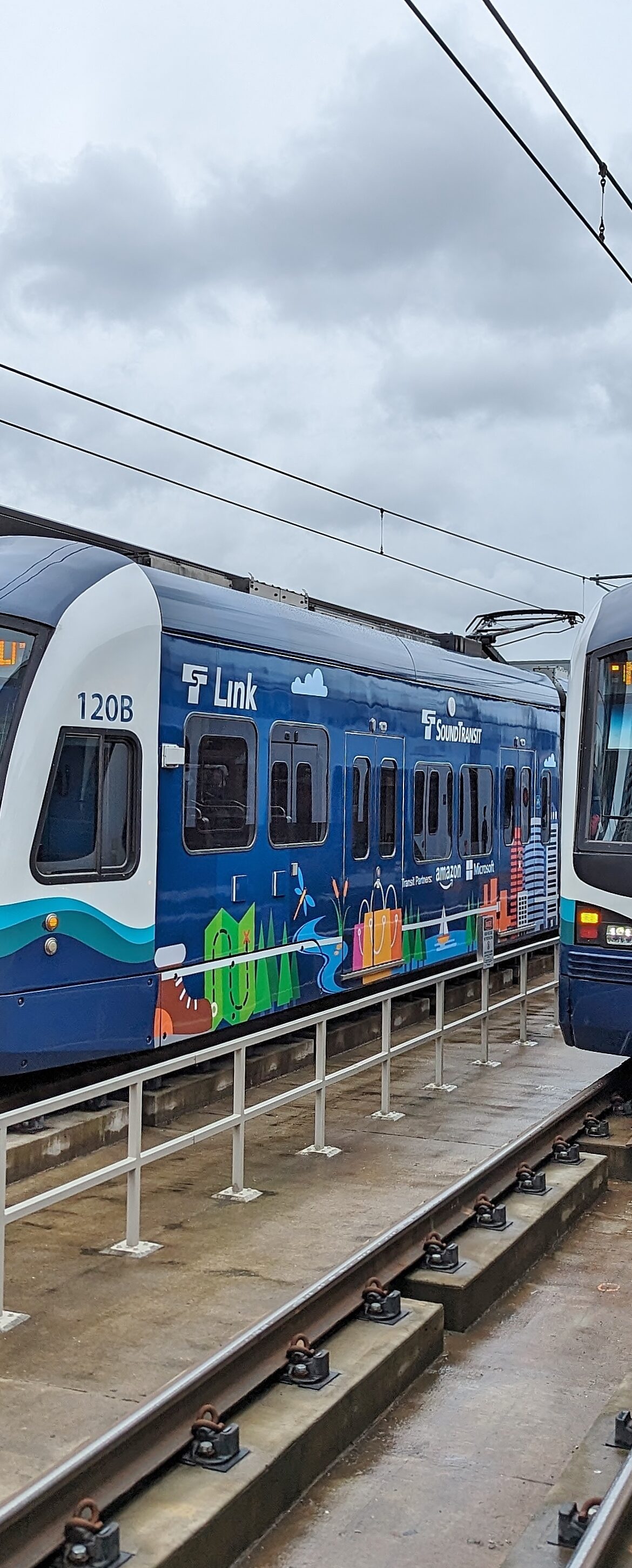
Crowds form to hop on East Link line trains on their first day running in downtown Bellevue

On April 27, 2024, Sound Transit opened up the East Link light rail line for riders to connect from Redmond to Bellevue, and ultimately to Seattle. The new rail line was met with noticeable excitement and underscores the need (and eagerness) for improved and additional public transportation.

Crowds form to hop on East Link line trains on their first day running in downtown Bellevue
The opening of the East Link light rail line in Bellevue, Washington (Wikimedia Commons)

Why light rail?

Light rail is rail-based transportation that can operate in mixed traffic (similar to streetcars, which you might find in cities like New Orleans or San Francisco). These systems are designed to carry more passengers than even a very frequent and packed bus line (like the M15 in NYC which carries at least 30,000 passengers daily) but less passengers than a heavy rail transit line (like New York’s 6 train, carrying nearly 400,000 riders a day). Heavy rail is typically utilized when spacing between stations needs to be farther apart, usually for bigger cities like New York City, which is three times larger than Seattle.

Light rail’s charm can come from many perspectives. Riders might choose to take light rail because it can be more reliable and frequent than a bus, particularly buses that have to share lanes with private vehicles. Light rail is a cheaper alternative than driving a car when accounting for time, gas prices, maintenance, and car payments, and taking this form of transit can help riders avoid the frustration of rush hour traffic. The term “light rail” is also associated with “clean” energy use and quiet, quick transport. Meanwhile, municipalities might find that light rail is a more cost-effective option than constructing a subway system.

Building on the success of previous lines, Seattle has invested in the East Link light rail line (also called the 2 Line), which opened to fanfare on April 27, 2024. Once fully completed, the East Link will connect Seattle and the 1 Line (formerly Central Link from Northgate to Angle Lake) in the west to Bellevue and Redmond in the east.

Current route for the 2 Line, starting in Redmond and ending in Bellevue
East Link route as of April 27, 2024
The East Link extension route shown in blue, starting at Chinatown in Seattle and making stops in Mercer Island, Bellevue, and Redmond, finally ending at Downtown Redmond.
East Link Extension (Sound Transit)

Bellevue’s transportation champions

The Seattle area’s investment in public transit didn’t start with light rail. In the 1960s, the federal government offered to cover 80 percent of the costs for a potential 49-mile rapid transit system in the state. The funding and proposal were turned down due to fear of growth and financial costs. The lost opportunity spurred movement in Seattle to begin the long process of establishing an improved public transit system. There is a clear priority and demand for improved and additional transit in Washington state—and luckily, there are representatives that understand how to work the levers to obtain it.

Senator Patty Murray (D-WA) has been recognized as a champion for public transit by the American Public Transportation Association and placed a large emphasis on the importance of public transit in decreasing congestion and emissions, as well as promoting economic growth. She has had a long history with the light rail project and ensuring that Sound Transit has a future. In 2009, Senator Murray secured $1 billion in federal funding for light rail and other transit related projects.

Former mayor of Seattle and Sound Transit Chairman Greg Nickels grappled with the project from the beginning despite the uncertainty of the progressive plan. Even during his run for mayor in 2001, he campaigned aggressively on Sound Transit’s lack of funding and reiterated the importance of light rail. In 2006, when Seattle’s South Lake Union Streetcar opened and received criticism for sharing lanes with private vehicles, Nickels defended the project on the grounds that it would be built more quickly and would be less costly than alternative public transit options, all while adding more jobs.

Mike McGinn, mayor of Seattle from 2010-2013, also campaigned on the commitment to expand the city’s light rail system to connect to West Seattle. One of the roadblocks faced for the transportation project (as is the obstacle for many) is funding. Stakeholders disagreed on whether the transit line should be funded solely by the city or if it should be part of a larger regional project. McGinn called for a Seattle-only ballot measure to raise funds for the expansion of light rail to prevent money from being held up at the state and county level, as suburban politicians were more likely to be reluctant to fund anything that would not directly benefit private vehicle use. It is not uncommon to present policy proposals that will be politically unpopular and having visionaries that understand the long term benefits is one of the many levers that push products like the 2 Line forward.

Local leaders have worked especially hard to move this project forward, such as King County Councilmember Claudia Balducci, an outspoken transit and affordable housing champion. She is a former mayor of Bellevue and continued her advocacy on the 2 Line when she was elected to the city council in 2015. Current Bellevue Mayor Lynne Robinson, Deputy Mayor Mo Malakoutian, and the entire city council have also been supportive of the light rail expansion and were all present for the grand opening.

A group of Bellevue city leaders and stakeholders lift their shovels to break ground for the new extension
Groundbreaking ceremony for the East Link in Bellevue (Wikimedia Commons)

Part of supporting progress for transit is understanding where there is hesitancy from constituents and what can be done to address concerns. For example, so that the Eastside community could understand the investment and construction expectations of the project, the city demonstrated how they would strategically incorporate the light rail system into city planning. This led to the creation of the BelRed subarea plan, which aims to deliver transit-oriented development including implementing a broad range of housing and walkable/bikeable neighborhoods that connect to the regional transit network. Safety was another voiced concern, which the city addressed by having first responders train months ahead to respond effectively in tunnels and elevated tracks and activating the Bellevue Police Unit dedicated to security on transit.

Opportunities ahead for the Seattle area and beyond

Seattle has a promising transportation future ahead with the new light rail line and should be used as a guiding light for political leaders and community advocates. This was a long overdue effort for Seattle to connect the east to the west, and despite setbacks along the way, visionaries in recent history helped make it happen by standing tall against the opposition to implement the long needed project. Finally, advocating for change at the leadership level required addressing community needs in a balanced manner, standing by principles, and maintaining the vision that long-term success is complex and requires layered discourse. The story of the East Link shows that creating substantial change comes from all different levels and actors working together to make a difference.