Posts Tagged "featured"
As the House aims to slash, tell the Senate to protect money for rail, transit & TIGER in next week’s budget vote
.jpg) While the House plan for transportation slashes money for passenger rail, new transit construction and innovative TIGER grants, a Senate committee has drafted a budget that increases funding for new transit construction, keeps and expands TIGER, provides support for Amtrak and passenger rail improvements, and funds a new grant program to jumpstart progress on repairing critical bridges.
While the House plan for transportation slashes money for passenger rail, new transit construction and innovative TIGER grants, a Senate committee has drafted a budget that increases funding for new transit construction, keeps and expands TIGER, provides support for Amtrak and passenger rail improvements, and funds a new grant program to jumpstart progress on repairing critical bridges.
One in 9 bridges still “structurally deficient” as average age nears 50 years
 One in nine of the bridges and overpasses American drivers cross each day is rated in poor enough condition that some could become dangerous or be closed without near-term repair, according to our new 2013 report on the nation’s bridges. Lay them all end-to-end and you could drive from Mexico to Canada across the US on one long deficient bridge. Don’t miss our new 2013 report and interactive map.
About those 66,000+ deficient bridges: What did last summer’s transportation law change?
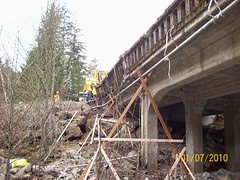
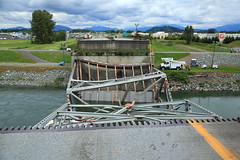 With the second collapse of an Interstate bridge in six years, Americans might expect Congress to leap into action to ensure adequate funding for bridge rehab and replacement. But as we have reminded numerous reporters since an I-5 bridge dropped into Washington’s Skagit River, federal lawmakers instead took a gamble and eliminated the nation’s dedicated bridge repair fund last summer.
58-year-old bridge collapses in Washington State on west coast’s most major interstate
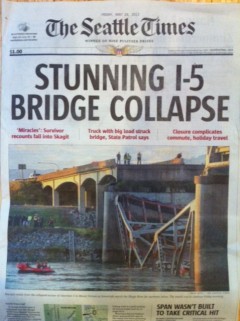 Shortly after the evening commute last night (around 7 p.m. local time) an entire section of the Interstate 5 bridge — both north and southbound lanes — over the Skagit River north of Seattle, Washington collapsed and fell into the river, sending two cars tumbling down into the river, injuring three yet miraculously killing no one. One of those who plunged into the river along with his wife called it a “miracle” that no one was killed or more severely injured.
What happens when driving rates continue to drop?
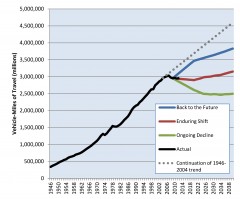 The typical American drives less today than at the end of Bill Clinton’s first term and the millennial generation (16-34) is leading the charge. But how likely is that trend to hold in the future? And if it does, what does that say about what we should be building, and how we will pay for it, if not with the gas taxes raised from driving? A game-changing new report seeks to answer the first question, and to fuel a conversation about the second.
NPR: 19 states (and counting) creating plans to raise more transportation dollars
 More than a third of all U.S. states have plans of some sort to raise new money for transportation to help cover yawning budget shortfalls and keep up with maintenance and new construction of their state transportation networks. NPR picked up that story this week and talked to T4 America director James Corless about the growing trend of states stepping out on their own to raise their own money for transportation to augment the federal funding that did not increase with the last transportation bill.
Tracking state transportation funding plans
 With MAP-21 signed into law last summer, attention has shifted from Washington to the states. In many cases, states have looked at the bottom line in MAP-21 and are deciding that they need more money for transportation and are embarking on ambitious and often groundbreaking plans to raise additional revenues for transportation. Visit the home for state plans here, where we’re tracking all of the proposed (and enacted) plans in one easy, simple chart. If you see something we’ve gotten wrong or a state we should add, drop us a line and let us know.
Ambitious Maryland plan moves forward to index gas tax, add sales tax for transportation
When Maryland’s Intercounty Connector (ICC) highway opened in 2011, it did more than create a new east-west toll road between I-270 and I-95 in the northern suburbs of Washington, DC: It also severely hampered Maryland’s ability to build other large-scale transportation projects for years to come. But now there’s significant momentum to raise new state revenues for transportation to ensure that the state won’t have to shelve their plans for a 21st century transportation system.
America’s infrastructure improves slightly over 2009, still a failing grade
 America’s civil engineers raised the grade given to our country’s infrastructure from four years ago, but unfortunately, it’s still a failing grade for America. With the $3.3 trillion dollars needed by 2020 (according to ASCE) unlikely to arrive in this current climate of reduced budgets and austerity, is there a way forward that can make smarter decisions with the money we have and knock back our maintenance backlog while still investing in the 21st century infrastructure our country needs?
Rethinking the gas tax: Suddenly it’s the theme of 2013
 Is the per-gallon gas tax going the way of the full-service filling station? To look at the flurry of proposals coming out lately, you might think so. Since the start of the year, major new proposals from industry leaders, governors and state legislatures have sparked a new debate over the ways we collect revenue collection for transportation — at the federal, state and local levels. Industry groups have proposed creative ways to essentially raise the gas tax. At the same time, 2013 already has seen several ambitious proposals for funding transportation outside of the excise tax on gas.
US Transportation Secretary departs, leaving a legacy of memorable initiatives
The news many had suspected was confirmed to be true this morning in a blog post from Secretary LaHood himself — the Transportation Secretary is planning to step aside for President Obama’s second term.
Sandy relief bill will provide billions for repairing and improving transportation systems
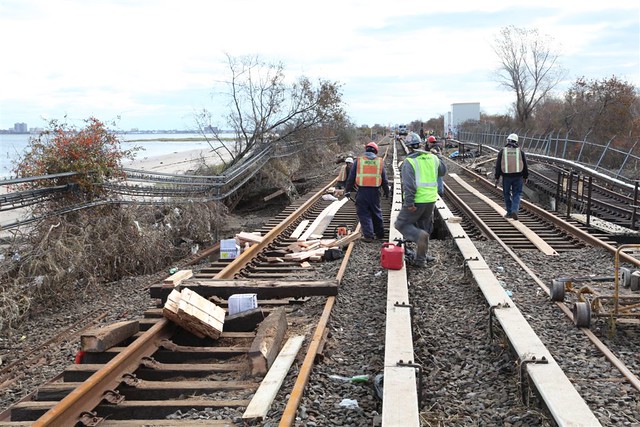 The Sandy relief bill on the cusp of final passage will provide billions for cleanup and more than $12 billion for transportation — including an unprecedented step toward making transportation networks around the northeast and NYC more resilient in the face of climate change, more frequent and unpredictable storms, and rising water levels.
From state to town, Michigan takes strong steps toward a better transportation future
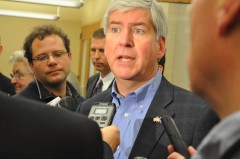 Perhaps no place illustrates the national positive trends in transportation at the ballot box (and state legislatures) better than Michigan, where citizens voted to raise taxes for transportation investments in cities and counties across the state, at least one anti-transit elected official was ousted, a Republican governor led the charge for regional transit investment in the state’s biggest metro and when given a chance to bail in the name of “cost savings,” voters doubled down on their existing transit systems.
T4 America releases new guide to implementing MAP-21
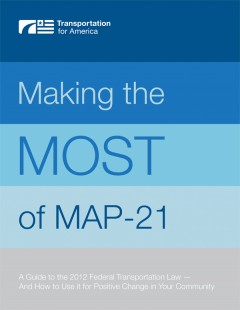 A new easy-to-follow handbook, Making the Most of MAP-21: A Guide to the 2012 Federal Transportation Law — And How to Use it for Positive Change in Your Community, features both narrative chapters and two-page explainers on the key features of the new program, from the consolidated highway program to the new transportation alternatives, as well as new financing options.
What the 2012 elections mean for the federal transportation picture
 Though some pieces have fallen into place – including a decision on who will lead the House’s key transportation committee for the next two years — the 2012 election still leaves a number of key questions hanging in the balance. We’ve looked at a few local transportation ballot measures, but what will the impact be on transportation at the federal level as a result of the 2012 elections?
Tuesday’s vote: Strong support for more transportation options nationwide
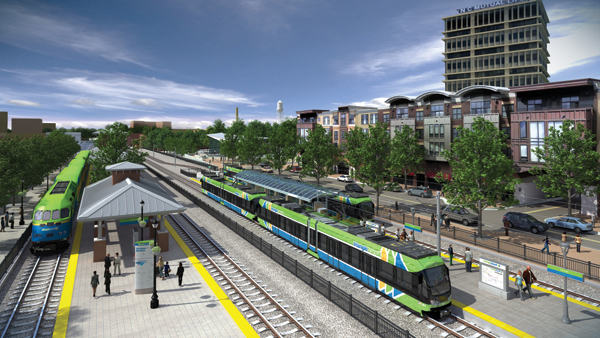 During a federal election season that saw the presidential candidates making only the barest mention of our teetering system for funding transportation infrastructure, local voters took transit funding into their own hands in more than two-dozen locales Tuesday. Most of the measures that included public transportation and a more balanced set of transportation options appear to have passed — or in the case of California, came achingly close to the required two-thirds majority.
With cities and suburbs clamoring to build new transit systems, a new book showcases creative financing approaches for getting them built
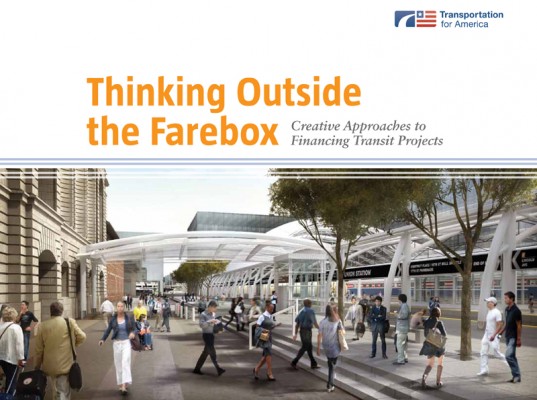 The demand for public transit is at its highest point in 50 years, and more communities then ever before are looking for funds to build and operate rail and bus lines. Despite the challenges posed by ideological gridlock in Congress, dwindling federal gas tax revenues, and the elimination of earmarks, many communities are finding creative ways to move ahead.
Is metro Atlanta vote a bellwether for transportation funding?
 The Atlanta region soundly rejected a penny sales tax to fund $7.1 billion in new transportation improvements for the traffic-snarled region. Coming on the heels of the passage of MAP-21, a federal bill indicating a shrinking federal role in transportation funding, many wondered: Will metro regions and localities be able to bootstrap their way out of congestion and mobility woes? Was the failure of Atlanta’s transportation vote a bellwether for votes in other states and metros?
Weight of the Nation series highlights transportation’s potential to help fight obesity
 HBO’s new film series highlights the shocking state of our country’s obesity levels and worsening health, highlighting the impacts of the transportation systems we build and where we live on those alarming trends. An influential public health expert weighs in for T4 America on the movie and the connections to transportation.
Saving a transit system and turning the tide for the future of a mid-sized city
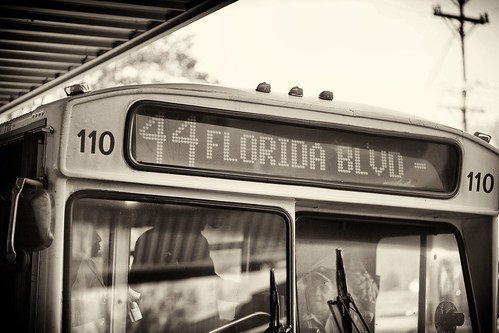 Last month, the citizens of Baton Rouge, LA, voted to raise their taxes to preserve and expand their struggling bus system. To pass it, churches, faith-based groups and local organizers teamed up with businesses and institutions. As we’ve seen in similar local measures, they won by explaining exactly what taxpayer money would buy, building a diverse coalition and getting out the vote.
Our three principles
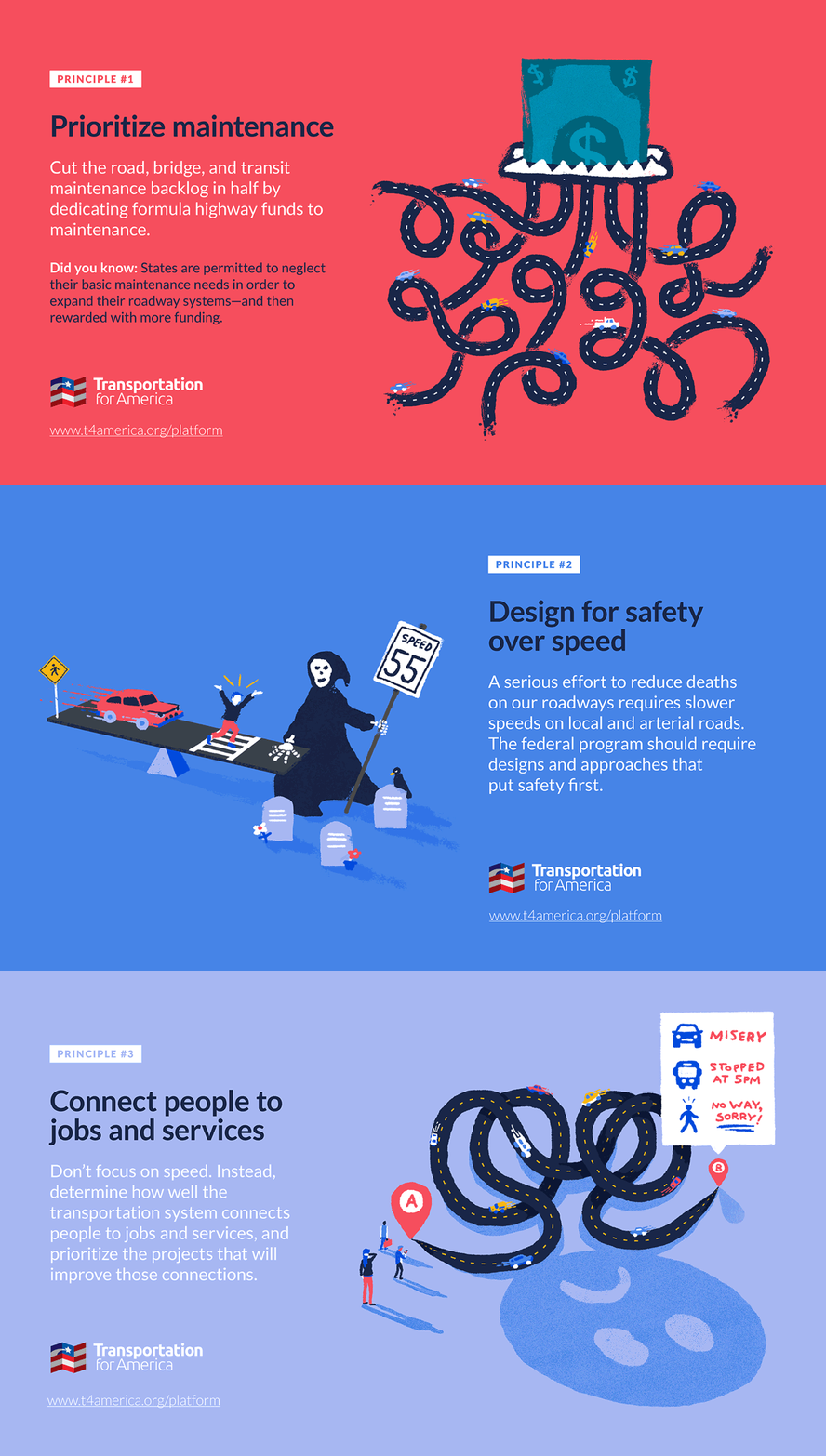
It’s past time to elevate the national conversation about infrastructure beyond just the price tag.
Learn more about our platformLatest From The Blog


There’s a climate cost to America’s freeways, and…
Apr 23rd, 2024


Progress for passenger rail in the South and…
Apr 10th, 2024

I cannot find the zoom link, I registered…
Jan 6th, 2024

A rare look behind the curtain of Transportation…
Jul 28th, 2023

In what Harrison Ford said was his most…
Jul 25th, 2023

Good example, walking to the local taco place…
Jul 24th, 2023