Congress only proposes delusional ideas to fix the highway trust fund

Large highways running through a community.

Congress will propose nearly anything other than raising the gas tax to fix the highway trust fund. If Congress actually addressed the program’s total failure to deliver outcomes, maybe it would be easier to build broad support for raising significant new transportation funding.

Since 2008, the federal highway trust fund has received infusions from the general fund totaling over $280 billion. The federal gas tax has not been increased above its current level of 18 cents per gallon since 1993. With every reauthorization of the program, there is always a looming date (currently 2028) when the Highway Trust Fund will go broke. Yet, every time we come around to discussions on the next surface transportation reauthorization, delusional thinking about how to fund the federal transportation program emerges.

For nearly two decades, rather than increasing the gas tax, Congress has resorted to infusions from the general fund to pass a multi-year transportation bill. Congress has come up with all sorts of convoluted machinations to delude themselves into thinking they aren’t increasing the deficit. 

For the 2012 MAP-21 transportation reauthorization and its short-term extension in 2014, Congress used many questionable budget maneuvers to make it look like they were paying for the infusions with cuts elsewhere. The most memorable of these was“pension-smoothing,” a bizarre accounting trick that delayed pension contributions—and the tax relief that comes with them—to more than 10 years in the future, beyond the horizon the Congressional Budget Office considers when calculating the impact on the deficit. This means we lose more tax revenue today to pay for the 2012 MAP-21 transportation bill than we would have back then.

Congress has also made a few attempts to adopt a vehicle miles traveled (VMT) user fee. In fact, a federal pilot program supported the adoption of voluntary VMT fees in several states starting in 2015, but none of them ever incorporated it into their mandatory fee structure. However, a few states allow drivers of fuel-efficient and electric vehicles (EVs) to choose VMT fees as a more affordable alternative to higher registration fees. For example, Oregon will make its OReGO VMT fee an alternative to higher registration fees for fuel-efficient and electric vehicles (EVs) starting in 2028. Virginia, Utah, Hawai’i, and Vermont are actively pursuing similar strategies. A federal VMT fee is extremely unlikely in the foreseeable future because of privacy concerns, states’ limited capacity, and Congress’s lack of political will.

The latest insult-to-our-intelligence proposals to address federal highway trust fund insolvency are punitive federal EV fees. Most states have already adopted punitive EV registration fees that are far higher than what gasoline-powered car drivers pay in gas taxes. House Transportation and Infrastructure Chair Sam Graves proposed highly punitive annual federal EV registration fees: $250 for EV owners and $100 for hybrids (who also pay the gas tax). These proposed EV fees are more than double what gas-powered car owners pay on average in federal gas taxes. In 2019, the average fuel economy was 22.3 miles per gallon for an average of 11,484 miles driven. This means the average car driver’s 18.4 cents-per-gallon federal gas tax added up to $94.76 annually.

EV drivers need to pay their share, especially as EVs become a larger share of cars on the road. However, there’s a problem with trying to solve a fiscal issue on the backs of a tiny minority of drivers. Highly punitive fees would slow EV adoption without changing the projected date that the Highway Trust Fund goes broke.

Transportation for America wants to see changes in this broken program before we put more money into it, and all these ridiculous funding proposals and machinations have drawn our attention away from a central question: The gas tax is simple, efficient, directly linked to the use of our nation’s roads and highways, and is already in place. Why has Congress not had the political will to raise the gas tax for more than a generation?

To answer that, you need to ask what the federal transportation program is accomplishing with the hundreds of billions it has spent over the last few decades. And the answer isn’t pretty. The highway trust fund was created in 1956 to build the interstate highway system, which has been completed for over three decades. Since then, the program has staggered forward on autopilot with diminishing and even deleterious returns. Congestion is up in every major metro area; road deaths are up, especially for people walking; state of repair has not markedly improved; and transportation is the largest contributor to greenhouse gas emissions and is the only sector with increasing emissions. The program’s approach of doling out vast sums of formula funding to state DOTs with little accountability, and the state DOTs’ penchant for widening highways instead of investing in basic repair, is obviously not going to fix these failures.

Until we can reorient the program to address today’s needs and require greater accountability for achieving outcomes in safety, access, environmental impact, and state of repair, Americans have no good reason to support increased taxes to pay for the program. Show us something better we can get for our money. Then we’ll see public support for raising revenue to pay for it.

A transportation two-fer: Save the highway trust fund and reduce emissions 22%

With only three real possible options to stave off the looming bankruptcy* of the nation’s transportation trust fund, a Senator has proposed choosing one of them: scale the nation’s transportation program down to the size of the revenues users pay into it. 

*No, the trust fund can’t actually go bankrupt—“insolvent” is the technical term. But for everyday people who cannot spend more money than they have, understanding it as “bankruptcy” is more helpful.

As we noted a few months ago, the nation’s transportation trust fund is in existential trouble. And it has been since 2008, when Congress started bailing it out with your general tax dollars. They’ve now poured in somewhere around $275 billion to cover the huge gap between how much Congress keeps spending on transportation and the far lower amount the gas tax brings in each year. And here we are again, back at square one, with the trust fund needing a massive bailout to cover a gap that will soon reach $40 billion annually.

There are three main options for tackling this problem: 1) (Continue to) deficit spend and bail it out, with every single taxpayer picking up the tab on top of whatever they pay at the pump. 2) Increase the gas tax (or create another tax) to raise revenues. 3) Live within our means by cutting spending down to the amount of revenue brought in each year. 

Spend what we have, nothing more

#3 is the path that Senator Mike Lee (R-UT) has attempted to forge with a simple new bill. 

His Balance the Highway Trust Fund Act would prohibit USDOT’s annual obligations (i.e, spending) for federal-aid highway programs from ever exceeding gas tax receipts to the highway account in any given year. To put that in real terms, CBO figures show that 2025’s highway spending was about $58.5 billion, which exceeds the $38.9 billion in gas tax receipts that were brought into the highway account by about $19.7 billion. So this bill would reduce highway spending by $19.7 billion.

The bill would do the same thing for transit, limiting annual obligations from the Mass Transit Account to the net gas tax receipts for each fiscal year. CBO estimates that amount would average about $5.75 billion annually during the next five-year reauthorization.

It’s debatable whether or not Sen. Lee is serious about advancing this proposal, given that he introduced it with no co-sponsors and no apparent media push (he’s proposed similar bills before). But this is, in fact, the only formal proposal in Congress right now aiming to deal with the looming bankruptcy of the highway trust fund. 

But that’s not the only way to categorize this proposal.

This is also technically the most ambitious climate bill in this Congress

As we’ve pointed out repeatedly over the last few years, the IIJA supercharged highway spending and massively increased overall transportation emissions, empowering state DOTs to commit to long-shelved or dormant expansion projects. Our Fueling the Crisis analysis showed that the IIJA could cumulatively increase emissions by nearly 190 million metric tonnes over baseline levels by 2040, largely due to all the added driving from the IIJA’s massive increase in unaccountable highway spending. That’s akin to nearly 50 coal-fired power plants running for a year. All this despite the hefty praise it received from the environmental world.

That analysis has likely only gotten worse, as many of the “good” programs for reducing emissions in the IIJA have been slashed or eliminated outright by the Trump administration, like electric vehicle charging infrastructure and grants for local projects focused on reducing driving or improving access. 

Here’s where the implications of Sen. Lee’s proposal get interesting.  

Assuming we scale down the size of the highway and transit programs to what the gas tax actually brings in, it would potentially reduce net emissions from the Highway Trust Fund’s programs by nearly 24 million tons. That’s a 22 percent reduction compared to simply extending the bill and getting the same outcomes.  

To emphasize: right-sizing the federal program would deliver more progress on emissions from transportation than any other climate bill that’s been proposed in this Congress. 

Sen. Mike Lee, accidental climate advocate? 

Compare those reductions to the potentially enormous growth in emissions likely to result if groups like AASHTO get their way and see the next reauthorization start at the same level of funding as in the IIJA (plus inflation).  Remember: their starting point is $400 billion over five years for the highway-only programs, which is somewhere around over $210 billion more than the gas tax will bring in over those five years! If Congress did roll over and decide to hand state DOTs another $210 billion of your money on top of what you pay at the gas pump, emissions would rise dramatically. 

The elephant in the room: transit funding

Unlike other proposals to kick transit out of the trust fund to try and save money, it’s notable that Sen. Lee is proposing to scale down the highway and transit programs in the same way: lowering spending on each one to the level of what the gas tax brings in. Nearly 3 cents of the 18 cents per gallon gas tax goes directly into the Mass Transit Account, and this bill would not change that—he’s not arguing to end federal support for transit funding.

As with highways, it would mean a significant cut in federal transit spending (a 66 percent reduction in federal funds, causing pain and fiscal ruin for transit systems across the country—especially smaller ones. 

But consider the position a proposal like this puts most transit advocates in: most will be loudly opposed to this proposal, even when it would massively reduce emissions from highway-related spending and finally end the runaway growth of the unaccountable highway program. We transit advocates get backed into a corner on proposals like Senator Lee’s because transit funding is inextricably tied to highway funding.

And so transit advocates will continue to have no choice but to be boosters for an enormous highway program, just to keep transit funding at the same paltry level that’s far less than what we need to truly invest in the rest and build a world-class system for all of our cities, big and small. The structure of this program requires transit advocates to essentially back AASHTO’s fever dream of deficit spending on historic funding for highways, more flexibility, and even less oversight. 

That’s the high price of keeping transit funding at the same levels.

People who believe that we need more and better transit in this country should not have to hold their nose and swallow insane amounts of unaccountable highway funds that undermine our transit investments. They should not have to support bank-breaking reauthorizations paid for by their grandchildren just to prop up a system that delivers such terrible results on safety, maintenance, and access to other options for getting around.

Especially when there is growing evidence that the Trump administration is killing grants for transit-related projects or failing to advance transit capital projects with money set aside by Congress. (Some breaking news we hope to expand on in the coming weeks: Trump’s USDOT has advanced zero new transit capital investment grants in the last 13 months, a new record for slowness.) 

All of this points to an uncomfortable reality that has been looming for years, and which transit advocates (including ourselves) need to eventually grapple with: The federal Highway Trust Fund is not a long-term, stable solution for funding transit in this country, and the time has come to have a conversation about other mechanisms for funding transit in the future. The future of transit needs to stop being tied to the fate of a supercharged highway program that is producing terrible results for taxpayers.

Sen. Lee’s proposal reduces the size of a program that produces bad outcomes. What we need instead is a smarter, virtuous funding mechanism that, for each dollar invested, supports good investments across all modes. 

Because the damage being done by this federal transportation program—funded by immense deficit spending for 18 years now—is too great to ignore. 

Analysis: New CBO projection accounting for Trump administration policies shows Americans will pay billions more in fuel taxes 

New CBO Projections show Americans will be paying more Highway Trust Fund taxes as a result of new policies

According to the latest projections from the Congressional Budget Office, Americans are set to pay over $80 billion more in gas taxes thanks to new transportation policies implemented under the Trump administration. The kicker? This won’t fix the Highway Trust Fund’s insolvency problem, and it will cost Americans more to deliver the same terrible outcomes on safety, maintenance, emissions, and access.

Each year, the Congressional Budget Office (CBO) projects anticipated tax information for important federal programs, detailing their fiscal status, trust fund balances, and tax revenues. One of those balances the CBO makes projections for is the Highway Trust Fund

Early last year, the CBO made projections for the balance of the Highway Trust Fund that took into account assumptions about policies that were put into place during the Biden administration. They assumed that, with strong adoption of more fuel-efficient vehicles in line with that administration’s policy to support EV adoption, gas tax revenues would decline over time as people purchase less gas, peaking in 2026 with $44.2 billion in tax revenue before dipping down to just under $38 billion in 2035. In terms of solvency, they found that the Highway Trust Fund would reach a balance of zero dollars at some point in 2028 (though the Mass Transit Account would hit zero first in 2027). 

However, a lot has changed since that last round of projections. Since day one, the Trump administration has made the rollback of what it considers to be “woke” transportation policy a core part of its agenda. With cancelled grants, delayed programs and projects, and significant rollbacks of market-shaping regulations pushed in both legislation and rulemaking, there isn’t a path the administration hasn’t pursued to enact its agenda. Many of those decisions, such as the recent repeal of the Environmental Protection Agency’s Endangerment Finding, were made with the justification that the targeted programs and regulations ultimately constituted expensive bloat that imposed costs on both the government and consumer. 

At USDOT, rollbacks were powerful, effectively eliminating CAFE fuel economy standards. EV programs like NEVI and the Charging and Fueling Infrastructure program have been frozen, left in limbo, or outright cancelled. Beyond EVs, recurring grant terminations for everything from the nation’s largest public transportation project to projects that build multi-use paths deemed “hostile to motor vehicles” have led to cancellations, uncertainty, and delays nationwide.  Congress has followed the administration’s lead, greenlighting the agenda with its own transportation rescissions made in the annual appropriations process and the budget reconciliation bill

These decisions can make a major difference in people’s choices over time, but they’ve already started to have an impact. People are paying more in federal taxes. And the CBO believes that trend will continue.

Comparing newly released data from February 2026 to January 2025 projections, Americans paid over $55 million more in taxes to the Highway Trust Fund than the CBO previously projected for 2025, likely in part due to the aforementioned policies introduced by the Trump administration aimed at decreasing the efficiency of future vehicles, slowing the expansion of other transportation options, and making people drive more.

Now, the CBO projects that those same policies will result in Americans paying more in taxes—over $80 billion more over the next ten years. Instead of revenues declining with the adoption of new, more efficient vehicles, the CBO now projects that revenues for the Highway Trust Fund will actually increase. Highway tax revenues are projected to rise from $44.2 billion in 2025 to nearly $52 billion in 2035, signaling the CBO’s belief that Americans will be driving more and purchasing more gasoline, thus paying more in federal gas taxes. 

In terms of the Highway Trust Fund’s insolvency, little would change. With most of the revenue increases coming in the 2030s, the additional revenue would only delay insolvency by a few weeks before the balance hits zero in 2028, barely making a dent in the looming insolvency problem.


Some think tanks and other interest groups are praising the increase in anticipated taxes as a good thing, with the Highway Trust Fund inching marginally closer to solvency without having to address the cost increases for highway projects with diminishing returns. While $80 billion is a lot of money, it is just a drop in the bucket compared to the rampant spending on highway programs out of the trust fund. Even with the new revenue, the Highway Trust Fund would still require hundreds of billions more, likely from general fund dollars, to pay for spending. More importantly, how does that money matter when the Highway Trust Fund itself is directed toward a program that produces such bad outcomes for safety, maintenance, and emissions?

It’s worth considering what the actual result of these new policies from the administration will look like for the average person. Arguably, the result won’t be noticeable, for all the wrong reasons. 

Life will be no different. When you need to get somewhere, people will likely drive, get stuck in traffic, and, in doing so, lose a concerning portion of their time to gridlock and paycheck to gas and insurance bills. The (incredibly expensive) cars most people buy will be less fuel-efficient, causing their transportation costs to increase. 

Thanks to our misplaced transportation safety priorities, thousands will continue to die in crashes annually, and even more will be seriously injured. The existing trends will cruise along, as there has been no structural change to how we approach transportation. Nearly 60% of the Highway Trust Fund’s tax revenue comes from the gasoline taxes that people effectively pay for every time they are at the pump. And gas isn’t getting any cheaper in 2026. When Americans are getting increasingly annoyed with just how expensive daily life is, we are now moving our transportation policy to be even more extractive of Americans, expecting them to pay for literally hundreds of billions more gallons of gas just to get around. But hey, at least you paid for a few extra weeks of solvency for the Highway Trust Fund.

The highway trust fund isn’t on life support—it’s been dead since 2008

Our failing federal transportation program is supposed to be completely paid for with gas taxes, but since 2008, Congress has taken an additional $275 billion from taxpayers (on top of all gas taxes) to cover the difference between gas taxes and their spending. And it’s only getting worse.

You may have heard about the looming “fiscal cliff” for the country’s federal transportation trust fund in 2028. We can climb a cliff—but this is more like a chasm: The Congressional Budget Office projects that, by 2027, the gap between trust fund revenues and spending will reach $40 billion annually, resulting in an overall deficit of more than $240 billion by 2033. To put that $40 billion gap in perspective, the entire federal-aid transportation program spends about $77 billion per year. 

This deficit is happening for one basic reason: Congress keeps spending far more than the gas tax brings in

But first, how did we get here? 

There’s a much longer version of this story, but let’s start with the shorter one. 

Every time you buy gas, 18.4¢ per gallon (and 23.4¢ for diesel), as a “user” of the transportation system, you pay into a protected federal trust fund for transportation called the Highway Trust Fund.1   (Despite its name, the fund also has a Mass Transit Account because transit benefits drivers too by taking all of those potential drivers off the road.) There are other small fees on tires and related things, but 90 percent of the trust fund’s money must come from fees charged to the users of the system.2 

Here’s how trust funds work: Users pay fees directly into a protected trust fund over a long period of time, and then those funds must be spent to benefit those users. The users (those who buy gasoline) pay directly for the system (roads and transit systems.) This allows the transportation program to be protected from the typical annual appropriations fights over a program’s funding levels. Gas taxes roll into the trust fund and then get distributed back to states via a multi-year authorizing law, usually five years for transportation. For example, the Infrastructure Investment and Jobs Act of 2021 allocated those anticipated user fees for five years.

Since its inception, the bedrock principle of our federal transportation program has been that the user (through the trust fund) covers 100% of the cost of the federal transportation program for highways and transit. And, other than a rocky start in the 1950s and 60s, users did cover that full cost for years. Until 2008.

The trust fund is not “threatened”—it died in 2008

In 2008, after rosy projections of growing gas tax revenue by Congress in the 2005 surface transportation reauthorization law failed to materialize as growth in driving slowed, Congress was forced to make an emergency bailout of the trust fund, transferring $8 billion in general funds into it to keep it from becoming insolvent. 3  But this September 2008 bailout just turned out to be just the first of many. Flash forward to 2025, and Congress has now made a total of nine transfers totaling $275 billion—taken from all taxpayers, regardless of how much they drive or how much fuel they purchased—to keep the “trust fund” solvent.

To put that number in perspective, the total price tag for the entire five-year 2005 federal transportation law (SAFETEA-LU) was only $244 billion. The reality looks even worse if you start to consider its status without those nine transfers: 

The “user pays’” principle isn’t on life support—it died a long time ago. 

Here are two basic reasons why: 

First, the gas tax hasn’t increased since 1993, even as the fuel efficiency of vehicles has improved, and inflation has steadily reduced its purchasing power. 4

This means that annual gas tax revenue declined by $10 billion per year from 2010 to 2025. There’s also compelling evidence that the largest factor in the erosion of gas tax value “is the massive increase in road construction costs—the cost-per-mile of the United States highway system grows larger each year.”  

Second, 2008 was also the beginning of a structural imbalance created by how much the gas tax was bringing in and (most importantly) how much money Congress was committing to spend each year. Rather than keeping overall spending matched 1:1 to the amount of gas taxes projected to come in, Congress has continually committed to spending far more than the gas tax brings in. State DOTs received 50 percent more in flexible formula funding in the 2021 IIJA compared to the 2015 FAST Act, which was itself a 15 percent increase over MAP-21 in 2012. All while gas tax revenues were failing to grow at the same rate. 

Everyone has paid to fill the gap since 2008, whether you’ve ever bought a gallon of gas

Back in the late 2000s and early 2010s, the loudest debate during reauthorization was about the states who received more gas tax revenue back than they paid into the program. But because of the $275 billion taken from all taxpayers to plug the gaps in the trust fund, this phenomenon simply no longer exists. Every state is receiving more than they paid in gas taxes. The Congressional Research Service estimates that more than a quarter of all “trust fund” spending has come not from users but from general tax dollars or other sources since 2008. That number has gotten worse in recent years: when it expires in 2026, close to a third of all IIJA spending will have come from sources other than users. 

And despite what you will surely hear about the #1 problem being that we spend gas tax revenues on non-highway projects, Congress is spending $20 billion more per year than the gas tax brings in on highway formula programs alone.

One more time: The trust fund and its core concept are not mostly dead; they are completely dead.

What’s next for the trust fund 

Because of this looming fiscal fiasco, the loudest refrain you will hear from the transportation industry and lobby groups and Congress over the next two years will be about money. You won’t hear much about making dramatic changes to get better outcomes out of this program, but you will see headlines and quotes about how we need to “find more money,” and “solve the funding issue,” and “address the trust fund’s insolvency.” Indeed, the trade group representing state DOTs has already staked out this position: We absolutely must grow the size of this bankrupt program, and taxpayers (every one of you!) need to collectively find $210 billion for them to keep doing the same thing that fails to deliver results. AASHTO’s proposal:

Why is the default assumption that we have to continue increasing the size of a program that no longer pays for itself while failing to deliver on what matters?

There are only three basic options for moving forward

As Taxpayers for Common Sense wrote a few weeks ago, “the Highway Trust Fund’s looming insolvency is not just a transportation problem—it is a taxpayer problem.” There are three broad options at this point:

  1. Take billions more from all taxpayers (whether they buy gas or not) by deficit spending, transferring billions into the trust fund, and having all taxpayers pick up the tab
  2. Take billions more from taxpayers by raising revenues in some fashion (increasing gas taxes or establishing new taxes)
  3. Cut the size of the program’s spending down to the amount of revenue brought in each year and live within our means

These first two options require taking more money from taxpayers to prop up a federal program that is failing to move the needle on repairing our crumbling infrastructure, reducing congestion, reducing emissions, or improving safety.

It’s time to start thinking about that third option: Scale the program down to the size of what the gas tax brings. Similar plans have been suggested before, including a slightly different 2014 proposal by Senator Mike Lee (R-UT) and 28 Senate Republicans to mostly phase out the federal gas tax—except for a few cents to fund interstate maintenance and repair only—and leave it to states to make up for the lost funding. 

End this program as we know it

There was a time in T4America’s history that we joined the chorus of those who thought Senator Lee’s above idea was a terrible one. Back then, we believed—as a lot of others still do—that we just had to accept billions in destructive highway building and bad outcomes in order to get some transit funding, pennies for bike lanes or sidewalks, or competitive grants for creative, multimodal projects. But we simply cannot continue ignoring this program’s damage and terrible performance.

It’s time to wind down the federal program. 

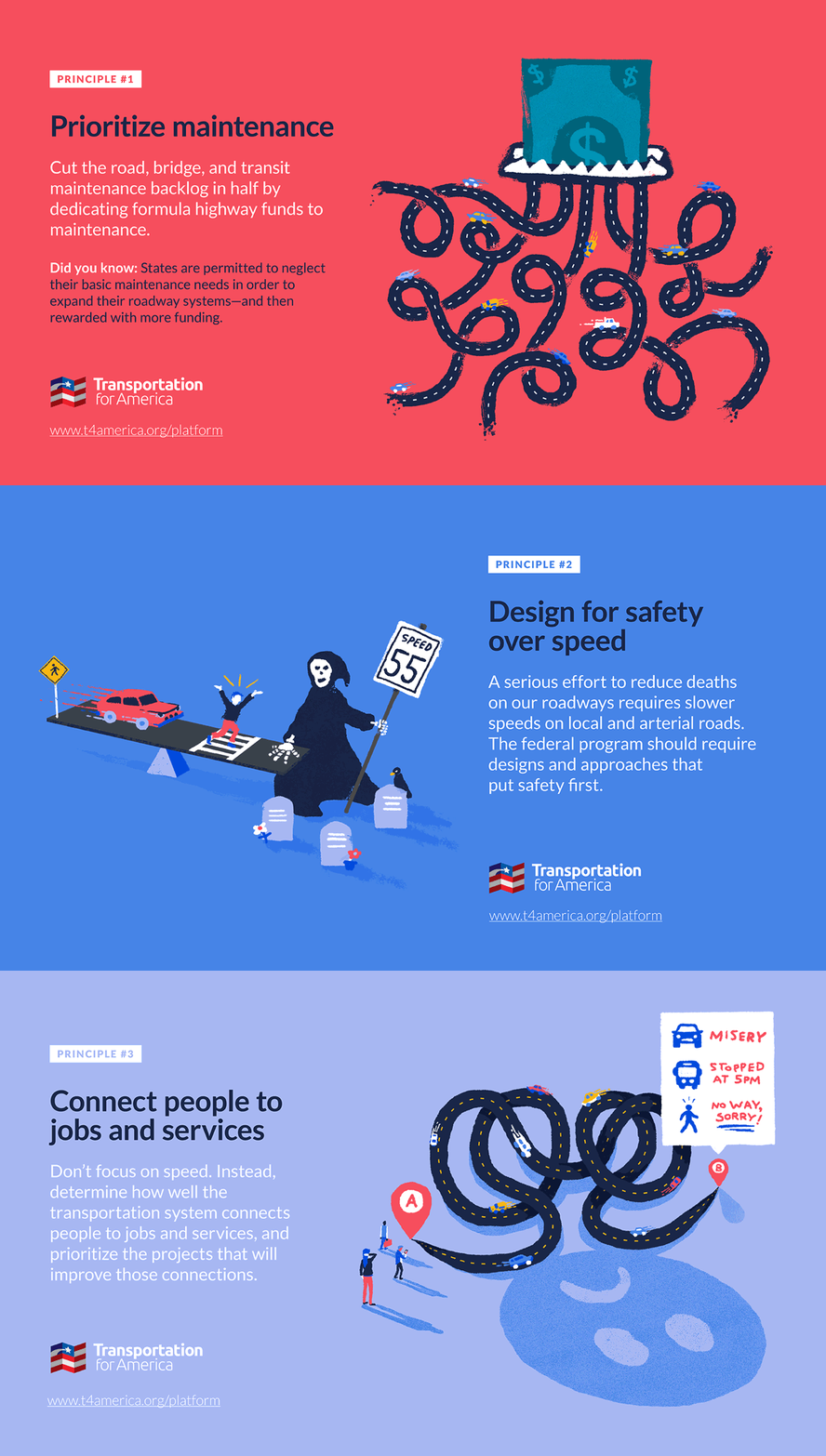
As we say in our platform for reauthorization, “this program doesn’t need a facelift; it needs to be blown up and replaced with something completely new.” It has completely failed to deliver on its promises, and it’s taken obscene amounts of money from all taxpayers above and beyond what vehicle owners pay at the pump to do it. 

Scaling the program down to the size of incoming gas tax revenues is probably the best first step toward transitioning to a radically different federal program oriented around setting priorities, picking projects that will deliver on those outcomes, and providing greater accountability for taxpayers. This is the only conversation about funding that T4America will be having: What are the best possible options for scaling down the federal transportation program and creating something new?

This program has been a bad deal for a long time, and it’s time we stop accepting it. It’s not time to rescue the trust fund, it’s time to write its eulogy.

Beyond the pump: Evaluating fresh approaches to transportation funding
An empty gas station with rows of abandoned power blue pumps glowing with neon lights in the middle of the night

Current state gasoline taxes aren’t enough to cover our transportation funding needs. Evaluating alternatives needs to involve taking five key principles into account. Read our policy evaluation framework, created by T4A Policy Associate Stephen Coleman Kenny with support from T4A Policy Director Benito Pérez, NRDC Senior Transportation Advocate Zak Accuardi, and T4A Policy Intern Julia Camacho.

An empty gas station with rows of abandoned power blue pumps glowing with neon lights in the middle of the night

Our transportation systems are largely funded by motor fuel taxes that finance the federal Highway Trust Fund. Since the 1980s, these funds have been allocated using a roughly 80/20 split between highway and transit spending under the assumption that drivers were paying a larger share and deserved to receive more investments in return. However, after a crisis in 2008 when the national fund ran out of money—requiring billions of dollars in bailouts ever since—this system has proven to be outdated and unstable.

Why the gas tax status quo needs to change

In 2008, the National Surface Transportation Infrastructure Financing Commission wrote that the United States has an “ever-expanding backlog of investment needs” that then-current transportation funding policies would only cover one third of. As of 2016, public transit systems have faced a backlog of over $105 billion for maintenance and replacement costs.

Today, this problem is only worsening. America’s reliance on gasoline taxes in order to fund roads and transit systems is proving to be unsustainable. As vehicles become increasingly efficient and electric vehicles (EVs) become more commonplace, overall levels of fuel consumption are decreasing—thus lowering gas tax revenues and further widening the infrastructure funding gap. Without a change in our revenue-raising systems, our roads and transit infrastructure will crumble. It’s critical we act now. 

As policymakers explore potential alternatives to the gas tax, a variety of options have emerged, including the following: 

  • Road pricing, or taxing by vehicle miles traveled (VMT)
  • Adding new tolls
  • Congestion pricing
  • Flat vehicle registration fees
  • Indexing the gas tax to inflation
  • Taxes on external costs of driving like emissions and accidents
  • General revenue subsidies
  • Duties on fuel sales

Many of these proposals are not new—for instance, T4A wrote about raising the gas tax or indexing it to construction fees back in 2014. But save for some VMT-based road pricing pilot programs in Oregon, Virginia, and most recently Utah, little progress has been made.

Choosing the right option

There are a variety of possibilities, but no one option fits every regional context. Rather, the process of evaluation has to be sensitive to the goals and priorities of state and federal transportation programs. With that in mind, there are five main needs that new proposals will need to address, which we compiled into a policy evaluation framework:

  • Outcomes: How the funding scheme changes road user behavior by incentivizing one of the following outcomes: electrification (EV adoption), mode shift away from personal vehicles, or maintaining the status quo.
  • Fairness: Ensuring that the funding scheme is fair to all users by having road users (including drivers of internal combustion engine (ICE) cars and EVs alike) pay user fees in accordance with the wear and tear they impose on the road system.
  • Stability: Estimating the revenue projections of the proposed system and whether or not it raises enough money to maintain the transportation system in both the short and long term.
  • Equity: Examining how the structure of the funding scheme impacts different socioeconomic groups, and how the benefits and burdens are distributed. 
  • Feasibility: Considering the administrative costs, jurisdictional issues, technology for implementation, political popularity, and public support for the proposal. 

There are tradeoffs between these goals, but looking at the possible alternatives to the gas tax through these five lenses provides a starting point for choosing a new policy. Find examples of our policy evaluation framework in action here.

Taking a closer look at a VMT tax and its implementation in Oregon

Among the options mentioned above, road pricing, or a tax on VMT, has emerged as a popular frontrunner among policymakers and thought leaders. A VMT tax would impact ICE cars and EVs equally, would include usage of all roads—not just interstates or toll roads—and would result in a precise user charge, especially if adjusted for vehicle weight, that drivers pay based on their wear and tear on the road system.  However, the shortcomings of a VMT tax lie in the other four aspects—equity, outcomes, feasibility, and revenue stability. 

A VMT tax would be regressive, penalizing people who need to drive the furthest—in other words, rural households and those who live farther from city centers—and already have to pay high transportation costs as a result. Additionally, a VMT tax only incentivizes mode shift for that same group of people, who are the most likely to not be able to shift away from driving due to a lack of transportation alternatives.

Furthermore, a simple VMT tax doesn’t incentivize EV adoption over ICE cars or even just more efficient vehicles over heavier ones that use more fuel, since all vehicles are treated the same. With regards to feasibility, VMT taxes have faced technology challenges, high administrative costs, and public opposition. And in terms of revenue stability, a VMT tax is sufficient only if we maintain high levels of driving in the long term.

Oregon, a state that has historically been especially reliant on the gas tax for transportation funding, has tested out a VMT tax. In 2001, Oregon created a Road User Fee Task Force (RUFTF) in order to evaluate possible alternatives as hybrid vehicles and EVs began to rise in popularity. RUFTF decided to try implementing a road usage charge and launched a VMT pilot program in 2012 that succeeded in four areas: policy and public acceptance, technology, operations, and cost. This led to the creation of the voluntary OReGO program in 2015 that now enables drivers of EVs and efficient vehicles to pay a per-mile charge in exchange for reduced vehicle registration fees or gas tax rebates.

It’s notable that one of the aspects that wasn’t considered was outcomes—how the funding scheme changes (or doesn’t change) the behavior of road users, incentivizing electrification or mode shift or neither. Oregon’s eventual vision is to have a dual tax system—VMT for EVs and efficient vehicles, and a gas tax for all other vehicles.

When asked whether a VMT tax for fuel-efficient vehicles punishes drivers trying to do the right thing environmentally, Jim Whitty, who led the implementation of these programs at Oregon’s DOT, said that “making the great choice to buy a less polluting vehicle doesn’t make it a great choice to let the road system crumble.” And when asked why people who will pay more under a VMT system would volunteer to participate in the program, Whitty didn’t have a clear answer.

Notably, as of 2020, only 701 drivers were actively participating—well under the 5,000 that the program had initially envisioned. Oregon is now considering making OReGO into a mandatory policy, but other states should still try out other options before rushing to commit to a VMT tax.

Reevaluating America’s transportation funding systems

It’s of course critical that we act now to resolve this growing funding gap in order to address pressing maintenance needs and invest in the future of America’s transportation systems. When choosing an alternative policy (or combination of policies) to replace the current gas tax, it will be important to consider these five aspects—outcomes, fairness, stability, equity, and feasibility.

However, federal and state leadership will be as critical as funding. Both levels of government have a crucial role in transportation funding. Much innovation is fostered in localities, but without an overarching vision and approach, this can result in a patchwork of approaches that can spur inequitable outcomes.

It’s also important that we consider the ultimate impacts of this transportation funding system: namely, how the money is actually used. In a foundational 2006 report on possible alternatives to the fuel tax, for example, the Transportation Research Board acknowledged that their analysis prioritized problems related to highway financing over public transit. 

We can’t afford to pour money into expanding highways and worsening America’s transportation woes. Even if we achieve an optimal policy that maximizes revenue raised for transportation funding, we need to ensure that the money raised by any of these proposals is actually used for projects that prioritize maintenance and repair and make advancements towards reliable, affordable, and frequent transit systems that connect people to the places they need to go.

Learn more about how to evaluate alternatives. Read our policy evaluation framework here.

There’s a reason why Missouri voters twice rejected gas tax increases
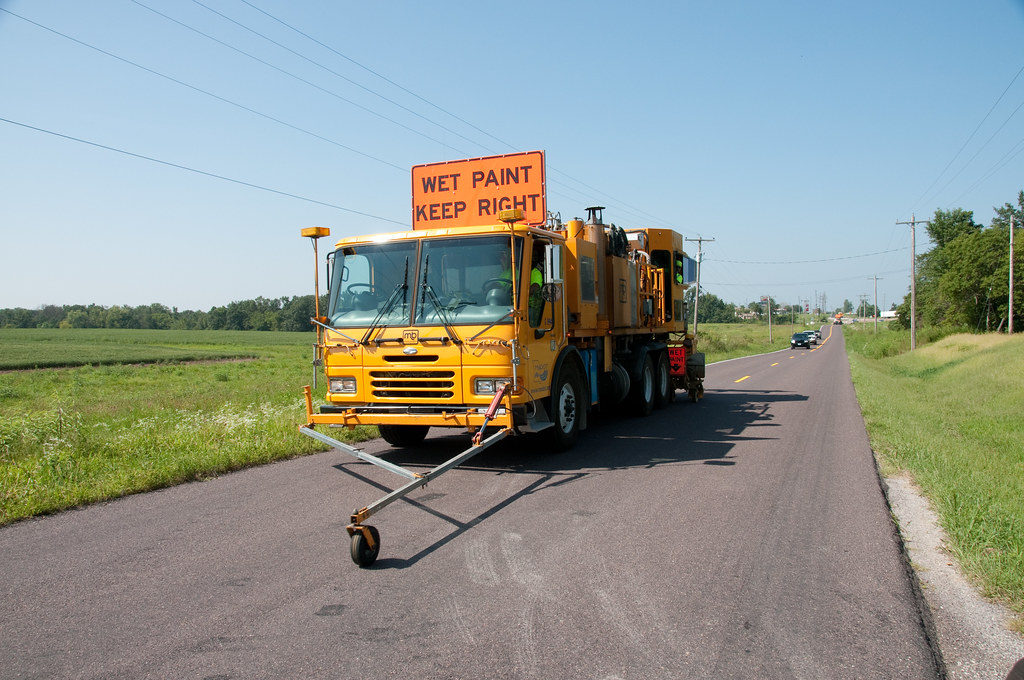
A truck painting lane markings on a two-lane road in Missouri.

Missouri spends more of its transportation budget on building new roads than maintaining its existing roads—23 percent of which are in poor condition. If it did a better job prioritizing maintenance, perhaps it wouldn’t need to ask taxpayers for a bailout. 

A truck painting lane markings on a two-lane road in Missouri.

A truck painting lane markings on a two-lane road in Missouri. Photo by MoDOT.

The state of Missouri gets over $1 billion a year from the federal government to support their highway needs. They match that with another $1.5 billion in state transportation funding for a total of $2.5 billion in spending a year. 

This large sum is what they have to cover the maintenance and upkeep of 77,000 miles of roadway. At ~$24,000 a mile per year to keep a new road in good condition, that means the state has somewhere in the neighborhood of $1.85 billion in baseline maintenance needs for its existing system each year. Of those miles of roadway, 23 percent are in poor condition. (Their repair costs could be much higher: to restore bad roads to good condition costs more than the $24k per lane-mile figure for keeping new roads in good repair.)

The bottom line is that Missouri has a lot of built-in, predictable costs that they need to cover and a pretty deep well of existing transportation funding. But Missouri, along with 20 other states across the country, is actually spending more money on building new roads than on maintaining the ones they already have. According to their own reporting, Missouri is spending 31 percent of their federal funding on new roads while spending only 20 percent on repair of existing roadways. (Note that Missouri’s largest metropolitan area, St. Louis, is heralded for having the least traffic congestion in the country, which makes you wonder why the state feels the need to widen roads.) 

After spending more money on expansion than repair, Missouri cries poverty and asks its taxpayers for more money. Perhaps it’s no surprise that voters have said no to them—twice. Should a bank loan you money to expand your deck while your roof is leaking?

Now the state is selling bonds to cover the cost of replacing rural bridges—an important investment. But one has to wonder, how many bridges and roads could they have already replaced with existing funds if those funds were prioritized to maintaining existing infrastructure before building the next shiny new highway or adding more lanes somewhere? At the very least, shouldn’t taxpayers expect as much money to go into highway maintenance as into expansion? 

Unfortunately, neglecting repair while spending more money on building new roads is perfectly legal and permissible under the federal transportation program. Congress is just fine with Missouri neglecting needed repairs and increasing their overall need by adding more lanes, and as a result, Missouri is not alone. 

This lack of accountability and clear priorities is why Missouri’s roads—and other roads, bridges, and transit systems in poor condition across the country—won’t be fixed by simply spending more money. In spite of unprecedented high levels of transportation funding, including from the Recovery Act, roadway conditions nationally have deteriorated over the last 10 years. Even if we double nationwide transportation spending, there is no guarantee that roads will improve in Missouri or elsewhere without a change to the underlying policies. This is why every conversation about transportation policy that begins and ends with money just isn’t good enough right now.

Missouri is fortunate to have powerful members of Congress that are uniquely positioned to change and improve policy. We can require states receiving federal money to maintain roads before building new ones. They could also require it of themselves.

Prioritizing repair is common sense. We cannot afford to waste any more time and money.  

Read more about Missouri and 20 other states making the same mistake in our report Repair Priorities

Stories You May Have Missed – Week of January 12th

As a valued member, Transportation for America is dedicated to providing you pertinent information. This includes news articles to inform your work. Check out a list of stories you may have missed last week.

  • The U.S. Chamber of Commerce is supporting a 25 cents increase in the gas tax to fund an infrastructure package. (Washington Post)
  • Congress must pass an extension of government appropriations this week or a government shutdown will happen. (Vox)
  • “GOP leaders face most difficult shutdown deadline yet.” (The Hill)
  • Cities and researchers are finding clever ways to get data that transportation network companies (TNC) like Uber and Lyft refuse to provide. (Citylab)
  • GM says they plan to have a car with no steering wheel Or pedals ready for streets In 2019. (NPR)
  • Minnesota Governor Mark Dayton has proposed a $1.5 bond for infrastructure projects that would fund a variety of types of infrastructure, including express bus service in Minneapolis. (Minnesota Star Tribune)
  • Louisiana Governor John Bel Edwards has proposed a $600 million highway improvement plan for the state. (The Advocate)

Stories You May Have Missed – Week of October 27th

Stories You May Have Missed

As a valued member, Transportation for America is dedicated to providing you pertinent information. This includes news articles to inform your work. Check out a list of stories you may have missed last week.

  • “White House eyes 7-cent gas tax hike for infrastructure plan.” (The Hill)
  • National Economic Council Director Gary Cohn discussed with the Bipartisan House Problem Solvers Caucus last week a potential timeline of an infrastructure package and the possibility of a gas tax raise. Mr. Cohn said that an infrastructure package could happen in the early part of 2018 and that a gas tax increase could be voted on as part of an infrastructure plan. (Politico Morning Transportation)
  • House Republicans are scheduled to release their tax reform plan on Wednesday. Details are scarce right now but many tax credits could be at risk including potentially the parking and transit benefit, to help pay for the expected reduction in corporate and individual tax rates. (CNN)
  • 16 State DOT’s gave back their biking and walking money from the Federal Highways Administration rather than investing in bike and pedestrian projects. (Safe Routes To School)
  • A new report from MIT looks at the potential future effect of Automated Vehicles on real estate and how communities will develop. (The Drive)
  • The Utah Legislature and Salt Lake City are currently examining and debating potential governance reforms to the Utah Transit Authority (UTA) structure. (Deseret News)
  • A new business group, the Washington Partnership is pushing to overcome political differences and get Virginia, D.C. and Maryland to agree on how to reform Metro. The Washington Partnership is concerned that the problems at Metro will harm the Washington D.C. metro economy. (Washington Post)

Stories You May Have Missed: June 19th – June 23rd

Stories You May Have Missed

As a valued member, Transportation for America is dedicated to providing you pertinent information. This includes news articles to inform your work. Check out a list of stories you may have missed last week.

  • U.S. Conference of Mayors attendees are “hungry for details about Trump’s infrastructure plan.” (Marketplace)
  • The Senate Commerce Committee has rejected the White House’s proposal to privatize the U.S. air-traffic control system. (The Hill)
  • Autonomous vehicle bills are on the horizon. (The Hill)
  • “States raising gas taxes to fund transportation improvements.” (Fox News)
  • Inside Uber CEO Travis Kalanick’s resignation. (NY Times)

South Carolina legislature overrides governor’s veto to increase state gas tax
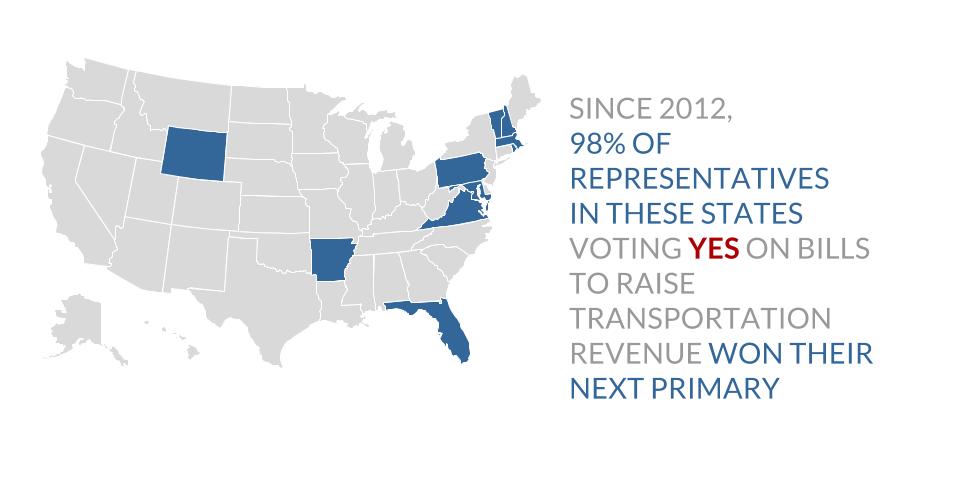
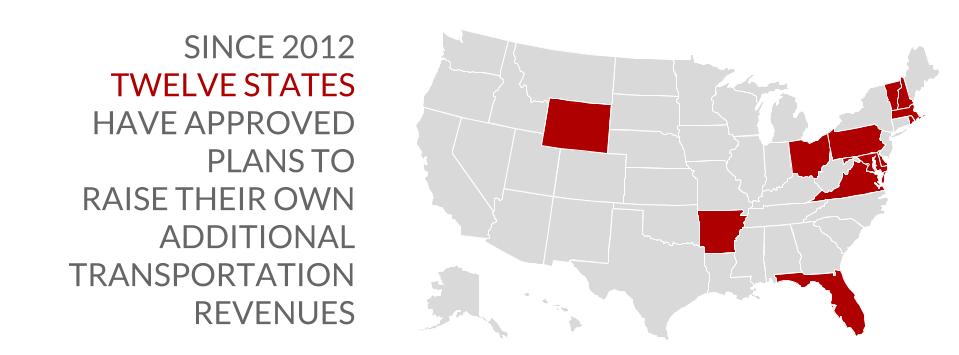
Last week the South Carolina legislature voted to override a veto from the governor to successfully raise the state’s gas tax and other fees to increase funding for state highway projects. South Carolina is the 29th state to raise new transportation revenues since 2012.

To view details on the all of the states that have new revenue since 2012, please see this page, along with the rest of our resources on state funding & policy.

South Carolina’s new law (H. 3516) will raise fuel tax rates by a total of 12 cents per gallon by increasing the rate by 2 cents each year until 2022. When fully implemented, the 12-cent tax increase will generate an estimated $486 million annually.

The funding bill adds a new five percent tax on vehicle sales, netting $73 million annually. It also increases registration fees by $16 (netting $26 million annually) and adds a new $120 biennial fee on electric vehicles and a $60 biennial fee on hybrid vehicles (for $1.5 million annually).

New funding will be directed to maintenance and new construction on the state’s transportation system and to the state infrastructure bank to finance new projects. The law does not make major changes to the state’s transportation priorities

To offset the impact of tax and fee increases, the law creates a refundable tax credit in the amount of either the increased fuel tax cost or the amount paid on vehicle maintenance (whichever is less). This credit expires in 2022.

The House voted 95-18 and the Senate voted 32-12 on May 10 to override the veto. The passage came after several years of debate over new road funding. The state chamber of commerce and local chambers from Charleston, Greenville, and Lexington counties campaigned for the tax hike, including by sending mailers urging constituents to call their legislators to show support for the funding bill.

South Carolina is the fifth state to take action to raise new revenues in 2017, joining California, Indiana, Tennessee and Montana.

The 1 thing you need to know about President Obama’s clean transportation plan

On February 4, the White House released President Obama’s 21st Century Clean Transportation System plan to be included in his FY2017 budget proposal expected out on February 9. The President asserts that his budget proposal will strengthen the nation’s transportation fund through one-time revenues from business tax reform and a $10 per barrel fee on oil, and make large investments in transit and improve funding for local and regional governments.

“This is a new vision. We’re realistic about near-term prospects in Congress, but we think this can change the debate,” one senior administration official said.

The announcement comes two months after the passage of the 5 year surface transportation bill known as the FAST Act. However, Congressional leaders have not expressed willingness to consider the proposal.

House Majority Whip Steve Scalise (R-LA) made this point clear. “President Obama’s proposed $10 per barrel tax on oil is dead on arrival in the House.”

What the plan proposes

The plan includes a wide range of innovative solutions. It would refocus federal investments to reduce congestion, reform the existing transportation formula programs, and invest in competitive programs, including the popular Transportation Investment Generating Economic Recovery (TIGER) program. It would also increase investments in mass transit funding by $20 billion annually, provide $2 billion for an autonomous and low-emission vehicle pilot, and add $10 billion per year to reform local and regional transportation programs. The latter would include new discretionary grant programs for regions that lower emissions and better link land use decisions with transportation investments.

To pay for these investments, revenues from a $10 per barrel fee paid by oil companies would be phased in over 5 years. During the development of the FAST Act, Congress was unwilling to even hold a floor vote on increasing transportation user-fees, which hasn’t been raised in over 23 years.

Day 1 Wrap Up: Congressional Conference Committee Action

This morning the conference committee for the surface transportation authorization bill met for the first time. The first order of business was appointing Representative Bill Shuster (R-PA) – chair of the House Transportation & Infrastructure Committee – as the conference chair and Senator Jim Inhofe (R-OK) – chair of the Senate Environment & Public Works Committee -as the vice-chair.

Possibly the most revealing item covered during this first official meeting was an early statement from Chairman Shuster (R-PA) that the conference plans to work diligently through the Thanksgiving recess that starts this Thursday, November 19th, to meet a self-imposed deadline of Monday, November 30. The proposed timeline will allow the House and Senate to vote on final passage for the conference agreement before MAP-21 expires on Friday, December 4th (MAP-21 expires this Friday, November 20th, but the House has already passed a bill to extend the authorization to December 4 and the Senate is expected to follow suit today or tomorrow).

There are still a few sticking points that need to be resolved and came up today during each conferee’s opportunity to speak today. Many hold differing positions on the low funding levels for this authorization as well as the non-transportation generated revenue used to pay for the bill. Those in the Northeast took issue with a House provision to remove transit funding dedicated to high-growth states in the northeast and place it in a national competitive bus and bus facilities program. And others, while not objecting to including passenger rail authorization in the surface authorization for the first time ever as expected by this bill, wanted to include greater reform at Amtrak.
We do not expect any further public meetings until the Members of Congress return on November 30, at which time the conference is expected to have finalized this bill. This means that much of the work on the conference report will happen out of view and behind closed doors. If interested, we advise that you contact your member over the Thanksgiving recess and visit them in person if you can about items of importance for you and your community.
Senate Conference Members
Environment & Public Works Committee
Republicans
Jim Inhofe (R-OK)
John Barrasso (R-WY)
Deb Fischer (R-NE) – also a Commerce Committee member
Democrats
Barbara Boxer (D-CA)
Commerce Committee
Republicans
John Thune (R-SD) – also a Finance Committee member
Democrats
Bill Nelson (D-FL) – also a Finance Committee member
Banking Committee
Democrats
Sherrod Brown (D-OH) – also a Finance Committee member
Finance Committee
Republicans
Orrin Hatch (R-UT)
John Cornyn (R-TX)
Democrats
Ron Wyden (D-OR)
Chuck Schumer (D-NY)
Other Conferees
Republicans
Sen. Lisa Murkowski (R-AK)
Democrats
Dick Durbin (D-IL) – Democratic Whip
House Conference Members 
Transportation & Infrastructure Committee
Republicans
Bill Shuster (R-PA)
Reps. John J. Duncan, Jr. (R-TN)
Sam Graves (R-MO)
Candice Miller (R-MI)
Rick Crawford (R-AR)
Lou Barletta (R-PA)
Blake Farenthold (R-TX)
Bob Gibbs (R-OH)
Jeff Denham (R-CA)
Reid Ribble (R-WI)
Scott Perry (R-PA)
Rob Woodall (R-GA)
John Katko (R-NY)
Brian Babin (R-TX)
Cresent Hardy (R-NV)
Garret Graves (R-LA)
John Mica (R-FL)
Barbara Comstock (R-VA)
 
Democrats 
Peter DeFazio (D-OR)
Eleanor Holmes Norton (D-DC)
Jerrold Nadler (D-NY)
Corrine Brown (D-FL)
Eddie Bernice Johnson (D-TX)
Elijah Cummings (D-MD)
Rick Larsen (D-WA)
Michael Capuano (D-MA)
Grace Napolitano (D-CA)
Daniel Lipinski (D-IL)
Steve Cohen (D-TN)
Albio Sires (D-NJ)
Donna Edwards (D-MD)
 
Ways & Means Committee
Republicans
Kevin Brady (R-TX)
Dave Reichert (R-WA)
Democrats
Sander Levin (D-MI)
Energy & Commerce Committee
Republicans
Fred Upton (R-MI)
Markwayne Mullin (R-OK)
Democrats
Frank Palone (D-NJ)
Financial Services Committee
Republicans
Jeb Hensarling (R-TX)
Randy Neugebauer (R-TX)
Democrats
Maxine Waters (D-CA)
Other Committees
Republicans
Mac Thornberry (R-TX)
Mike Rogers (R-AL)
Bob Goodlatte (R-VA)
Tom Marino (R-PA)
Darin LaHood (R-IL)
Glenn Thomson (R-PA)
Will Hurd (R-TX)
Lamar Smith (R-TX)
Democrats
Loretta Sanchez (D-CA)
Zoe Lofgren (D-CA)
Raúl Grijalva (D-AZ)
Gerry Connolly (D-VA)

Utah makes a bipartisan move to increase state and local transportation funding to help meet the demands of high population growth
Earlier this spring Utah became the third state in 2015 to pass a comprehensive transportation funding bill, raising the state’s gas tax and tying it to inflation. Unlike most other states acting this year, Utah raised revenues to invest in a variety of modes and also provided individual counties with the ability to go to the ballot to seek a voter-approved sales tax to fund additional local transportation priorities.

Fueled by the highest birthrate in the country, Utah’s population is expected to double by 2060. The state’s existing transportation funding sources — unchanged since 1997 and losing value against inflation — would not be sufficient to meet the demands posed by the rapidly growing population. Working proactively, the Utah Legislature and stakeholders worked together to raise new funding for transportation and ensure that the state stays ahead of the population boom.

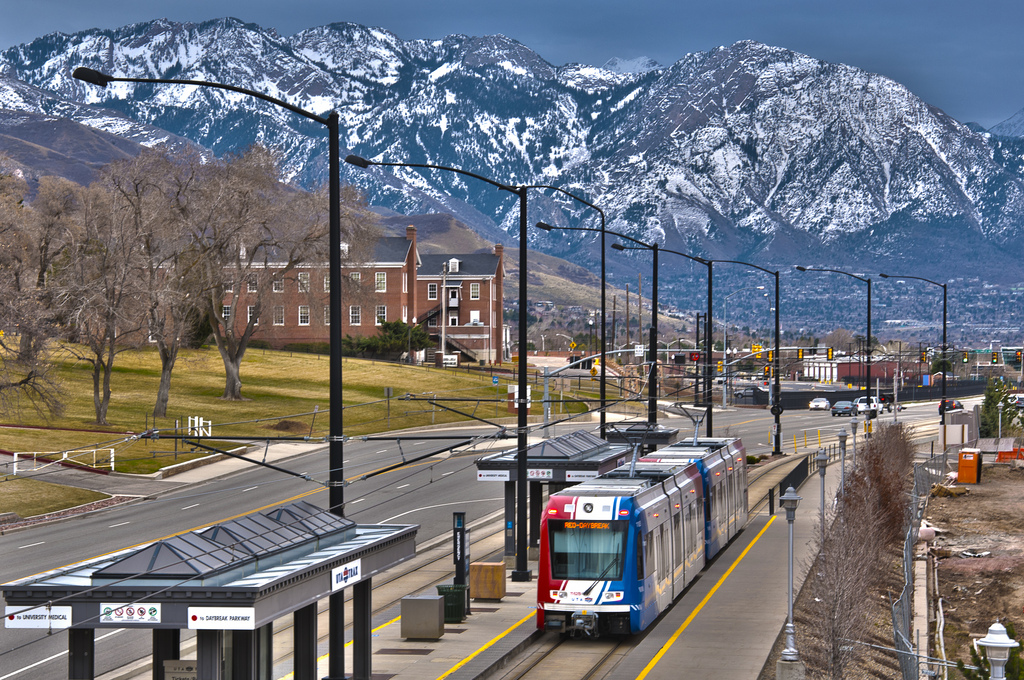
TRAX Red Line to Daybreak at Fort Douglas Station. Flick photo by vxla. https://www.flickr.com/photos/vxla/

TRAX Red Line to Daybreak at Fort Douglas Station. Flick photo by vxla. https://www.flickr.com/photos/vxla/

What does the new funding package do?

The new law, passed in March 2015, will generate approximately $74 million annually by replacing the cents-per-gallon gas tax with a new percentage tax indexed to future inflation. The bill also enables counties to raise local option sales taxes, which, if adopted by every county, would generate $124 million in new annual revenue specifically for local needs.

In specific terms, the bill replaces Utah’s current fixed 24.5 cents-per-gallon rate with a new rate of 12 percent of the statewide wholesale gasoline price, beginning January 1st, 2016, and indexes that rate to inflation. The bill also specifies that the tax can’t dip below the equivalent of 29.4 cents per gallon (i.e. a floor mechanism) or climb above 40 cents per gallon (i.e. a cap mechanism). Additionally, diesel, natural gas and hydrogen will see an incremental rise in their taxes until they reach 16.5 cents per gallon (an eight-cent increase for diesel and natural gas).

Importantly, the bill also enables all Utah counties to ask voters to approve a 0.25 percent local sales tax, the proceeds from which can be used to fund almost any locally-identified transportation need, whether roads, transit, bicycle and pedestrian infrastructure or other related projects. Revenues from these county sales taxes would be split between the county (20 percent), cities (40 percent), and a county’s transit agency (40 percent). If a transit service area doesn’t exist in the county, the money is split between the county (60 percent) and cities (40 percent).


Due to a constitutional restriction, all state gas tax revenue generated in Utah may only be used on roads, so this new optional sales tax gives counties and local governments a new mechanism to raise funds for their pressing needs, whatever they may be. While the state will see a much-needed revenue increase that can be invested in the state’s Unified Transportation Plan, the local option sales tax is a very important provision that could give localities of all sizes extremely flexible resources to meet their pressing local needs.

Lynn Pace,  Vice President of Utah League of Cities and Towns and City of Hollday council member

Lynn Pace, Vice President of Utah League of Cities and Towns

“There was a major push to say that we need a more multimodal transportation system,” said Lynn Pace, vice president of the Utah League of Cities and Towns. “We needed more flexibility, and that pushed people towards the [local option] sales tax because it was flexible, more flexible than the gas tax.”

Political compromises on the way to passage

At the end of 2014’s legislative session, a transportation bill that, much like this year’s bill, would have allowed counties to impose a voter-approved quarter-cent sales tax to fund transportation was defeated. There were other funding bills that died, including one that would have increased the gas tax by 7.5 cents per gallon and another that would have reduced the gas tax from 24.5 to 14 cents per gallon while adding a 3.69 percent fuel tax. In the end, there wasn’t adequate consensus between legislators to get a bill done in 2014.

This year was different, however.

The 2015 session started with an effort to raise or otherwise reform Utah’s gas tax. The Speaker of the House, Rep. Greg Hughes (R-Draper), wanted to drop the per-gallon flat tax and change it to a percentage tax so that the tax rose and fell with gas prices. Senate President Wayne Niederhauser (R-Sandy), however, felt that tying the gas tax to fluctuating gas prices was too risky. Prices could rise and fall dramatically, he said, subjecting Utah drivers to suddenly higher gas prices (or declining revenues coming to the state with low prices). To eliminate the uncertainty, Niederhauser wanted a straight increase in the gas tax.

Greg Hughes UTA Salt Lake mugshotHughes however, didn’t believe that representatives in the House would pass a tax increase, fearing political fallout. Pegging the tax rate to gas prices would allow the state to eventually see revenues increase as gas prices rise without the political risk of imposing taxes immediately. In the end, the bill indexes the gas tax rate to inflation, but with a floor and ceiling put in place to counter destabilizing fluctuations in the gas price.

The importance of including the local option sales tax

Legislators had a similar back-and-forth on the bill’s other major revenue-raising provision: the local option sales tax.

Rep. Johnny Anderson (R-Taylorsville), the sponsor of this provision, wanted to ensure that money from the sales tax went to transit before it went to roads. Rep. Jim Dunnigan (R-Taylorsville), however, wanted to put that decision in the hands of the voters and local elected officials.

As legislators moved towards the end of the session, the House and Senate passed different versions of the transportation bill. The Senate opposed allowing counties to impose a voter-approved sales tax, but the House insisted. Eventually, the chambers came to an agreement, provided that local option sales tax revenues could go to not just transit but all forms of transportation, from roads to transit, bike and pedestrian infrastructure.

Staying on message

The 2014 debate on transportation funding by Utah legislators laid some of the important groundwork for this year’s success. But this time, several ingredients (and some notable changes) came together this year to help convince formerly skeptical legislators to vote yes.

The bill’s supporters — which included the Wasatch Front Regional Council, the Utah League of Cities and Towns, and the Utah Transportation Coalition, among others — were able to present a compelling and winning message about why Utah needed to raise additional dollars to invest in the transportation system. They talked about the critical economic development connection, as well as accommodating and moving more people and goods within the booming state over the next 25 years. Supporters educated both the public and legislators about why Utah’s communities need to be able to raise funds for and invest in multimodal transportation projects.

In a conservative state like Utah, supporters found that economic arguments worked best for convincing legislators and the public that transportation is a worthwhile investment. Their argument was two-pronged: first, a state with a good transportation network can more easily attract businesses, which need solid transportation infrastructure to attract talent, get their employees to work, and ship their goods, and, second, that waiting to repair critical transportation infrastructure will make maintenance cost more in the long run.


Read T4America’s separate 2014 profile of Utah’s “Can-Do” transportation ambitions.

Utah Light Rail 1With stories of partisan gridlock making headlines every day, Utah stands out as a model of collaborative planning for a better future. State leaders and citizens have managed to stare down a recession while making transportation investments that accommodate projected population growth and bolster the economy and quality of life.

Click through to read the full story.


To make sure that the message really resonated, supporters made sure that they were all singing from the same sheet.

The Utah Transportation Coalition — a group that includes the Salt Lake Chamber of Commerce and the Utah League of Cities and Towns — conducted two years of studies to find the facts they needed for their education campaign.

“What we did differently this year versus last year — in years past — is that we worked together, we were all in lockstep together, we knew our message, stayed on message,” said Abby Albrecht, Director of the Utah Transportation Coalition. “We worked really hard to be the voice in the community and in the legislature about transportation, why it was so important for our economy, for our quality of life, to our healthcare.”

A clear, unified plan for future investment

That singular message is captured in Utah’s Unified Transportation Plan, a statewide transportation plan synthesized from several regional plans and plans from the state DOT and the Utah Transit Authority. The unified statewide plan prioritizes those needs and outlines the $11.3 billion most critical projects to fund.

Having a statewide plan in which everyone could see their needs reflected helped everyone feel that the entire state was working together to develop a holistic vision for the future instead of a bunch of regions competing against each other for the same funds. That unity of purpose across the state helped bring legislators on board.

“Every legislator has skin in the game at that point,” saidMichael (Merrill) Parker, Director of Public Policy at the Salt Lake Chamber of Commerce. “It’s not urban versus rural, or region versus region; every legislator is in the same camp trying to solve one problem, not their local district’s problem.”

With a clear vision in hand, supporters worked hard to spread that message.

“There was a [unified] plan in place, an agreed-upon plan in place, saying, ‘This is what needs to be done, we all agreed that this is the plan, and here are the gaps in funding,’” said Pace, from the Utah League of Cities and Towns. “So, it put us in the position to say, ‘We all agreed what needs to be done. Utah’s population is going to double in the next 30 years, we need funding to implement the plan, to help make it happen.’”

All of that education paid off.

The law passed the House on March 9th and in the Senate on March 12th. Governor Gary Herbert signed the law on March 27th. This provides counties the ability to place local sales tax referendums on the ballot as early as November 2015.

On to the ballot box

Supporters cheered the bill’s passage in March, but there are still important hurdles to clear to reach the bill’s full potential. The bill could raise an additional $124 million annually for transportation if adopted by all Utah counties. Groups like the Salt Lake Chamber and Utah Transportation Coalition are embarking on public education campaigns in the counties that are placing local sales tax questions on their November ballots.

110 of Utah’s 244 cities have passed resolutions urging their county governments to put the proposition on November ballots, and as of August 24th, 12 of Utah’s 29 counties have taken action to do exactly that. That list of 12 counties includes Salt Lake County, the state’s most populous county, and where, according to the Salt Lake Tribune, elected officials in all 16 cities supported the county’s action in August 2015 to place the initiative on this November’s ballot.

Salt Lake County mayor Ben McAdams

Salt Lake County Mayor Ben McAdams

The mayor of that county, Salt Lake County Mayor Ben McAdams, knows how important investing in Utah’s transportation is, especially since his region is the most populated in the state:

“We want to have a visionary approach to transport, where we look into the future and forecast what our region is going to look like. We know that a transit-oriented future will improve quality of life, save tax dollars, and really help us develop the kind of community we want to live in. That all takes forethought and planning.”

This year’s move by the legislature was a triumph of bipartisan cooperation and compromise, undergirded by the clear vision for investment that local leaders and civic groups have bought into. As a result of their successful work, the state will see an increase in transportation funding in 2015, but we’ll be watching especially closely this November as Utah counties join countless others in deciding measures at the ballot to also raise new local money for transportation.

Need a  quick summary of Utah’s transportation law? You can read it here.


Want more information on states moving to raise new transportation revenues at the state or local level? Don’t miss our page of resources chronicling the active and enacted plans since 2012.


US Senate Transportation Authorization – T4A Update

The US Senate continues to debate the federal surface transportation bill this week, with a series of votes taken last night by the full Senate. Individual senators filed over 200 amendments and T4America continues to track the latest developments on those amendments. We have compiled a brief update on where things stand and provide information on three amendments that we know would spur innovation, access and local control. 

**It is rumored that another manager’s amendment package will be offered in the near future. T4A will update this information as needed.

Transportation Funding Timeline Update: Transportation funding expires this Friday and the House announced this morning that they intend to pass a 3-month extension to match the Senate’s; setting up a new October 29 transportation funding deadline.

Last week, Majority Leader McConnell (R-KY) introduced what is expected to be the first of potentially two or more manager’s amendment packages. Manager’s packages serve as legislative vehicles to modify a piece of legislation in committee or on the floor, wholesale. This first manager’s package makes a number of changes, including maintaining the historic 80/20 highway and transit funding split; increases funding for the FTA High Intensity/Fixed Guideway State of Good Repair Formula program by $100 million (paid for by cutting TIFIA and the Assistance for Major Projects by $50 million each) and requires 50% of the off-system bridge set-aside funding in the STP program to be used on bridges that are not on the federal-aid highway system.

Last Sunday, the Senate dispatched a couple of non-germane amendments, but voted to allow Senators to vote on whether or not to tie the Ex-Im Bank authorization to the highway authorization. Late last night, the Senate voted and approved that plan (64-39).

Under this new modified manager’s package, T4A believes that it is unlikely that few if any of the 200+ plus amendments filed by Senators will be considered or voted on. However, we do anticipate the introduction of a third manager’s amendment which will reflect additional changes. T4A continues to work to increase local control, innovation and access to jobs and opportunity through three primary amendments. They include the following:

  1. Wicker-Booker STP local control amendment (corresponding fact sheet by USCM on changes to metro level funding)
  2. Murray TIGER authorization amendment
  3. Donnelly Job Access planning amendment (search for S. Amdt 2434, 2435 and 2436; this one is messy, our apologies)

Update: 5 Issues to Watch (for more information, please refer to T4A’s Member post on 7/23/15):

Pay-fors – Since the last post on 7/23/15, a number of items have shifted. A few provisions, considered poison pills, were removed, including the $2.3 billion that came from denying those with felony warrants social security benefits and $1.7 billion that came from rescinding unused funds for TARP’s Hardest Hit Fund. These rescissions leave the authorization with $43.7 billion, all of which are generated outside of the traditional transportation-user fee system. The measure would provide enough additional HTF revenues to provide the first three years of highway and transit investment, but Congress would be required to raise additional resources before October 2018 to be able to fund the final three years of the DRIVE Act’s authorized spending.

Transit funding – Changes in the manager’s package increased the levels of transit funding to be 24% of the authorized levels overall and 24% of any new funding generated annually.

Freight –The DRIVE Act creates a robust freight planning process that directs states to examine efficient goods movement and identify projects needed to improve multimodal freight movement. However, despite instituting a multi-modal freight planning process, the new National Highway Freight Program would require 90% of the funding go to highway-only projects rather than to multimodal projects using a performance-based system. What impact will this have?

Take, for example, the non-highway freight needs in the State of California. Ten percent of California’s funding would be only $9.3 million in 2016, growing to $23 million in 2021. Comparitively, one multimodal project at the Port of Long Beach in California to remove a railroad bottleneck and build more on-dock rail capacity cost the Port $84 million. T4A views this policy as a missed opportunity and not consistent with T4A’s freight policy.

Overall, due to removal of the TARP Hardest Hit Fund, the bill’s overall investment levels needed to be reduced. Under the first manager’s package, the freight program was set to receive $1.5 billion in FY2016 growing to $2 billion in FY2018. The program would now receive $991.5 million in FY2016 and increase to 1.9 billion in Fy2018.

Passenger Rail – No changes to note from the last update on 7/23/15.

Assistance for Major Projects (AMP) – Funding decreased by $50 million per year to increase funds for FTA’s High Intensity/Fixed Guideway State of Good Repair Formula program. AMP would now be authorized at $250 million in FY16 and rise to $400 million in FY2021.

*NEW* TIFIA – The initial manager’s package introduced early last week would cut TIFIA funding from $1 billion to $500 million per year. Removing the TARP Hardest Hit Fund and other payfors required additional cuts, which senate authorizers took out of the TIFIA program. Those cuts, plus the increase to the FTA’s High Intensity/Fixed Guideway State of Good Repair program, result in an overall authorized funding level for TIFIA at just $300 million per year over the life of the bill.

Senate Passes Cloture; 5 Things We’re Watching

***Please note, at 10:00am T4A received McConnell’s substitute amendment, which means that a number of these items may have changed. We’ll keep you updated as it proceeds.**

Last night, the US Senate passed a procedural vote called cloture. Like a starting pistol in a race, this means that they can now start debating, amending and eventually pass a federal surface transportation bill out of the Senate. While many things can, and will, happen over the next few days, there are a number of topics that Transportation for America is watching.

Want to know how your Senator voted on cloture? Click HERE.

1.Payfors – DC parlance for real and imaginary ways to pay for this bill.

At this time, there appears to be a wide-ranging list of payfors that run as small as $172 million up to $16 billion. Some of these include items like such as rescinding unused TARP funds or extending fees for TSA. There do not seem to be many that keep the traditional tie between users of the system and payments into the system.

The mass transit account appears to be running out of funding well before the highway trust fund. Initial T4A analysis seems to indicate that the legislation pulls in all 10 years of the proposed funding to pay for 3 years of the highway trust fund and 1.5 years of the mass transit account.

APTA transit run

APTA transit funding table in current Senate transportation legislation

The legislation also appears to sell 101 million barrels out of the 693.7 million barrels of the Strategic Petroleum Reserve (SPR) between 2018 and 2025 to bring in $9B over 10 years. Critics of this funding scheme assert that we are selling the oil when prices are at record lows, making it a foolish idea. Sen. Murkowski (R-AK) is reportedly one of those critics.

Originally, this legislation withheld Social Security payments from recipients that are subjects of a felony arrest warrant and for whom the state has given notice that they intend to pursue the warrant, raising $2.3 billion over 10 years. T4A has heard that Senate negotiators have removed this provision due to the advocacy of a number of social equity and civil rights groups.

2. Transit
T4A and the larger transportation community have several concerns about this title, the main ones are:

banking transit

US Banking Democrats chart on modal share under currently proposed Senate legislation

First, the DRIVE Act fails to provide public transportation with 20% of the new revenue dedicated to growth, which is a historical guarantee dating back to President Reagan’s agreement in 1982. Public transportation receives only 6% of the revenue derived from the future funding growth (see Senate Banking Democrats chart). U.S. DOT estimates that the Mass Transit Account ends the third year of the bill (FY 2018) with a negative balance of $180 million. Senator Boxer is reportedly negotiating a fix with Senate Republicans that will increase that percentage.

Second, projects with private funds get to “skip the line” for federal money, providing a major incentive for privatized service. The existence of a new expedited process could entice cities to pursue transit privatization on a large scale by using P3s to operate transit service. The labor community has expressed strong opposition and may oppose the entire bill if this provision isn’t removed.

Third, this legislation forces the Federal Transit Administration (FTA) to wait 6 months before increasing oversight of at-risk projects. Sec. 21015 requires the FTA to wait for a project to fail 2 consecutive quarterly reviews before providing more oversight to a project that is going over budget or falling behind schedule.

3. The Freight program

This legislation includes all modes of freight, including pipelines for the first time. It also requires the establishment of a new multi-modal freight network within 1 year of enactment, the establishment of which appears to be similar to the creation of the existing freight network (as well as a re designation of the existing highway freight network). It does, however, define economic competitiveness by the amount of traffic moved and not economic outcomes and will fund projects that reduce congestion, improve reliability, boost productivity, improve safety or state of good repair, use advanced technology or protect the environment on the national highway freight network.

You’ll recall that T4A sent out an action alert to keep the TIGER program multimodal and not let the US Senate Commerce Committee use it for freight-exclusive purposes. We’re happy to report that effort was successful, though the TIGER program is still not authorized or funded in the transportation bill.

4. Passenger Rail
This legislation authorizes passenger rail funding for the first time ever in a federal surface transportation reauthorization. The legislation calls for $1.44B in 2016 and growing to $1.9B in 2019. It maintains a national system and provides for clear cost accounting among the 4 business lines of Amtrak of the corridor, state-supported and long-distance trains. Provides for up to 6 new passenger rail routes on a competitive basis and for the first time makes operational costs eligible for grants.

5. AMP – Assistance for Major Projects
This is a new project for highway or transit projects that cost at least $350M or 25% percent of state highway apportionment (10% in a rural state). Applications should be reviewed based on consistency with federal goals, improvement to the performance of the system, is consistent with the statewide plan, can’t be completed without federal help and will achieve one or more of the following:

  • generate national economic benefits outweigh cost,
  • reduce congestion,
  • improve the reliability of movement of people and freight, or
  • improve safety

Grants under AMP must be at least $50M, with a rural guarantee of 20%. Eligible applicants for AMP include states, local governments (or group of locals), tribal governments, transit agencies, port authorities, public authorities with transportation function and federal land management agencies. It is not yet clear if this language is specific enough to include MPOs.

Amendments to be offered: T4A staff is monitoring a number of potential amendments. One of which (offered by Senators Wicker (R-MS) and Booker (D-NJ)) would increase the ability of communities to fund projects through the Surface Transportation Program. We strongly urge you to call your Senator and tell them to co-sponsor that amendment.

ICYMI: T4A and SGA Host Federal Policy Webinar; Materials Inside

Yesterday, Smart Growth America and Transportation for America hosted a webinar to review congressional action on the federal surface transportation authorization. If you were able to attend, you will recall that we mentioned how the US Senate is poised to consider the authorization before the full Senate next Tuesday. That continues to be the current timeframe for Senate consideration.

webinar image

Access the webinar powerpoint here.

As a T4A member, you can access the webinar anytime through this page.

Two action items stemming from that conversation include:

  • It is highly likely that T4A will be issuing a number of action alerts next week. While we don’t have legislative language on a number of potential amendments, we anticipate movement on issues of local control, freight, TAP, transit funding and TIGER. Member support would be greatly appreciated.
  • The National Complete Streets Coalition is requesting support to tell FHWA to make more inclusive streets that are designed to be more livable. You can register your comments here: bit.ly/NHSdesign (this weblink is case-sensitive).

Congress kicks into high gear on transportation — let’s summarize the action
During an extremely busy week in Congress in several key committees, a long-term transportation bill and a multi-year passenger rail authorization were introduced and passed committees, along with hearings on possible ways to keep our nation’s transportation fund afloat, rural transportation issues, rail safety, and autonomous vehicles.

For those of you who don’t regularly follow Congress, this is often how things go: nothing seems to happen for a long time, and then there’s an explosion of activity all at once. That’s certainly what took place this week in the Senate, with some important ramifications for the future of transportation funding and policy. We hope that Congress shows the same focus when they return from their weeklong July 4th recess.

Four of the five Senate committees with jurisdiction over either transportation policy or funding were active this week. Two notable transportation policy bills (and one yearly spending bill) were advanced out of committees this week, and the Senate made the first big move toward passing a long-term transportation reauthorization ahead of the July 31 expiration of MAP-21, the current law. So what happened, and what should we be expecting next?

Here’s our brief rundown of what you need to know.

First up, in news we haven’t covered here yet, the Senate Appropriations Committee this morning marked up and passed their version of the yearly transportation and housing spending bill that was passed out of the House several weeks ago — a bill that cut TIGER, passenger rail, and transit construction. Unfortunately, the news out of the Senate today was only marginally better. On the plus side, TIGER funding is maintained at this year’s level: $500 million again for competitive grants this upcoming year. But the Senate actually makes deeper cuts to New and Small Starts transit construction than the House did — $520 million in cuts over last year, and $320 million more than the House passed a few weeks ago. Passenger rail funding gets a marginal increase over last year’s level.

While we were hopeful that the Senate could possibly restore some of these cuts made by the House — as had happened in several years past — the consensus by House and Senate Republicans to stick to 2011 budget sequestration-level discretionary funding amounts for all of their FY2016 spending bills result in cuts across the board to discretionary programs like these. All Democrats on the Appropriations Committee opposed this bill.

Smart Growth America offered up this statement on the THUD bill today. T4America is a program of Smart Growth America.

The United States is in the middle of an affordable housing crisis. Rents are rising, the homeownership rate is declining, and federal housing programs are already failing to meet the need for affordable homes. Gutting the HOME program at a time like this is the wrong response. If Congress’s budget caps force this outcome, the budget caps need to be changed.

Logged-in T4America members can read our full THUD summary below:

[member_content]June 24, 2015 — The Senate Appropriations Subcommittee on Transportation, Housing and Urban Development, and Related Agencies (Transportation-HUD) marked up and reported its FY2016 appropriation bill to the full committee on June 23 without amendment. This is T4America’s short members-only summary of the THUD bill as reported to the full committee. Read the full memo.[/member_content]

Second up was the release and the subsequent committee markup of the Environment and Public Works (EPW) Committee’s six-year transportation bill known as the DRIVE Act. The EPW Committee is responsible for the largest portion of the full bill known as the “highway title” — more on the other portions below. In case you missed any of our posts about the EPW bill over the last few days, you can catch up with those below. Long story short? EPW released a bill with some modest improvements that represents a good starting point for debate, they approved it unanimously in committee while making a few small improvements, and important amendments that could ensure our investments best maintain and improve our transportation system are still outstanding and will hopefully be considered by the full Senate.

Statement on the release of the Senate’s long-term transportation reauthorization proposal

While this bill provides a positive starting point, there are other areas where Congress can and should do better.

Senate’s new transportation bill is a good start, but more should be done for local communities

The EPW committee marked up and approved this bill unanimously on June 24th without considering amendments (other than a package of amendments in a manager’s mark.) The amendments mentioned below were discussed or offered and withdrawn, and will hopefully be debated on the floor of the Senate. So keep any letters of support coming — this action is still ongoing!

Senate Committee rolls forward with speedy markup of six-year transportation bill

In a committee markup where the phrase “doing the Lord’s work” was invoked by numerous members on both sides of the aisle, the Senate Environment and Public Works Committee sped through a markup of their draft six-year transportation bill in less than an hour this morning, approving it by a unanimous vote with no amendments, save for a manager’s package of amendments agreed to in advance.

While the Senate Appropriations Committee marked up the transportation & housing spending bill this morning, the Senate Commerce Committee — the committee with jurisdiction over rail policy in the Senate — considered the Railroad Reform, Enhancement, and Efficiency Act — a bill to govern all passenger rail policy and authorize funding for the next several years. The RREEA bill is a good step forward, supported by T4America wholeheartedly:

Statement in response to introduction of the Railroad Reform, Enhancement and Efficiency Act

Senators Wicker and Booker are doing the nation a great service in crafting a bill that ensures Americans will see continued and improving passenger rail service in the years to come. Passenger rail service is vital and growing in popularity, and keeping the system working and safe requires investment. The Wicker-Booker bill embraces both those ideas. It authorizes necessary funding to start to return the system to a state of good repair and make targeted investments to improve service.

The committee markup of the bill known as RREEA was mostly uneventful, and it passed by a unanimous vote with mostly minor amendments and issues raised — some of which were safety-related and expected in the wake of the recent derailment in Philadelphia. The Commerce Committee is also responsible for freight and rail policy for the long-term bill, and we’ve heard that they could be releasing their draft long-term bill shortly after the July 4th recess.

Lastly, both House and Senate committees tasked with finding the funding to pay for the next long-term transportation bill (or finding the money to extend MAP-21 past July 31) held hearings this week to continue their work along those lines. In the case of the House, they were specifically discussing repatriation of corporate earnings as a possible revenue source.

Repatriation is the process by which companies can bring offshore earnings back to the U.S. at a reduced tax rate, and then all or a share of those tax revenues would be directed to the trust fund, providing revenues for a long-term transportation bill. It’s an idea that’s gotten some traction in the Senate — Senators Barbara Boxer and Rand Paul have introduced a proposal — but it’s still a one-time fix that’s still not a fee paid by the users of the transportation system.

A House Ways and Means subcommittee held a hearing today to discuss repatriation, and the overall takeaway from the hearing seemed to be that while repatriation may be the most feasible option after a gas tax increase was ruled out by Ways and Means Chairman Paul Ryan, there’s still little consensus in the House, and many representatives want to tie it to more thorny issues like corporate tax reform, reducing the chances that it could pass quickly or easily.

In the Senate, the Finance Committee held a hearing today as well to discuss the use of public-private partnerships — a growing trend in many states as they look to up-front cash from the private sector to help fund longer-term projects where the private party defers their payment or profits. Despite the way P3s, as they’re known, are frequently invoked as a possible funding solution, almost all the panelists today noted that although having a greater range of financing options will certainly be a boost to many states and cities, P3s won’t be sufficient without also increasing overall revenues. They’re not a panacea.

Which leads us right back to the elephant in the room: finding and agreeing upon a new, stable revenue source that can keep the nation’s transportation fund solvent for years to come. It was indeed a busy week, and we hope that Congress will keep up the momentum when they return from their weeklong July 4th recess.
Exclusive Member Summary – 6/18/15 Senate Finance Highway Funding Hearing

June 18, 2015 — US Senate Finance Committee — “Dead End, No Turn Around, Danger Ahead: Challenges to the Future of Highway Funding”

Witnesses

Dr. Joseph Kile – Assisant Director for Microeconomic Studies Division, Congressional Budget Office

The Honorable Ray LaHood – Senior Policy Advisor, DLA Piper

Mr. Stephen Moore – Distinguished Visiting Fellow, The Heritage Foundation

At this hearing, Chairman Hatch (R-UT) looked to explore every possible option to address the long-term fiscal challenges of the Highway Trust Fund. However, at the hearing he mentioned that he does not see any large-scale gas tax increase as politically possible. That said, Hatch pressed the need remove the “highway cliff” by finding funding to do a multi-year authorization.

Senator Carper (D-DE) called upon Senator Hatch to ensure no options like the gas tax are taken off the table, and referred to T4A analysis that showed state legislators who vote for a gas tax increase were not punished. Carper mentioned that at a minimum we should be able to index the gasoline and diesel tax and then come up with other creative sources to fund infrastructure.

Witness Stephen Moore with Heritage Foundation floated the idea of devolution, but the proposal was very unpopular for a majority of committee members and was shot down by former Secretary Ray LaHood as an irresponsible notion. Senators Thune (R-SD), Heller (R-NV) and Menendez (D-NJ) all voiced devolving the program. Transit came under attack for receiving gas tax dollars, but Senator Thune mentioned kicking transit out of the program is a political non-starter after it failed in the House during debate for MAP-21, and Senator Menendez and former Secretary Ray LaHood both stood up strongly for the need for more robust transit investment, not less.

Senator Thune (R-SD) mentioned that we should be treating general fund transfers as adding debt to an already debt-burdened country, since those funds ultimately do account for part of the deficit. He said it is time we stop the easy solution of general fund transfers and find a way pay for it. Senator Hatch agreed that long-term action is absolutely needed, and mentioned it will be difficult, but that the Committee will be working to look at all the different options to come up with a solution that stops the country from kicking the can down the road.

House takes first step in process to keep the nation’s transportation fund solvent

For the first time since 2012, the House of Representatives held a hearing focused on funding the nation’s transportation system. Today’s hearing focused on the elephant in the room: how to adequately fund a transportation bill that’s longer than just a few months. While it’s a relief to see the funding issue finally getting airtime in the House, keeping the nation’s transportation fund solvent is only half of the problem — we also need to update the broken federal program that isn’t meeting our country’s needs.

Rep. Paul Ryan (R-WI), chairman of the House Ways and Means Committee tasked with finding the money to pay for a transportation bill, took the most obvious funding solution off the table — raising the federal gasoline excise tax — right at the start of the hearing as the gallery was still getting comfortable in their seats, deflating some members of the committee who were eager to at least discuss this option.

“We are not raising gas taxes‚ plain and simple,” he said, while adding later that the House “does need to find a real solution, a permanent solution. We are all ears.” Chairman Ryan suggested that repatriation of overseas profits (a one-time, non-transportation user fee fix) or giving states more authority could be possible solutions, but a gas tax increase is off the table.

Before the hearing, Rep. Earl Blumenauer (D-OR) held a press conference featuring a coalition of groups who support his bill to raise new revenue in the House by phasing in a 15-cent increase in the gas tax. Civil engineers, general contractors, roadbuilders, public transportation operators and T4America director James Corless spoke at the press conference to support Rep. Blumenauer’s case that Congress’ inaction is negatively impacting our nation’s economy and action is long overdue.

James corless blumenauer
T4America director James Corless speaking at this morning’s press conference

Rep. Blumenauer carried his momentum from the morning press conference into the hearing an hour later.

“We’re not keeping up our end of the bargain for the 50 percent of capital spending on big projects that comes from the federal government. We haven’t made any meaningful adjustment since 1993 to the gas tax, relying on short-term fixes, gimmicks – and no matter how you slice it, adding to the deficit,” Rep. Blumenauer said in his prepared remarks.

Rep. Lloyd Doggett (R-TX) concurred. “What is missing from our transportation policy is money – revenue. We cannot build these highways with fairy dust,” Rep. Doggett (R-TX) said.

Rep. Renacci (R-OH), who has put forward a separate plan to index the gas tax to inflation and set up a mechanism to provide long-term transportation funding, noted that “short-term fixes cost money in delay and uncertainty.” He shared a story about meeting with constituents, including some tea party members, on transportation issues. He said that they told him, “‘Quit going to the general fund and taking dollars…what you’re doing is passing it onto our children and grandchildren. What I’d be willing to do is pay a user fee as long as I get my roads and bridges fixed.’ We have to come up with a long-term solution, we can’t continue to go down this path,” he said.

As Rep. Bob Dold (R-IL) from the Chicago area noted on the topic of buying new railcars for the CTA and Metra, “Do we buy them one at a time or ten at a time? I can get a far better deal if I buy them ten at a time,” he said. When agencies can’t reliably put together a multi-year budget because they have no idea what to expect from the federal government, projects can begin to cost more than they should.

Following on the heels of today’s Ways & Means hearing, the Senate Finance Committee is holding a hearing of its own tomorrow on transportation funding.

We can hope that the newfound willingness to discuss the challenging revenue question will lead members of Congress to build consensus around a funding proposal suitable for the nation’s need. However, simply raising new funding to pour into a broken system isn’t going to get us where we need to go either — we need to fix the broken system and update it with the kinds of policies that ensure every dollar invested by taxpayers provides the greatest benefits for the economy and our communities. It’s not enough to simply raise money and spend it on the same processes that created the crisis we find ourselves in today. America can do better, and it’s important that the decisionmakers understand this fact.

On that policy question, eyes are quickly turning to the Senate Environment and Public Works (EPW) Committee, which is responsible for the highway title — the largest portion of the bill. They are planning to release and mark up their successor to MAP-21, a six-year bill, next Wednesday, June 24th.

We are counting on the Senate EPW Committee to release a bill that can maintain our current system, complete the transportation network, incentivize the strategic investments that can provide access to opportunity for all Americans and best improve connections within the cities and towns that drive our economy.

Continuing and improving a nascent process to measure the performance of our transportation investments would allow us to better ensure that our limited resources bring the best return. And a forward-looking plan to direct more of that money down to where it’s needed most would be a great companion to any plan to shore up the nation’s transportation funding.

We’re now looking to the Senate to make progress on finding a long-term funding solution, but also to make the policy changes we so urgently need to ensure those dollars are well spent.


Michigan ballot measure to raise transportation & education funds goes down by a large margin
A Michigan bill that would have raised new money and overhauled how the state pays for transportation was defeated by huge margin Tuesday with 80 percent of voters rejecting the complicated proposal.

The bill would have eliminated the state’s fuel sales tax and raised the tax on wholesale gasoline sales to 41.7 cents per gallon (or 14.9 percent of a gallon of fuel’s base value, whichever is higher). This maneuver would have ensured that the entirety of the wholesale gas tax would have gone to transportation, compared to the current gas sales which does not.

To compensate for the loss of gasoline sales tax revenues currently going to municipalities and schools, the bill increased the sales tax on everything else statewide from six to seven percent and allocated the additional revenues to schools, local municipalities, and a tax break for low-income families.

The proposal would have also increased vehicle registration fees, commercial truck registration fees and would have instated a fee on electric vehicles.

While certainly disappointing to the supporters in Michigan, it reinforces the same lesson we’ve shared here regularly: transportation-related ballot measures have the best chance of passage when they are simple, specific and transparent about the money that will be raised and exactly where and how it will be spent. Voters have proven over and over again that they’ll support transportation ballot measures — if they meet some of those basic qualifications. Michigan’s measure surely suffered from the complexity and from the combination of education and transportation funding together into one proposal.

Some of the states still in play in 2015

Though there have been no new statewide funding packages passed since our last update here, other states are trying to bring transparency to the process of selecting transportation projects. Texas’s HB 20 tasks the TxDOT with creating “a performance-based planning and programming process” that would evaluate which transportation projects receive state money. Similarly, Louisiana’s HB 742 would require the Louisiana Department of Transportation and Development to rank projects according to a series of measures that highlight which projects are most vital to the state.

Also in Louisiana, the House’s tax committee approved two funding bills. The first would raise the state’s sales tax by one cent, with the proceeds going towards 16 designated transportation projects. The second bill would increase the gas tax ten cents, from 20 cents per gallon to 30.

The Missouri Senate gave initial approval to a 1.5-cents-per-gallon gas tax increase (3.5 cents per gallon for diesel). The state’s gas tax has been 17.3 cents per gallon since 1992. The bill stills needs one more vote in the Senate before going to the House. There are only two weeks left in the state’s legislative session and it is unclear whether they will vote on the bill before then.

In Minnesota, where we recently documented the state’s prevalence of structurally deficient bridges, both the House and the Senate have passed transportation-funding bills, but the two differ greatly. The Senate proposal raises new funds via a gas tax increase and a Twin Cities regional sales tax increase. The House’s version mostly shifts dollars around or borrows funds for transportation. The issue has been pushed aside as legislators must also hash out a state budget before the May 18th deadline.