Raquel Nelson: Homicide charge dropped, but the real crime persists
June 13, 2013By David Goldberg
Three years after being convicted of vehicular homicide for crossing the street with her young son, Raquel Nelson today finally was freed of the looming threat of three years in jail.
The metro Atlanta mom made national headlines in 2011 when a Cobb County jury found her guilty of killing her four-year-old because she chose to cross a five-lane road from a bus stop to her apartment, rather than walk an additional two-thirds of a mile to cross at the nearest signal. The judge at the time offered her an option for a new trial, which she took, along with a pro bono offer from more experienced counsel.

Atlanta Mom Raquel Nelson and her deceased son, A.J.
After prosecuting Nelson with multiple, more serious charges, and saddling taxpayers with lawyer’s fees from multiple appeals, the Cobb County solicitor ultimately accepted a plea to jaywalking and imposed a $200 fine.
That particular ordeal is over for Raquel Nelson.
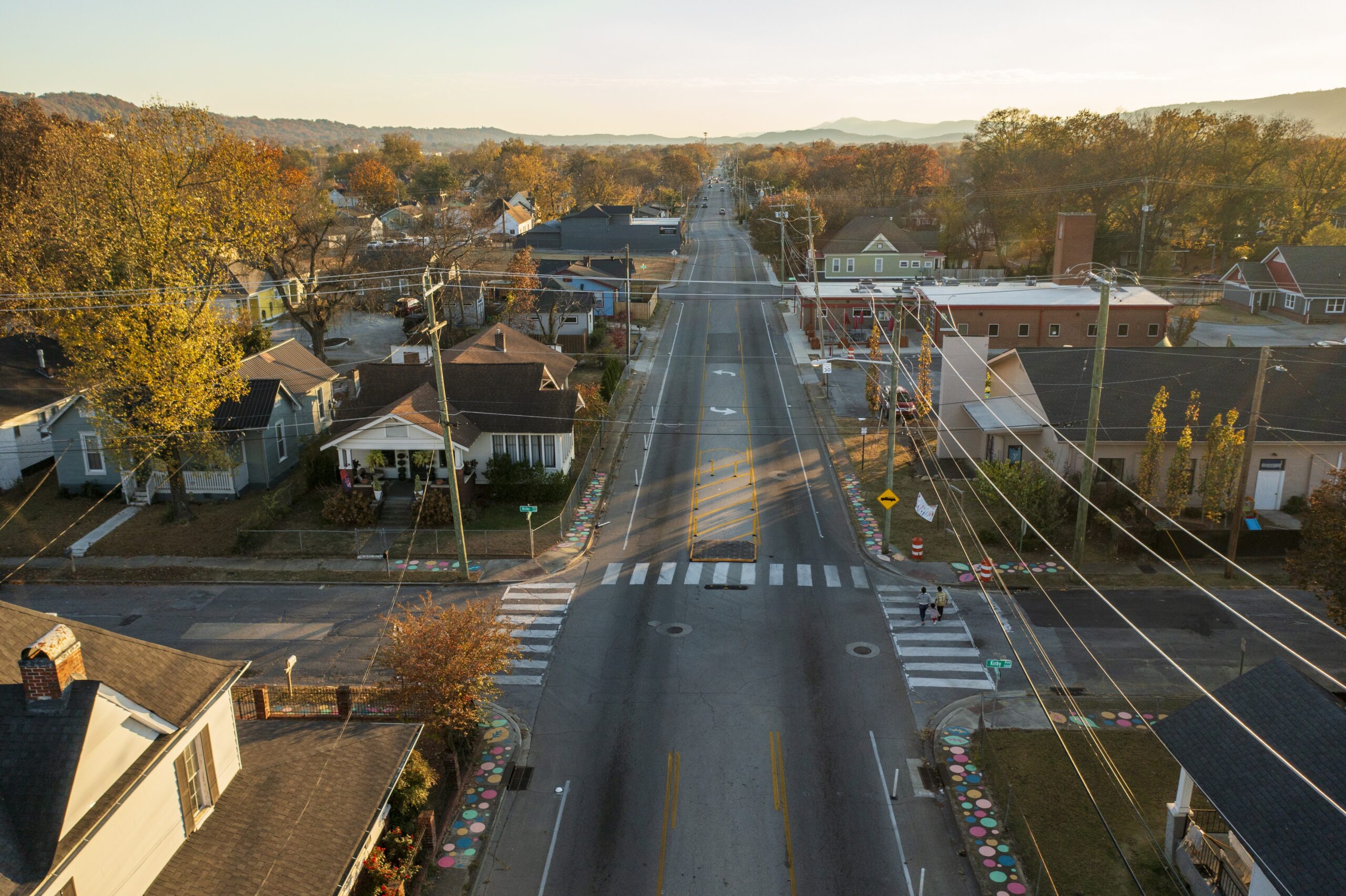
But the underlying crime persists – not just in Cobb County, GA, but also in cities and inner-ring suburbs all over the country. Areas built since the 1950s to be automobile dependent now are home to many lower-income families who don’t have access to cars. Nevertheless, the busy roads around them typically have not been retrofitted with safety measures for people on foot, bicycle or getting to and from the bus. The situation is getting exponentially worse as low-wage workers and recent immigrants move to these areas for their more affordable housing.
As we noted in a 2011 Washington Post op-ed:
Nelson was found guilty of killing her son by crossing the road in the “wrong” place. But what about the highway designers, traffic engineers, transit planners and land-use regulators who placed a bus stop across from apartments but made no provision whatsoever for a safe crossing? Those who ignored the fact that pedestrians always take the shortest possible route but somehow expected them to walk six-tenths of a mile out of their way to cross the street? Those who designed this road — which they allowed to be flanked by apartments and houses — for speeds of 50 mph and more? And those who designed the entire landscape to be hostile to people trying to get to work or carrying groceries despite having no access to a car? Are they not culpable?
The good news from Georgia is that this case — and similar tragedies, as the pedestrian fatality rate rises in metro Atlanta — have led the Georgia Department of Transportation to take a serious look at these issues, according to Sally Flocks, the executive director of Atlanta’s PEDS.
“I’ve been really impressed by the extent to which the Georgia DOT now sees the need for safe crossings on busy roads, and mid-block crossings at transit stops,” Flocks said. PEDS is working with GDOT to help identify solutions and ways to evaluate the places to fix. The department now is changing policy to use federal safety money in proportion with the fatality rates, Flocks said.
Now we have to hope that the dozens of other states that still pay scant attention to these issues will take notice of this cautionary tale from Georgia. Still, they will only be able to get so far as long as Congress continues to short-change the long-deferred projects to make the dangerous roads built with federal aid safer for everyone who uses them.
See the Atlanta Journal-Constitution story on the plea deal here.
Recognizing the Life and Service of Senator and Transportation Advocate Frank Lautenberg
June 3, 2013By Transportation for America
On the news of Senator Frank Lautenberg’s (D-NJ) passing this morning, Transportation for America director James Corless released the following statement.
Our condolences go out to the family, friends and colleagues of Senator Frank Lautenberg as they mourn the loss of a man who had served his country in almost every way possible, from humble beginnings in Paterson, New Jersey, to brave service in World War II, to decades as a businessman, and to almost 30 years of service in the United States Senate.
From his tireless advocacy for our nation’s passenger rail system, to safety and comfort for travelers on planes, trains and automobiles, and his recent work as a champion for a more performance-based multimodal transportation system, Senator Lautenberg’s impact on transportation policy is hard to overstate.
In the last transportation reauthorization discussions, he was the strongest voice for creating a holistic national freight policy to ensure that ports and freight systems can make multimodal investments to move goods more efficiently. And before the last transportation law ever expired, he began promoting performance measures and stronger accountability in the new law as a way to ensure that billions of transportation dollars would be well spent and result in a system that’s safer, cleaner, and more efficient. Portions of his freight policies were incorporated into MAP-21 last summer, a bill that also began the transition toward a performance-based 21st century transportation system.
Whether riding an Amtrak train or enjoying a smoke-free trip on an airplane, just to name a few, millions of Americans enjoy the fruit of his service. He will be missed, but his legacy as an advocate for a multimodal transportation system that works to better move goods and people is secure.
About those 66,000+ deficient bridges: What did last summer’s transportation law change?
May 30, 2013By Stephen Lee Davis
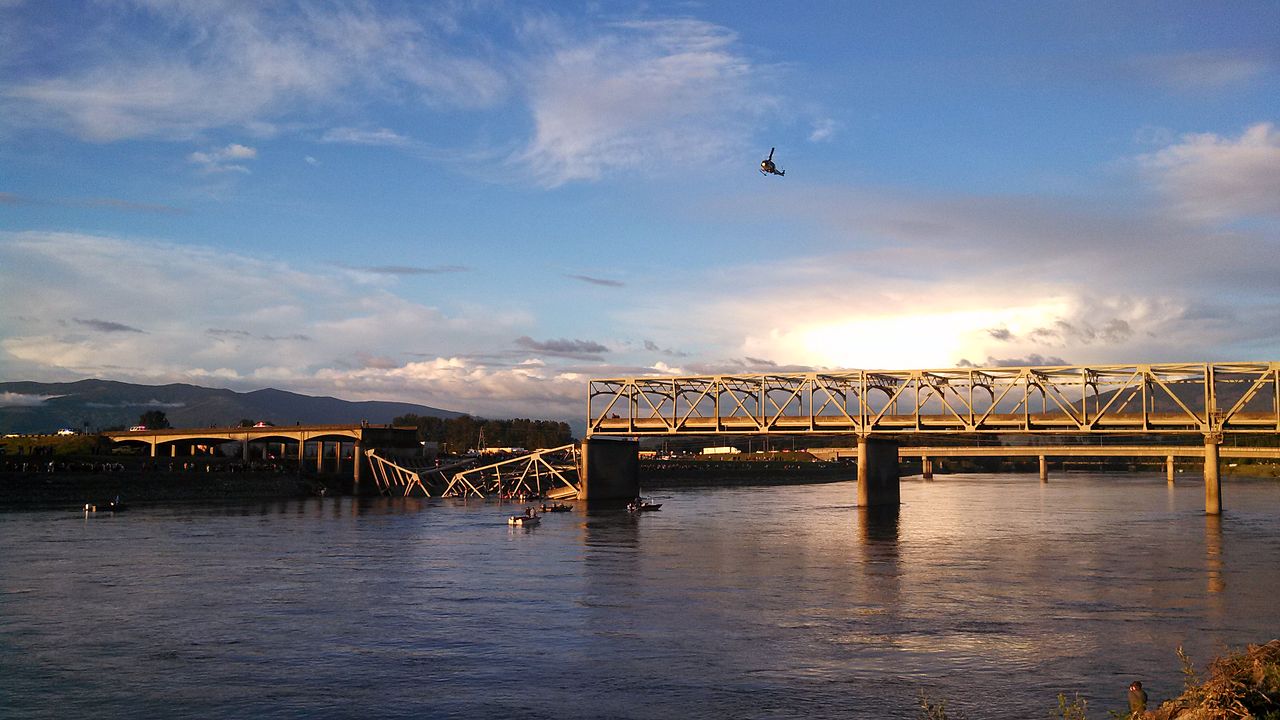
With the second collapse of an Interstate bridge in six years, Americans might expect Congress to leap into action to ensure adequate funding for bridge rehab and replacement. But as we have reminded numerous reporters since an I-5 bridge dropped into Washington’s Skagit River, federal lawmakers took a gamble and eliminated the nation’s dedicated bridge fund last summer.

I-5 photo by the Washington DOT on Flickr.
The bridge fund came into being in 1991, and especially in the first decade afterward, the country made enormous progress repairing deficient bridges. But that progress had slowed to a trickle when Congress took up the transportation funding bill, MAP-21, last summer.
With the I-35W collapse fresh in our minds and progress on repairing deficient bridges slowing, many assumed Congress would think about ways to make bridge repair more of a priority.
Not quite.
Instead, they took a gamble, eliminating the dedicated repair fund so that states could “set their own priorities,” as long as they promised to set targets for the repair of bridges on the National Highway System. That sounds great in principle, until you remember that competition for funds is growing rapidly, with no corresponding drop in the political pressure to build pet projects.
Though they won’t say it out loud, many DOT chiefs like a dedicated maintenance fund because it allows them to say “no” to projects they can’t afford, while helping to ensure existing facilities stay safe and functional. The changes in MAP-21 also don’t give similar attention to bridges not on the National Highway System – 90 percent of all bridges in need of repair – more on this below.
T4America has been a strong advocate of measuring performance against clear targets and goals. But for something as critical as bridge maintenance, there needed to be a well-considered transition period to understand how the new performance management system works, and establish clear targets and guaranteed enforcement mechanisms.
Instead, Congress scrapped the existing bridge repair program and directed USDOT to work with states to cooperate on setting measurable targets for things like bridge condition — but without significant penalties for failure. And considering that MAP-21 is only a two-year bill, states won’t be reporting on these measures until after this bill has already expired.
The second big change made last summer will force state and local communities into painful choices about priorities.
Before MAP-21, all 600,000+ highway bridges were eligible to receive funding for repair under that dedicated bridge repair program.
From the biggest interstate bridge down to that crucial bridge that connects your town across the river to another nearby town, all 66,500-plus deficient bridges could get the dollars dedicated for bridge repair.
Under MAP-21, Congress decided to focus the former bridge repair dollars almost exclusively on a narrow set of roadways known as the National Highway System (NHS). Think of the NHS as the interstates, state highways and most major four-lane and larger highways. The bridges on these roads are our most heavily traveled, no doubt, but they represent only about 10 percent of all structurally deficient bridges.
The other 90 percent will now have to compete with all of the other transportation needs in your community for the flexible funding that can be used on almost anything. And all of those needs will compete for less funding too, reduced from about 60 percent of all funding to 40 percent.
Bridge repair is added into the mix of choices along with regional transit investments, safe streets for all users, congestion relief, other transportation options, and other road repair — leaving communities with tough choices to make.

—-
All this comes as our transportation network begins to show its age. At an average age of 43 years, the typical bridge is nearing the end of its 50-year design life, and many thousands are far older than that. Structurally deficient bridges are more than 20 years older on average.
The federal government should be all about making sure that bridges are being systematically upgraded, repaired or replaced. And in the wake of a calamity like the closure of a key commercial corridor, we Americans ought to be all about letting Congress know we’re willing to pay for a safe and secure transportation network, and making lawmakers pay at the ballot box if they won’t deliver it.
Bridge collapse in Washington captures national attention
May 29, 2013By Stephen Lee Davis
Unsurprisingly, the sudden collapse of the 58-year-old Interstate 5 bridge over the Skagit River in Washington state last Thursday night captured the attention of the country and virtually all major national news outlets. Just like in the days after the Minnesapolis I-35W bridge collapse — though mercifully no one died in this incident — reporters scrambled to understand the issue of bridge condition and asked the same question: “how could this happen, and could it happen again somewhere else tomorrow?”
T4 communications director David Goldberg was on site in Washington and did several interviews on television from the bank of the Skagit River to talk about America’s aging bridges and the 66,000-plus that are structurally deficient across the country.
CNN’s Jake Tapper took up the issue head-on with a live interview on The Lead Friday evening (ignore the Arrested Development video thumbnail…):
TAPPER: The American Society of Civil Engineers gave a C-plus to the 600,000 bridges in the U.S.; 11 percent of them are considered structurally deficient. How worried should Americans be when they drive across bridges?
GOLDBERG: Well, the worry is not so much that they will collapse like this with a lot of frequency, but the problem is that the system is aging and it’s aging pretty rapidly. The typical bridge out there was designed to last 50 years and the average age is 44.
And if you look at the bridges that are structurally deficient, the one in 10 bridges that are rated as structurally deficient, something like the typical age of those is 65 years. And that’s going to be — we’re going to have 65-year-old bridges coming every year from now — now on, because we have been building them like mad since the 1950s. And we frankly haven’t been keeping up with them like we should.
TAPPER: And, David, what should the government be doing that in your view they are not doing enough?
GOLDBERG: Well, there’s a couple things that have happened in recent years that Congress in particular needs to pay attention to, because it’s federal money that pays for the big bridges like this across the country.
And they are the ones that stand to hurt us the most if they fall or if we have to close them. And one thing is that we have to recognize the gas tax receipts are going down. We’re getting more fuel- efficient cars and people are driving less, so we have to figure out a way to replace a lot of that money.
And the other thing that has happened in the last year or so is that Congress actually eliminated the fund that was dedicated to bridge repair and sort of said to states, well, you know, you just decide whether they should be fixed or not. But the problem is we have got political pressure to build a lot of the new projects, which competes with that repair money.
So you get situations like this where bridges should have been replaced. They’re not going to be unless we have a dedicated fund.
TAPPER: So, it sounds like you’re saying that the people who make these decisions need to be a little bit more focused on rebuilding and restrengthening things that already exist, as opposed to pursuing new projects?
GOLDBERG: Well, we certainly need to fix things before we build the new stuff that we can’t afford to maintain. So, we have got to get the money together to fix the things and we have got to make it a priority to fix them, because this can’t happen in America.
And NBC Nightly News also led off their Friday evening coverage with the bridge collapse story.
Have you seen another interesting story on the bridge collapse and what it means for transportation policy in your state or nationally? Send it our way via email or in the comments below.
And in case you still haven’t seen it yet, don’t miss our interactive map (and 2011 report) that allows you to search by address and see the status of all bridges around any U.S. address, with inspection data and sufficiency ratings. We’re hoping to update the map and the report in the coming weeks, so stay tuned.
Tragic bridge collapse in Washington highlights urgent problem of aging and deficient US bridges
May 24, 2013By Transportation for America
For Immediate Release
Contact: Stephen Davis
202-955-5543 x242
202-569-8218
steve.davis@t4america.org
or David Goldberg
202-412-7930
Transportation for America issued the following statement following last night’s collapse of the Interstate 5 bridge over the Skagit River near Mount Vernon, Washington.
“The shocking collapse of a busy Interstate 5 bridge over the Skagit River in Washington State highlights the issue of our country’s aging bridges and what we’re doing to address them. Thankfully, no one was killed or even seriously injured in this collapse, which could not be said about the last high profile bridge collapse in Minnesota.
Nationwide, more than one in ten bridges is rated structurally deficient, in need of close monitoring, urgent repairs, rehabilitation or replacement. We take more than 260 million trips over deficient bridges each day. In just our 102 largest metro areas alone, there are more deficient bridges than there are McDonald’s restaurants in the entire country, 18,000 versus 14,000.
While this particular bridge was not considered structurally deficient at the time of its collapse, it is one of thousands that are well past their intended lifespan and carrying far more traffic than intended at the time they were built. The typical bridge is 43 years old with a design life of 50 years.
Considering that progress on repairing deficient bridges has slowed in the last ten years, Congress took a major gamble in last summer’s new transportation law (MAP-21) by eliminating dedicated funding for repairing highway bridges. Now bridge repair is forced to compete with other transportation needs for funding.
At the same time, our chief source of repair dollars – the federal gas tax – is declining as Americans drive more fuel-efficient cars and fewer miles. Congress urgently needs to address both our funding priorities and how we will pay for them in the face of an aging system and growing population, before the next preventable bridge collapse strands commuters, cripples a local economy and claims lives.”
58-year-old bridge collapses in Washington State on west coast’s most major interstate
May 24, 2013By Stephen Lee Davis
Shortly after the evening commute last night (around 7 p.m. local time) an entire section of the Interstate 5 bridge — both north and southbound lanes — over the Skagit River an hour north of Seattle, Washington collapsed and fell into the river, sending two cars tumbling down into the river, injuring three yet miraculously killing no one. One of those who plunged into the river along with his wife called it a “miracle” that no one was killed or more severely injured.
From the Seattle Times:
Rescuers pulled three people with minor injuries from the water after the collapse, which authorities say began when a semitruck with an oversized load struck a steel beam at around 7 p.m.
That caused a massive piece of the northern side of the bridge to wobble, and then fall into the water, taking with it a gold pickup, its travel trailer and an orange SUV.
Rescuers did not believe there was anybody else in the water but were planning a morning search to be sure.

Seattle Times photo by Dean Rutz. Link to gallery of images here.
Perhaps the most amazing part of this story is that on a bridge that carries more than 70,000 cars daily and at a time of day when traffic could be expected to be moderate at the least, only two vehicles fell into the yawning gap and into the water. Along with everyone else, we at T4 America are relieved that no one died in this tragic bridge collapse.
Just like several years ago in Minnesota, attention quickly turned to the bridge itself. So what do we know about it today?
The Interstate 5 bridge over the Skagit River actually predates the creation of Interstate 5. It was built to carry old US 99 over the river in 1955. When Interstate 5 was built in 1957, it largely followed the US 99 corridor and just like many other bridges, this bridge was folded into the interstate system, though it certainly wasn’t built to today’s interstate standards.
Because of that (and likely other design considerations), the bridge was considered “functionally obsolete” by state and federal inspectors, which is a designation that could mean any number of things, none of which have anything to do with structural safety. The lanes could be narrower than today’s standards, the weights allowed could be less than an interstate bridge built today, or built using materials that would be considered obsolete today.
However, the bridge was not considered “structurally deficient” at the time of collapse, which means that a bridge requires repair, rehabilitation or replacement, along with much more regular inspections. To be considered structurally deficient, one of the three major components of a bridge (deck, superstructure, substructure) has to score a 4 or below on a scale of 1-10.
The data in our interactive map is not the most recent release of federal data, but the ratings for this specific bridge have not changed in the federal National Bridge Inventory that was reported in early to mid 2012 by Washington State. WSDOT likely inspected the bridge again sometime in 2012 after they reported annual bridge data to the federal government, and WSDOT is saying publicly today that the bridge was not structurally deficient and was still only considered functionally obsolete.
Here’s the snapshot from our interactive map of U.S. bridges, which you can use to look up the condition of the bridges near any U.S. address.
(Amazingly, you can see that Google Maps has already updated their map to show that Interstate 5 no longer crosses the Skagit River.)
On a list of structurally deficient bridges in Washington compiled by WSDOT in September 2011, this bridge is not included, though there is at least one other nearby Interstate 5 bridge in Snohomish County that is included, built in 1933. (It’s scheduled for repair, per WSDOT.)
It’s hard to accurately describe how crucial this interstate connection is. I-5 runs from Canada to Mexico within the U.S. and touches almost every single major city on the west coast. It’s a vital corridor not only commuters but also for freight traffic — 12 percent of the daily traffic on this bridge was truck traffic. And this is the main route from Seattle up to Vancouver, certainly a direction that many Seattle region residents might have been planning to travel for the long holiday weekend starting this afternoon.
Those plans are surely on hold, and the ripple effect for freight and other travel up and down the west coast will be felt for some time to come as Washington authorities decide how to handle this painful gap in their transportation network.
We will be back later this morning with a short statement, and follow us along on twitter at @t4america for other news and developments.
PS, here’s the cover of the Seattle Times this morning.

Update: this post incorrectly said the bridge 63 years old at first publication. That has been corrected.
What happens when driving rates continue to drop?
May 14, 2013By David Goldberg
Anyone who follows this blog, or transportation discussions in general, is well aware that the miles driven per American has been dropping in recent years and that the millennial generation (16-34) is leading the charge. Indeed, the typical American drives less today than at the end of Bill Clinton’s first term.
But how likely is that trend to hold in the future? And if it does, what does that say about what we should be building, and how we will pay for it, if not with the gas taxes raised from driving? A report out today from the U.S. PIRG Education Fund and Frontier Group seeks to answer the first question, and to fuel a conversation about the second.

None of the likely scenarios sees miles of driving returning to the heights of previous trends.
The short answer to Question 1: No plausible scenario sees per capita driving rates continuing their formerly inexorable climb, and all fall well below current government projections. And no, the authors do not assume that we are entering permanent economic recession, because the underlying are likely to trends persist whatever the strength of the economy:
Millennials. Americans under 35 drive nearly one-fourth less now than those who where the same age a decade ago. There are myriad likely reasons: The cost of car ownership, their tendency to live in more urban locales, reduced employment rates during the recession, etc. But the authors site many reasons why their driving rates may remain lower than previous generations, even during child-bearing years.
Baby boomers. The post-war generation drove workforce participation rates to unheard of levels, and now those workers are nearing the end of their commuting years. And while self-driving cars might allow granny to keep motoring, they will not replace those commute trips.
Technology. We already know the Internet allows work-from-anywhere and online shopping, replacing trips for those purposes. But now mobile tech makes riding transit far more accessible, and enables transit use to be complemented by a burgeoning array of options: Zipcar, Car2Go, bike share, Lyft, Scoot, etc.
Vehicle operating costs. The era of dirt cheap motoring really does seem to have come to a close. It’s not just gas prices, which have helped fuel much of the recent shift; they’ll stay high for a while. But more and more tolls are coming into our lives, parking is astronomical, insurance is usurious. As long as options are available and cheap, a lot of households will own one car rather than two, and leave the one they have parked, until they decide they don’t need it.
[See how these trends are playing out in Charlotte in the NY Times' excellent piece on 1A of today's edition.]
Based on these and other factors, authors Phineas Baxandall and Tony Dutzik ran three scenarios for the future. None assumed a wholesale continuation of the depressed driving rates among millennials; all forecast younger folks to drive more in the child-rearing years. Still, none of the scenarios approached a return to the yearly mileage growth of the previous 60 years, and all fall below current government projections.
What does this mean for the future of our transportation programs? A lot less money, for one thing, unless we change our dependence on the gas tax:
Coupled with improvements in fuel efficiency, reduced driving means Americans will use about half as much gasoline and other fuels in 2040 than they use today, making the real value of gas taxes fall as much as 74 percent.
Indeed, we are already seeing the impact of that fall-off. The tightening revenue suggests, first, that we should make sure we are setting aside existing dollars to ensure the good repair of our existing system. Second, we should review projects in the pipeline that assume escalating rates of driving. Third, we should help the metropolitan regions and mid-sized cities – our economic production zones – that are trying to give their citizens more reliable and affordable options. All of this suggests that we need shift to a mix of revenue sources to build a unified transportation fund that can cover all our infrastructure needs. You’ll be seeing a lot more from us on those ideas in the weeks and months to come.
Reaction to President Obama’s nomination of Mayor Anthony Foxx as U.S. DOT Secretary
April 30, 2013By Transportation for America
Responding to President Obama’s nomination of Charlotte Mayor Anthony Foxx as Secretary of the U.S. Department of Transportation, Transportation for America Director James Corless issued this statement:
“Transportation for America congratulates Mayor Foxx on his nomination as transportation secretary. We are delighted to see a mayor of one of our up-and-coming economic centers selected to provide national leadership on implementing the provisions of MAP-21 and laying the groundwork for what we hope will be a rejuvenated national program. As a metropolitan region in the booming Sun Belt, Charlotte has become a leader in embracing transportation innovations and high-quality public transportation as key building blocks of a prosperous economy.
The long recession and related budget woes, along with the trend of flattening gas tax receipts, have left states and localities struggling to meet the needs of a growing and diversifying population. As the elected head of a major city, Mayor Foxx is more likely than most to understand the issues facing localities and states. We wish him success during the confirmation process.”
Reaction to President Obama’s Infrastructure Budget
April 11, 2013By Transportation for America
WASHINGTON, D.C. – Responding to President Obama FY 2014 budget announcement, including $50 billion in additional investment in key areas, Transportation for America Director James Corless issued this statement:
“President Obama has been very consistent in calling for investment in fixing and expanding our overburdened transportation network, and his budget reflects those priorities. His pledge to fully fund the commitments made to states and localities in the MAP-21 law last summer is welcome, particularly in the light of the arbitrary cuts made under so-called sequestration.
The proposed $50 billion investment in near-term repairs and upgrades would give thousands of Americans work that needs doing, as our report on structurally deficient bridges made clear. Transit systems, too, are suffering from decay after a long recession that saw budgets cut to the bone and beyond. Our ports and freight networks need help, too.
In fact, we would like to see the President and Congress agree to more than a one-shot infusion. The transportation trust fund is in long-term trouble as gas tax receipts flatten, and the funds our communities depend on to build and maintain transit and road infrastructure have become less and less reliable. The truth is, our nation needs an ongoing investment in maintenance and repair of our 20th century infrastructure, even as we build a ‘next generation’ infrastructure for the 21st century.”
NPR: 19 states (and counting) creating plans to raise more transportation dollars
April 11, 2013By Stephen Lee Davis
More than a third of all U.S. states have plans of some sort to raise new money for transportation to help cover yawning budget shortfalls and keep up with maintenance and new construction of their state transportation networks.
NPR picked up the story this week that we’ve been following very closely and spent some time talking to T4 America director James Corless about the growing trend of states stepping out on their own to raise their own money for transportation to augment the federal funding that did not increase with the last transportation bill.
One major reason federal transportation funding did not increase is that “cars are getting more efficient, and people are actually driving less,” James Corless told NPR. “So that has conspired really to put less revenues into these state and federal funds — trust funds out of the gasoline tax. So purchasing power is declining, and so states are getting creative,” he said.
Listen:
According to figures released by Transportation for America, which advocates for modernizing the nation’s infrastructure, 19 states have approved or are considering legislation to increase transportation funding.
One creative approach was taken by Virginia, which actually eliminated its gas tax while raising sales taxes and imposing a tax on wholesale fuel. The state is also allowing the congested Northern Virginia and Hampton Roads areas to raise their own tax revenue.
Republican William Howell, the speaker of the Virginia House, helped broker the deal. “It was a true compromise,” he says. “As with most any compromise, no one’s 100 percent happy with every feature of it. There are some things that I’m not crazy about. I’m sure there’s some features that other people don’t relish. But we had to do it.”
Though a third of all states do have some sort of proposal in the works, they’re all certainly not created equal. Ohio is looking to borrow more than a billion dollars against future turnpike revenues to build yet more roads. Gov. Walker in Wisconsin wants to borrow $1.2 billion and repay it with dwindling trust fund dollars and general tax revenue. A bill in Indiana would allow Indianpolis counties to tax themselves and invest that money in transit. Massachusetts has a plan to raise as much as a billion dollars a year for multimodal needs, including budget relief for their amazingly indebted transit agency.
Want to learn more and see what your state is planning, if anything?