Speeding up, cleaning up freight movement in the U.S.
March 17, 2010By Lilly Shoup
![]() |
| Container trucks on an American highway Originally uploaded by futureatlas.com |
Since Chairman Oberstar introduced the Surface Transportation Authorization Act (STAA) last summer, we’ve increasingly heard that addressing freight congestion is going to be a major component of any national transportation policy.
Projections of the increase in freight movement in the next few years are huge — total freight movements are projected to increase by 92% in the next 30 years, according to a comprehensive congressional study. Congestion on the railroad network is also forecast to spread — by 2035, thirty percent of the rail network, or 16,000 miles, will experience unstable flows and service break-down conditions.[i] Considering the strong efficiency advantage of freight rail, that’s very bad news.
We face a choice in how the nation will step up to meet the coming demand for moving goods — and how clean those solutions will be. The upcoming reauthorization of the federal transportation bill is a great opportunity to help achieve a smarter, greener freight system. The innovative freight projects highlighted in this week’s “Good Haul” report by the Environmental Defense Fund demonstrates the practical solutions that are economically smart, protect us from harmful air pollution, and provide jobs for American workers. We have a golden opportunity to focus investments on projects that use the existing freight system more efficiently and grow the economy, while improving air quality and meeting big-picture national goals.
We need to recognize the connections between goods movement systems and public health and fast track the innovative solutions that tie transportation investments that improve efficiency with those that also improve air quality. The Good Haul report demonstrates that there have been innovative projects to address both these concerns and that some regions around the country are leading the way — but none of the practices in the case studies reflect current accepted standards or federal policy.
It’s time for the nation as a whole to refocus on options to invest in clean green freight.
Here’s a glance at a few of the 28 case studies highlighted in the report:
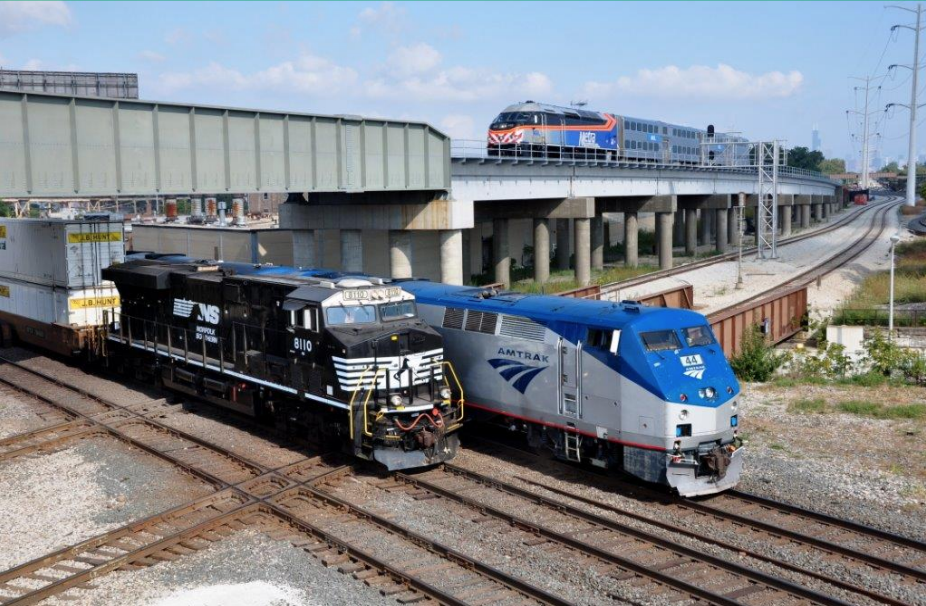
- In Chicago, the CREATE program aims to reduce congestion and improve air quality by streamlining four major rail lines. Chicago handles 30% of rail freight revenue and expects to see an 89% increase in rail traffic over the next 30 years. The program will result in $1.12 billion in health care savings from improved air quality and will generate economic activity valued at more than $525 million. The program expects to create 2,700 annual jobs.
- In Southern California, the Ports of Los Angeles and Long Beach launched the Clean Air Action Plan in 2006, which cleans up all areas of port activity: ships, trucks, cargo handling equipment, locomotives — even tug boats. The plan has already taken 2,000 dirty diesel trucks off the road and has created more than 3,000 jobs at the Port of LA, alone.
- In Seattle, BNSF Railway installed four electric wide-span, rail-mounted gantry cranes at the Seattle International Gateway (SIG) intermodal facility. The cranes’ wide footprints allow them to span three tracks, stack containers and load and unload both trucks and railcars. The cranes produce zero onsite emissions and have increased throughput by 30% at the facility.
- In the East, the Port of Virginia’s Green Goat hybrid yard switcher, a rail locomotive that moves short distances within a rail yard, provides fuel savings between 40-60% and is predicted to reduce nitrogen oxide and particulate matter emissions between 80-90% annually.
- Along the Gulf, SeaBridge freight, a coastal shipping service between Port Manatee, Florida and Brownsville, Texas avoids an average of 1,386 miles of congested highways. Compared to trucking, one SeaBridge barge has the capacity to remove 400,000 truck highway miles on a single one-way voyage.
[i] Association of American Railroads, National Rail Infrastructure Capacity and Investment Study prepared by Cambridge Systematics, Inc. (Washington, DC: September 2007), figure 4.4, page 4-10.
Cleaner buses can create jobs, improve the environment
January 14, 2010By Stephen Lee Davis
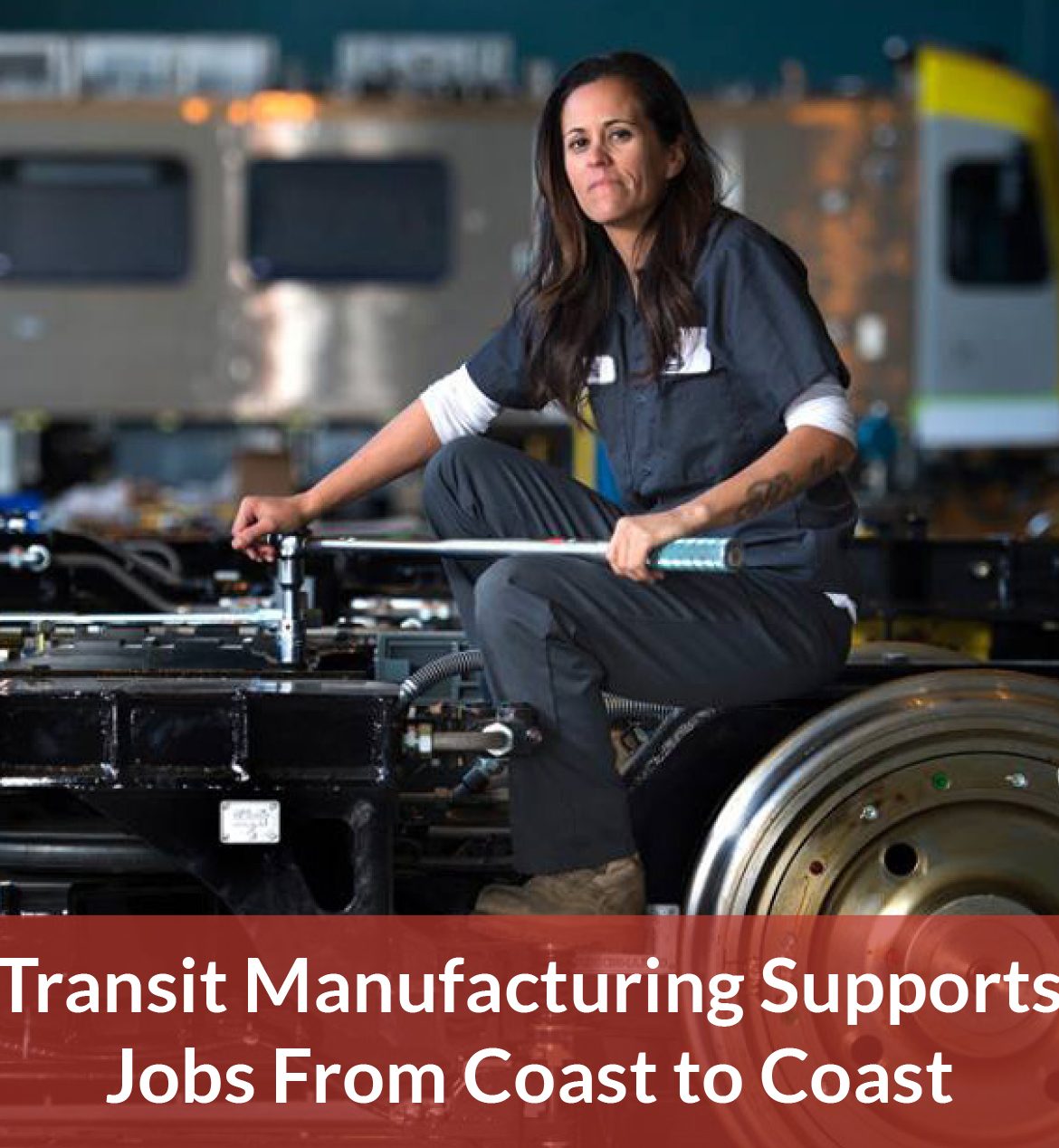
A new study by Duke University illuminates the fact that thousands of green jobs are waiting to be tapped in transit bus manufacturing — if the federal government will make a sustained commitment to investing in public transportation.
The Duke University Center on Globalization, Governance and Competitiveness released a new report this morning during a briefing at the Natural Resources Defense Council that evaluated the many U.S. job opportunities that can reduce carbon emissions in public transit buses. Jobs in and related to public transportation are some of the lowest hanging fruit in the push for green jobs, so what’s keeping the domestic manufacturing industry from ramping up?
The U.S. market for heavy-duty transit buses is small, currently delivering 5,000 to 5,500 buses per year. U.S.-based firms dominate the North American bus market, with an 88% share in total buses and a 51% share in heavy-duty transit buses. Under current U.S. transportation policy, which favors highway spending and de-emphasizes public transit, bus orders are small and sporadic; this makes it difficult for the bus industry to grow.
![]() |
| Non-comprehensive chart of the domestic supply chain for buses. From the Duke CGGC report, p.30 |
The report is well worth a read, but for a much simpler case study of what this means in real life, consider one piece of the complex supply chain for transit buses that we tend to take for granted: seats. On a crowded bus or train, you may not get the chance to sit in one, but when you do, you probably don’t think about the design or innovation that went into that seat. It probably didn’t occur to you that seats can add hundreds or thousands of pounds of weight that the bus needs energy to carry.
David McLaughlin, vice president of the American Seating Company, a U.S.-based manufacturer of seats for buses and railcars (among many other things), made it clear at this morning’s briefing that increased investment in transit would be good for business. But he also stressed that those benefits are not limited to American Seating alone. As a result of the stimulus bill from 2009, McLaughlin’s company calculated $2.9 million in new business, the bulk of which resulted from seat orders for buses and railcars ordered by transit agencies across the country with stimulus dollars.
“$2.9 million means 11 new jobs for us at American Seating,” he said. In another internal study, His company discovered that 1 job at American Seating sustained roughly 6 others in their immediate supply chain.
Take those two facts together and you begin to see the economic impact of the small public transit investment in the stimulus — and what could happen on a much larger scale. American Seating, just one manufacturer of one particular component that goes into transit vehicles, created the equivalent of 11 jobs through the stimulus. Those 11 jobs create or sustain 66 more at the company that supply them.
Stimulus spending will not be enough, however. Although the economic activity resulting from the stimulus was important, McLaughlin said his business needs investment that is reliable, consistent and predictable — like the funding that could result from a full six-year transportation bill. Stable funding sources will fuel the research and development that can cut seats weights even further and enable buses to use less energy.
“The stimulus package has been a good thing, but what we really need is sustained predictable investment, so we can make the investments we need to make to ensure our viability. This isn’t just a public issue, it’s a public-private issue. …It’s jobs,” he said.
The message from all fronts this morning was consistent. To spur job creation through manufacturing cleaner transit buses, the industry needs reliable, predictable investment and government policies that encourage innovation. Increasing the available federal funding for new transit lines and rolling stock is one aspect. Ensuring operation of these new transit lines remains affordable is another. Both are needed. As the report says:
If federal, state and local policy were to shift to a clear, sustained commitment to public transit, the nation would have the manufacturing capability to meet the resulting increased demand for transit buses. However, the transit bus industry is unlikely to have significant market growth in the absence of several major changes: better management of public transit funds and improved coordination with manufacturing firms; significant, sustained public funding; and perhaps most important, a comprehensive transportation policy shift that encourages public transit use.
Or, in other words, give transit agencies money to buy new rolling stock — and the money to operate them — and you’ll be creating green jobs on Main Street all across America. Buy new hybrid buses for New York City or San Francisco to reduce emissions there, and support new jobs in towns like Grand Rapids, Michigan that need jobs more than anything.
Dangerous by Design
November 9, 2009By Stephen Lee Davis
![]() |
| YikesPedestrian Originally uploaded by Transportation for America |
| Look carefully in the turning lane above the center of the photograph. There’s a pedestrian trying to cross this 7-lane urban arterial road. See any crosswalks anywhere on the road? Photo courtesy of Dan Burden. |
Over the last several decades, many of our cities and communities have seen the same shift of daily business from walkable, downtown Main Streets to wide, fast-moving state highways. These “arterial” roads are the new main streets in most communities, drawing shopping centers, drive-throughs, apartment complexes and office parks. Unlike the old walkable main streets, however, the pressure to move as many cars through these areas as quickly as possible has led transportation departments to squeeze in as many lanes as they can, while disregarding sidewalks, crosswalks and crossing signals, on-street parking, and even street trees in order to remove impediments to speeding traffic.
As a result, more than half of fatal vehicle crashes occurred on these wide, high capacity and high-speed thoroughfares. Though dangerous, these arterials are all but unavoidable because they are the trunk lines carrying most local traffic and supporting nearly all the commercial activity essential to daily life.
Before the top 10 most dangerous city rankings, here are just a few facts you might like to know:
Inadequate facilities. Of the 9,168 pedestrian fatalities in 2007-08 for which the location of the collision is known, more than 40 percent were killed where no crosswalk was available.
Spending disparity. Though pedestrian fatalities make up 11.8 percent of all traffic-related fatalities, states have allocated less than 1.5 percent of total authorized transportation funds to projects aimed at improving safety for pedestrians (for funds spent under current transportation bill.) No state spends more than 5 percent of federal transportation funds on safety features or programs for pedestrians or cyclists, despite a 30 percent increase in total federal transportation dollars beginning in 2005.
Complete streets save lives. Providing sidewalks, crosswalks and designing for lower traffic speeds saves lives. Only one in 10 pedestrians deaths occurred within crosswalks, while six in 10 occurred on arterial-type roads where speeds were 40 mph or higher.
The danger is not shared equally. Older adults, disabled and low-income Americans are being killed at disproportionate rates. African-Americans, who walk for 50 percent more trips than whites, and Hispanic residents, who walk 40 percent more, are subjected to the least safe conditions and die disproportionately.
Aging in place, yet unable to leave the house on foot. An AARP poll of adults 50 years and older found that 40 percent reported inadequate sidewalks in their neighborhoods and nearly half of respondents reported that they could not safely cross the main roads close to their home.
| Rank | Metropolitan Area | 2007-08 Pedestrian
Danger Index |
|
| 1 | Orlando-Kissimmee, Fla. | 221.5 | |
| 2 | Tampa-St. Petersburg-Clearwater, Fla. | 205.5 | |
| 3 | Miami-Fort Lauderdale-Pompano Beach, Fla. | 181.2 | |
| 4 | Jacksonville, Fla. | 157.4 | |
| 5 | Memphis, Tenn.-Miss.-Ark. | 137.7 | |
| 6 | Raleigh-Cary, N.C. | 128.6 | |
| 7 | Louisville/Jefferson County, Ky.-Ind. | 114.8 | |
| 8 | Houston-Sugar Land-Baytown, Texas | 112.4 | |
| 8 | Birmingham-Hoover, Ala. | 110.0 | |
| 10 | Atlanta-Sandy Springs-Marietta, Ga. | 108.3 | |
| See the full rankings and download the report | |||
New Report Documents Impact of Transit Service Cuts and Fare Increases on America’s Communities
August 18, 2009By Transportation for America
Reduction in service and rise in fares in cities across the country especially harmful for families, elderly, low-income & minority populations
![]() |
| Learn more and download the report |
| CONTACT: Cosabeth Bullock 202-478-6128, 202-904-7466 cbullock@mrss.com Download this release (pdf) |
WASHINGTON, D.C. — Americans across the country, in towns large and small, are being hurt by fare increases and draconian cuts in public transportation service, an epidemic that did not have to happen, according to a report released today by Transportation for America and the Transportation Equity Network.
The report, Stranded at the Station: The Impact of the Financial Crisis in Public Transportation, is the first systematic analysis of the conundrum faced by communities and their transit systems: Historic ridership and levels of demand for service, coupled with the worst funding crisis in decades. In a detailed examination of 25 transit systems, the authors found that while state and local transit revenues have been pummeled by a tough economy, the effects were compounded by failures in federal policy.
“The result,” said Dr. Sarah Mullins of the Transportation Equity Network, “is dramatic service cuts and fare increases that are hurting people who are trying to hang onto hard-to-find jobs and who can least afford the added financial strain.” Both rural and urban communities depend on public transit to sustain a viable workforce and encourage new development and commerce, Dr. Mullins noted. Service cuts and fare increases disproportionately harm older Americans and racial minorities, populations that account for nearly 48% of households without a vehicle.
Seven systems are facing operating deficits in excess of 10 percent, including those in Atlanta, San Francisco, New York, Chicago, Dallas, Washington, D.C. and Boston. To cope, agencies are lopping off routes, laying off workers and raising fares. Ten of the largest 25 transit agencies are raising fares by more than 13 percent, with San Francisco’s Muni contemplating a 33 percent hike, Boston’s MTA 20 percent, and DART in Dallas 17 percent.
“As employers and commuters everywhere know only too well, public transportation is an essential service that is critical to our economy,” said James Corless, director of Transportation for America. Noting that Congress had acted recently to provide an emergency infusion of general fund dollars into the highway trust fund, he added, “We need to see the same sense of urgency for the rest of the transportation system. But more than that, we need a long-term, sustainable source of funding for building, operating and maintaining the entire network.”
Recently, Representative Russ Carnahan attained more than 60 co-sponsors of his bill, H.R. 2746, which would allow public transit agencies greater flexibility in federal transit funding to be used for operating assistance, in addition to capital improvements. Corless urged Congress to support legislation to allow for greater flexibility in transportation spending, in addition to a serious overhaul of our current funding mechanism and a renewed vision for transportation.
“Mass transit has a residual benefit to any community,” said Congressman Carnahan. “Local transit agencies need options as they experience record-high ridership and record-high costs. Transit not only connects neighborhoods; it also is part of any comprehensive plan to secure America’s energy independence and reduce global warming.”
Stranded at the Station examines the impacts of proposed fare increases and service reductions on low-income, “lifeline” transit users and higher-income “choice” riders who may be riding transit for the first time. Dr. Mullins noted that low-income, elderly and minority riders, especially, are losing service on routes where transit serves as their only access to schools, healthcare and jobs. Residents of small towns and rural communities in particular are increasingly stuck without transportation options as budget shortfalls force small local transit agencies to cut back on service in rural America.
“I think these transit cuts are a shame,” said Henrietta Woods, a member of Metropolitan Congregations United in St. Louis. “I am a senior citizen and a retired hospital employee. It’s hard for me to get to the grocery store now that they cut my bus.”
The upcoming transportation authorization is a once-in-a-generation opportunity to create the safe, clean and smart transportation system necessary to move America forward. Congress is considering legislation that cuts red tape preventing local transit agencies from spending already existing public transportation funds on maintaining service and keeping fares affordable. Americans simply cannot afford to wait any longer for changes to our national transportation system that will save and create jobs and help us tackle long term economic, energy, climate and health challenges.
###
ABOUT THE TRANSPORTATION EQUITY NETWORK
The Transportation Equity Network, a project of the Gamaliel Foundation, has more than 300 grassroots and national partner organizations from the environmental and economic justice, civil rights and land use reform fields. TEN is working to ensure that transportation, metropolitan growth, and land use policy decisions produce equitable outcomes for all individuals. Disadvantaged populations have borne the brunt of the environmental and safety hazards from ill-considered transportation and land use policies.
New report chronicles the impact of transit cuts on American communities
August 18, 2009By Stephen Lee Davis
A new report from Transportation for America and the Transportation Equity Network — following up on our United States of Transit Cutbacks from earlier this year— looks closely at the cuts that public transportation agencies across the country are facing and how they’ve have impacted the people in those communities.
Communities and their transit systems are stuck in a difficult quandary: they’re facing booming, historic ridership and levels of demand for service, while also facing the worst funding crisis in decades.
Stranded at the Station: The Impact of the Financial Crisis in Public Transportation is the first systematic analysis of the issue, and the story is not a pretty one. Nearly 90 percent of transit systems have had to raise fares or cut service in the past year and among the 25 largest transit operators, 10 agencies are raising fares more than 13 percent.
Many transit agencies across the country have cut service, raised fares or laid off workers to deal with shrinking budgets, severely affecting the people who depend on regular, reliable service in order to access jobs, social services and education everyday. Nationwide demand for public transportation is at historic levels and growing, but funding for the day-to-day operations of these transit services is built on an unstable foundation. This report shows that without federal support, many will likely will be unable to meet the demand now and in the future.
Download and read the full report at http://t4america.org/resources/stranded
Relatedly, we’ve updated the United States of Transit Cutbacks map to reflect the data in this new report, and the map now includes 21 case studies from the report, highlighting 21 of the many communities facing the most significant budget deficits and those with the highest fare increases for 2009. We’ll be continuing to track the issue and cuts across the nation with that map, so keep us posted if we don’t have your city on the map.
So we want to know: how have these drastic cuts in public transportation service affected your everyday life? Tell us your story and we’ll help share it with Congress.
Can we cut the carbon emissions from transportation in half by 2050?
July 30, 2009By Stephen Lee Davis
If we’re serious about reducing CO2 emissions, with nearly a third (28%) of our greenhouse gas emissions coming from the transportation sector, the question won’t be should we try to get cuts from transportation, but rather, what cuts can we get from transportation? Moving Cooler, a new report released this week by a collection of groups, studies that question in depth and demonstrates how we can clean the atmosphere while also reducing our oil dependency, expanding our options for living and getting around and making transportation more affordable overall.
T4 America is currently focused on making sure that a share of revenues generated by the climate bill will be directed into cleaner transportation choices, but there’s been some question about exactly which strategies and investments will be the best bet for getting the cuts we need to meet our ambitious targets.
Building on the 2008 release of Growing Cooler, which showed how increases in driving and population would wipe out gains in fuel mileage technology, Moving Cooler makes the case that we need to look beyond the idea that newer, more efficient cars or low-carbon fuels will be enough on their own to achieve the big reductions we’ll need to meet our targets. What other strategies can we employ to get there from here?
The report looks at “bundles” of different techniques for reducing emissions from transportation — like road pricing, intelligent transportation systems, increased public transportation, pay-as-you-drive insurance, and making walking and biking safer and more convenient, to name a few — and finds that we could cut transportation emissions by as much as 47 percent if we employed all the tools examined in Moving Cooler.
Implementing some of these strategies would help cut emissions, but also provide Americans with numerous other benefits.
Offering more good options for living and getting around while using less oil will reduce our individual and national vulnerability to disruptions in either the oil supply or the climate. Giving more people the opportunity to drive less to accomplish daily tasks is essential to any long-lasting strategy. The best message from this report is that we can increase personal choice and freedom without imposing unnecessary hardships.
Growing Cooler showed that people living in more efficient, less automobile dependent environments drive about a third less, on average. Meeting the growing demand for more housing and travel choices would reduce driving and become a significant factor in fighting climate change.
Moving Cooler shows how a combination of public investment and market forces can unleash the private sector to help reduce our carbon footprint and reduce oil dependency by giving people the types of transportation choices they are increasingly looking for.
Driving down in 2008, congestion down much more
July 8, 2009By Stephen Lee Davis
![]() |
| Interstate 24 Traffic Originally uploaded by Transportation for America |
Due to the impact of high gas prices, the economic slowdown, and a growing preference for public transportation and other options for getting around, congestion was down in 2008 over 2007, marking the first two-year decrease in congestion since the Texas Transportation Institute began keeping track in 1982. Today, TTI released their bi-annual Urban Mobility Report today on the state of congestion and traffic in the U.S.
Some key findings:
Travelers spent one hour less stuck in traffic in 2007 than they did the year before and wasted one gallon less gasoline than the year before. The differences are small, but they represent a rare break in near-constant growth in traffic over 25 years.
- The overall cost (based on wasted fuel and lost productivity) reached $87.2 billion in 2007 — more than $750 for every U.S. traveler.
- The total amount of wasted fuel topped 2.8 billion gallons — three weeks’ worth of gas for every traveler.
- The amount of wasted time totaled 4.2 billion hours — nearly one full work week (or vacation week) for every traveler.
One cause of the decrease in congestion is the same cause responsible for the lower numbers of highway fatalities — Americans have been driving less and less. Vehicle miles traveled (VMT) growth rates have been in decline since 2005 and in 2007, total VMT and per capita VMT actually decreased for the first time since World War II. High gas prices and the recent economic downturn have contributed to these declines, but VMT was actually in decline well before the shock of increased gas prices and the recession, and has continued to fall even as gas prices plummeted over the last year.
And while total vehicle miles traveled (VMT) went down just slightly, congestion is down much more significantly.
According to Feburary numbers from INRIX, a reputable traffic statistics service, just a 3.7% drop in vehicle miles traveled in 2008 resulted in a 30% drop in congestion in our 100 most congested metro areas. That means each commuter spent 13 less hours stuck in traffic in 2008 over the previous year. And in slight contrast to the TTI report, the report found that overall, “99 of the top 100 most populated cities in the U.S. experienced decreases in traffic congestion levels in 2008 as compared to the prior year.” Small reductions in how much we drive each year have a much larger impact on congestion.
| The best way to reduce congestion and help Americans save money, time and fuel is to get smarter about managing traffic and offer increased options such as public transportation, telecommuting and incentives for carpooling, bicycling and walking. There is ample evidence that shows that reducing peak hour traffic by just a small percentage will dramatically reduce congestion and all of the costs associated with traffic.” |
| — James Corless, T4 America |
There’s no doubt that the sagging economy had a hand in reducing how much we drive. But regardless of the current economy, most Americans seem to be looking for ways to drive less — not more. So what if we invested more in the positive ways to reduce the amount we have to drive by making other options for getting around accessible, convenient, and available to more people?
With public transportation ridership still going up — even as driving is going down — it’s clear that people who have choices for getting around use them. People are looking for other convenient ways to travel that can get them out of traffic and save them time and money.
And as the INRIX numbers show, if we can make it easier to get around and increase the options for doing so, everyone behind the wheel benefits as congestion decreases. (And despite the decrease overall, the current $87 billion in congestion costs isn’t good news, by any stretch of the imagination.)
It’s unquestionable that the recession has had an impact, giving us some momentary slack in congestion. But what will we do with the breather? When the economy begins to pick back up again and people start driving more, will we head straight back into gridlock? With driving down and public transportation up, will we make more investments in the kinds of transportation options people are clamoring for, the kinds of options that can reduce congestion and make travel more painless for everyone?
Or will congestion simply mount as the economy rebounds?
How have states fared with the billions in transportation stimulus funds?
June 29, 2009By Stephen Lee Davis
You may recall that the $787 billion economic stimulus bill that passed in February had nearly $30 billion allocated for transportation investments. That money was given out to states and Metropolitan Planning Organizations (MPOs) — largely free of any criteria or requirements for what projects it should be spent on.
Smart Growth America released a report today examining how well states have been spending these billions. As they say on the Smart Growth America blog today, not only did the money arrive in a time of economic recession, but “at a time of embarrassingly large backlogs of road and bridge repairs, inadequate and underfunded public transportation systems, and too-few convenient, affordable transportation options.”
So after 120 days, how have states done in addressing these pressing needs and investing in progress for their communities?
After analyzing project descriptions provided by states and MPOs, Smart Growth America found forward looking states and communities that used the stimulus money as flexibly as possible, repairing roads and bridges and making the kinds of smart, 21st century transportation investments that their communities need to support strong economic growth.
Other states and communities missed this golden opportunity to create jobs while making progress on their most pressing transportation needs. These states spent their precious funds on building new roads rather than repairing existing roads, and ignored the chance to spend the money flexibly on the kinds of options that their residents really want — like public transportation or streets safe for walking and biking — leaving their communities stuck in traffic and stuck in the past.
…Despite the golden opportunity of extra funding, most states did not use the opportunity to make as much progress as possible on long-term goals. Even though repair backlogs can stretch years or decades into the future, nearly one-third of the money, $6.6 billion, went towards roadway new capacity projects. At a time when public transportation ridership is hitting all-time highs and the budget crunch is causing transit agencies to cut routes, service and jobs, an abysmal 2.8% was spent on public transportation. Only 0.9% percent was spent on non-motorized projects (i.e., bike and pedestrian projects).
Read more about the report and download the full version from Smart Growth America.
New policy paper: Transportation in small towns and rural regions
May 28, 2009By Stephen Lee Davis
![]() |
| Check out the sixth in our ongoing series of policy briefs. These policy briefs are short, four-page, concise summaries of an issue with interesting facts and some clear recommendations for improvement through the federal transportation bill. Download this Brief (pdf) |
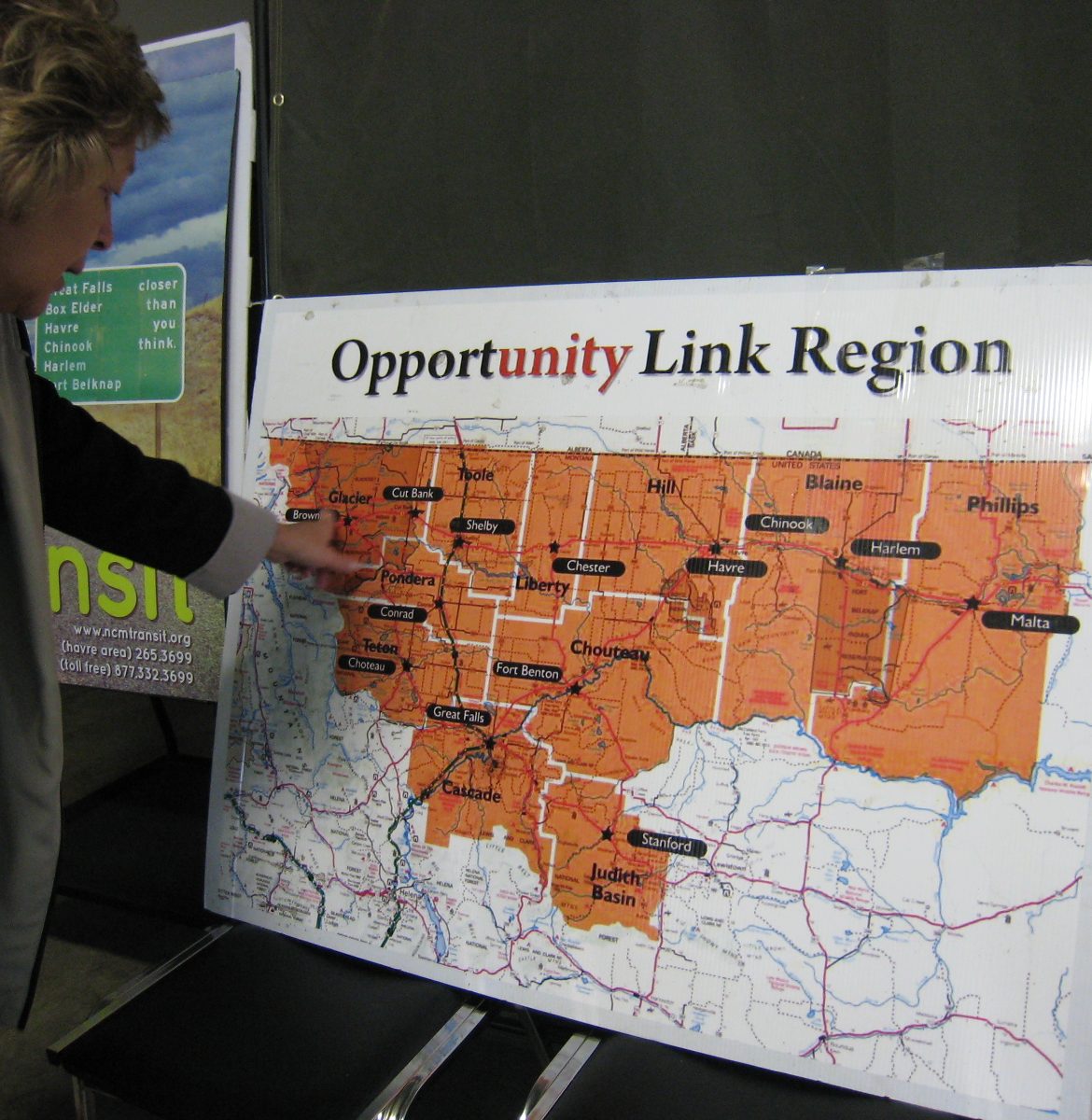
Smaller towns and rural communities face a different set of issues than urban or suburban America, and we need a transportation program that recognizes those differences, provides access for all people, and helps them succeed economically.
In our webinar two weeks ago, we talked about transportation challenges and solutions in smaller towns and rural areas, and we encourage you to download the accompanying policy brief on Transportation, Small Towns and Rural Communities.
As the policy brief makes clear, our current transportation program leaves rural communities stranded.
Providing access to jobs and the economy is critical for these rural areas and smaller towns. Unfortunately, since many of the decisions about how to invest in transportation are made at the state and federal level, local residents often have little say over how their transportation dollars are spent.
The 56 million residents of rural areas and small towns – about 20 percent of the population of the United States – often fall through the cracks of federal transportation policy.
These towns have higher concentrations of elderly and low-income citizens, who face unique challenges in accessing their jobs, school or civic life. In addition, children in rural areas are 25 percent more likely to be overweight or obese than those in urban areas and face unique barriers to being active and maintaining a healthy weight.
Consider five short facts from this brief:
|
Rural transportation connects people to jobs, health care, and family and contributes to regional economic growth by linking businesses to customers, goods to markets, and tourists to destinations. Research has shown that rural and small metropolitan transit services offer measurable economic benefits. In one study, rural counties with transit service were found to have 11 percent greater average net earnings growth over counties without transit, and the estimated annual impact of rural public transportation on the national economy was over $1.2 billion.
Bottom line? Our nation’s transportation infrastructure should provide access for all Americans, regardless of their geographic location, age, income, or disability status. We need to care for our existing transportation network, while ensuring that we build a 21st century system that will allow residents of rural communities, small cities, and small towns to thrive.
Check out the webinars page to listen to or watch a recording of our recent session on this topic.
Rep. Oberstar stuck in traffic, misses release of report on public transportation
April 23, 2009By Stephen Lee Davis
The Environmental Defense Fund held a news conference Thursday morning to release a new report profiling 10 innovative public transportation systems that are pushing beyond traditional ideas of transit, providing fast, clean and flexible service to help people get from A to B. Some special guests were invited, including transit supporter Rep. James Oberstar of Minnesota, who heads up the House committee responsible for writing the transportation bill this year.
So where was Rep. Oberstar when the press conference kicked off Thursday morning on Capitol Hill?
Stuck in gridlocked DC traffic, according to the Minneapolis Star-Tribune.
Once the strong sense of irony subsided, EDF carried on with the release of the report that profiles 11 systems from coast to coast that are “Reinventing Transit” by thinking outside the box to implement innovative service that can keep Americans moving.
Rep. Oberstar offered his strong support for the report in absentia.
Reinventing Transit makes the case that reinventing the transportation bill to fund transit innovations in Minnesota and nationwide will deliver new jobs, new connections to jobs and economic development for communities of all sizes. Given our economic and environmental challenges, ‘business as usual’ transportation investments are not good enough. Reinventing Transit sets the standard for transit investments in the upcoming transportation bill to fuel America’s economic recovery.
Read more quotes from the guests and EDF in their press release.
Five of the systems profiled in detailed case studies have accompanying videos. The systems profiled span from coast to coast, and cities from small to large.
One system not profiled is Washington’s own Metro, which keeps thousands of cars off the road each day, keeping that infamous DC traffic from being even worse. And Metro does have several stops near the Capitol.