U.S. Transportation Department makes good on promise to ensure our streets are made safer
March 16, 2010By Stephen Lee Davis
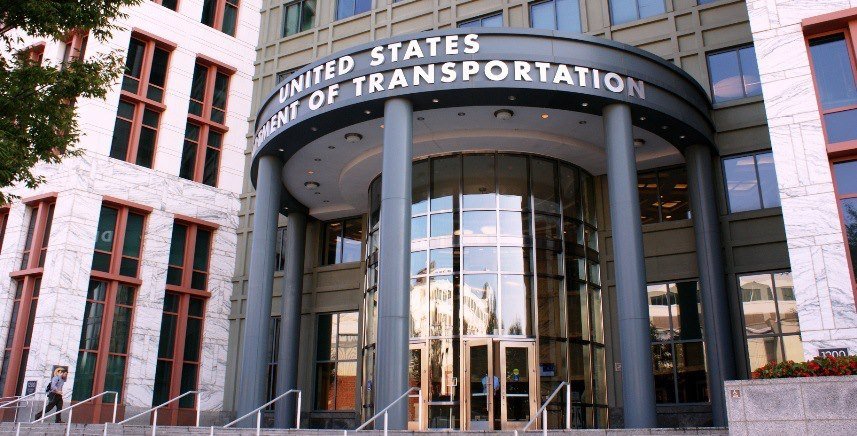
Secretary of Transportation Ray LaHood issued a exciting new directive yesterday that officially shows DOT’s support for improving safety for walking and bicycling and the importance of integrating them into transportation systems — treating them as equal modes of transportation.
Last fall we released a report chronicling the tragedy of 76,000 preventable pedestrian deaths over the last 15 years. “Dangerous by Design” took a hard look at our often unsafe streets that are engineered for speeding traffic with little or no provision for people on foot, in wheelchairs or on a bicycle.
![]() |
| DSC_0376 Originally uploaded by Transportation for America |
When that report was released, we asked supporters like you across the country to sign a petition to Transportation Secretary Ray Lahood asking him to support Complete Streets at DOT, and more than 4,100 of you responded. We took that petition directly to Secretary Lahood back in November of 2008, and afterward, he told T4 America, “the right of way “belongs to pedestrians and bicyclists as well. The DOT Safety Council is going to look at this report and work with advocacy groups to ensure our streets are as safe as possible.”
Yesterday, Secretary Lahood and DOT responded by turning his words to us from November into official DOT policy with the release of a DOT “policy statement.”
The DOT policy is to incorporate safe and convenient walking and bicycling facilities into transportation projects. Every transportation agency, including DOT, has the responsibility to improve conditions and opportunities for walking and bicycling and to integrate walking and bicycling into their transportation systems. Because of the numerous individual and community benefits that walking and bicycling provide — including health, safety, environmental, transportation, and quality of life — transportation agencies are encouraged to go beyond minimum standards to provide safe and convenient facilities for these modes.
Or as he described it more simply on his Fastlane blog yesterday, “This is the end of favoring motorized transportation at the expense of non-motorized.”
We applaud the Secretary’s work on this issue and are especially thankful for the thousands of you who wrote a letter to Congress or signed our petition to Sec. Lahood urging him to use all the powers at DOT’s disposal to make safe, complete streets the norm all across America. Your voices were heard, and policy has changed.
“This is an issue that has been ignored far too long, even as thousands have died or been injured unnecessarily just by doing something as simple as trying to cross the street,” said T4 America director James Corless.
“We thank Secretary Lahood for his leadership at DOT and for elevating this urgent issue to the level of prominence that it deserves. Americans deserve have a safe route for walking to the store, walking their kids to school, or walking to the bus stop at the end of their block to get to work. Taking these simple steps to consider the needs of everyone who uses a street — bicyclist, pedestrian, or wheelchair user — is exactly what we were hoping for when we took our message into Secretary Lahood’s office last November. It can help us stay healthier by giving us one more option for travel, and Secretary Lahood is spot-on when he says that it’s a key part of making livable neighborhoods.”
This certainly doesn’t mean that the issue is over. As Barbara McCann with the National Complete Streets Coalition reminds us, there is still no official federal requirement for complete streets on projects the feds spend money on. And only a fraction of states, cities, and towns have rules on the books requiring them to ensure the safety of all users when they build or retrofit a street or road.
DOT is saying all the right things in this statement, but they need the legislative authority and money from Congress to line up with their excellent intentions.
So we’ve taken a first step. A big, important leap into a safer world for everyone who uses our streets. But there is more left to do.
Join us TODAY for a national call-in day for walking and biking
March 11, 2010By Stephen Lee Davis
| Tell your Rep to support this bill: Make a call |
Monday, we told you about a new bill in Congress from Rep. Earl Blumenauer that would help cities large and small begin to build complete active transportation networks, making it easier and more attractive to get around on foot or on bike, and most importantly, helping stem the tide of the 76,000 preventable pedestrian deaths over the last 15 years. We asked you to send a message to your Representative, and you didn’t disappoint, with thousands of messages going to offices representing districts from coast to coast.
Today, along with numerous other partners like Rails to Trails, League of American Bikers, America Bikes, and America Walks, we’re asking all of our supporters to make a phone call to your Representative to support this new bill — the Active Community Transportation Act.
With the National Bike Summit in town this week, more than 700 advocates for safe walking and biking are visiting the offices of their congressional delegations today, asking them to sponsor this bill and letting them know about all the benefits of making it easier to safely get around on foot or on bike. We want to back them up and have all of our voices heard loud and clear in the halls of Congress today.
Increasing the number of people who can safely walk or bike will reduce congestion, help cut emissions, keep Americans healthier and keep those people out there already walking and biking safe. Let your representative know that you think this bill is a great idea for your community, and for America.
Distracted driving hits the mainstream: Oprah dives in deep
January 19, 2010By Stephen Lee Davis
In a show that was overwhelmingly informative, shocking and sobering, Oprah Winfrey focused her top-rated talk show yesterday on the epidemic of distracted driving and the preventable injuries and fatalities caused each and every year. Secretary Ray LaHood for one, appreciated the focus on an issue that he’s spent his first year trying to elevate in our national consciousness.
It is fitting that The Oprah Winfrey Show chose the Martin Luther King Day of Service to air its program on distracted driving. Spreading awareness about this deadly epidemic is a huge contribution to the safety of millions of Americans. For that public service, I enthusiastically thank Oprah. And I encourage everyone who didn’t see the show to visit Oprah’s website where you can watch segments of the show, read the transcript, and SIGN THE PLEDGE! Oprah’s online pledge draws a line in the sand that says, “NO! We will not do this anymore.”
The most heart-wrenching part of the show was the “after the show” feature that had relatives of those killed in distracted driving accidents share the names of their loved ones and tell their stories. The first two families to tell their story had relatives killed while walking and biking, respectively.
Is it just me, or does it seem like this show could represent a bit of a tipping point for this issue? Then again, many of the automakers spent the recent Detroit Auto Show rolling out new (dangerous) ways to use phones and the internet while behind the wheel.
What do you think?
Already asked your rep to support complete streets? Tell some friends to join you
December 3, 2009By Stephen Lee Davis
Maybe some people just need a little visual aid to help grasp the devastating toll that our roads have on those who walk them everyday.
400 people are killed in America every single month, just crossing the street, walking from A to B, or riding their bike through town. That’s like two busloads of Americans being killed… every single week.
The worst part is that many of these deaths are preventable. We need to start building roads in a way that works for everyone who uses them – motorists, pedestrians, cyclists, and those with limited mobility. A lot of you have already sent messages to Congress telling them that the time is now to support safer streets for all Americans.
Help us send a message to Secretary LaHood and the USDOT
November 10, 2009By Stephen Lee Davis
As our new Dangerous by Design report illustrates, pedestrian safety is a matter of life or death for thousands of Americans each year. With a loss of life equivalent to a jumbo jet going down roughly each month, it is a tragedy that simply does not get enough attention at any level of government. Tragic, because these are preventable deaths, largely on roads that are not safe for walking or biking.
As a follow-up on the release of the report, Transportation for America is working to arrange a meeting with U.S. Transportation Secretary Ray LaHood, perhaps as soon as next week. At this meeting, we plan to deliver the message from our hundreds of partner organizations and thousands of supporters across the country that safer streets must be a priority!
Sign our petition today and help us send a strong message to the USDOT!
Secretary LaHood has already demonstrated a strong interest in safety with a distracted driving initiative and the creation of a new Safety Council, and we have praised his vocal commitment to livability in our towns and communities. Because the Department of Transportation holds the purse strings, if Secretary LaHood adds Complete Streets to his list of safety priorities, we can ensure that every road project facilitates safe travel for everyone — including vulnerable pedestrians.
So if you have not yet signed the petition, go and sign it now so we can take an enormous stack with names from across the country to Secretary LaHood soon. This is our chance to make a big impression and to let him and the DOT know how many of you care about making our streets safer for everyone.
If you have signed the petition already, be sure to post it to Twitter or Facebook with the links below, or tell a friend about it.
![]() |
Post about this action on Twitter! | ![]() |
Post a link to your Facebook profile |
Dangerous by Design
November 9, 2009By Stephen Lee Davis
![]() |
| YikesPedestrian Originally uploaded by Transportation for America |
| Look carefully in the turning lane above the center of the photograph. There’s a pedestrian trying to cross this 7-lane urban arterial road. See any crosswalks anywhere on the road? Photo courtesy of Dan Burden. |
Over the last several decades, many of our cities and communities have seen the same shift of daily business from walkable, downtown Main Streets to wide, fast-moving state highways. These “arterial” roads are the new main streets in most communities, drawing shopping centers, drive-throughs, apartment complexes and office parks. Unlike the old walkable main streets, however, the pressure to move as many cars through these areas as quickly as possible has led transportation departments to squeeze in as many lanes as they can, while disregarding sidewalks, crosswalks and crossing signals, on-street parking, and even street trees in order to remove impediments to speeding traffic.
As a result, more than half of fatal vehicle crashes occurred on these wide, high capacity and high-speed thoroughfares. Though dangerous, these arterials are all but unavoidable because they are the trunk lines carrying most local traffic and supporting nearly all the commercial activity essential to daily life.
Before the top 10 most dangerous city rankings, here are just a few facts you might like to know:
Inadequate facilities. Of the 9,168 pedestrian fatalities in 2007-08 for which the location of the collision is known, more than 40 percent were killed where no crosswalk was available.
Spending disparity. Though pedestrian fatalities make up 11.8 percent of all traffic-related fatalities, states have allocated less than 1.5 percent of total authorized transportation funds to projects aimed at improving safety for pedestrians (for funds spent under current transportation bill.) No state spends more than 5 percent of federal transportation funds on safety features or programs for pedestrians or cyclists, despite a 30 percent increase in total federal transportation dollars beginning in 2005.
Complete streets save lives. Providing sidewalks, crosswalks and designing for lower traffic speeds saves lives. Only one in 10 pedestrians deaths occurred within crosswalks, while six in 10 occurred on arterial-type roads where speeds were 40 mph or higher.
The danger is not shared equally. Older adults, disabled and low-income Americans are being killed at disproportionate rates. African-Americans, who walk for 50 percent more trips than whites, and Hispanic residents, who walk 40 percent more, are subjected to the least safe conditions and die disproportionately.
Aging in place, yet unable to leave the house on foot. An AARP poll of adults 50 years and older found that 40 percent reported inadequate sidewalks in their neighborhoods and nearly half of respondents reported that they could not safely cross the main roads close to their home.
| Rank | Metropolitan Area | 2007-08 Pedestrian
Danger Index |
|
| 1 | Orlando-Kissimmee, Fla. | 221.5 | |
| 2 | Tampa-St. Petersburg-Clearwater, Fla. | 205.5 | |
| 3 | Miami-Fort Lauderdale-Pompano Beach, Fla. | 181.2 | |
| 4 | Jacksonville, Fla. | 157.4 | |
| 5 | Memphis, Tenn.-Miss.-Ark. | 137.7 | |
| 6 | Raleigh-Cary, N.C. | 128.6 | |
| 7 | Louisville/Jefferson County, Ky.-Ind. | 114.8 | |
| 8 | Houston-Sugar Land-Baytown, Texas | 112.4 | |
| 8 | Birmingham-Hoover, Ala. | 110.0 | |
| 10 | Atlanta-Sandy Springs-Marietta, Ga. | 108.3 | |
| See the full rankings and download the report | |||
Even Newt agrees: Let the kids bike
October 9, 2009By Stephen Lee Davis
![]() |
| Newt Gingrich at Manhattan Tea Party Originally uploaded by ajagendorf25 |
Raise your hand if you had former Speaker of the House Newt Gingrich pegged as a staunch advocate for walking and biking to school?
A few days after schools across the country celebrated Walk to School Day, a middle school in Saratoga Springs, New York is in the news once again for their policy prohibiting students from walking or biking to school. Apparently, Newt Gingrich caught wind of their policy and wrote the school district a letter urging them to drop their policy.
Twelve-year old Adam Marino and his mother were thrust into the spotlight back in May when he chose to bicycle to Maple Avenue Middle School in violation of a current prohibition. Adam told the Albany Times-Union this week that biking has improved his health and his studies. School officials said the prohibition was to keep children safe.
Gingrich, the Georgia Republican who led the GOP takeover of Congress in 1994, heard the story and sympathized with Adam. He penned a letter to school officials, writing: “At a time when nearly one-third of American children and teens are overweight or on the brink of obesity, students like Adam who exhibit healthy behaviors should not be punished but rather rewarded.”
Gingrich’s support for the young bicyclist is welcome, but Maple Avenue Middle School’s concerns about safety shouldn’t be dismissed out of hand either.
County and state officials should be working to ensure that Adam and others like him have a safer ride, rather than just declaring it “unsafe” and giving up. The first story about Adam, back in May, pointed out that the school district hadn’t applied for any state funding from the Safe Routes to School program, which can help communities improve streets and add sidewalks to make walking and biking to school safer for children.
Does this mean we can assume the Speaker’s support for Complete Streets legislation and Safe Routes to School to help making walking and biking safer and easier for people just like Adam?
Cellphones and texting pose great risks behind the wheel
July 28, 2009By Stephen Lee Davis
Last week, the New York Times covered the news that the National Highway Transportation Safety Administration decided in 2003 not to release preliminary data showing that talking on cellphones while driving — whether using a hands-free device or not — posed a safety risk nearly equivalent to drunk driving. Researchers at the NHTSA were pushing for a more extensive research program to follow their preliminary research, but due to what the Times cited as “political considerations,” not only was the extra study and research not ordered, but the existing findings were essentially buried.
The memos, research and draft letter to Department of Transportation Secretary Norman Mineta were released to The Center for Auto Safety and Public Citizen via a Freedom of Information request, who sent them to the Times.
The NHTSA officials were encouraged to stick to their mission of information-gathering and to avoid lobbying states to pass laws restricting cellphones in any way. But what good is information gathering when the results don’t leave the agency, much less find their way into the hands of lawmakers or state legislators?
The news in the Times‘ Driven to Distraction series only got worse yesterday.
The Virginia Tech Transportation Institute is releasing a peer-reviewed report showing that truckers who text message while driving were 23 times more likely to crash. The study outfitted tractor-trailer drivers with cameras to study their behavior and found that “in the moments before a crash or near crash, drivers typically spent nearly five seconds looking at their devices — enough time at typical highway speeds to cover more than the length of a football field.”
Tom Dingus, director of the Virginia Tech institute, one of the world’s largest vehicle safety research organizations, said the study’s message was clear.
“You should never do this,” he said of texting while driving. “It should be illegal.”
Most shocking perhaps was the closing story. If you happen to live near Windham, Maine, you might want to keep an eye out, though this sort of behavior is more common than one might think. According to a survey of 2,501 drivers in the story, “21 percent of drivers said they had recently texted or e-mailed while driving,”
“It’s convenient,” said Robert Smith, 22, a recent college graduate in Windham, Me., who says he regularly texts and drives even though he recognizes that it is a serious risk. He would rather text, he said, than take time on a phone call.
“I put the phone on top of the steering wheel and text with both thumbs,” he said, adding that he often has exchanges of 10 messages or more. Sometimes, “I’ll look up and realize there’s a car sitting there and swerve around it.”
Mr. Smith, who was not part of the AAA survey, said he was surprised by the findings in the new research about texting.
“I’m pretty sure that someday it’s going to come back to bite me,” he said of his behavior.
Breaking Down the Blueprint: Improving public health and safety with a 21st Century transportation program
May 22, 2009By Andrew Bielak
![]() |
Earlier this week, we talked with you about Transportation for America’s national objective for a healthier, safer transportation system, and showed you the performance targets needed to measure our progress towards these goals.
Today, we’d like to talk about just how we hope to reach these goals through some of the policies and reforms that we propose in our Blueprint.
As some of you probably know, trying to understand federal transportation, and the programs, funding mechanisms, and institutional structures behind it, is no day at the beach — these policy details are complex, confusing, and sometimes, pretty boring. In an effort to create a more coherent national vision for our transportation system, T4 America has drafted a simple and clear set of targets and programs in our Blueprint, which we believe can serve as a more accessible guide for the future of transportation policy.
While the programs throughout the entire Blueprint encourage and incentivize investment in safer roads for all users, more walkable, bikeable communities, and cleaner air, we thought we’d focus here on a couple policies and priorities that exemplify our commitment to improving safety and public health.
(Continue Reading)
Breaking Down the Blueprint: T4’s Objective for Improved Public Health and Safety
May 20, 2009By Stephen Lee Davis
![]() |
When we think about our daily commutes to work, walks to the grocery store, or bus rides our kids take to school, there are few things more important than making sure these activities keep us healthy and safe.
After all, the numbers related to these issues are simply staggering — more than 37,000 people killed on our roads in 2008, between $40 and $60 billion in annual health care costs from negative air quality associated with transportation, more than 16 percent of children, and 66 percent of adults, considered overweight or obese due in large part due to a lack of physical activity.
Transportation for America believes that a renewed transportation system must Ensure Safety for All Transportation Users and Improve Public Health Outcomes — a goal that will require some critical changes in the way we approach transportation policy. For that reason, we’ve made it one of six top-line objectives in our Blueprint.
(Continue Reading)