Posts Tagged "biking"
Many of the most dangerous states for people walking are planning for more people to die
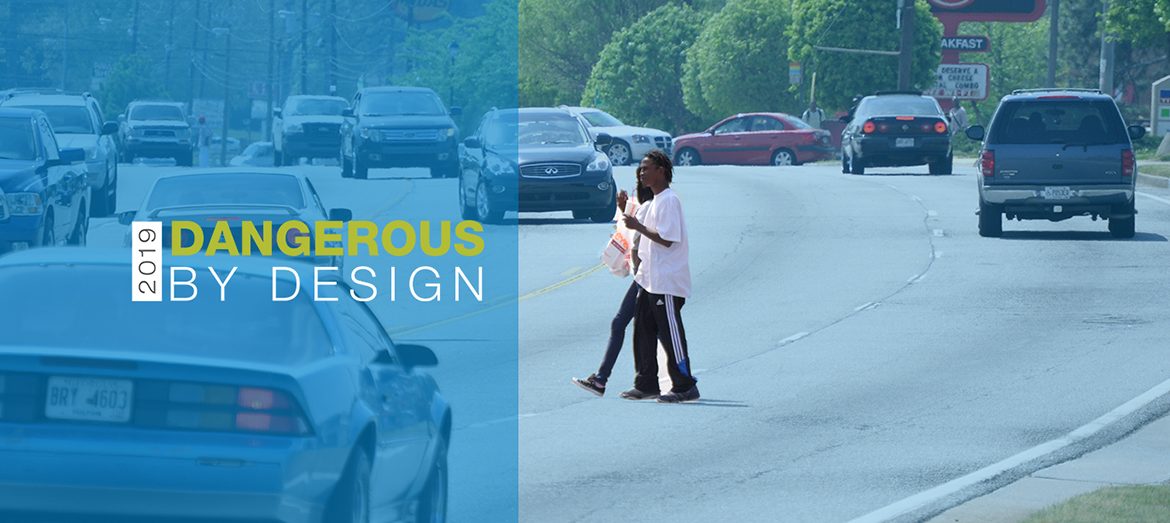
13 Americans per day were struck and killed while walking by drivers from 2008-2017, according to a report released today by our colleagues at the National Complete Streets Coalition. Dangerous by Design 2019 also shows how some of the most dangerous states are, astonishingly, committed to making the problem even worse.
Changing the transportation paradigm, one project selection at a time.

Thanks to support from the Kresge Foundation, Transportation for America helped several regions around the country take tangible steps toward aligning their spending with their policy goals using performance measures. We asked them about it…here’s what they said.
On National Walking Day, too many Americans are still having to endure unsafe streets
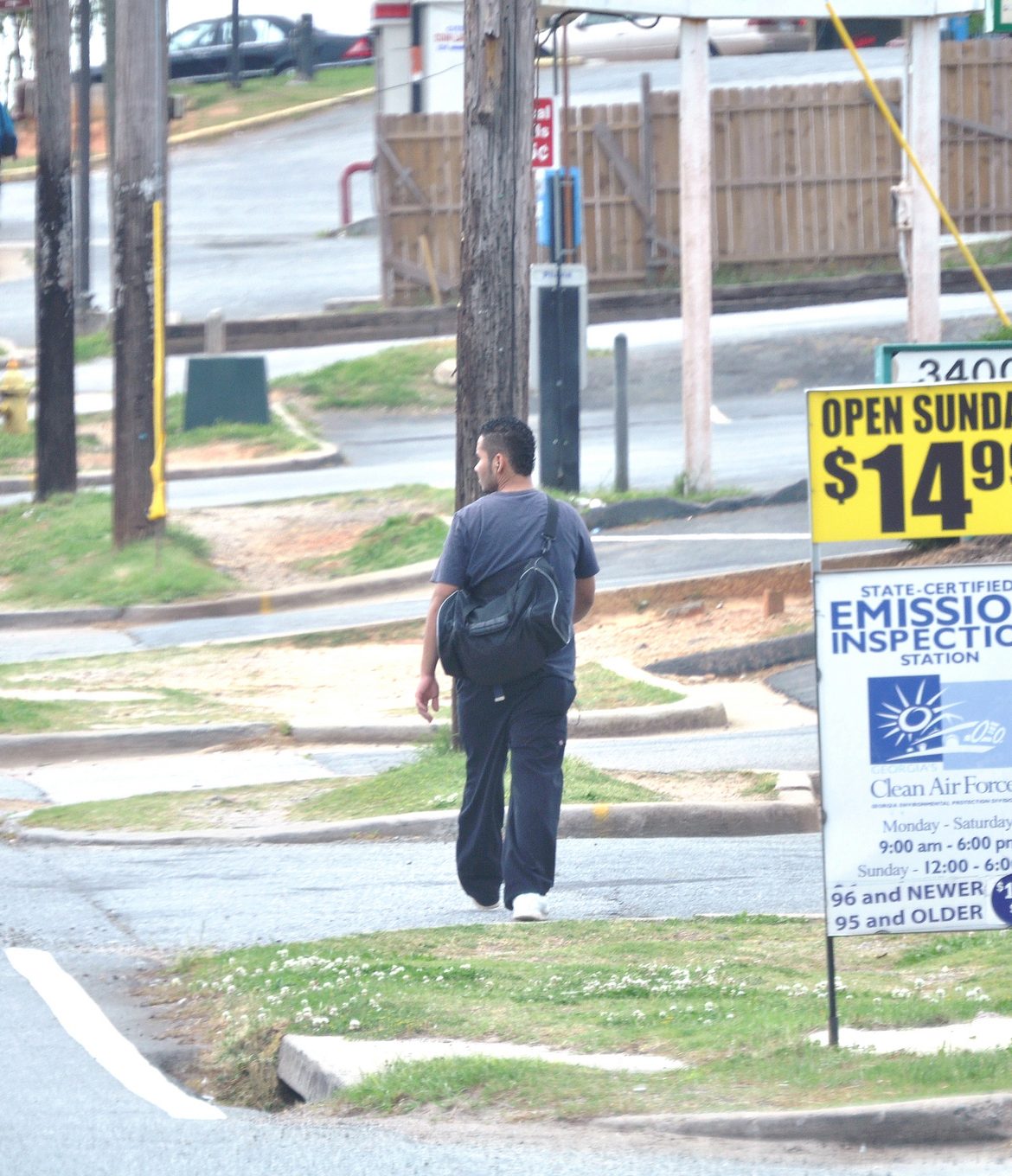
While we missed recognizing National Walking Day last week while the Complete Streets conference was happening in Nashville, we wanted to come back this week and revisit a post from 2012 looking at what’s actually keeping more people from walking in many of our metro areas.
Coming soon: A new report on how metro areas are building more and better bicycling and walking projects
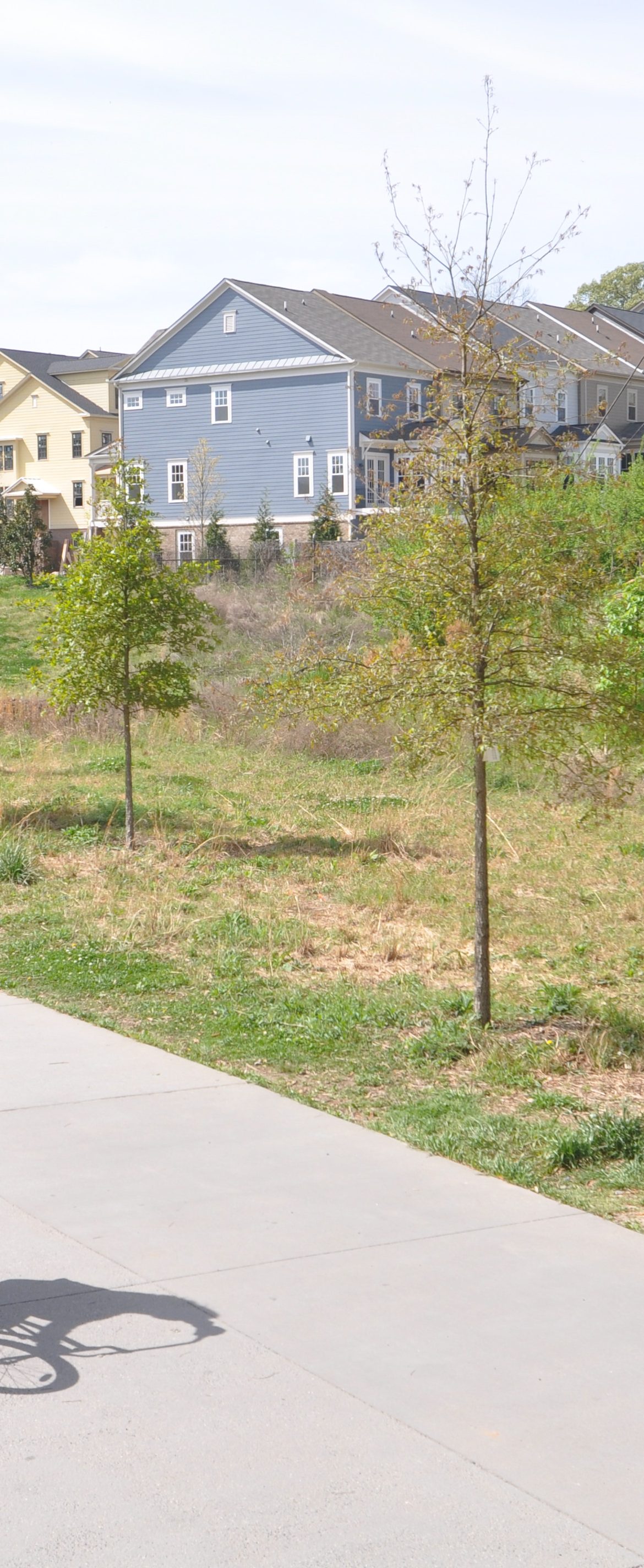
Metro areas of all sizes across the country are strategizing, developing, and implementing new ways to improve bicycling and walking in their regions. Over the last year, T4America worked with metro areas across the country to collect and document these stories, ideas, and strategies into a guidebook that we’re releasing on December 11.
Federal program that helps tackle health disparities threatened in ’18 budget

Congress is threatening to eliminate a small yet significant federal program housed within the Centers for Disease Control and Prevention (CDC) that helps local communities take concrete steps to prevent someone’s zip code from being the most powerful determinant in their long-term health.
How are metro areas prioritizing health and building more biking and walking projects?
Though there’s booming demand all across the country to build more projects that can help residents get out and bike or walk — whether for exercise or just for getting around safely from A to B — it can be an uphill battle to do so. How are metro areas upending the conventional wisdom and building more projects that help improve their residents’ health?
Introducing “Dangerous by Design 2016”
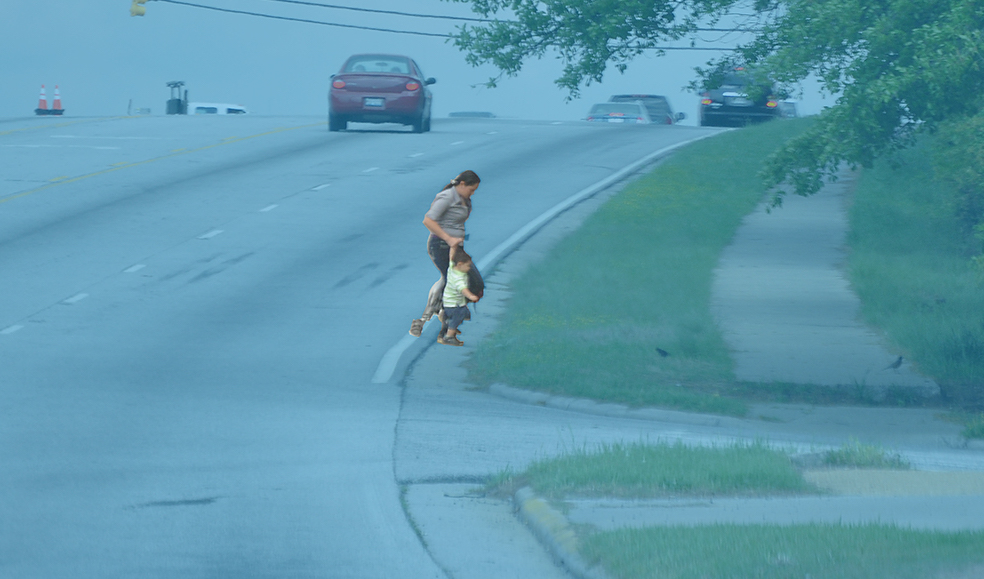
Between 2005 and 2014, a total of 46,149 people were struck and killed by cars while walking. That averages out to about 13 people per day.
Webinar wrap: How MPOs are prioritizing public health to build prosperous regions
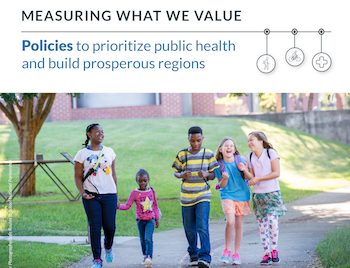
Last week, we had a discussion detailing how public health professionals are working with regional transportation planners to plan, fund, and support building more state of the art active transportation projects — accompanying the release of Measuring What We Value: Prioritizing Public Health to Build Prosperous Regions.
Urban bike trails in cities like Indianapolis, Dallas and Atlanta are proving to have rich economic benefits to city neighborhoods
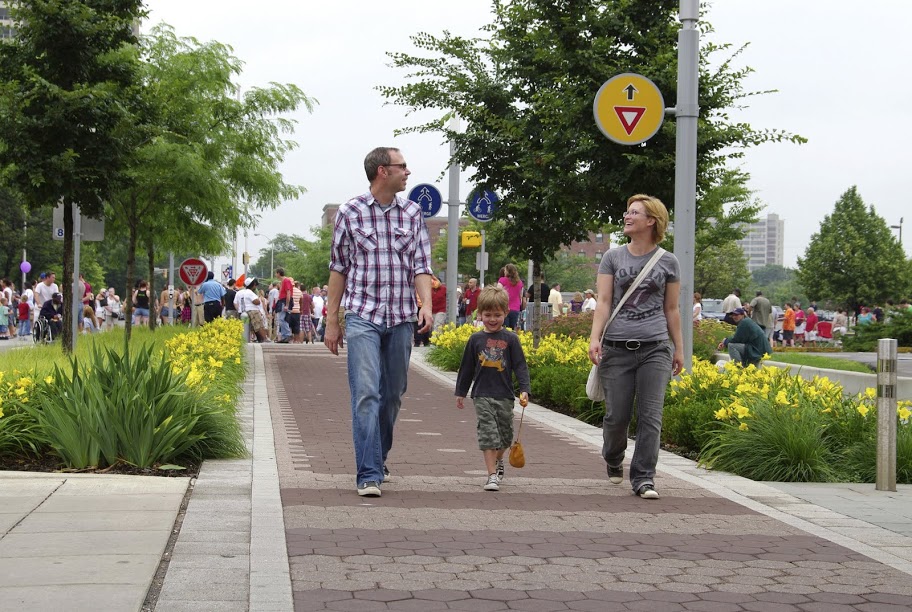
Affirming a trend seen in other cities, Indianapolis’s eight-mile Cultural Trail has been a boon to the neighborhoods adjacent to it — as well as the city as a whole — increasing property values of homes and businesses and giving residents and tourists an efficient, unbroken path to walk, bike and move around the city.
Healthy economies need healthy people — Nashville leads the way for other regions
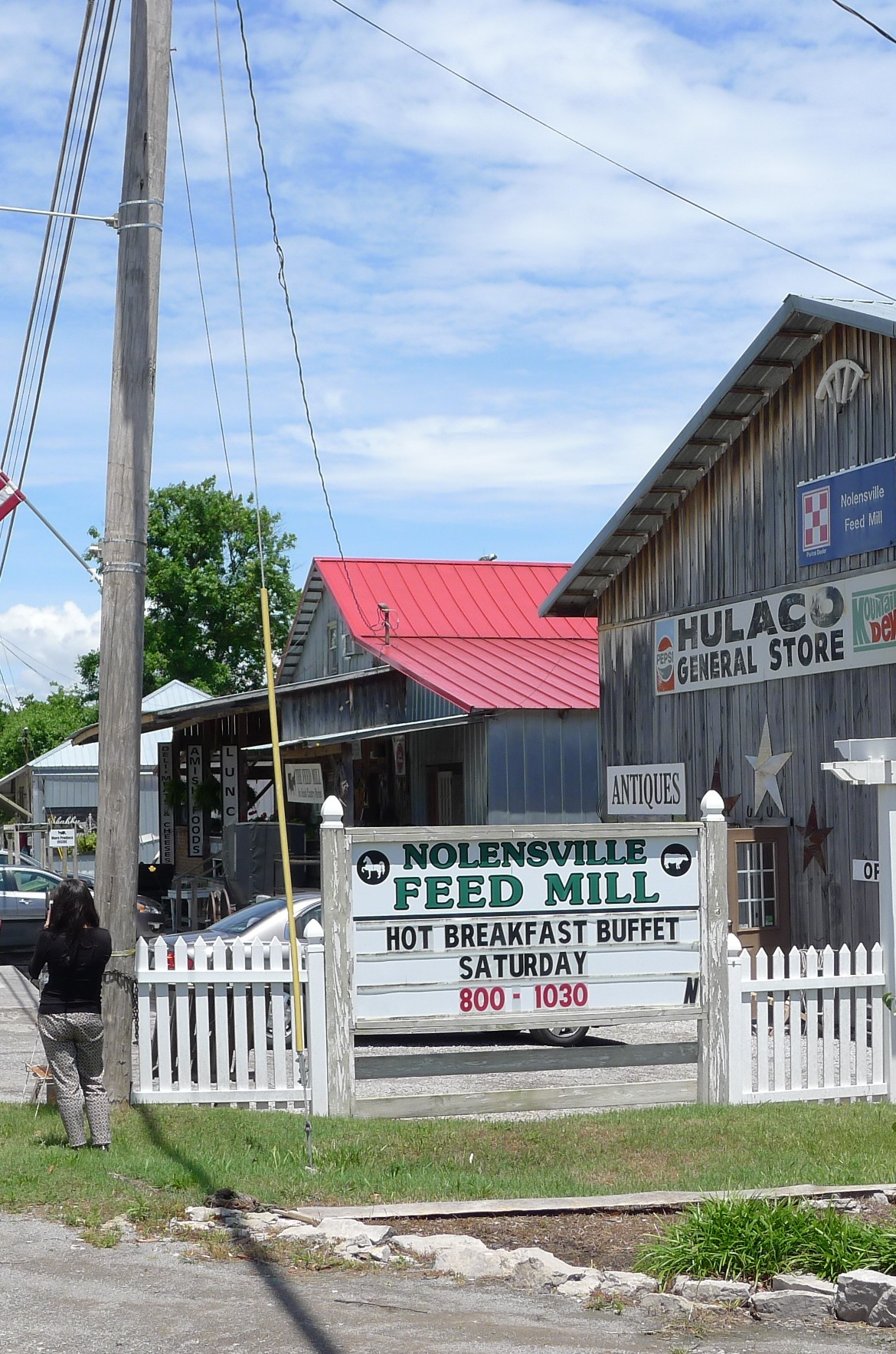
What’s the connection between healthy residents and a healthy bottom line? Why should a local business community care about improving the health of the residents that live there? Representatives from five regions gathered last week in Nashville to learn how providing better transportation infrastructure and building more walkable communities can help improve residents’ health — and boost local economic prosperity and competitiveness.
Its National Walking Day, but too many people will have to walk unsafe streets
You may not have known it — its not the most publicized special day on the books — but today is National Walking Day. Some of you may have traded part or all of your drive or transit trip today for a walk to work. But for many, every day is walking day, and it happens on streets with dangerous or inconvenient conditions that no one should have to endure just to walk to school, their job, or the grocery store.
New report and map chronicles the visceral reality of 47,000 preventable pedestrian deaths
 From 2000-2009, 47,000 people were killed while walking our nation’s streets, according to the 2011 edition of our pedestrian safety report. These fatalities occurred largely on streets designed for speeding traffic at the expense of people on foot. Dangerous by Design 2011 adds a visual element: Data from 2001-2009 can be viewed on an interactive map, showing details about the victim, the street type and even what the street looks like via Google Street View.
National Geographic on Dangerous by Design
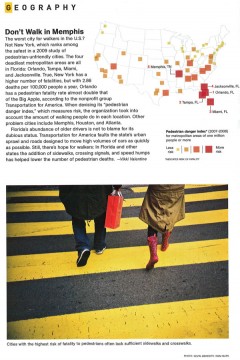 We mentioned this on Twitter when the issue came out back in July, but National Geographic had a nice one-page feature on Dangerous by Design, our study from 2009 ranking metro areas on their relative danger to those on foot and bike, focusing on Florida’s overall risk based on having 4 of the top 10 most dangerous metros. In the last 15 years, more than 76,000 Americans have been killed while crossing or walking along a street in their community, and it’s high time that more attention was paid to this preventable loss of life that we far too often ignore or simple believe to be inevitable.
Helping kids get active and healthy by “keeping them moving”
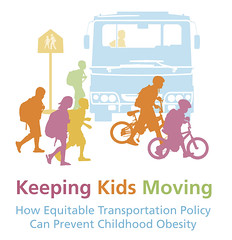 We’re facing an epidemic of childhood obesity, and this could very well be a generation of children who live shorter, less healthy lives than their parents. A healthier transportation system for America’s kids requires change in federal policy. But change will remain out of our grasp without a sense of urgency from everyday people on the ground. So where’s the meeting point between policymakers in Washington and citizens in their neighborhoods?
Dozens of bicyclists ride to USDOT Friday to tell Secretary LaHood “thanks”
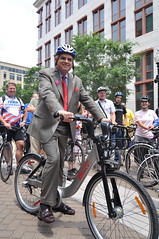 Transportation for America was proud to co-author and circulate a letter thanking Secretary Ray LaHood for USDOT’s policy statement elevating walking and biking in national policy. Last Friday, several of us at T4 cycled with a handful of national partners to DOT Headquarters across town to thank the Secretary in person.
Michelle Obama’s “Let’s Move” report says walking and biking key to healthier kids
 Earlier this month, we highlighted two reports on the integral link between health and transportation. First Lady Michelle Obama’s recent Let’s Move report on childhood obesity goes one step further — endorsing a new surface transportation bill that encourages more walking and biking.
Michelle Obama’s Let’s Move campaign a positive step, but must emphasize transportation voices
In February, First Lady Michelle Obama announced her exciting “Let’s Move” campaign and the goal of seriously confronting childhood obesity in the United States within a generation. Now, the campaign – more formally known as the Presidential Task Force on Childhood Obesity – is getting to work on an action plan to influence federal policy. This is a great start, but there’s an omission: the task force does not include a representative from the U.S. Department of Transportation.
U.S. Transportation Department makes good on promise to ensure our streets are made safer
 Sec. LaHood issued a new directive yesterday that officially shows DOT’s support for improving safety for walking and bicycling — treating them as equal modes of transportation. Last fall we released a report chronicling the 76,000 preventable pedestrian deaths over the last 15 years on streets unsafe for walkers or bikers. Today, DOT made some progress on the issue.
Help us send a message to Secretary LaHood and the USDOT
As our new Dangerous by Design report illustrates, pedestrian safety is a matter of life or death for thousands of Americans each year. With a loss of life equivalent to a jumbo jet going down roughly each month, it is a tragedy that does not get enough attention at nearly any level of government. These are preventable deaths, largely on roads that are not safe for walking or biking. Transportation for America is working to arrange a meeting with U.S. Transportation Secretary Ray LaHood and to deliver the message from our hundreds of partner organizations and thousands of supporters across the country that safer streets must be a priority! Sign our petition today!
New York City sees biking go in one direction — up!
All of the videos from Streetfilms are certainly worth watching, but we wanted to call out special attention to this one, especially on the heels of the Dangerous by Design release yesterday morning. With nearly 5,000 people dying every year on our roads while walking or biking, some cities are working hard to bring those […]
Our three principles

It’s past time to elevate the national conversation about infrastructure beyond just the price tag.
Learn more about our platformLatest From The Blog


There’s a climate cost to America’s freeways, and…
Apr 23rd, 2024


Progress for passenger rail in the South and…
Apr 10th, 2024

I cannot find the zoom link, I registered…
Jan 6th, 2024

A rare look behind the curtain of Transportation…
Jul 28th, 2023

In what Harrison Ford said was his most…
Jul 25th, 2023

Good example, walking to the local taco place…
Jul 24th, 2023