Posts Tagged "accountability"
National transportation policy is a rudderless ship sailing off into oblivion
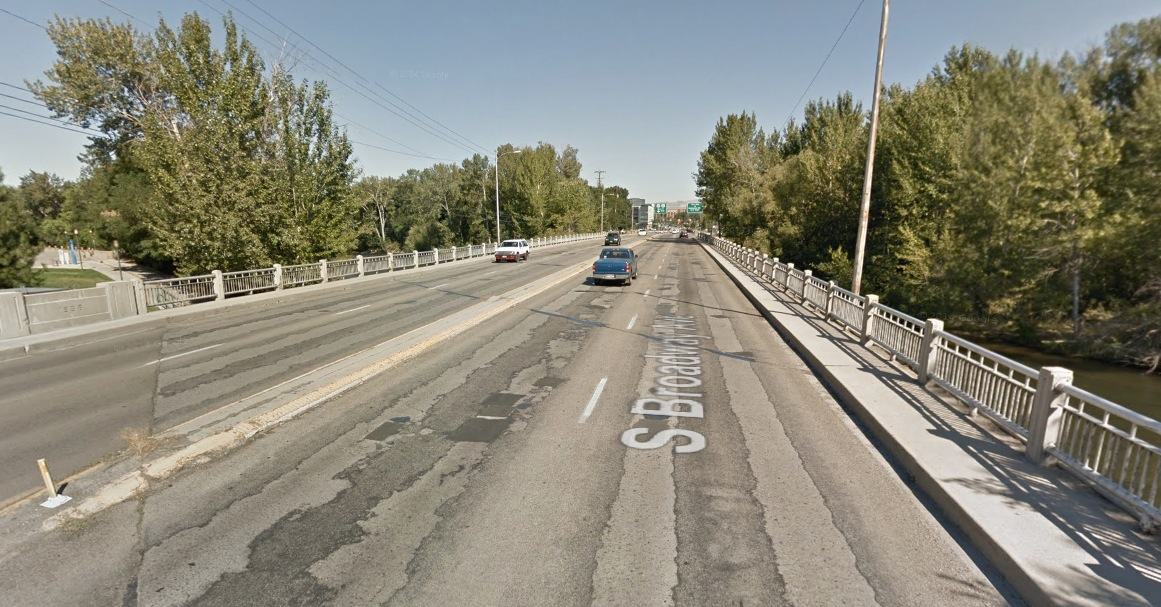
For well over two decades, we’ve had no big-picture guiding purpose for the federal transportation program. Like a ship with a jammed rudder heading off aimlessly into forever, federal transportation policy has been limping along without an overarching purpose or destination in mind. How does this inertia lead us toward all the wrong things?
Did you know that it’s Infrastructure Week once again?
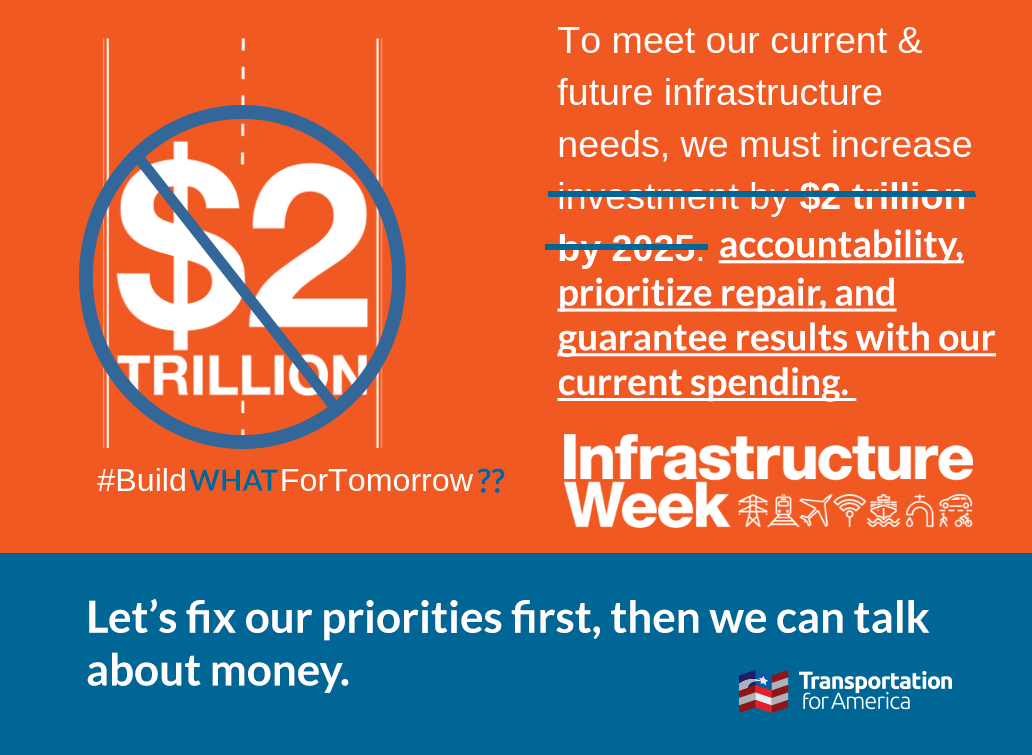
After two solid years of everyone in Washington, DC talking nonstop about a standalone infrastructure bill to pump trillions into America’s infrastructure, we’d understand if you weren’t aware that the last Infrastructure Week ever ended.
Will Oregon’s DOT change how they do business?
Buttressed by public opinion, a new oversight effort and legislative action, momentum is building in Oregon for increasing transparency and accountability in how the state’s transportation agency does its business
Maryland’s governor is fighting a more objective process for choosing transportation projects
While other states and regions across the country are using new tools to evaluate potential transportation projects and pick the ones that offer the best return for taxpayer money, Maryland Governor Hogan and his administration are staunchly opposing similar new policies that add accountability and transparency to that process.
Maryland attempting to bring accountability & transparency into process for selecting transportation projects

Maryland is attempting to join the growing movement of states trying to ensure that transportation projects are selected and built on their merits in a more transparent process. T4America testified today in favor of a bill that would move the needle in that direction.
Update: North Carolina legislature adjourns without addressing political meddling in transportation selection process
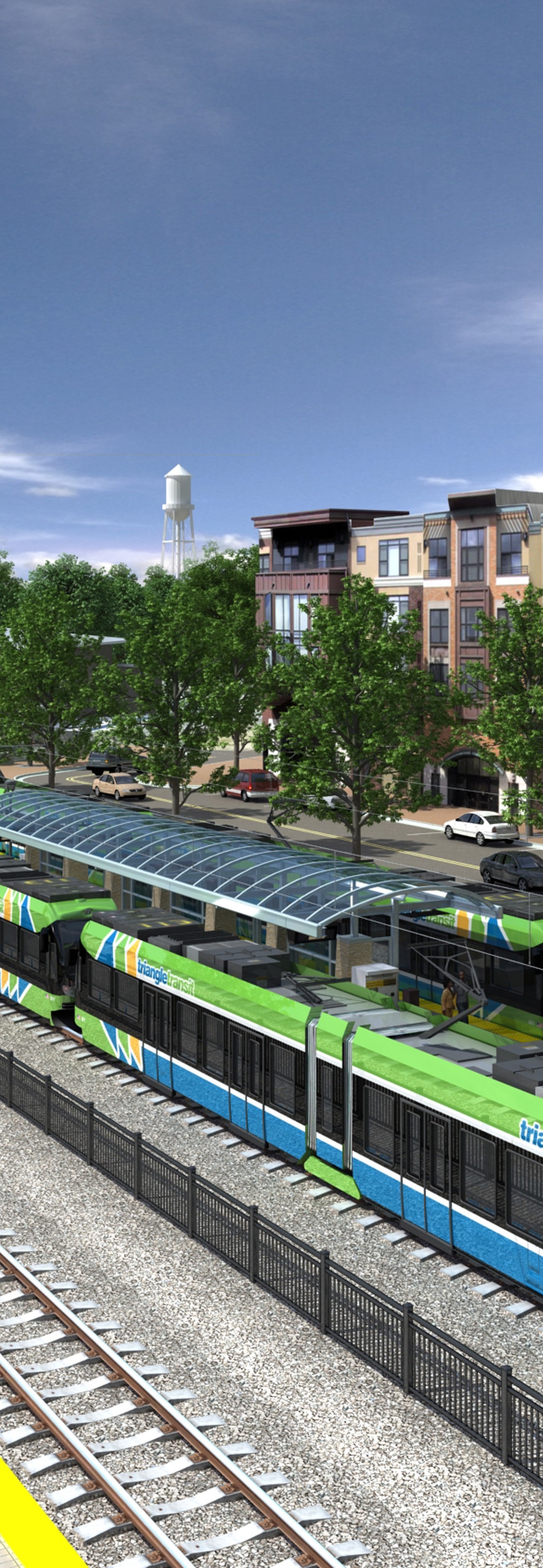
The NC legislature adjourned their session without fixing a damaging cap on state funds intended for a Triangle area light rail project. Their widely decried actions circumvented a new bipartisan state process for evaluating transportation projects on the merits and awarding state funds to the best projects, intended to be free from political meddling.
Politicians meddling with North Carolina’s shift to a merit-based process for choosing transportation projects
Just two years after instituting a new process to choose transportation projects based on merit and award funds in a more transparent process intended to be free of political interference, a handful of North Carolina legislators reinserted politics back into the process in an attempt to stop a light rail project in the Raleigh-Durham metro area.
Louisiana legislature makes a paradigm shift to better prioritize transportation dollars and restore public confidence

Raising new state funds for transportation can be a tough sell, especially if taxpayers don’t have any faith in the process for spending the money already available. Making that process more transparent, accountable and understandable can be a smart first step to increase public support for raising new transportation funding — one hope behind a bill in Louisiana that cleared the state House and Senate by unanimous votes last week.
Second proposed performance measure from USDOT makes some important improvements
You may have missed it amidst the flurry of holidays and the beginning of a new year, but after a long wait, the Federal Highway Administration finally released the second of three proposed rules to measure the performance of our nation’s transportation investments. Unlike the first proposed rule for safety, the news is much better this time around.
Our three principles
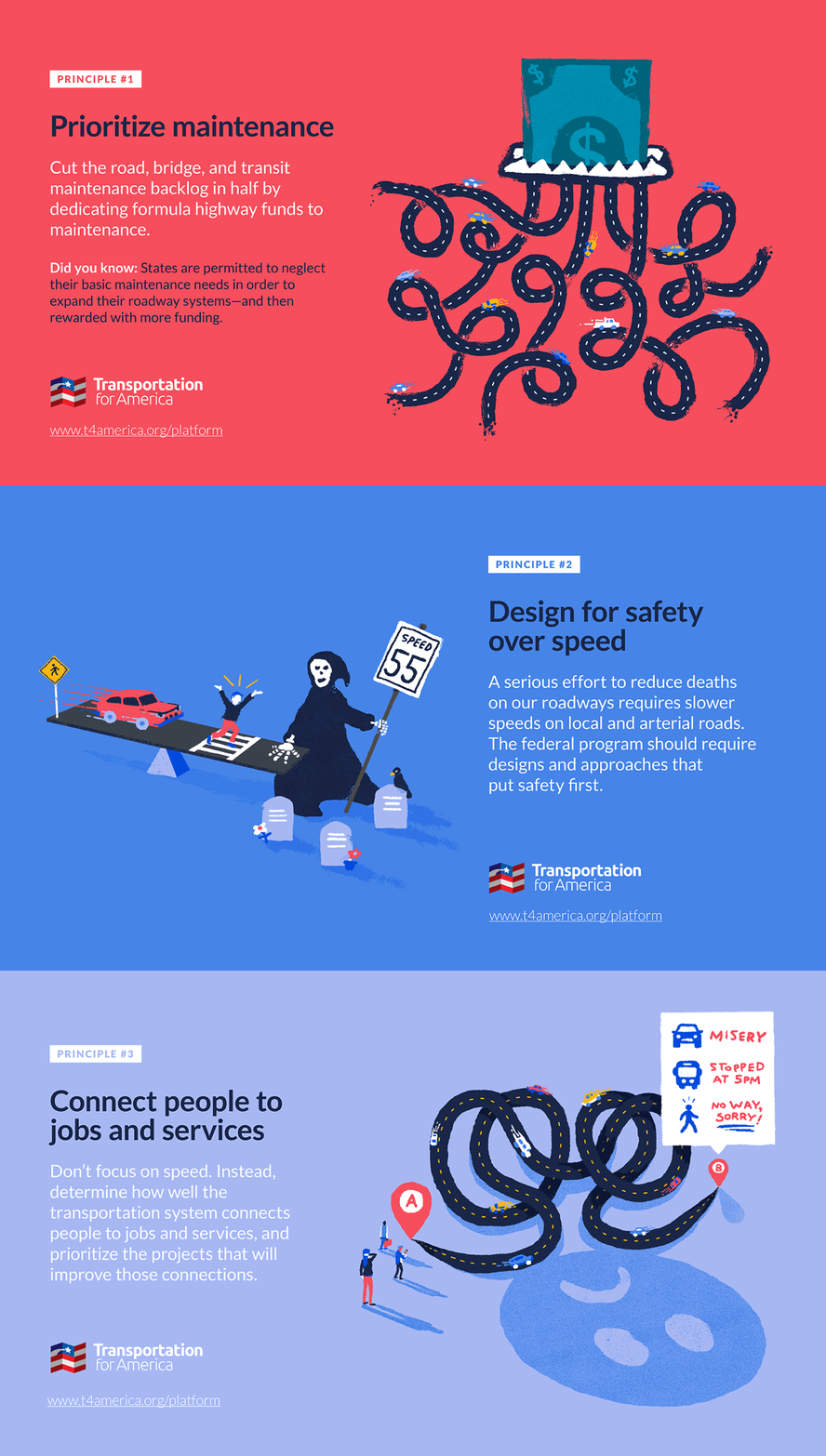
It’s past time to elevate the national conversation about infrastructure beyond just the price tag.
Learn more about our platformLatest From The Blog


There’s a climate cost to America’s freeways, and…
Apr 23rd, 2024


Progress for passenger rail in the South and…
Apr 10th, 2024

I cannot find the zoom link, I registered…
Jan 6th, 2024

A rare look behind the curtain of Transportation…
Jul 28th, 2023

In what Harrison Ford said was his most…
Jul 25th, 2023

Good example, walking to the local taco place…
Jul 24th, 2023