Posts Tagged "bridges"
The USDOT listened, and we thanked them for it — 1,100 times
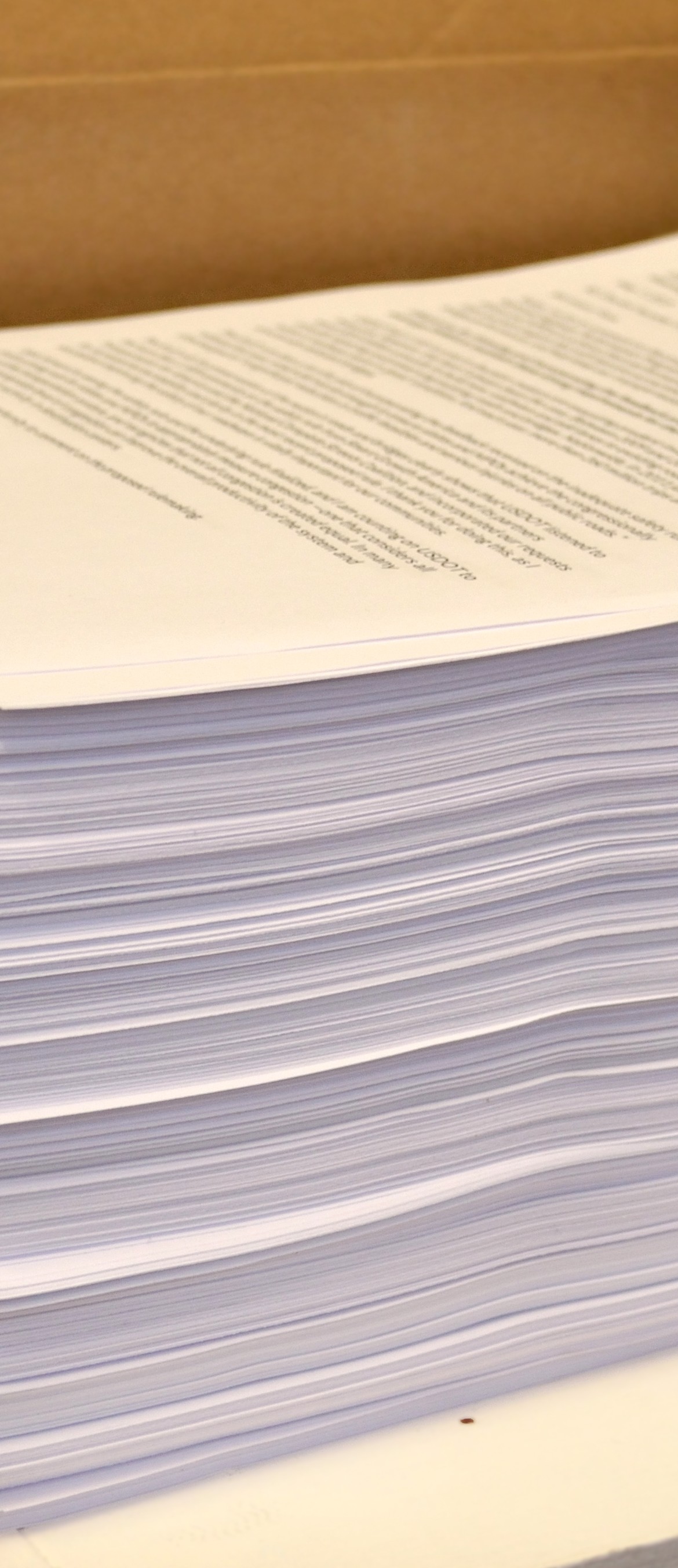
Last Friday, with help from many of you, we delivered almost 1,100 ‘thank you’ letters to the U.S. Department of Transportation for writing strong rules to hold states accountable for the condition of their roads and bridges.
New T4America report chronicles the prevalence of Minnesota’s structurally deficient bridges

As the state legislature debates legislation to increase transportation funding, T4America released a new report looking at the prevalence of structurally deficient bridges in the state of Minnesota. This report is a state-level version of “The Fix We’re In For”, a report we’ve issued several times since 2011, with 2015 statistics for Minnesota.
Hold states accountable for repairing roads and bridges – send a letter to USDOT
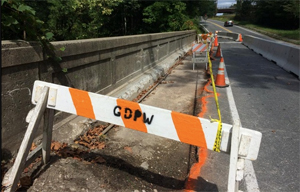
The U.S. Department of Transportation is in the process of writing new rules to hold states accountable for the condition of their roads and bridges. USDOT’s strong first draft rule was a step in the right direction, and we want to thank them — and ensure they don’t bow to pressure to soften these requirements.
Credit where it’s due: With repair rule, the feds listened to public comment
In developing new standards for ensuring our roads and bridges are kept in good condition, officials at the U.S. DOT did something skeptics would find surprising: They really listened to public comment, and reflected it in the newly released rule.
Second proposed performance measure from USDOT makes some important improvements
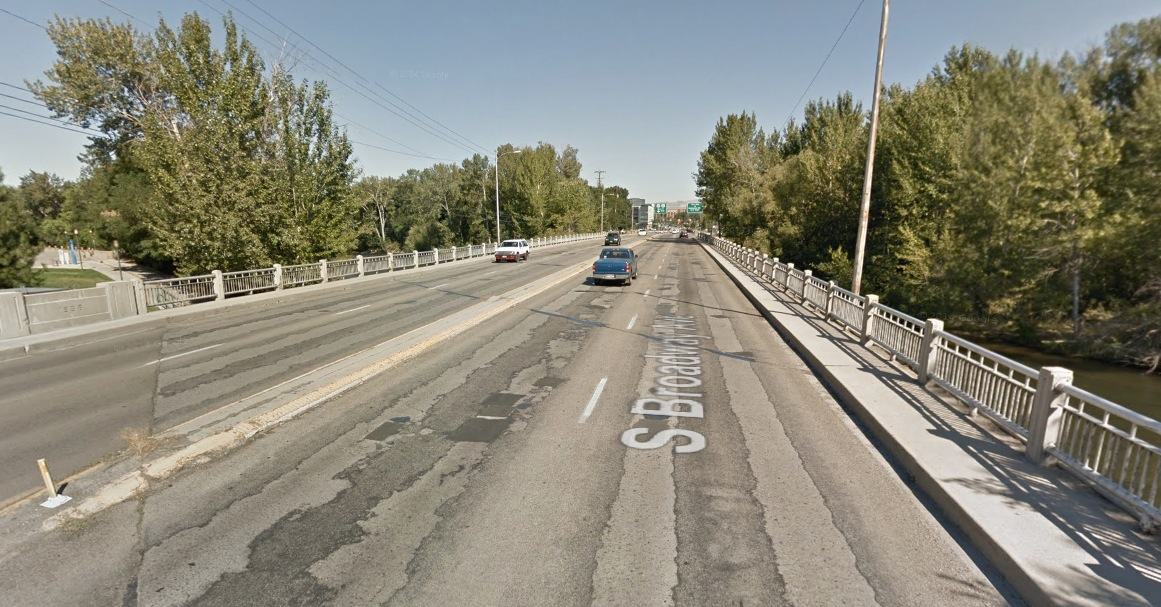
You may have missed it amidst the flurry of holidays and the beginning of a new year, but after a long wait, the Federal Highway Administration finally released the second of three proposed rules to measure the performance of our nation’s transportation investments. Unlike the first proposed rule for safety, the news is much better this time around.
A broke Highway Trust Fund means job losses equal to Denver’s population, President Obama warns

Speaking today at the Key Bridge in Washington, DC, President Obama called on Congress to save the Highway Trust Fund from its pending insolvency, and to adopt a long-term transportation bill on the scale of his proposed four-year, $302 billion program. [Full text here.] In doing so, he retraced the bipartisan history of transportation funding […]
States already scaling back planned work for next year in anticipation of funding crisis
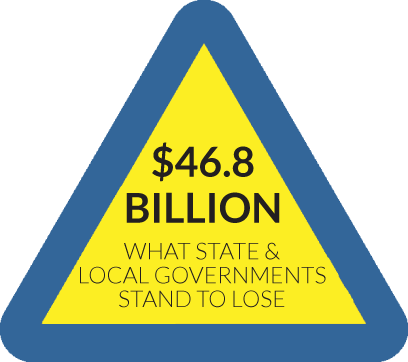
Congressional inaction on saving the nation’s transportation fund would have tangible impacts on projects planned for next year and beyond, forcing many long-awaited projects to halt indefinitely as soon as this summer. Numerous states are already beginning to make plans for a year where no federal money is available for new projects by scaling back plans and tentatively canceling projects.
Highlights from the great coverage of our bridge report
It’s easy to be cynical about our often frivolous media environment these days, but it is heartening to see the seriousness with which outlets of all sizes are treating reports about the need to maintain our aging bridges and other infrastructure. In addition to dozens of newspaper and web reports, more than 500 broadcast outlets have picked up yesterday’s release of the “The Fix We’re in For”, the 2013 edition of our report on bridge conditions nationwide.
The backlog of our country’s deficient bridges is indeed shrinking, but barely
We hope you had a chance to check out our new report yesterday on the state of our nation’s bridges? 1 in 9 US bridges — about 66,500 in total — are rated structurally deficient and in urgent need of repairs, maintenance or even replacement. This is an updated version of the data we released two years ago, and the findings are much the same: Everyday, Americans of all different stripes drive across these deficient bridges, with more than 260 million trips taken each day on these bridges. And though we’ve gotten about 0.5 percent better nationally in the last two years, from 11.5 to 11 percent total deficient, that’s only a difference of about 2,400 deficient bridges.
Release: New report highlights mounting challenge of aging bridges, ranks states
One in nine of the bridges and overpasses American drivers cross each day is rated in poor enough condition that some could become dangerous or be closed without near-term repair, according to an updated analysis of federal data released today by Transportation for America. Nearly 67,000 of the nation’s 605,000 bridges are rated “structurally deficient” and are in need of substantial repair or replacement, according to bridge inspections analyzed in The Fix We’re In For: The State of the Nation’s Bridges 2013. Nearly 8,000 are both structurally deficient and “fracture critical”, meaning they are designed with no redundancy in their key structural components, so that if one fails the bridge could collapse. The Federal Highway Administration estimates that the backlog of troubled bridges would cost $76 billion to eliminate.
One in 9 bridges still “structurally deficient” as average age nears 50 years
 One in nine of the bridges and overpasses American drivers cross each day is rated in poor enough condition that some could become dangerous or be closed without near-term repair, according to our new 2013 report on the nation’s bridges. Lay them all end-to-end and you could drive from Mexico to Canada across the US on one long deficient bridge. Don’t miss our new 2013 report and interactive map.
About those 66,000+ deficient bridges: What did last summer’s transportation law change?
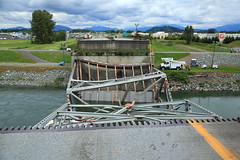 With the second collapse of an Interstate bridge in six years, Americans might expect Congress to leap into action to ensure adequate funding for bridge rehab and replacement. But as we have reminded numerous reporters since an I-5 bridge dropped into Washington’s Skagit River, federal lawmakers instead took a gamble and eliminated the nation’s dedicated bridge repair fund last summer.
Bridge collapse in Washington captures national attention
Unsurprisingly, the sudden collapse of the 58-year-old Interstate 5 bridge over the Skagit River in Washington state last Thursday night captured the attention of the country and virtually all major national news outlets. Just like in the days after the Minnesapolis I-35W bridge collapse — though mercifully no one died in this incident — reporters scrambled to understand the issue of bridge condition and asked the same question: “how could this happen, and could it happen again somewhere else tomorrow?”
Tragic bridge collapse in Washington highlights urgent problem of aging and deficient US bridges
Transportation for America issued the following statement following last night’s collapse of the Interstate 5 bridge over the Skagit River near Mount Vernon, Washington.
“The shocking collapse of a busy Interstate 5 bridge over the Skagit River in Washington State highlights the issue of our country’s aging bridges and what we’re doing to address them. Thankfully, no one was killed or even seriously injured in this collapse, which could not be said about the last high profile bridge collapse in Minnesota.
58-year-old bridge collapses in Washington State on west coast’s most major interstate
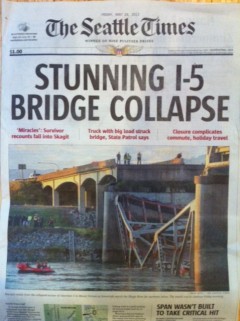 Shortly after the evening commute last night (around 7 p.m. local time) an entire section of the Interstate 5 bridge — both north and southbound lanes — over the Skagit River north of Seattle, Washington collapsed and fell into the river, sending two cars tumbling down into the river, injuring three yet miraculously killing no one. One of those who plunged into the river along with his wife called it a “miracle” that no one was killed or more severely injured.
AP says attacks on transportation enhancements are “exaggerated and misrepresented”
On Friday, we highlighted the disingenuous attempt from some in Congress to tie the need to repair our bridges to the elimination of a tiny program to make it safer to walk or bike on our streets and roads. Senators Rand Paul of Kentucky, Tom Coburn of Oklahoma and John McCain of Arizona have been […]
A real plan to fix bridges, or a reprise of attacks on pedestrian safety?
Our reports calling attention to our nation’s deficient bridges have gained enormous traction in recent weeks, to the point that members of Congress and the White House are citing our data in demonstrating the need for infrastructure investment. Unfortunately, some are using them to make disingenuous attempts to eliminate a small program they’ve been trying […]
Events across the country last week bring sense of urgency to bridge repair
Many communities are taking a close look at Transportation for America’s deficient bridge rankings by metro areas released last week. People are telling their representatives to invest in our infrastructure — and Washington is listening, with President Obama and rank-and-file members of Congress expressing urgency about repairing our crumbling assets. At an event held at the […]
New Report Ranks Deficient Bridges by Metro Areas
 This new report from T4 America ranks metropolitan areas on the condition of their bridges, and finds that more than 18,000 bridges in our largest metropolitan areas are rated “structurally deficient.” This new look at the bridge data from earlier in 2011 finds that just a quarter of deficient U.S. bridges, located in these 102 metropolitan areas over 500,000 people, carry 75 percent of all traffic crossing a deficient bridge each day.
T4’s Andrea Kiepe writes about reaction to Minneapolis bridge collapse, potential for making repair a priority
T4 America’s Minnesota Field Organizer Andrea Kiepe penned a moving piece for the Infrastructurist this week about how the tragic Minneapolis bridge collapse four years motivates her work for transportation reform and investment today. It’s a timely subject too, given the recent decision by the governors of Kentucky and Indiana to shut down the Sherman […]
Our three principles

It’s past time to elevate the national conversation about infrastructure beyond just the price tag.
Learn more about our platformLatest From The Blog


There’s a climate cost to America’s freeways, and…
Apr 23rd, 2024


Progress for passenger rail in the South and…
Apr 10th, 2024

I cannot find the zoom link, I registered…
Jan 6th, 2024

A rare look behind the curtain of Transportation…
Jul 28th, 2023

In what Harrison Ford said was his most…
Jul 25th, 2023

Good example, walking to the local taco place…
Jul 24th, 2023