Transportation For America » u.s. dot

TIGER Grants Offer Critical Support to Communities with Innovative Transportation Projects

February 17, 2010
By Transportation for America

Merit-based program an excellent model for the next transportation authorization

The Obama Department of Transportation today broke historic ground in unveiling projects chosen in a first-ever program to award federal dollars on a competitive basis to innovative projects that address economic, environmental and travel issues at once.

The 51 projects announced under the TIGER grant program, funded by $1.5 billion included in the American Recovery and Reinvestment Act (ARRA), meet a broad array of challenges, including:

  • Bridge replacements in Oklahoma, Michigan, Wisconsin, Kentucky and Indiana that can support multiple modes of travel;
  • Port and freight-rail projects to spur economic growth in Tennessee, Alabama, Mississippi, Virginia, Hawaii, Pennsylvania and Ohio;
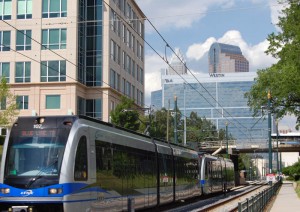
  • Modern streetcar construction to support vibrant urban corridors in Tucson, Dallas, Portland and New Orleans and light rail in Detroit;
  • Innovative highway funding and operations in Texas, North Carolina, Colorado, South Carolina and Arkansas;
  • Bicycle and pedestrian networks in Philadelphia, Indianapolis, and a complete streets project in Dubuque, IA;
  • The long-awaited rebirth of New York’s former Penn Station as Moynihan Station.

“These are the kinds of projects that will create good paying jobs, spur local economic development, revive our city centers and create regional integrated transportation solutions,” said John Robert Smith, the co-chair of T4 America and former Mayor of Meridian, Mississippi. “Today’s announcement clearly shows the administration’s commitment to supporting livability initiatives in metropolitan regions, smaller communities and rural areas alike.”

A complete list of recipients can be found on the US DOT press release.

Project applications had to show multiple benefits, with priority give to these criteria: 1) that projects improve the condition of existing facilities and systems, 2) contribute to the economic competitiveness of the U.S. over the medium- to long-term, 3) improve the quality of living and working environments for people, 4) improve energy efficiency, reduce dependence on foreign oil, reduce greenhouse gas emissions and benefit the environment, and 5) improve public safety.

Secretary LaHood spoke from Kansas City, showcasing the city’s Green Impact Zone, an area of high unemployment and concentrated poverty that is being revitalized with green buildings, clean transportation options including public transportation and bicycle and pedestrian projects.

DOT Secretary Ray LaHood noted that the program was extraordinarily sought-after, garnering 1,400 applications totaling nearly $60 billion for the $1.5 billion pot. “The sheer popularity of this ground-breaking approach is testament to how many states and localities are struggling to build innovative projects that simply don’t happen under the pre-existing program,” Mayor Smith said.

“We hope this is a glimpse of what the next transportation authorization could look like,” Smith added. “Congress needs to build on this success and authorize the surface transportation program along similar lines to support innovation and integrated transportation solutions in communities of all sizes.”

Bookmark and Share

Feds announce change to consider livability in funding transit projects

January 13, 2010
By Stephen Lee Davis

TriMet MAX on the Transit Mall Originally uploaded by paulkimo90
From the Transportation for America Flickr group.

Following through on a policy change hinted at for much of 2009, Transportation Secretary Ray LaHood announced this morning that federal transit officials would begin considering expanded criteria as they select which transit projects to fund, bringing a new focus on improving livability and sustainability.

At the Transportation Research Board’s annual conference this morning, Secretary LaHood made it clear that a wider range of positive benefits would be considered in the application process for new transit lines or systems. These applications were being unfairly burdened by the previous administration’s cost-effectiveness measurement, which left out such benefits as energy efficiency, economic development and reduced emissions.

“Our new policy for selecting major transit projects will work to promote livability rather than hinder it,” he said. “We want to base our decisions on how much transit helps the environment, how much it improves development opportunities and how it makes our communities better places to live.”

Of course, the one problem that this will not fix is the very high demand for a limited supply of New Starts funding. Even under the old narrow rules for winning approval, only a small percentage of the many applicants were receiving limited funding, and even then, the federal government was only matching about half of local funds, compared with at least 80 percent for road projects.

Still, this change is keeping in line with the positive reforms contained in Chairman Jim Oberstar’s draft reauthorization bill released back in the summer. In June, we quoted the bill’s section on New Starts reform, noting that the proposal to remove the cost-effectiveness requirement and include other “livability” criteria “equalizes the treatment of proposed transit projects and elevates the importance of the benefits that will occur in the community once the project is built.”

The Obama administration and all the leaders at USDOT and the Federal Transit Administration are to be praised for their leadership in changing this program for the better. The next step is securing a greater share of funds for public transportation in the upcoming reauthorization and improving federal match rates to equalize the choices state or regional leaders face between new highways and new transit lines.

Update: Chairman Oberstar responded with a statement of his own praising the change, also observing that New Starts needs greater funding to meet the overwhelming demand. ”Now we need increased investment dollars to follow this reform, so that we can move forward with transit projects that relieve congestion, reduce emissions, increase our energy independence, and promote more livable communities across the country,” he said. (From Elana Schor’s post on Streetsblog Capitol Hill)

Bookmark and Share

Secretary Ray LaHood on the the Daily Show with Jon Stewart

December 16, 2009
By Stephen Lee Davis

U.S. Secretary of Transportation Ray LaHood was the guest on the Daily Show with Jon Stewart last night, and got an easy question right off the bat. When asked by Stewart about how a high-powered CEO could get from New York to D.C. “when it’s foggy out,” alluding to the three Wall Street CEOs who had their plane grounded in last week’s fog, missing a meeting with the President, Ray LaHood gave a simple answer.

“Amtrak runs in the fog,” he said.

Watch to the end for LaHood’s plug for the investments in high speed passenger rail. The applause that follows certainly sounded organic — like a group of people who are excited about one day getting to ride speedy passenger rail from city to city.

The Daily Show With Jon Stewart Mon – Thurs 11p / 10c
Ray LaHood
www.thedailyshow.com
Daily Show
Full Episodes
Political Humor Health Care Crisis

Bookmark and Share

Secretary LaHood receives your message loud and clear, responds in kind
November 17, 2009
By Stephen Lee Davis

DSC_0348 Originally uploaded by Transportation for America
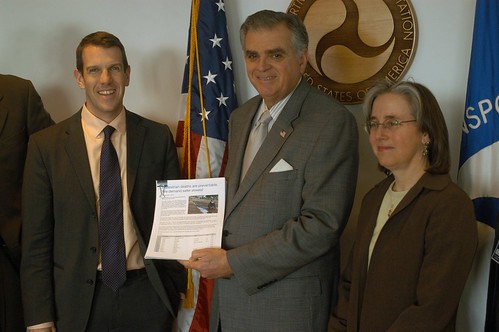
Secretary Ray LaHood holds the petition from Transportation for America and thousands of supporters while flanked by T4 America campaign director James Corless, left, and Barbara McCann of the National Complete Streets Coalition Monday afternoon at USDOT

Just a week after the release of Dangerous by Design, our report on the epidemic of pedestrian deaths, Transportation for America and six of our key partners had the opportunity to meet with Transportation Secretary Ray LaHood. During the meeting yesterday, we delivered a petition with thousands of signatures urging him to make pedestrian safety and complete streets a USDOT priority.

He responded with resounding support, telling T4 America, “the right of way doesn’t just belong to cars — it belongs to pedestrians and bicyclists as well.”

He added, “the DOT Safety Council is going to look at this report and work with advocacy groups to ensure our streets are as safe as possible.”

After Dangerous by Design was released last Monday, we asked for your help sending a strong message to Transportation Secretary Ray LaHood that safer, complete streets must be a priority at USDOT. The response was fantastic. In just five days, we received more than 4,100 signatures from people in 47 U.S. states on a petition to Secretary LaHood.

Due in part to the massive media coverage that Dangerous by Design received last week from coast to coast, we were able to set up this meeting with the Secretary and three of his top deputies to present him with the petition, talk about the report and discuss the urgency of pedestrian and bicycle safety. With the petition and a copy of Dangerous by Design in front of him, LaHood listened intently as T4 America’s James Corless and others talked about the epidemic of preventable deaths — and what we can do to turn the tide and keep pedestrians safe.

DSC_0334_2 Originally uploaded by Transportation for America

Secretary LaHood was hopeful that federal transportation policy can better accommodate all users and keep them safe, and that now is the right time to make that change.

“I think this Congress gets it now,” Secretary LaHood told us. “Certainly in part because of advocates like you.” He acknowledged that making the streets in our communities safe and accommodating for everyone dovetails well with the Obama administration’s focus on livability.

He stressed that safety is the top consideration for everything they do at USDOT and urged T4 America to take the report directly to Congress as they continue discussions on the full six-year transportation bill. He also asked for more copies of Dangerous by Design (on their way, Mr. Secretary!)

Transportation for America was joined in the meeting by partners from America Bikes, the American Public Health Association, AARP, the National Complete Streets Coalition, the Safe Routes to School National Partnership and Smart Growth America.

View the entire set of photos from the meeting in our Flickr stream, and check back here later today for some more comments on the meeting.

DSC_0376 Originally uploaded by Transportation for America
Barbara McCann of the National Complete Streets Coalition, right, tells Secretary LaHood a story from Cary, Illinois about Nate Oglesby, a young man who was killed in 2000 on his bicycle because he was crossing the only bridge over the Fox River — one that had no safe lanes for pedestrians. (Two other teens had died there previously.) Lanes were eventually added to the bridge at significant cost, but as McCann noted, “it would have saved money and lives to have just done it right in the first place.” Complete Streets policies would ensure that the needs of all users are considered during the planning phase of a project.

Bookmark and Share

U.S. DOT Secretary LaHood Announces DOT Safety Council Will Address Pedestrian Safety Following T4 America Report

November 16, 2009
By Transportation for America

Ray LaHood Petition Originally uploaded by Transportation for America
U.S. Transportation Secretary Ray LaHood sits behind a copy of Dangerous by Design and the petition signed by over 4,100 Americans asking USDOT to make safer streets a priority. More photos below.

In a meeting today with Transportation for America, Secretary LaHood commits to working with advocacy groups and reviewing policy to address pedestrian safety.

U.S. Transportation Secretary Ray LaHood today pledged that the DOT Safety Council will take up the issue of pedestrian safety and work with advocacy groups to make America’s streets safer for everyone who uses them.

“The right of way doesn’t just belong to cars — it belongs to pedestrians and bicyclists as well,” said Secretary LaHood. “The DOT Safety Council is going to look at this report and work with advocacy groups to ensure our streets are as safe as possible.”

Secretary LaHood made the commitment during a meeting with Transportation for America and six coalition partners prompted by last week’s release of a report documenting preventable pedestrian deaths nationwide. More than 100 localities and states have adopted complete streets policies, requiring that urban and suburban roadways be designed for the safety and comfort of motorists, pedestrians, bicyclists and public transportation riders alike.

According to Dangerous by Design: Solving the Epidemic of Preventable Pedestrian Deaths (and Making Great Neighborhoods), more than 76,000 preventable pedestrian deaths over the last 15 years in America. That statistic is roughly equivalent to a jumbo jet crashing every month. Most pedestrians were killed on streets designed exclusively to move vehicles, with little or no provision for the protection of people on foot or bicycle, the authors found.

Secretary LaHood already has demonstrated a strong interest in safety with a distracted driving initiative, the creation of a new Safety Council and his overall support for community livability in general. By adding Complete Streets to his list of safety priorities, he and his department can help ensure that every road project facilitates safe travel for everyone — including vulnerable pedestrians.

“Secretary LaHood’s leadership on the entire issue of safety is welcome, indeed,” said James Corless, director of Transportation for America. “In elevating pedestrian and bicyclist safety to a national priority, the secretary is taking a long overdue step that will help to save lives, promote healthy levels of exercise in Americans’ everyday lives and make our neighborhoods, towns and cities even better places to live.”

Corless was joined in Monday’s meeting by representatives from the AARP, America Bikes, the American Public Health Association, National Complete Streets Coalition, the Safe Routes to School National Partnership and Smart Growth America.

“This is an important commitment toward a goal we all share,” said Elinor Ginzler, AARP’s Senior Vice President for Livable Communities. “When Americans walk out of their homes to get to where they need and want to go, they should be confident in their travel safety.”

During the meeting representatives of the Transportation for America coalition presented the secretary with a petition signed by more than 4,100 Americans in the days following last week’s report release. Dangerous by Design was co-produced by the Surface Transportation Policy Project, Transportation for America and the Tri-State Transportation Campaign.

Bookmark and Share

FAQ: Transportation bill expires, emergency extension passed

October 1, 2009
By Stephen Lee Davis

The Senate Garage Fountain (Olmstead Fountain) and the US Capitol Originally uploaded by kimberlyfaye

UPDATED: We posted a similar question-and-answer document covering the specific issue of rescissions. Read that here.

As you may have read on Streetsblog Capitol Hill, where Elana Schor has been closely tracking the inexorable march toward expiration of the old transportation bill (SAFETEA-LU), the Senate passed an emergency one-month extension of the current law last night, just hours before the deadline.

There have been a lot of questions flying around today, so we’re going to try to post some simplified answers to clear up any confusion. Federal transportation policy is not the simplest code to decipher, but we’ll try our best to start with the basics.

The short explanation?

The Senate failed to pass an extension of their own to match the House’s recent 3-month extension before the transportation bill expired last night.

To prevent transportation spending from stopping entirely, Congress added a one-month extension of current transportation law to a last-minute bill (a Continuing Resolution) that keeps the federal government from shutting down in case they don’t pass the required individual spending bills for the next year. The one-month Continuing Resolution did not address the scheduled loss of $8.7 billion in transportation funds that will be taken from states, starting today.

Click through the jump below if you want much more detailed information.

(Continue Reading)

Bookmark and Share

Cash for Clunkers already headed to the scrap pile?

July 30, 2009
By Stephen Lee Davis

CARS: Rusty and McQueen
Rusty and McQueen from Pixar’s CARS

UPDATED (7/31, or less than 24 hours later): Acting faster than anyone probably thought Congress was capable of, the House approved an influx of $2 billion in additional funding today to the program to keep it going. The Senate is scheduled to take up the measure next week.

The government’s new Cash For Clunkers program (C.A.R.S) has been active for less than a week, but it looks to be heading for a premature end. The Associated Press is already reporting that the the Department of Transportation has been making calls to legislators to let them know that they’re planning to suspend the program at midnight tonight. (Thursday 7/30)

Through late Wednesday, 22,782 vehicles had been purchased through the program and nearly $96 million had been spent. But dealers raised concerns about large backlogs in the processing of the deals in the government system, prompting the suspension.

A survey of 2,000 dealers by the National Automobile Dealers Association found about 25,000 deals had not yet approved by NHTSA, or nearly 13 trades per store. It raised concerns that with about 23,000 dealers taking part in the program, auto dealers may already have surpassed the 250,000 vehicle sales funded by the $1 billion program.

There is still the possibility that the program could be extended with another infusion of cash, which the AP story does not mention.

The relative merits of the program and the effect on actually having any impact on improving fleet vehicle mileage have been debated elsewhere, but it was clearly a popular program during its first week in existence. (Did you see the TV commercials?) But as Elana Schor over at Streetsblog Capitol Hill pointed out the other day, some experts claimed that only a marginal number of cars would be bought that wouldn’t have been purchased regardless.

While the DOT estimates that as many as 250,000 autos will be scrapped before the initial infusion of cash runs out, car industry forecasters at Edmunds.com believe only 50,000 extra sales will result, leaving the taxpayers with a whopping $20,000 bill for every new car purchased.

Bookmark and Share

T4 America Co-Chair Shelley Poticha to head new HUD Office of Sustainable Housing and Communities

July 24, 2009
By Transportation for America

CONTACT: David Goldberg
202.412-7930
david.goldberg@T4America.org

The Obama Administration has appointed Transportation for America Co-Chair Shelley Poticha to be Senior Advisor for Sustainable Housing and Communities at the U.S. Department of Housing and Urban Development, the department announced today.

Poticha, who is also President and CEO of Reconnecting America, is expected to head a new HUD Office of Sustainable Housing and Communities that would be created under legislation to be sponsored by Senate Banking Committee Chairman Chris Dodd (D-CT).

“Shelley will help lead HUD’s effort to change the way we think about how our communities fit with how Americans live their lives,” said HUD Secretary Shaun Donovan. “Her wealth of experience will help move us forward in creating sustainable, greener and smarter communities.”

Shelly Poticha from Reconnecting America
Photo via Reconnecting America

Poticha has been Co-Chair of the Transportation for America campaign since its launch in 2008.  As president and CEO of the national nonprofit Reconnecting America since 2004, she has become a national leader for the reform of land use and transportation planning and policy. In that role, and as former executive director of the Congress for the New Urbanism, she has helped stimulate a national conversation about the role of transportation in shaping communities and making them more sustainable and affordable. She also has been a tireless advocate for diverse and inclusive neighborhoods.

“Shelley understands how transportation, housing, energy and environmental policies impact the real lives of people,” said James Corless, Director of Transportation for America. “She will be a powerful voice to ensure we make smarter investments at the federal level to make American communities safer, healthier and more prosperous. We are sad to lose her leadership of our campaign, but are proud to see her take on this new and exciting challenge.”

“Shelley has worked with all levels of government on the issues of livability, sustainability and affordability. Secretary Donovan couldn’t have made a better choice,” said New York City Transportation Commissioner Janette Sadik-Khan, President of Reconnecting America’s Board of Directors and a member of the T4 America executive committee. “Shelley is one of this country’s foremost experts on sustainable communities.”

Poticha will advise HUD Deputy Secretary Ron Sims on sustainability issues. Sims was previously County Executive for King County, Washington.

“Shelley is a visionary and well-respected expert in growth management and urban policy and will help all of us focus on how to create better living environments for all Americans,” Sims said.

HUD’s Office of Sustainable Housing and Communities will provide technical and policy support for energy, green building and integrated housing and transportation programs at HUD and around the nation. Additionally, the office will manage the department’s key relationships with other federal agencies.

Poticha has helped forge an interagency partnership between HUD and the Federal Transit Administration to link transit and land use policy and funding, and to study the interplay between housing and transportation costs. One of the products of this partnership was a report entitled “Realizing the Potential: Expanding Housing Opportunities Near Transit,” which examined the strategies being used to create and preserve mixed-income housing near transit in five case study regions. The report was authored by the Center for Transit-Oriented Development, a partnership of Reconnecting America, the Center for Neighborhood Technology and Strategic Economics. The report is available here.

Shelley has co-authored several books, including The New Transit Town: Best Practices in Transit-Oriented Development, Street Smart: Streetcars and Cities in the 21st Century, and The Next American Metropolis, as well as the Charter of the New Urbanism, and many reports and white papers.

Bookmark and Share

T4 America co-chair appointed to HUD’s sustainable communities office

July 24, 2009
By Stephen Lee Davis

Shelly Poticha from Reconnecting America
Photo via Reconnecting America

Shelley Poticha, president of Reconnecting America and a co-chair of the Transportation for America campaign, has been appointed to be senior advisor of Sustainable Housing and Communities at the U.S. Department of Housing and Urban Development.

It’s a new office at HUD that would be created by legislation currently being assembled by HUD and Senate Banking Committee Chairman Chris Dodd. Among the other duties involved, she would be a HUD representative in the recently-announced EPA/HUD/DOT livable communities partnership.

From the Transportation for America statement:

“Shelley understands how transportation, housing, energy and environmental policies impact the real lives of people,” said James Corless, Director of Transportation for America. “She will be a powerful voice to ensure we make smarter investments at the federal level to make American communities safer, healthier and more prosperous.  We are sad to lose her leadership of our campaign, but are proud to see her take on this new and exciting challenge.”

We’ll have a full statement and press release up later today. UPDATED: Full T4 statement and release has been posted here.

Bookmark and Share

56 million people in rural America looking for better transportation solutions

July 17, 2009
By Lilly Shoup

Ray LaHood on a trainA top priority in the transportation debate is addressing the mobility needs of the 56 million residents of rural areas and small towns in America – about 20 percent of the population of the United States. Rural areas and small towns often fall through the cracks of federal transportation policy, which focuses on statewide priorities for building new highways and often overlooks local needs and preferences.

Access to jobs, schools, shopping, and critical community services is just as vital for Americans living in small cities, towns and rural communities. Transportation for America has been working closely with our coalition partners on this important issue for some time. Now, it looks like Secretary of Transportation Ray LaHood is also getting on board.

Listening to folks at the La Crosse Interstate Fair in Wisconsin this week, he heard many of the same things that we already know:

  • It’s getting harder financially to depend on a truck or car for all of a family’s transportation needs.
  • Rural residents need public transportation just like city-dwellers do.
  • Access to commercial air service is increasingly difficult for rural areas.
  • Shippers of grain and other products need better freight options to get rurally produced goods to markets.

Clearly, the transportation system in rural areas and small towns faces challenges and demands that are unique from those in our metropolitan areas. Small cities and towns have higher concentrations of older Americans and families in poverty who would absolutely benefit from more affordable transportation options, beyond just driving. In addition, children in rural areas are 25 percent more likely to be overweight or obese than those in urban areas and face unique barriers to being active and maintaining a healthy weight. Non-metro areas have a larger share of people over age 65 (15 percent) than the country as a whole (12 percent) particularly across the middle of the country. (According to 2004 numbers.)

These challenges are amplified by global changes in the economic marketplace, insufficient funding to maintain substandard or unpaved roads, improve public transportation services, and upgrade or replace substandard and deteriorating bridges.

Our nation’s transportation infrastructure should provide access for all Americans, regardless of their geographic location, age, income, or disability status. While there are no easy answers here, Secretary LaHood’s comments are a good starting point for reframing the debate towards policy options that benefit all Americans, regardless of geography.

Bookmark and Share

Older posts »

About Us | Our Partners | Contact Us | For The Media | Become a Partner

Transportation for America
1707 L Street NW Ste. 250
Washington, DC 20036
202-955-5543

Creative Commons License
This site is licensed under a
Creative Commons License
.