Transportation For America » pedestrian

U.S. Transportation Department makes good on promise to ensure our streets are made safer
March 16, 2010
By Stephen Lee Davis

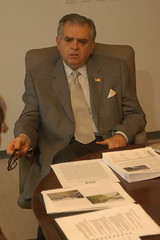
Secretary of Transportation Ray LaHood issued a exciting new directive yesterday that officially shows DOT’s support for improving safety for walking and bicycling and the importance of integrating them into transportation systems — treating them as equal modes of transportation.

Last fall we released a report chronicling the tragedy of 76,000 preventable pedestrian deaths over the last 15 years. “Dangerous by Design” took a hard look at our often unsafe streets that are engineered for speeding cars with little or no provision for people on foot, in wheelchairs or on a bicycle.

DSC_0376 Originally uploaded by Transportation for America

When that report was released, we asked supporters like you across the country to sign a petition to Transportation Secretary Ray Lahood asking him to support Complete Streets at DOT, and more than 4,100 of you responded. We took that petition directly to Secretary Lahood back in November of 2008, and afterward, he told T4 America, “the right of way doesn’t just belong to cars — it belongs to pedestrians and bicyclists as well. The DOT Safety Council is going to look at this report and work with advocacy groups to ensure our streets are as safe as possible.”

Yesterday, Secretary Lahood and DOT responded by turning his words to us from November into official DOT policy with the release of a DOT “policy statement.”

The DOT policy is to incorporate safe and convenient walking and bicycling facilities into transportation projects. Every transportation agency, including DOT, has the responsibility to improve conditions and opportunities for walking and bicycling and to integrate walking and bicycling into their transportation systems. Because of the numerous individual and community benefits that walking and bicycling provide — including health, safety, environmental, transportation, and quality of life — transportation agencies are encouraged to go beyond minimum standards to provide safe and convenient facilities for these modes.

Or as he described it more simply on his Fastlane blog yesterday, “This is the end of favoring motorized transportation at the expense of non-motorized.”

We applaud the Secretary’s work on this issue and are especially thankful for the thousands of you who wrote a letter to Congress or signed our petition to Sec. Lahood urging him to use all the powers at DOT’s disposal to make safe, complete streets the norm all across America. Your voices were heard, and policy has changed.

“This is an issue that has been ignored far too long, even as thousands have died or been injured unnecessarily just by doing something as simple as trying to cross the street,” said T4 America director James Corless.

“We thank Secretary Lahood for his leadership at DOT and for elevating this urgent issue to the level of prominence that it deserves. Americans deserve have a safe route for walking to the store, walking their kids to school, or walking to the bus stop at the end of their block to get to work. Taking these simple steps to consider the needs of everyone who uses a street — bicyclist, pedestrian, or wheelchair user — is exactly what we were hoping for when we took our message into Secretary Lahood’s office last November. It can help us stay healthier by giving us one more option for travel, and Secretary Lahood is spot-on when he says that it’s a key part of making livable neighborhoods.”

This certainly doesn’t mean that the issue is over. As Barbara McCann with the National Complete Streets Coalition reminds us, there is still no official federal requirement for complete streets on projects the feds spend money on. And only a fraction of states, cities, and towns have rules on the books requiring them to ensure the safety of all users when they build or retrofit a street or road.

DOT is saying all the right things in this statement, but they need the legislative authority and money from Congress to line up with their excellent intentions.

So we’ve taken a first step. A big, important leap into a safer world for everyone who uses our streets. But there is more left to do.

Bookmark and Share

Tell Congress: Get America back on its feet with investment in healthy transportation!

March 8, 2010
By Stephen Lee Davis

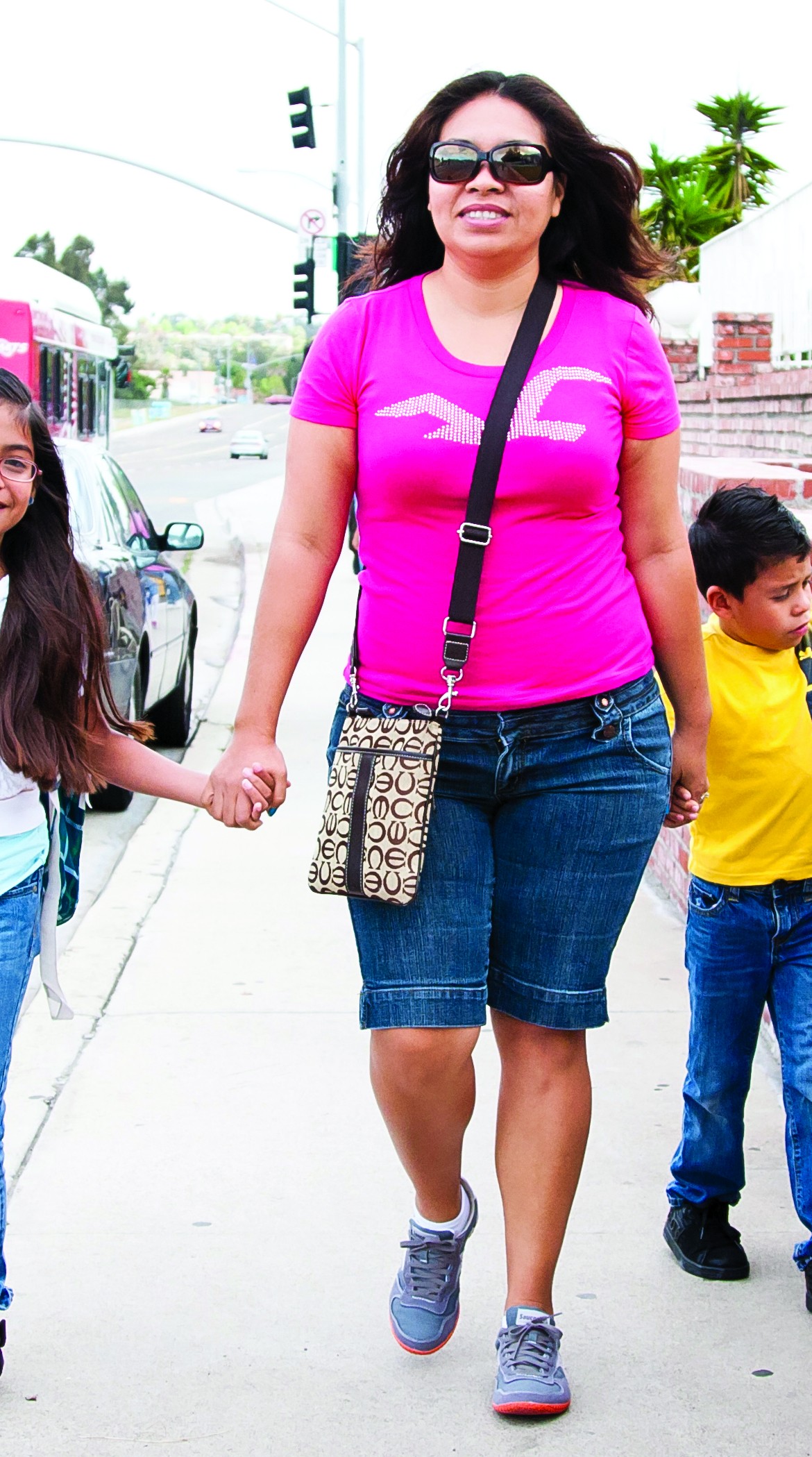
s_walk Originally uploaded by Transportation for America

In the last 15 years, 76,000 Americans have been killed while walking or simply crossing the street.

But help could be on the way. Rep. Earl Blumenauer introduced a bill last week to create a $2 billion competitive grant program to fund safe networks for biking and walking — giving states and cities the resources they need to start building projects they have waiting in the wings. This week, more than 700 bike advocates are descending on Capitol Hill to drum up strong support for the program while in D.C. for the National Bike Summit.

We need to back them up: Send a letter to your representative urging them to co-sponsor the Active Community Transportation Act (H.R. 4722).

This bill is a no-brainer. It will make America’s roadways safer, create jobs, reduce traffic congestion, cut emissions, and promote healthy living. It even pays for itself — as we make biking and walking safer and more accessible, we save billions of dollars on reduced healthcare, gasoline, and environmental costs.

And if we build it, they will come! Half of all trips taken in the United States could be accomplished with just a 20-minute bike ride, and a quarter are within a 20-minute walk. We need to make it safer and easier to make those trips on bike or foot. Polls have shown that Americans think their cities and communities should be more walkable.

Let’s get America back on its feet! Send a message to your representatives asking them to co-sponsor the Active Community Transportation Act.

Thanks to everyone who has already taken action today, retweeted the email alert, or posted it to Facebook to help us spread the word.

Bookmark and Share

Florida county heeds call for complete streets days after report’s release
November 13, 2009
By Sean Barry

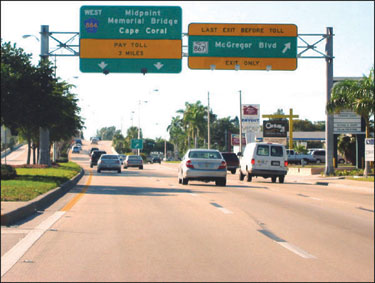
--lee_county_imageIt is always gratifying to see change happen, especially when change happens fast.

This week, within a day of the release of the Dangerous by Design report which showed the four most dangerous cities for pedestrians were in Florida, a key region in Florida had adopted one of the report’s recommendations and the campaign’s key platforms.

The report ranks metro areas across the country based on the relative danger to pedestrians in those areas. Florida newspapers have taken a particular interest in the report because four of the top ten most dangerous cities for walking are located in the Sunshine State.

(The report is a continuation of STPP’s past “Mean Streets” series, which have traditionally contained at least one Florida city in the rankings. Some have made great steps to increase safety. See p.39 of the full report for St. Petersburg’s success story of improving safety through new sidewalks, crosswalks and bike paths.)

In a Monday morning editorial, the Ft. Myers News-Press encouraged officials in Lee County, located in Southwest Florida, to adopt a “Complete Streets” resolution, committing the region to making roads safe for all users. The editorial cited the Dangerous by Design report in its recommendation.

BikeWalkLee, a countywide coalition and T4 America partner advocating for safer, complete streets led the charge for passage.

“During the public comment period, commissioners heard from senior citizens who want to maintain mobility after they no longer drive; parents who want a place for their children to safely walk and bike; high school and college students who want a more livable community as they make their careers here; public health officials concerned about the obesity epidemic, and emergency room doctors who see the tragic results every day of Lee’s dangerous roads,” said Darla Letourneau, a leader of BikeWalkLee.

Lee County Commissioners not only heeded the call, they took action the following evening. By a unanimous vote, commissioners adopted a resolution endorsing complete streets principles. Commissioner Frank Mann called the measure “forward thinking” and “something that we should have been doing for a number of years.”

Quick turn-around like this is heartening, and the enormous amount of media coverage generated by the report’s release could still spark more action in other parts of country. This happy ending is also a reminder to transportation advocates that personalizing policy is a great way to keep our agenda moving forward. “Complete Streets” sound abstract without the proper context, but become much more compelling when the policy’s goal is humanized — combating unnecessary, preventable pedestrian deaths.

Lee County is a great example for other communities and, we hope, a sign of more progress to come. Kudos to BikeWalkLee for their hard work to bring about this change.

Have a similar story to share of a dangerous community making a change this week? Share it in the comments.

Eryn Rosenblum of Transportation for America contributed to this report.

Bookmark and Share

Dangerous by Design

November 9, 2009
By Stephen Lee Davis

Dangerous by Design 600px web tease

What would the national reaction be if a jumbo jet full of passengers went down with regularity every 31 days or so? How loud would the calls be for a fundamental change in airline safety? It’s easy to imagine the shock and outrage if such a thing happened. Yet that is essentially what happens every year with preventable pedestrian fatalities on our nation’s streets and roads.

Every year, nearly 5,000 Americans die preventable deaths on roads that fail to provide safe conditions for pedestrians. This decade alone, more than 43,000 Americans – including 3,906 children under 16 – have been killed while walking or crossing a street in our communities. With more than 76,000 Americans dying in the last 15 years, it’s the equivalent of a jumbo jet going down roughly every month, yet it receives nothing like that kind of attention.

A new report from Transportation for America and the Surface Transportation Policy Partnership, Dangerous by Design: Solving the Epidemic of Preventable Pedestrian Death (and Making Great Neighborhoods), ranks metropolitan areas based on the relative danger of walking.

Download the full report, see the comprehensive rankings and view all of the companion tables of data online right here: http://t4america.org/resources/dangerousbydesign. After you’ve taken a look, ask U.S. Transportation Secretary Ray LaHood to make pedestrian safety a priority for the administration. Pedestrian deaths are preventable, and we demand safer streets!

Many of these preventable deaths are occurring along roadways that are dangerous by design, streets engineered for speeding cars with little or no provision for people on foot, in wheelchairs or on a bicycle.

YikesPedestrian Originally uploaded by Transportation for America
Look carefully in the turning lane above the center of the photograph. There’s a pedestrian trying to cross this 7-lane urban arterial road. See any crosswalks anywhere on the road? Photo courtesy of Dan Burden.

Over the last several decades, many of our cities and communities have seen the same shift of daily business from walkable, downtown Main Streets to wide, fast-moving state highways. These “arterial” roads are the new main streets in most communities, drawing shopping centers, drive-throughs, apartment complexes and office parks. Unlike the old walkable main streets, however, the pressure to move as many cars through these areas as quickly as possible has led transportation departments to squeeze in as many lanes as they can, while disregarding sidewalks, crosswalks and crossing signals, on-street parking, and even street trees in order to remove impediments to speeding traffic.

As a result, more than half of fatal vehicle crashes occurred on these wide, high capacity and high-speed thoroughfares. Though dangerous, these arterials are all but unavoidable because they are the trunk lines carrying most local traffic and supporting nearly all the commercial activity essential to daily life.

Before the top 10 most dangerous city rankings, here are just a few facts you might like to know:

Inadequate facilities. Of the 9,168 pedestrian fatalities in 2007-08 for which the location of the collision is known, more than 40 percent were killed where no crosswalk was available.

Spending disparity. Though pedestrian fatalities make up 11.8 percent of all traffic-related fatalities, states have allocated less than 1.5 percent of total authorized transportation funds to projects aimed at improving safety for pedestrians (for funds spent under current transportation bill.) No state spends more than 5 percent of federal transportation funds on safety features or programs for pedestrians or cyclists, despite a 30 percent increase in total federal transportation dollars beginning in 2005.

Complete streets save lives. Providing sidewalks, crosswalks and designing for lower traffic speeds saves lives. Only one in 10 pedestrians deaths occurred within crosswalks, while six in 10 occurred on arterial-type roads where speeds were 40 mph or higher.

The danger is not shared equally. Older adults, disabled and low-income Americans are being killed at disproportionate rates. African-Americans, who walk for 50 percent more trips than whites, and Hispanic residents, who walk 40 percent more, are subjected to the least safe conditions and die disproportionately.

Aging in place, yet unable to leave the house on foot. An AARP poll of adults 50 years and older found that 40 percent reported inadequate sidewalks in their neighborhoods and nearly half of respondents reported that they could not safely cross the main roads close to their home.

Rank Metropolitan Area 2007-08 Pedestrian

Danger Index

1 Orlando-Kissimmee, Fla. 221.5
2 Tampa-St. Petersburg-Clearwater, Fla. 205.5
3 Miami-Fort Lauderdale-Pompano Beach, Fla. 181.2
4 Jacksonville, Fla. 157.4
5 Memphis, Tenn.-Miss.-Ark. 137.7
6 Raleigh-Cary, N.C. 128.6
7 Louisville/Jefferson County, Ky.-Ind. 114.8
8 Houston-Sugar Land-Baytown, Texas 112.4
8 Birmingham-Hoover, Ala. 110.0
10 Atlanta-Sandy Springs-Marietta, Ga. 108.3
See the full rankings and download the report

Bookmark and Share

Details on the anti-bike and ped amendments in the Senate

September 16, 2009
By Stephen Lee Davis

We wrote yesterday about dangerous amendments from Senators McCain and Coburn, asking you to take action to help preserve funding for desperately-needed bike and pedestrian facilities. We’re happy to report that Senator Coburn’s amendments were defeated today, preserving critical funding for bicycle and pedestrian facilities across the country. We thank you for taking the time to weigh in with your Senator. (The Coburn amendment failed to pass, garnering only 39 votes.)

The anti-bike and anti-pedestrian amendments Sen. Coburn offered would have allowed states to ignore a requirement (since 1991) in transportation law requiring states to spend 10% of their surface transportation budgets on what’s known as Transportation Enhancements (TE). Maybe that sounds like an unneccessary transport buzzword, so to simplify it somewhat, TE essentially covers the things that don’t fall under the much broader categories of highways or transit. TE includes things like bike trails, new sidewalks, complete streets, streetscape improvements, and converting abandoned rail corridors to rail-trails, among many others.

With that in mind, it was interesting to see how Senator Coburn characterized the amendment in the summary on Thomas:

To remove an unnecessary and burdensome mandate on the States, by allowing them to opt out of a provision that requires States to spend 10 percent of their surface transportation budgets on enhancement projects such as road-kill reduction and highway beautification.

So if you thought that TE funded things like the super popular Capital Crescent Trail in DC (used by commuters every day) or the Silver Comet Trail in Atlanta, Ga., you might be confused to read the summary and find out that it’s about “road-kill reduction.”

From our partners at Bikeleague.org, here’s a breakdown of the vote.

Democrats voting for Sen. Coburn amendment:
Klobuchar (MN)
Bayh (IN)
McCaskill (MO)
Feingold (WS)
Webb (VA)

Republicans voting against Sen. Coburn amendment:
Bond (MO)
Cochran (MS)
Voinovich (OH)
Collins (ME)
Murkowski (AK)
Snowe (ME)
Shelby (AL)

Bookmark and Share

About Us | Our Partners | Contact Us | For The Media | Become a Partner

Transportation for America
1707 L Street NW Ste. 250
Washington, DC 20036
202-955-5543

Creative Commons License
This site is licensed under a
Creative Commons License
.