Year in review: Our top blogs of 2025

2025 is coming to a close, so we’re taking a moment to reflect on some of the biggest stories from the year. Whether it’s through reimagining infrastructure, restoring rail service, or making sure federal dollars actually serve communities across the U.S., our top posts of the year show how Transportation for America is working to drive real change within our transportation system.

Gulf Coast rail is back and better than ever

Our biggest win of 2025 came this August with the return of passenger rail service to the Gulf Coast. Since 2013, we’ve partnered with the Southern Rail Commission and U.S. Senator Roger Wicker to make this happen. This milestone shows the power of persistence: rallying state and federal leaders, negotiating with freight rail operators, and even creating new federal programs to fund restoration and expansion. It’s proof that when we don’t take no for an answer, we can create and expand a federal rail system that reaches everyone. The story of passenger rail’s return to the Gulf Coast is an energizing win that we will carry with us in our advocacy going forward.

The Highway Trust Fund has been dead since 2008

Transportation for America Director Steve Davis’s article digs into why the Highway Trust Fund is fundamentally broken. In the article, he explains that the Highway Trust Fund hasn’t been self-sustaining since 2008 (something not new to our readers). By laying out why the current funding model doesn’t work, Steve’s article sets the context for our broader work to reshape surface transportation reauthorization to deliver for taxpayers’ priorities.

Five reasons why the IIJA will expire without a replacement in September 2026

While the Highway Trust Fund post focuses on the structural problem of federal transportation funding, we wanted to look in our crystal ball to see what could be in store for the federal transportation program as it approaches reauthorization. With the Infrastructure Investment and Jobs Act set to expire in 2026, some members of Congress and the media will have you think that a replacement bill is a shoo-in, but historical patterns and the current realities on the hill show this is far from guaranteed. In this article, we lay out five reasons we can expect to miss the 2026 deadline, including the fact that on-time reauthorization is historically rare, deficit concerns limit appetite for continued spending at current levels, and the bipartisan coalition that supported the IIJA is weakening. Read our article to see why we don’t expect Congress to pass a new reauthorization in 2026 and why the tea leaves suggest the federal transportation program itself is due for major restructuring.

Why the World Cup could be our transit shame

At T4America, we like to look ahead to potential challenges that may arise from policy shortcomings, funding shortfalls…and massive global events. One of our 2025 interns, Yoni Preuss, broke down how the U.S. transit system is unprepared to accommodate the millions of visitors expected to travel for the World Cup in 2026. We’re lucky to have interns like Yoni that bring a fresh perspective and creative ideas to our work, especially when it has gone on to spark national (and international!) conversations to highlight the need for better transit funding.

What the Trump Administration’s actions signal for transportation

Throughout 2025, we tracked how federal funding decisions have had real ripple effects for states, cities, and local advocates. Our analysis of the Trump administration’s continued grant cancellations and funding rescissions shows that these actions put billions of dollars in transportation funding at risk and introduced new layers of uncertainty for communities working to build safer, more accessible transportation systems. This kind of careful tracking and clear analysis gives communities the tools they need to push back against funding clawbacks, and will continue to be important as we move into 2026 and beyond.

From our big passenger rail victory in the Deep South to our consistent analysis on transportation funding and spending, our work in 2025 proved that we can challenge the status quo and help communities reimagine the future of transportation. As we continue to advocate for a better federal transportation program, we can’t wait to build on this momentum in 2026, so that together we can continue to fight for a transportation system that safely, affordably, and accessibly connects everyone to jobs, services, and opportunities, no matter how they choose to get around.

Other favorites from the year

Here’s why you don’t want to miss TCamp 2026!

TransportationCamp DC is returning on January 10, 2026! TCamp is a space for anyone from seasoned transportation pros to first-time “Campers” to come together and share ideas, challenge assumptions, and spark new ideas and connections. Check out these testimonials from our team at Transportation for America and Smart Growth America, as well as from former attendees, about what makes this event so special!

TransportationCamp brings together hundreds of people who care deeply about transportation—and that’s exactly what makes this event so special. It’s the people, their ideas, and the energy we build together. What happens at TCamp goes far beyond that day, from forging close relationships to sparking ideas that can help transform our transportation system to work better for everyone, this event is one you don’t want to miss. Here’s what staff and past attendees have to say.

What makes TransportationCamp DC unforgettable?

“It’s hard to describe the feeling of getting up in front of everyone at the start of the day and seeing that huge crowd of 300-plus people in person for the first time. The energy of that opening session is unmatched, I think my favorite part of Camp is just how creative people get with the sessions.”

— Steve Davis, T4America

“At TransportationCamp DC in 2020, I participated in a session entitled ‘Cage Fight: EVs vs. VMT.’ It was a feisty debate, but a great way to get folks in the same room to fight it out and then come together. It’s moments like these that keep campers coming back year after year…the mix of curiosity, collaboration, and friendly debate that pushes ideas forward.”

— Chris Rall, Smart Growth America

TCamp is a place to connect and find your people

“My favorite TCamp memory is from TCamp24 when I was a recent graduate and freshly unemployed. I got to grab a drink with the lunch speaker, former Emeryville mayor John Bauters, and he gave me some encouraging words during a very discouraging job search. Two months later, I started at T4America!”

— Jaibin Mathew, T4America

“I went to my first TCamp in 2024. I remember attending a session all about researching your passion and found myself sharing my interests in data storytelling. To my surprise, two other people in the small group expressed similar interests. The like-mindedness and curiosity of campers at TransportationCamp made it easy to feel included, and I learned that it didn’t matter what my background or experience was. If you are willing to learn, there are endless opportunities to inherit new nuggets of knowledge.”

— Rachel Ellis, Smart Growth America

“After my first TransportationCamp, I realized just how many people out there are passionate about transportation, and how often you end up crossing paths with them again and again. Having recently moved to Washington, DC, it became an instant community for me. I met planners and transportation folks I still run into regularly, whether at work or out in the city.”
— Eric Cova, Smart Growth America

Why TCamp DC is unique

“It’s hard to find another conference where not only can you propose your own session and do something really interesting, but you’re surrounded by hundreds of people doing the same.”
— Steve Davis

“I was very pleased by the enthusiastic response to the notion that transportation infrastructure can be self-financing and better integrated with affordable and sustainable land use through land value return.”
— Rick Rybeck, TCamper

Looking ahead to TCamp 2026

“The relationship-building and idea-swapping and just general hanging out is one of the richest experiences of TransportationCamp.”
— Steve Davis

“I’ve had some of the most insightful and interesting conversations at TransportationCamp, with folks from across the country and region. I was so sad to see it cancelled in 2025 so I’m excited to welcome it back for 2026!”
— Kevin O’Brien, TCamper

Why TCamp matters to Smart Growth America and T4America

“The greatest value of TCamp is creating a space for sharing lessons, encouraging one another, telling our stories, and letting passion and ideas mix in powerful ways.”
— Steve Davis

“Unlike traditional conferences that seem frozen in time, TransportationCamp sessions are consistently rooted in the biggest challenges and opportunities facing transportation today, which stands in stark contrast to traditional conferences that haven’t evolved much over the years. TransportationCamp keeps moving forward because the people behind it do.” -Beth Osborne, Smart Growth America

TransportationCamp is a time where anyone can contribute ideas that help shape safer, more accessible, and more connected communities. For many, TCamp is where professional networks, careers, and friendships begin. Whether you’re a student, a policy expert, or an advocate, you’ll find yourself surrounded by people who share your commitment to making transportation safer, more sustainable, and more accessible.

This year’s Camp will build on its signature blend of deep discussions and dynamic energy, plus important and timely conversations about the upcoming federal surface transportation reauthorization bill, goals for local transit, and what’s in store for the future.

We hope to see you Saturday, January 10th, at the Catholic University of America’s Edward J Pryzbala Center from 9:00 a.m. to 5:00 p.m. Buy your ticket today to secure your spot!

Looking back at five years of TransportationCamp DC!

TransportationCamp DC is back on January 10, 2026 after a year-long hiatus! We can’t wait to bring the “unconference” back to the District and welcome back transportation nerds, doers, and dreamers from across the nation.

Whether you’ve ever been to TransportationCamp or not, it’s not your average conference. It’s a high-energy, participant-driven “unconference” where ideas that come from attendees are what drives how the day unfolds. Everyone has the chance to pitch their own sessions, vote on what they most want to explore, and dive right into conversations about anything from advocacy, technology, policy, to ideas for change in your local communities.

“The ‘unconference’ format of TransportationCamp allows participants to get straight to what any conference is all about—exchange of ideas, and connecting with people.” –Chris Rall, Director of Outreach for Smart Growth America, TCamp 2020.

T4America began hosting TransportationCamp DC in 2020, and over the years, the event has become the ultimate meeting place for people who love to ask “what if?” What if our bus networks worked for everyone? What if we stopped widening highways and invested in people instead? What if technology could actually make our streets safer and more inclusive? From local advocates to federal policymakers, students to startup founders, the mix of voices and exchange of ideas is what makes TCamp so unique.

“Expanding my horizons on topics I am knowledgeable about but not an expert in was great. It was amazing to learn more about things that I was not even aware of. TransportationCamp DC was a great experience.” —William West Hopper, TransportationCamp volunteer, TCamp 2022

Looking back on past years, here are some of the themes stand out:

Power is in the people, and there is a high level of energy and participation—down to the youngest Camper

For those who have never attended, the day always begins with breakfast and a giant empty wall for session proposals. Any Camper can propose one, and the proposals truly span the range from someone presenting on complex academic research down to “I have an idea I want to discuss.” Campers are consistently empowered to share their personal experiences and ready to engage with anyone and everyone in the room. TransportationCamp is a space to connect, collaborate, and recharge.

Changemaking is a central focus

Over the years, TransportationCamp has evolved from a space for sharing ideas to a catalyst for action. What began as a celebration of innovation in mobility—new tools, technologies, and infrastructure—has become a gathering for changemakers asking the harder questions: How do we turn these ideas into impact? How do we ensure that the future of transportation benefits everyone, not just those with access and privilege? This spirit of collaboration and urgency defines TransportationCamp today, as attendees come together to move beyond discussion and toward real, equitable change.

A happy place for transportation nerds

Attendees have described it as “a cross between a TED Talk and a group project that actually works.” The passion that derives from both those who are leading sessions and those participating is infectious. The like-mindedness and curiosity of campers at TransportationCamp makes it easy to feel included, no matter what your background or experience is. If you are willing to learn, there are endless opportunities to inherit new nuggets of knowledge. Expect lively debates, laughs, and aha moments that carry into your work long after the day ends.

A space to discuss the moments biggest transportation topics

TransportationCamp sets the stage for students, activists, professionals, advocates, nerds, planners to think about how our overall approach to transportation wastes our money, fails to connect people to jobs and opportunity, puts people in danger, and produces inequitable outcomes. Devoting time to learn and grow together is a powerful tool that generates hope for the future, a future where everyone can travel safely and conveniently, no matter where their trip begins and ends.

We hope to see you at TransportationCamp DC 2026!

As we gear up for TransportationCamp DC 2026 on January 12, we’re excited to build on that tradition with even more opportunities to connect and co-create. As cities work to reconnect communities divided by past infrastructure decisions, as new technologies reshape how we move, and as advocates demand safer, more sustainable streets for all, it’s more important than ever that the newest, most innovative ideas bubble up.

Whether you’re a first-timer curious about the world of transportation or an avid attendee ready for another year of conversation, we hope you’ll join us to take part in this fun and inspiring moment that will help shape the future of transportation.

Space is limited, and tickets sell fast, so don’t wait! Join us on Saturday, January 10th, at the Catholic University of America’s Edward J Pryzbala Center from 9:00 a.m. to 5:00 p.m. Register today to secure your spot!

Understanding the State of the System: Walking through our data hub for better transportation advocacy

UPDATE: Missed our webinar on how to use Transportation for America’s State of the System (SOS) data hub? Watch the recording here.

With more than $1.5 trillion invested in U.S. transportation since 1991, the need for clear, accessible data on outcomes has never been greater. Too often, communities and advocates struggle to track how decisions are made, what gets prioritized, and whether investments are delivering on promises of safety, repair, and equity. Join Transportation for America for a webinar exploring our State of the System (SOS) interactive data hub, a new tool designed to bring transparency to decades of transportation spending.

Transportation decisions shape daily life, from the safety of our streets to the strength of our economy. Yet too often, advocates and community leaders struggle to access clear, reliable information about where money is going and what outcomes it produces. Our State of the System (SOS) data hub brings transparency to decades of federal and state investments, helping advocates hold decision-makers accountable and push for smarter, more equitable transportation policies. Join us for our upcoming webinar on Sept. 24 at 12 p.m. ET to learn more about the SOS

At this webinar, together we will:

  • Explore the types of data available, including repair and maintenance, safety, and investment and spending, with both national and state-level insights.
  • Learn how to navigate the hub, export tables and charts in formats like CSV, PDF, or image, and compare states or national trends with ease.
  • Discover how you can use the data to shape well-informed advocacy strategies, whether you’re writing reports, informing stakeholders, or engaging with elected officials.


New report highlights the nation’s best Complete Streets policies

A new report from Smart Growth America evaluates and ranks the strongest Complete Streets policies adopted in 2023 and 2024, spotlighting the communities taking bold steps to make their streets safer and more accessible for everyone who uses them. These policies—ranging from large metros like San Antonio to small towns like Clyde, Ohio—offer a blueprint for how local governments can lead the way in building a better transportation system.

Strong Complete Streets policies are among the most effective and actionable ways to shift how transportation systems are planned, designed, and funded. They move us closer to a multimodal transportation network that prioritizes safety, access, and economic opportunity, especially for those historically left out of transportation decisions and investments.

By embedding safety and sustainability goals directly into local ordinances and implementation frameworks, these policies create real accountability for delivering on a transportation system that serves all users. They also align with our call to modernize federal transportation policy, which too often rewards highway expansion over comprehensive, people-first investments. Complete Streets help communities make smarter use of resources by focusing on access and connectivity, not just speed and capacity.

As we look toward federal reauthorization, this report reinforces why Complete Streets must be treated not as an add-on, but as core to any serious transportation reform efforts. These policies are already delivering results—and federal policy should prioritize funding and expanding initiatives like the Safe Streets and Roads for All (SS4A) Grant Program that help local jurisdictions implement Complete Streets strategies. Check out the full report.

Transportation reauthorization webinar series

The ~$ 77-billion-per-year federal transportation program has been limping along for years, accomplishing very little while requiring enormous taxpayer infusions to cover its costs. This program doesn’t need a facelift; it needs to be blown up and replaced with something completely new.

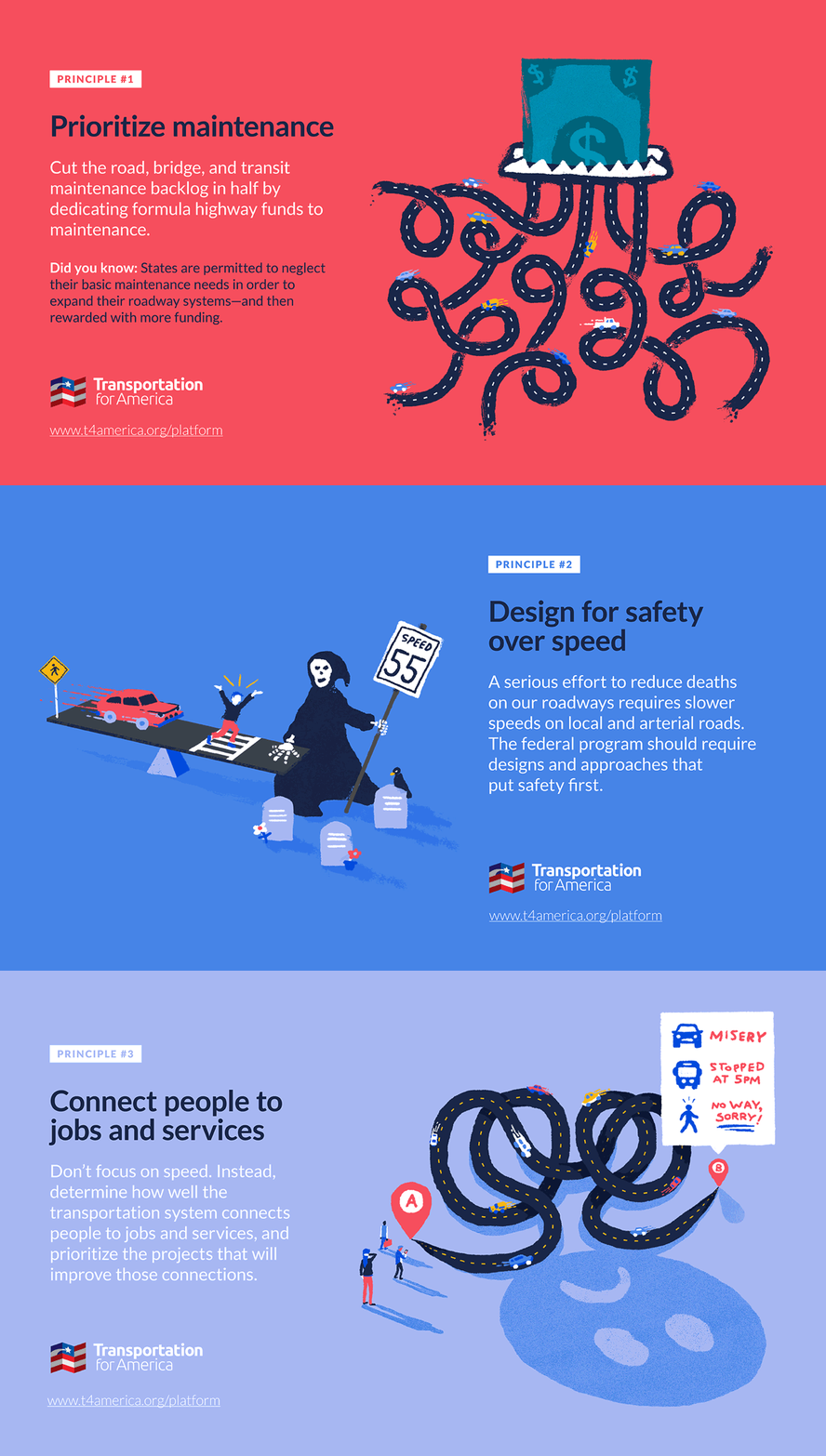
Our new policy proposals for the upcoming reauthorization in 2026 are not a menu of improvements on the margins of this bankrupt, poorly performing program. They are an interwoven package of essential reforms for building a new program from the ground up that’s accountable to taxpayers and oriented around accomplishing specific outcomes, like improving safety, state of repair, access to jobs and opportunity, and emissions.  With the clock ticking on reauthorization, it’s critical that advocates, local leaders, and policymakers understand what’s at stake—and how they can influence the outcome.

Join us for our webinar series that will explore these policy proposals and help you get involved. 

Whether you’re new to transportation policy or a seasoned advocate, this series will equip you with the knowledge and tools you need to inspire a safer, more sustainable transportation system. Learn more about our three sessions and register below.

Federal transportation reform for the 21st century

It’s time to bring our federal transportation program into the 21st century. Join Smart Growth America’s Interim President & CEO, Beth Osborne, and Policy Manager Corrigan Salerno on July 16th at 12 p.m. ET for a conversation on our bold policy proposal to modernize the program by demanding accountability, updating outdated standards, and ensuring real returns on investment for the public. During this session, we’ll explore how current models and measures prioritize vehicle speed over safety, access, and equity—and how we can shift federal priorities to deliver meaningful outcomes for communities. Learn what reforms are needed, why they matter, and how advocates can help push this vision forward. Register here.

Unlocking the power of passenger rail

Passenger rail has the potential to connect people, communities, and economies—but only if we fundamentally rethink Amtrak, the Surface Transportation Board, and the Federal Railroad Administration’s roles. Join Transportation for America’s Chairman, John Robert Smith, and Senior Policy Associate Mehr Mukhtar for a conversation July 23rd at 12 p.m. ET on our new federal policy proposals to expand and modernize passenger rail service across the country. We’ll dive into how smarter federal investment can support high-quality, high-ridership service—especially in corridors with strong public demand. This session will explore how prioritizing communities using state commissions and expanding service provider options is essential to ensure that passenger rail meets today’s mobility, equity, and climate needs. Register here.


New resource for state DOTs

The State Smart Transportation Initiative just released its new framework, Innovative DOT. This comprehensive framework offers specific recommendations designed to support state transportation officials in positioning their agencies for success in today’s evolving transportation landscape.

Developed with input from top transportation professionals—including T4America— and state DOT staff from across the country, the State Smart Transportation Initiative’s new framework highlights innovative approaches that leaders are adopting to enhance transportation system efficiency, government effectiveness, and constituent satisfaction. Learning from peers can help state transportation officials tackle shared problems without reinventing the wheel.

This comprehensive resource covers everything from planning to operations and agency culture. It shows how your agency can build a path to resilience while implementing policies and practices that prioritize people over cars.

It also highlights one of our principles, fix it first, and calls on states and local governments who aren’t already doing so to advocate for dedicated funding streams to invest properly in a state of good repair, focusing on maintenance rather than expanding existing transportation infrastructure.

We encourage transportation professionals, policymakers, and stakeholders to explore this valuable resource to continue innovating and improving their organizations to address contemporary challenges state DOTs are facing.

The State Smart Transportation Initiative (SSTI) is a joint program of Smart Growth America and the High Road Strategy Center at the University of Wisconsin.

Webinar: Executive orders and reauthorization—Navigating the future of federal transportation funding

Join us for a webinar on Tuesday, February 25th at 2 p.m. ET to discuss the state of transportation funding, including recent executive orders and the upcoming surface transportation reauthorization.

Register to join us!

Federal transportation funding is at a crossroads, with executive orders and USDOT directives reshaping priorities and halting projects, not to mention federal surface transportation program planning already underway. In a rapidly shifting USDOT, what is the latest on projects across the country facing uncertainty, delays, and outright cuts to obligated funding? How will the Trump administration’s policies influence long-term funding decisions? And could a shift in the reauthorization status quo really be a bad thing?

Join Beth Osborne, Director of Transportation for America, for a timely discussion on the state of federal transportation funding, what to expect in the coming months, and how advocates and practitioners can navigate this evolving landscape.

Supporting Reading:
Unflooding the zone: What do the Trump administration’s latest actions signal for transportation?
Reauthorization 101

Perspectives and takeaways from my first time at TCamp
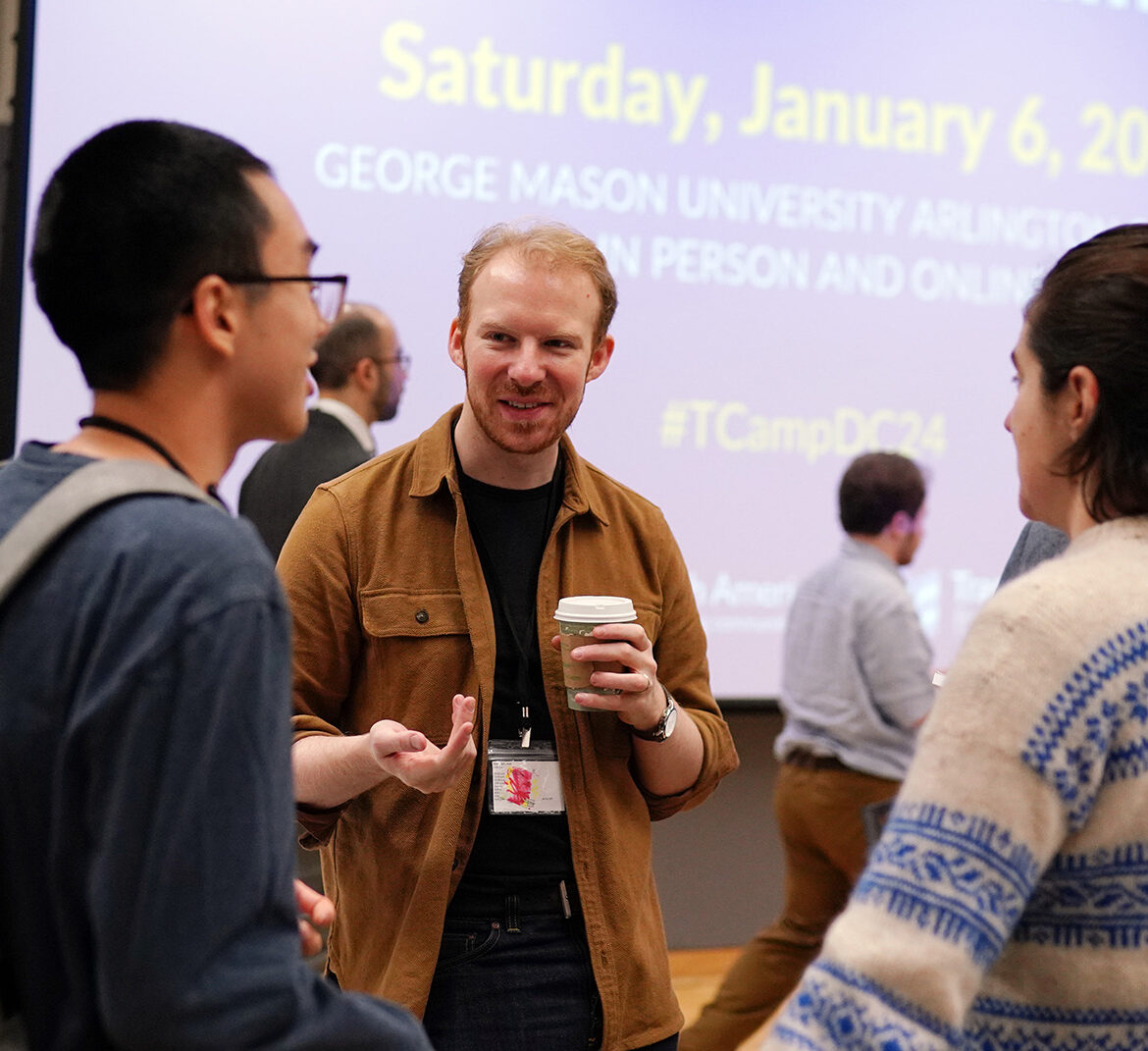
TransportationCamp DC took place at George Mason University Arlington Campus on January 6. As one of 300 attendees in person – with an additional 100 joining virtually – I witnessed the beauty of what can happen when people come together to have conversations about transportation and policy reform and the future of transportation infrastructure across the nation.

A rainy first Saturday of the year did not deter the enthusiasm and participation of hundreds of folks who came from near and far for the much anticipated annual TransportationCamp DC. The multi-purpose room of Van Metre hall slowly filled as people grabbed their morning coffee and bagels and said hello to friendly faces, old and new, while mulling over an icebreaker that prompted people to consider how to implement or improve upon different modes of transportation at the local and national level.

This annual “unconference” is a unique approach to talking about transportation. Rather than create a pre-planned agenda, the program’s sessions are decided by the participants, who range in age and expertise. They pitch topics of discussion to the group at large who then carefully consider and vote on the propositions that interest them most, resulting in the day’s agenda. Gradually, sheets of paper began to line the front of the room where people frantically wrote and displayed their session ideas in the hopes of winning over the crowd with their proposed topics. An array of ideas – green mobility, data-driven policy, transit equity, and climate grief and burnout to name a few – were listed, enticing people to intently ponder which subjects resonated most with them before casting their votes. 

Once the submission window closed, attendees transitioned to the main auditorium to hear from Veronica O. Davis, the Director of Transportation for the City of Houston. With copies of her new book, “Inclusive Transportation” in hand, people took their seats in anticipation of her opening remarks. Davis, a lively, energetic speaker who came prepared to engage the audience, began by surveying the room. When prompting people to proudly raise their hands if they grew up walking and biking in their communities, dozens of arms shot up, but the numbers dwindled as she built in the context of today, wondering at last, who among the crowd would allow their children to walk or bike in our current environment.

“We have built a world in which a child cannot move freely,” she acknowledged. It was a captivating segue into the rest of her presentation, where she read aloud the preface of her book and invited everyone to let their guard down and enter the day’s conversations intentionally, respectfully, and openly.

Inspired and ready for the day to unfold, it was nothing but hustle and bustle to peer over the heads and shoulders of the crowd that had formed to view the official schedule of the day. Five periods and their corresponding rooms and topics were assigned…TCamp was officially in session. Breakout rooms became an intimate space to discuss pedestrian safety, transit-oriented development, curbing transportation emissions, and more. The structure for each session ranged from formal presentations to open forums to robust group discussions.

I attended one session all about “researching your passion” and found myself sharing my interests in data storytelling. To my surprise, two other people in the small group expressed similar interests. The like-mindedness and curiosity of campers at TransportationCamp made it easy to feel included and I learned that it didn’t matter what my background or experience was. If you are willing to learn, there are endless opportunities to inherit new nuggets of knowledge.

Speaking of knowledge, the plenary speech given by Councilmember John J. Bauters was a presentation chock-full of additional, valuable insights. With an impressive background and intense understanding of the field, Bauters took a moment to showcase a variety of examples and success stories of how he’s helped his community in Emeryville, CA become a force to be reckoned with when it comes to inclusive transportation and infrastructure. Bauters’ speech helped me understand the importance of engaging with and electing decision-makers that align with my transportation goals, a lesson I was able to take into the conversations that followed for the remainder of the day.

After a jam-packed day, Camp came to an end, though the conversations were far from over. Some participants lingered beyond closing while others made their way to the reception at Penn Social in D.C. It was a space for vibrant and engaging interactions where people proceeded to mingle and enjoy a relaxed atmosphere complete with snacks, drinks, music, and arcade games.

It’s evident that TransportationCamp sets the stage for advocates, planners, and transportation nerds alike to enter the year with new or evolved alliances with peers and an invigorated sense of purpose and determination. Devoting time to learn and grow together is a powerful tool that generates hope for the future, a future where everyone can travel safely and conveniently, no matter where their trip begins and ends.

Special thanks to our sponsors!

Frequently asked questions about TransportationCamp DC
TransportationCamp DC is coming back on Saturday, January 6, 2024 at George Mason University’s Arlington campus. This is an annual opportunity to connect with experts, practitioners, and students all at once. Here’s everything you need to know about the “unconference.”

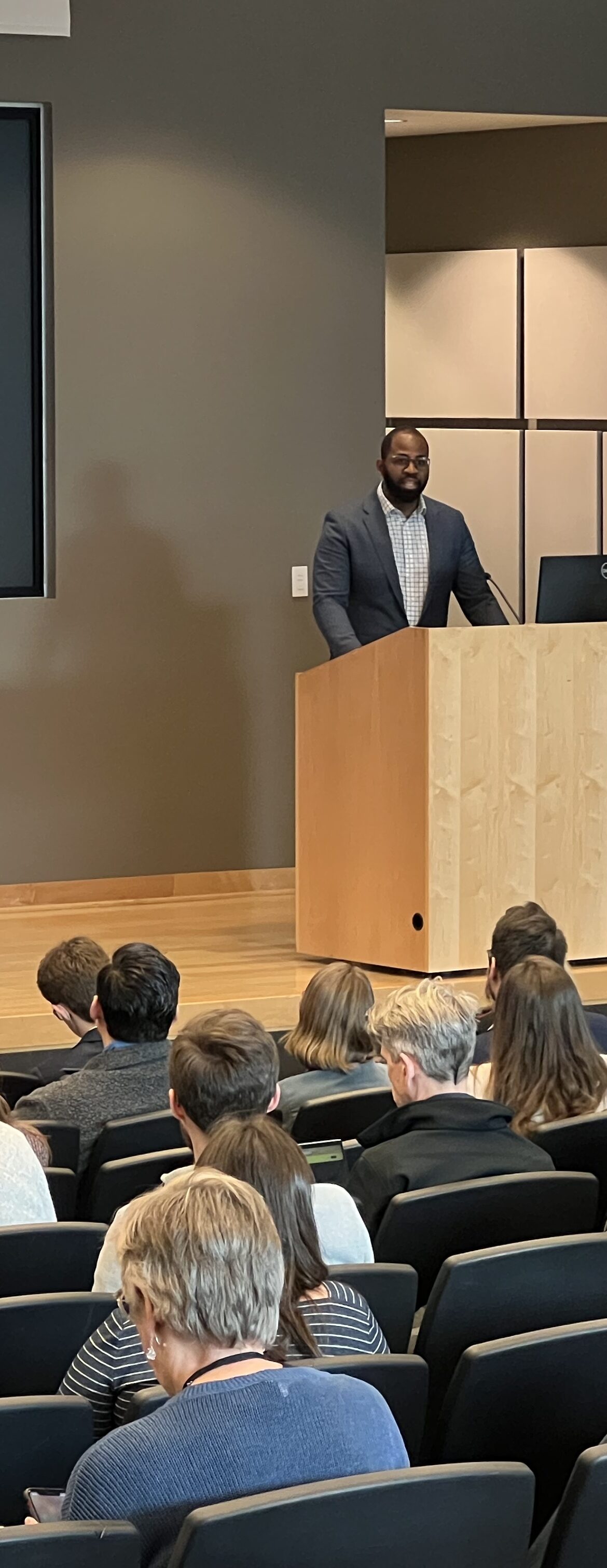
A Black man in a suit stands behind a podium. The slide behind him reads "TransportationCamp DC January 7, 2023, GMU Arlington Campus in person and online"
Shabazz Stuart delivers the keynote speech at TransportationCamp DC 2023.

1. Why is it called an unconference?

At TransportationCamp, every attendee has the opportunity to lead the conversation. Attendees submit topics for 50-minute breakout sessions and in-person Campers get to vote on what they want to talk about, giving the power to participants to create the experience they want to have!

2. Who should come to TCamp?

Everyone! Advocates, practitioners, Complete Streets Champions, politicians, business leaders, and students are all welcome to join and learn from each other.

3. When should I buy tickets?

Tickets are on sale right now! Get yours while spots last.

4. How do I submit sessions?

The process is different depending on whether or not you’re joining us virtually or in person. Here’s what it looks like:

In person: Attendees will submit sessions the morning of Camp and have the chance to vote on what they want to discuss.

Virtual: Attendees must be registered for Camp to submit sessions. Look for the submission form in your confirmation email!

If you plan to attend TCamp on Zoom, virtual-only sessions will play a big part in your experience. The deadline to submit virtual session ideas is December 31—have you submitted your session yet?

5. What do I need to know about leading a session?

We want sessions to feel like a conversation, so we recommend a casual, engaging, and inclusive approach. Breakout rooms at GMU will each have a projector, USB port, a computer if you need to use email to access resources, and a whiteboard with whiteboard markers.

Keep accessibility in mind. 14-point font is best for presentations. Be sure to choose a high-contrast design and, if you’re joining us in person, we’ll have a Google Drive folder available where you can drop your slides for people to view on their personal devices. Keeping these in mind will help ensure that everyone is able to enjoy your presentation.

For more advice on leading a session, please check here.

5. How do I get there?

Map

TransportationCamp will be at Van Metre Hall on George Mason University’s Arlington campus, 3351 Fairfax Drive, Arlington, VA 22201.

By bike: Bike parking is available near the front entrance on Fairfax Drive and in the parking garage, located at the rear of the building.

By metro: The closest metro stop is Virginia Square–GMU on the orange and silver line. Exit via Virginia Sq-GMU Metrorail Station at the southwest corner of Fairfax Drive & North Monroe Street, then head north on North Monroe St toward Fairfax Drive.

By car: Route to Founders Way North, Arlington, VA in Google Maps to get directed to the parking garage entrance.

For those joining Camp virtually, make sure info@t4america.org emails are reaching your inbox. Check your email the morning of Camp for a Zoom link to join, then you can simply tune in by joining a session using the link we attach.

6. Can I volunteer at TransportationCamp?

This year we are unfortunately not able to do an open call for volunteers. However, for future Camps, we’d like to have volunteer tickets available for partnering schools and organizations. If you are a student or part of an organization that would be interested in volunteering at Camp next year, please reach out to us!

7. Is there TransportationCamp near me?

There are TransportationCamps across the country hosted by various organizations! Visit transportationcamp.org to learn more.

8. Who can I contact for more information?

If you have questions or comments, please email tcampdc@smartgrowthamerica.org. We’ll get back to you as soon as possible!