Shut-down Crisis Reveals Desperate Need for Longterm Overhaul of our Nation’s Transportation Program
March 1, 2010By Transportation for America
With jobs, the economy our quality of life in the balance, Congress must act now on authorization.
As the national transportation program faces fiscal uncertainty today following Sen. Jim Bunning’s (R-KY) refusal to extend legislation to fund transportation and other national programs on Friday, James Corless, campaign director of Transportation for America, released the following statement:
“The problem is not simply that one Senator was able to thwart a crucial, timely vote. That lone Senator was able to shut down our nation’s transportation program only because Congress has left this essential underpinning of our economy on life-support for far too long. The highway trust fund we created to build the interstates in the 1950s simply is not up to the job of building and maintaining the system we need for the 21st century. This is not a backburner issue, even if Congress has been treating it as one.
“While we lurch, from extension to extension, with our transportation program teetering on the brink of insolvency, the rest of the world is not standing still. China is building a $500 billion rail network. Canada, whose hockey team just beat us for the gold medal, is beating us in building efficient urban transportation networks, even as our public transportation systems are being forced to slash service in the face of Congressional inaction.
“American jobs – millions of them — are relying on the authorization of our transportation program. Americans everywhere depend on an efficient, safe and accessible network of roads and transit systems to get to work each day. If we are going to right this economy permanently, Congress must quickly address our nation’s outdated transportation program and ensure stable funding levels for public transportation, including operating assistance for struggling systems, for the repair and maintenance of our highways and bridges, and a robust investment in projects that will make our communities sustainable for the long haul.”
James Corless is the Campaign Director of Transportation for America.
Letter to Speaker Pelosi with principles for transportation spending
December 2, 2009By Stephen Lee Davis
In light of discussions in Congress about a potential bill focused specifically on creating jobs, and President Obama convening a jobs summit this week in Washington, Transportation for America recently sent this letter to Speaker Nancy Pelosi that outlined 3 principles that should guide any potential infrastructure and transportation spending. If we’re going to fund infrastructure investments to put people back to work, it’s imperative that we get the most out of our precious dollars — and stay on track for passing the long-term transportation bill we so desperately need to get America moving again.
Any plan to create jobs through transportation spending should:
- Create the greatest number of jobs in the quickest time possible by prioritizing rehabilitation and operation of existing infrastructure and target new workforce development opportunities for people most in need of employment. (i.e., “Fix-it-first.”)
- Chart a new 21st century direction in transportation policy.
- Be limited to no more than a year and not replace the long term authorization of the transportation bill.
Click through the jump to read the full letter to the Speaker of the House from Transportation for America and several of our key partners.
(Continue Reading)
FAQ: What are rescissions? Will my state lose transportation money?
October 5, 2009By Stephen Lee Davis
Friday, we explained the details surrounding the expiration of the transportation bill on Wednesday night and the one-month extension that was passed. Read that here. Due in part to the failure of a bipartisan plan to shift some revenue to satisfy House budget rules, the states are also losing a total of $8.7 billion in transportation spending, known by the unmistakably Washington-transportation-insider term of a “rescission.”
Here’s our attempt to simplify that issue just a little bit for those who are interested in the policy details. Non-wonks, feel free to skip over this one. Just a fair warning! Click through the jump to read in its entirety.
(Continue Reading)
FAQ: Transportation bill expires, emergency extension passed
October 1, 2009By Stephen Lee Davis
![]() |
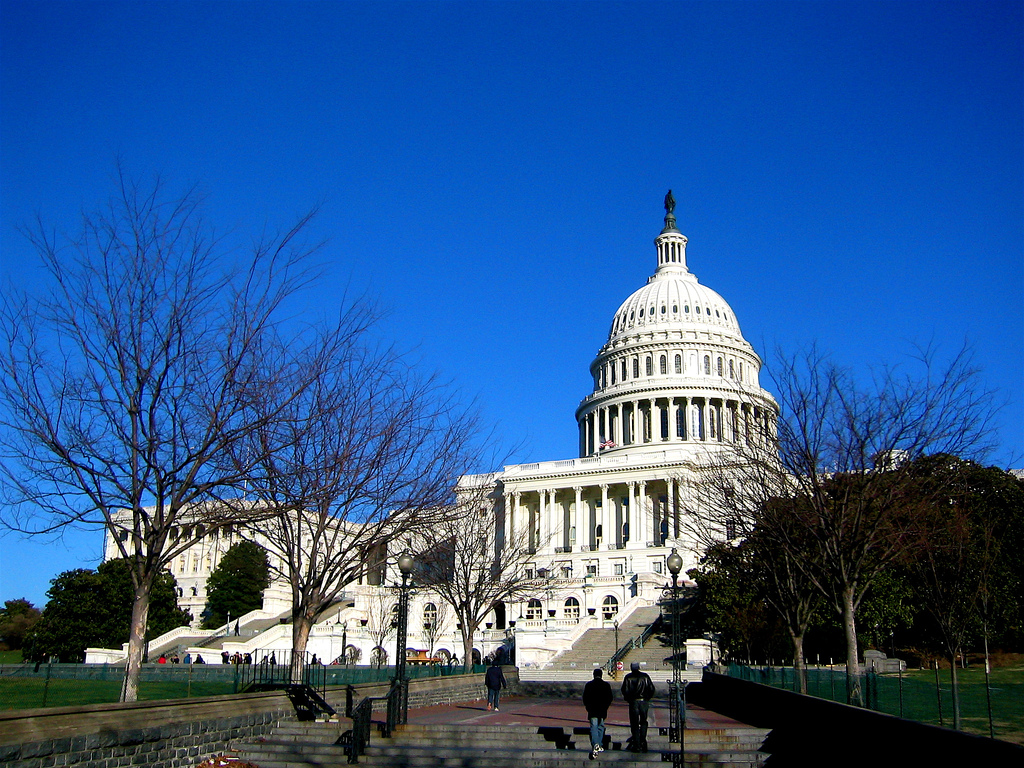
| The Senate Garage Fountain (Olmstead Fountain) and the US Capitol Originally uploaded by kimberlyfaye |
UPDATED: We posted a similar question-and-answer document covering the specific issue of rescissions. Read that here.
As you may have read on Streetsblog Capitol Hill, where Elana Schor has been closely tracking the inexorable march toward expiration of the old transportation bill (SAFETEA-LU), the Senate passed an emergency one-month extension of the current law last night, just hours before the deadline.
There have been a lot of questions flying around today, so we’re going to try to post some simplified answers to clear up any confusion. Federal transportation policy is not the simplest code to decipher, but we’ll try our best to start with the basics.
The short explanation?
The Senate failed to pass an extension of their own to match the House’s recent 3-month extension before the transportation bill expired last night.
To prevent transportation spending from stopping entirely, Congress added a one-month extension of current transportation law to a last-minute bill (a Continuing Resolution) that keeps the federal government from shutting down in case they don’t pass the required individual spending bills for the next year. The one-month Continuing Resolution did not address the scheduled loss of $8.7 billion in transportation funds that will be taken from states, starting today.
Click through the jump below if you want much more detailed information.
(Continue Reading)
House Republicans opposing 3-month extension, Senate Republicans possibly supporting it
September 23, 2009By Stephen Lee Davis
UPDATE #2: The House passed the 3-month extension of the transport bill under suspension of the rules yesterday, with a 335-85 vote in favor of the extension.
UPDATED: The bill will likely be voted on today under suspension of the rules, and there will be at least some GOP opposition to it. Elana Schor at Streetsblog reports that “Brad Dayspring, a spokesman for House Minority Whip Eric Cantor (R-VA) said Cantor would join Minority Leader John Boehner (R-OH) and Rep. John Mica (FL), senior Republican on Oberstar’s committee, in opposing the three-month extension.”
Rep. Jim Oberstar’s plan to introduce and/or pass a 3-month extension of the expiring surface transportation bill has hit a snag. According to the subscription-only email service Transportation Weekly, House Republican leadership has decided to oppose the bill, creating a roadblock for passing it today as planned under suspension of the rules, which requires a 2/3 vote and therefore some Republican support.
The 3-month extension (H.R. 3617) has been removed from the scheduled votes for today according to Transportation Weekly, noting that the reason for opposition isn’t exactly clear just yet:
Republicans have not yet made a public announcement as to what their objections to the three-month extension are, but one GOP staffer said that there should be a longer extension until the Democrats take the issue of a gasoline tax increase to pay for House Transportation and Infrastructure Chairman James Oberstar’s (D-MN) $450 billion, six-year bill off the table. Therefore, this could represent a real breaking point between Oberstar and his ranking Republican, John Mica (R-FL), who has so far been in lockstep with Oberstar (at least in public)…
To add to the confusion, The Journal Of Commerce reported yesterday that momentum might be building for a a shorter extension in the Senate, where all signs thus far have pointed toward passing the 18-month extension that the Obama administration prefers.
In the face of insistence by leaders in the House of Representatives to extend soon-to-expire federal highway programs by only three months, some senators are beginning to move away from plans for an 18-month extension…
…“There’s some movement, I think, toward a short-term extension” in the Senate, said Sen. John Thune, R-S.D. Thune is not only part of the Senate Republican leadership team as chief deputy whip but also ranking minority member on the surface transportation panel of the Commerce, Science and Transportation Committee.
So to summarize, the Democrats in the House want to pass a 3-month extension. The Republicans in the House are now opposing that, potentially leaning towards an 18-month extension. The Democrats in the Senate want an 18-month extension. The Republicans in the Senate are now leaning towards a shorter extension, possibly 3 months.
There are still several other ways for Rep. Oberstar to get his bill passed in the House without that Republican support, and it’s not certain at all that House Republicans would actually vote against it if push came to shove. Same goes for the Senate.
Stay tuned.
Sec. LaHood proposes 18-month extension of current transportation bill
June 17, 2009By Stephen Lee Davis
This morning on Capitol Hill, DOT Secretary Ray LaHood proposed an 18-month extension of the current SAFETEA-LU transportation authorization bill. Beyond simply extending the current bill, LaHood indicated that he wants to include some reforms in the 18-month extension — including a focus on metro areas, extensive cost-benefit analysis, and a commitment to “livable communities” — but was short on other specifics.
No word yet on how this will affect the proposed transportation bill outline to be released by Rep. James Oberstar tomorrow morning. Be sure to check back over the next few days for the latest.
“This morning, I went to Capitol Hill to brief members of Congress on the situation with the Highway Trust Fund. I am proposing an immediate 18-month highway reauthorization that will replenish the Highway Trust Fund. If this step is not taken the trust fund will run out of money as soon as late August and states will be in danger of losing the vital transportation funding they need and expect.
“As part of this, I am proposing that we enact critical reforms to help us make better investment decisions with cost-benefit analysis, focus on more investments in metropolitan areas and promote the concept of livability to more closely link home and work. The Administration opposes a gas tax increase during this challenging, recessionary period, which has hit consumers and businesses hard across our country.
“I recognize that there will be concerns raised about this approach. However, with the reality of our fiscal environment and the critical demand to address our infrastructure investments in a smarter, more focused approach, we should not rush legislation. We should work together on a full reauthorization that best meets the demands of the country. The first step is making sure that the Highway Trust Fund is solvent. The next step is addressing our transportation priorities over the long term.”
UPDATE: The Wall Street Journal has a story up covering LaHood’s proposal, and includes a quote from Rep. Oberstar, responding to the idea of an extension:
In a meeting with reporters Wednesday, Mr. Oberstar was adamant that Congress must pass a new law before the current one expires.
“Extension of current law is unacceptable,” Mr. Oberstar said. “Now is the time to move.”
UPDATE 2: Michael Cooper of the New York Times covers the proposed extension, and gets a statement from Jim Berard, spokesman for Rep. Oberstar. “The chairman is not too pleased with the administration’s proposal,” he said.