Posts Tagged "congestion"
Divided by Design: Quantifying the damage of our transportation program
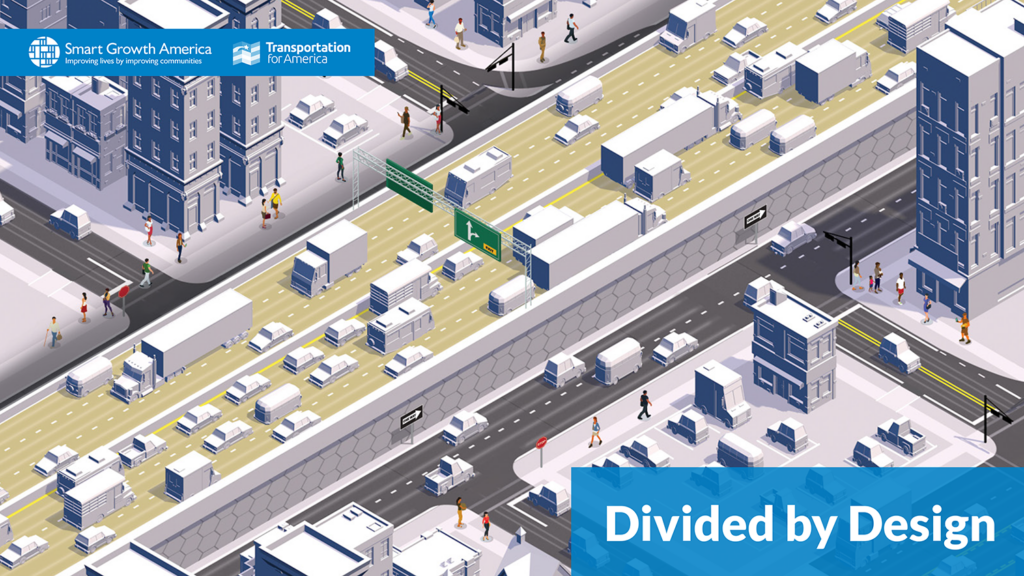
Our new report examines the racist roots of our current transportation system. Most importantly, it demonstrates how today’s policies and practices were shaped by the past, leading to racial disparities today. Without a fundamental change to the overall approach to transportation, today’s leaders and transportation professionals, no matter their intent, will perpetuate and exacerbate the damage.
The traffic forecast used to justify your road widening is bogus
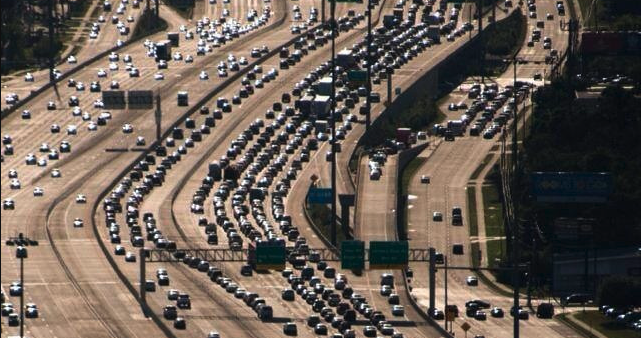
The predicted traffic levels on which transportation planners base their decisions are erroneous and rooted in obsolete methods. Here’s how transportation models fail to accurately predict future traffic, and how you can call out their misuse.
New survey: 82 percent of voters don’t believe highway expansions are the best solution for reducing congestion
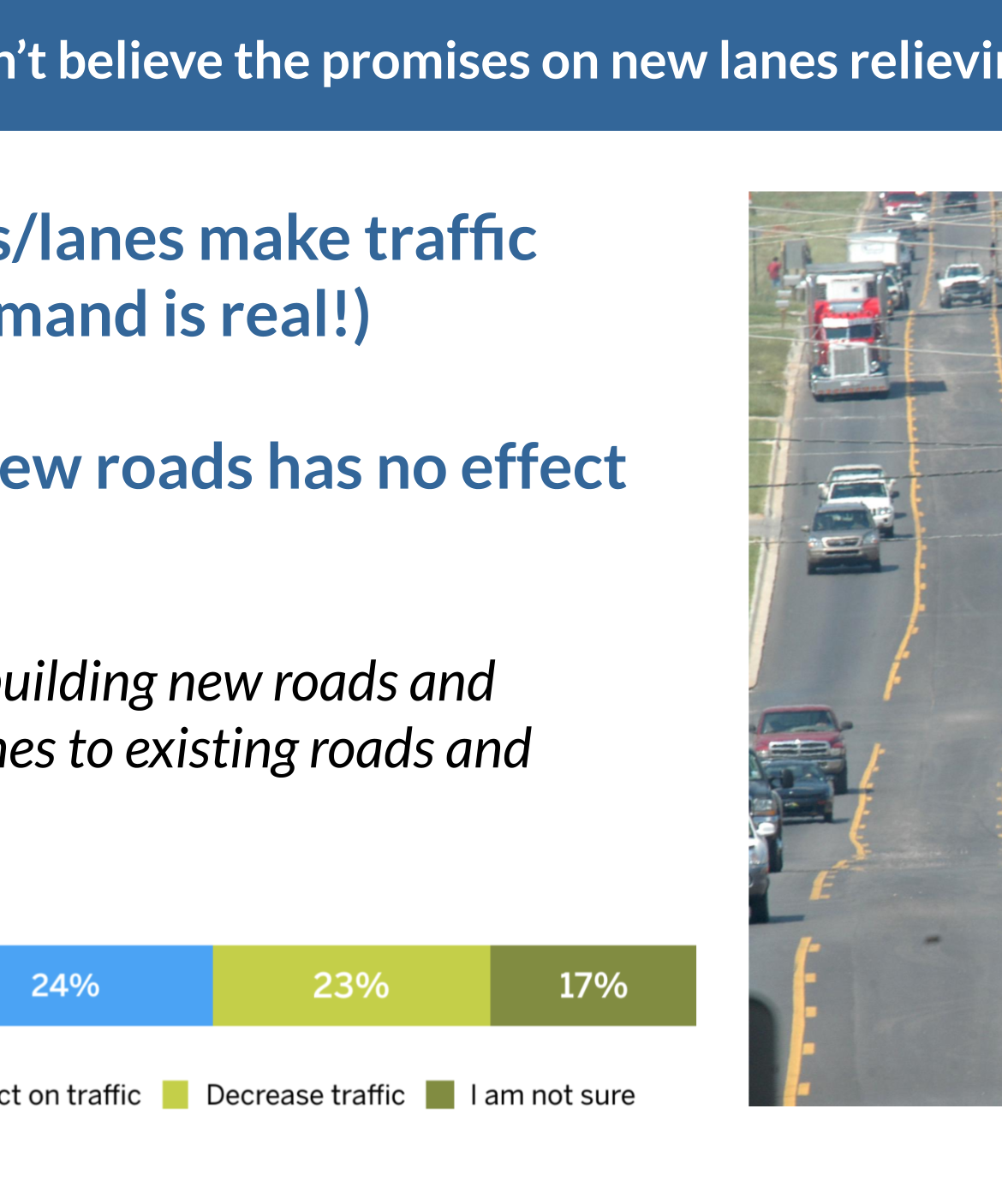
New nationwide survey shows that prioritizing road repair, improving transit, and reducing driving are more popular options for spending transportation dollars WASHINGTON, D.C. (June 29) — A new nationwide survey of American voters’ attitudes reveals a significant divide between voters’ attitudes about the best short-and long-term solutions for reducing traffic, versus the actual priorities of […]
TRB: Transportation’s Really Broken
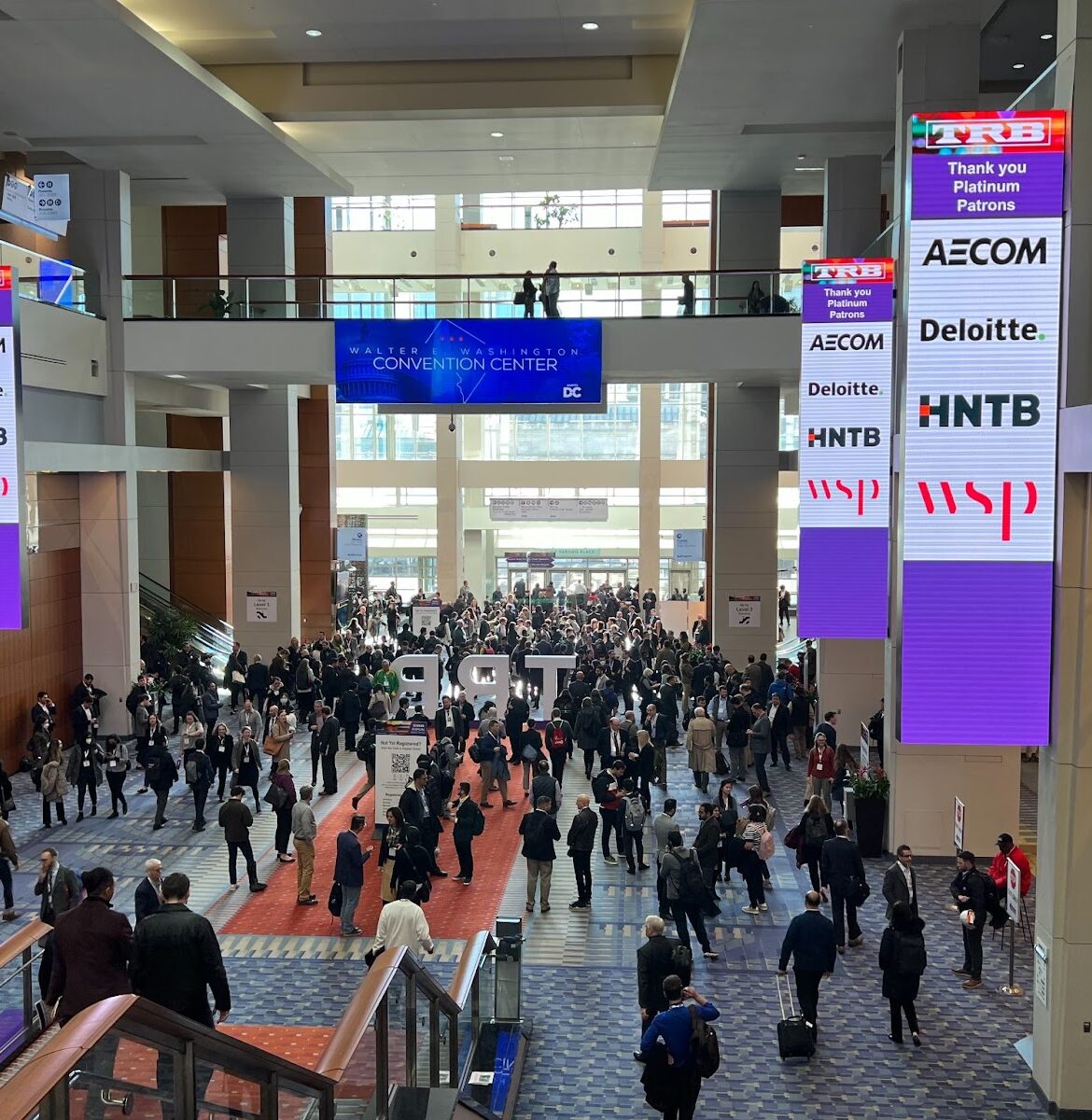
The Transportation Research Board’s Annual Meeting was held earlier this January in Washington, D.C. Despite claiming to be at the forefront of innovation, most of the conference avoided the truth: any system based primarily on moving cars as quickly as possible will leave many people behind.
Our solutions for congestion are worse than the problem
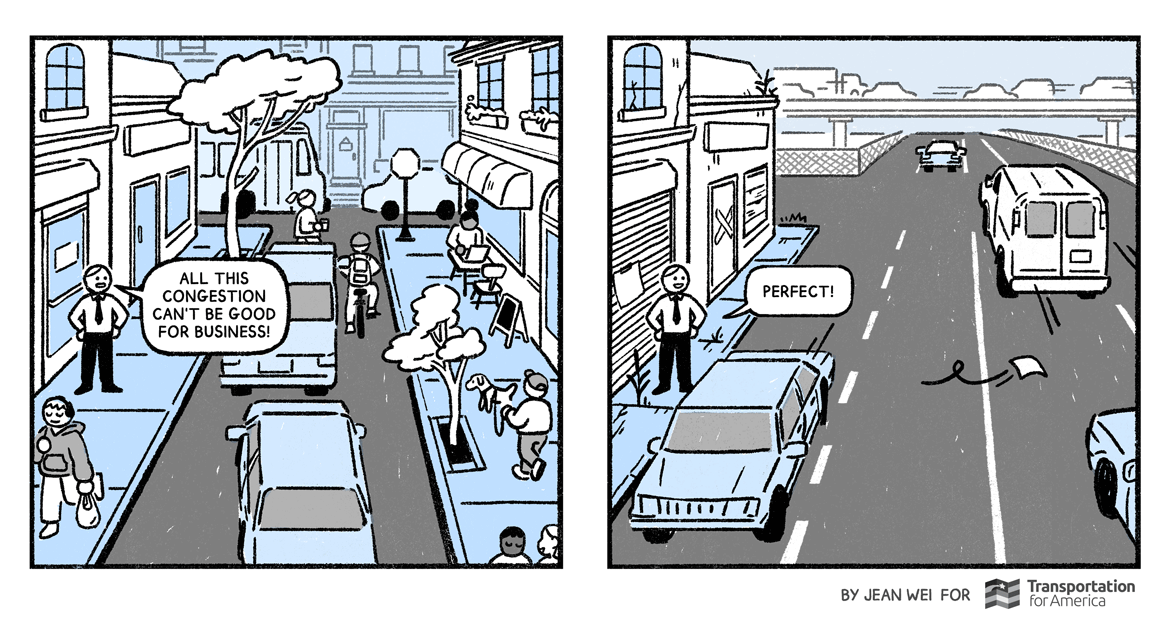
For decades, transportation agencies have been trying to “solve” congestion by increasing road capacity, even when doing so can obliterate or divide communities, harm local businesses, and make streets more dangerous. Our latest cartoon shows how our “cures” for congestion are often worse than the problem.
More highways, more driving, more emissions: Explaining “induced demand”
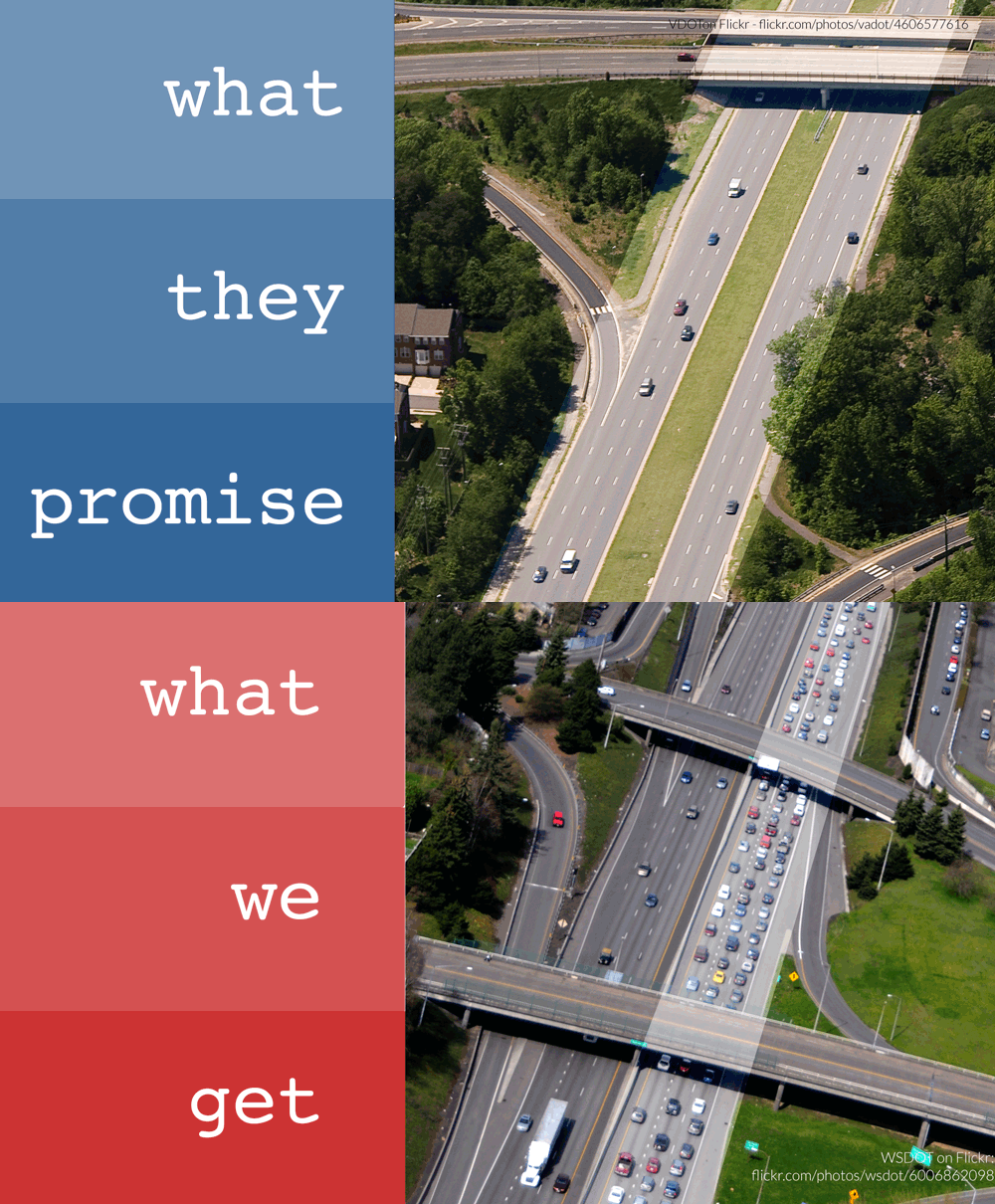
Even if we hit the most ambitious targets for changing our cars and trucks over to electric vehicles, we will fail to meaningfully reduce emissions from transportation without confronting this simple fact: new roads always produce new driving. This costly feedback loop referred to as “induced demand” is the invisible force short-circuiting the neverending attempts to eliminate congestion by building or expanding roads.
New calculator shows how highway expansions increase traffic
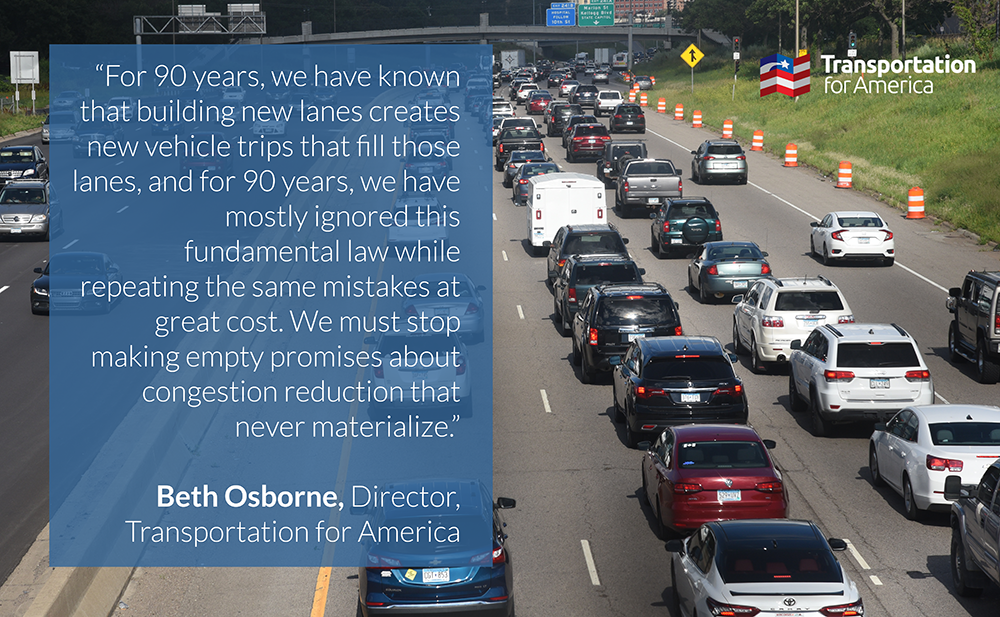
The SHIFT Calculator provides transparency about new traffic created by highway widening and expansion so transportation agencies can make smarter, more sustainable transportation investments.
Month of Action Week 3: Ending the Congestion Con
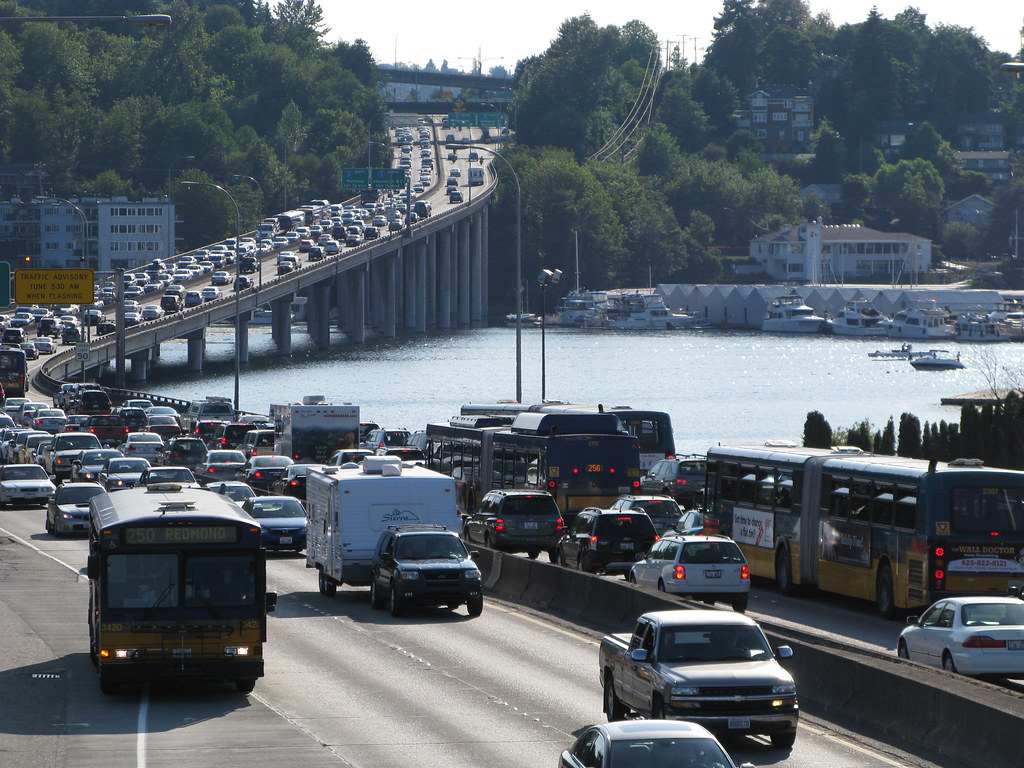
With Congress writing long-term transportation policy this month, we need to make sure that this bill doesn’t continue the broken status quo. This week, we need you to tell your Senators that widening highways just makes traffic worse.
Answers to your questions about Driving Down Emissions
We recently hosted a webinar to discuss our new report, Driving Down Emissions. We received many more great questions during the webinar than we had time to address, so we are answering some of the big ones here.
Here’s what Transportation for America has been up to this March
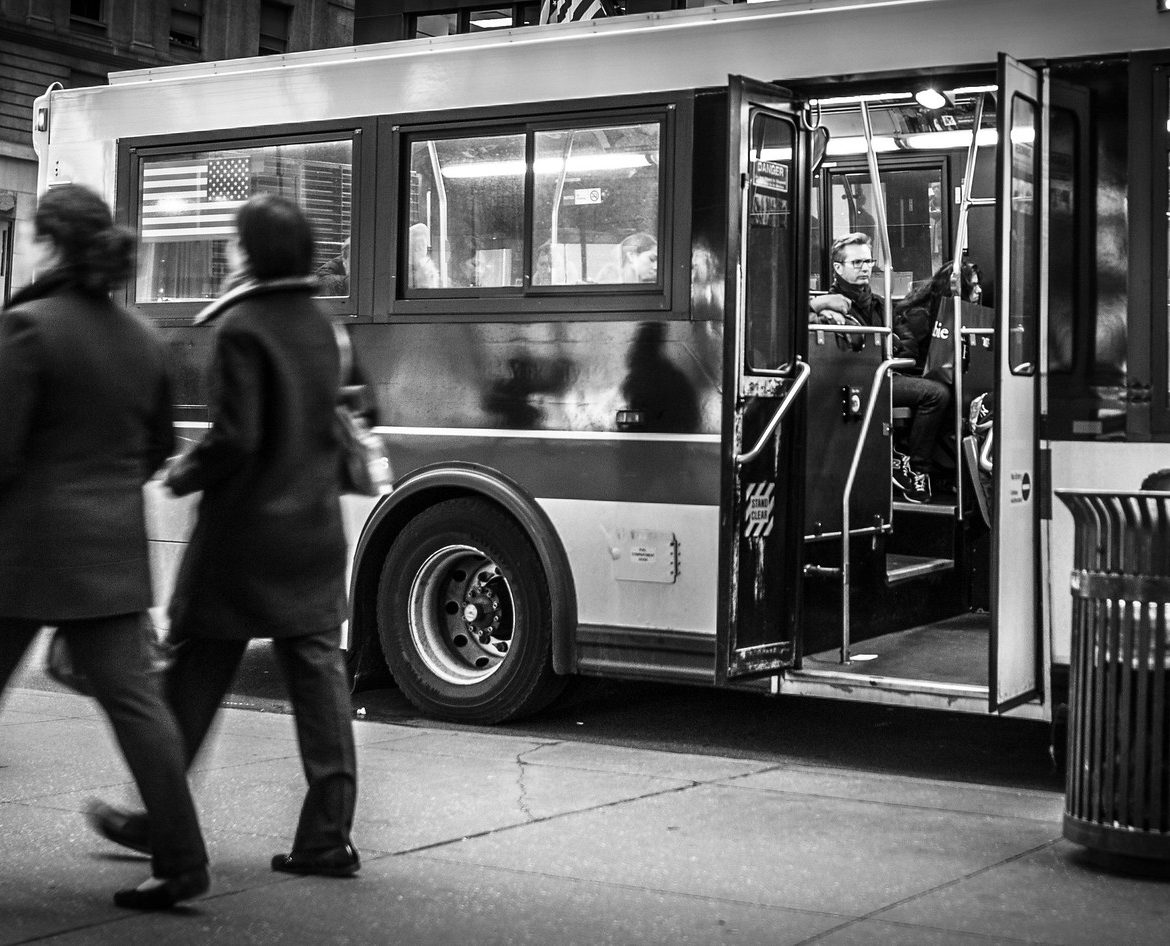
With COVID-19 throwing public transportation into an existential crisis, Transportation for America mobilized to preserve America’s most essential transportation service—and we did, with Congress agreeing to $25 billion in emergency assistance for transit operations this week. But while the news has understandably been consumed by COVID-19, the pandemic hasn’t been the only thing on our plates.
The Congestion Con: You’ve been played
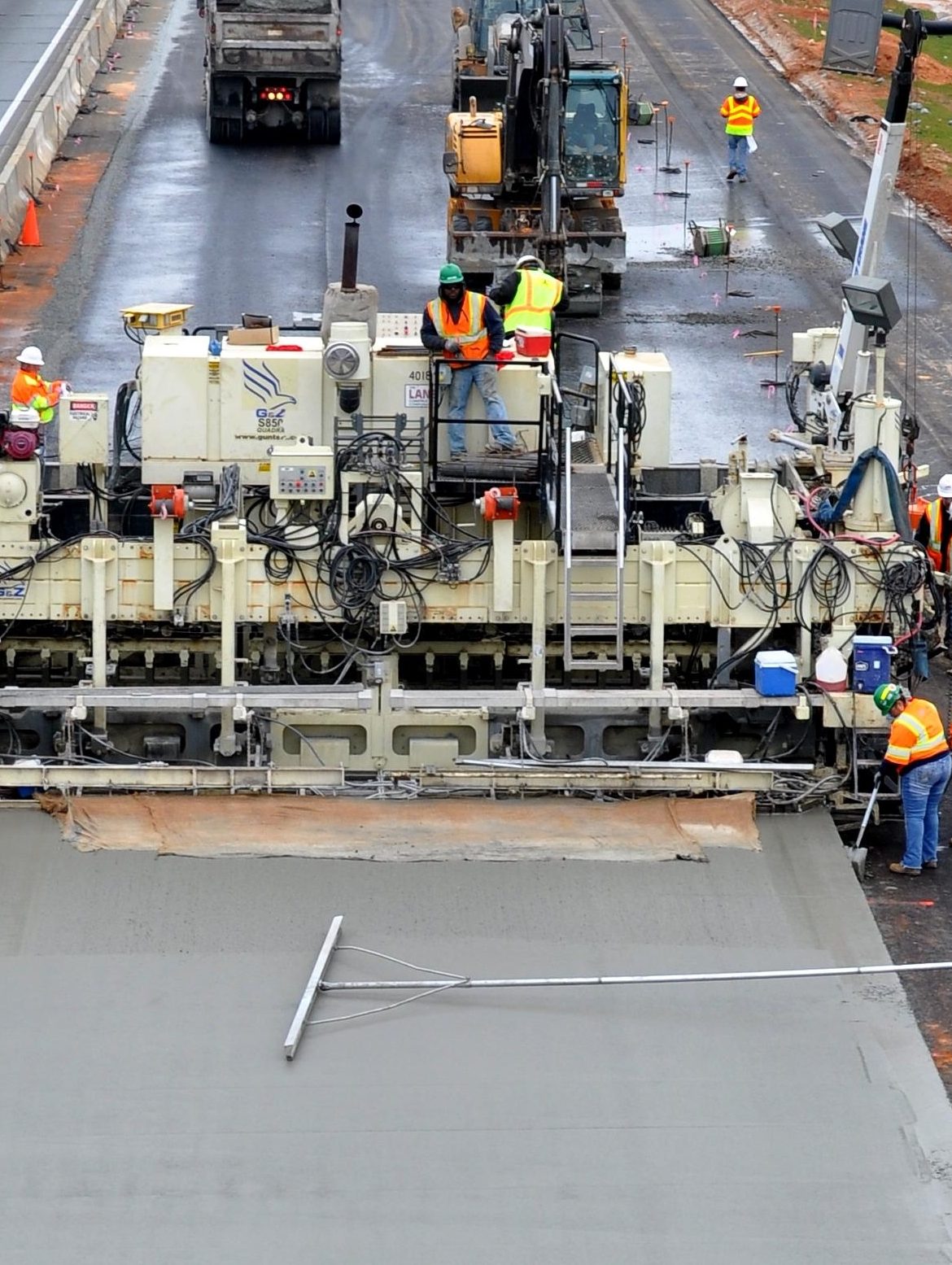
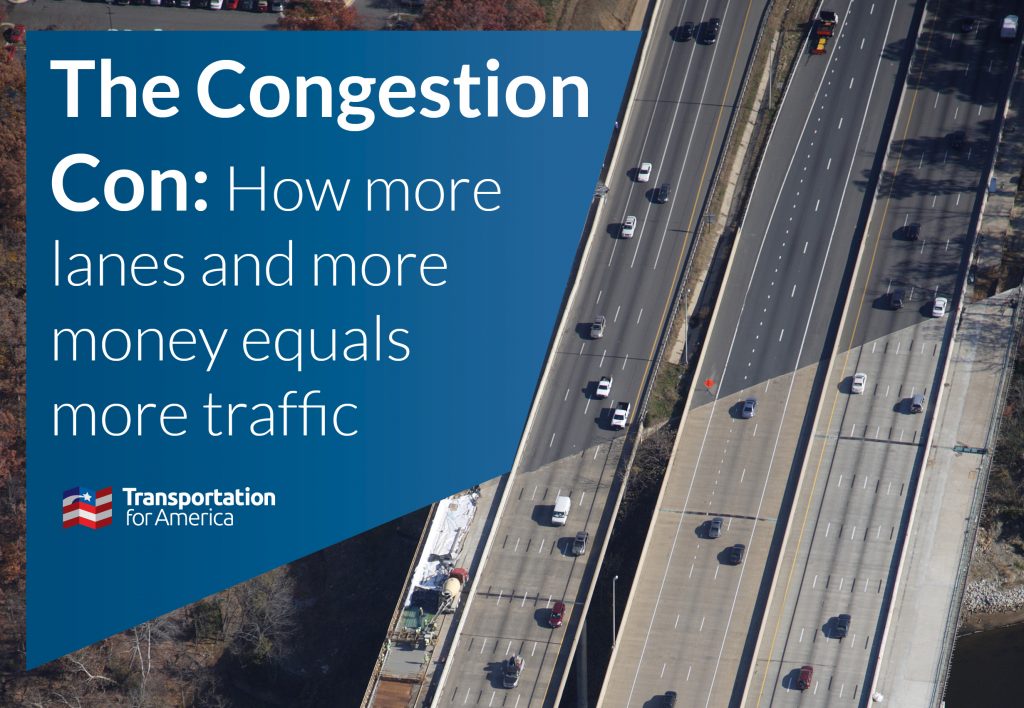
In a new report, The Congestion Con: How more lanes and more money equals more traffic, we show how our approach to curbing congestion with new and wider highways has failed. We have spent decades and hundreds of billions of dollars on highways in the name of beating back congestion, yet in all of the 100 most populous urbanized areas examined in the report, congestion has gotten worse as a result. The Congestion Con lays out a comprehensive look at congestion data, why our “solution” has failed, and what the federal government can do to correct course.
Unpacking the final suite of new USDOT performance measures [video]
The new requirements released last week by USDOT for how states and metro areas will have to measure traffic congestion were just part of a larger package of all-new performance measures. Catch up on what you need to know about them with our detailed webinar unpacking all of it.
Learn more about USDOT’s final congestion rule and the rest of the final performance measures [webinar]

The new requirements released last week by USDOT for how states and metro areas will have to measure traffic congestion were just part of a larger package of new performance measures. Join us next week to unpack the congestion rule and the rest of the suite of new measures.
USDOT rewrites congestion rule in response to outpouring of feedback
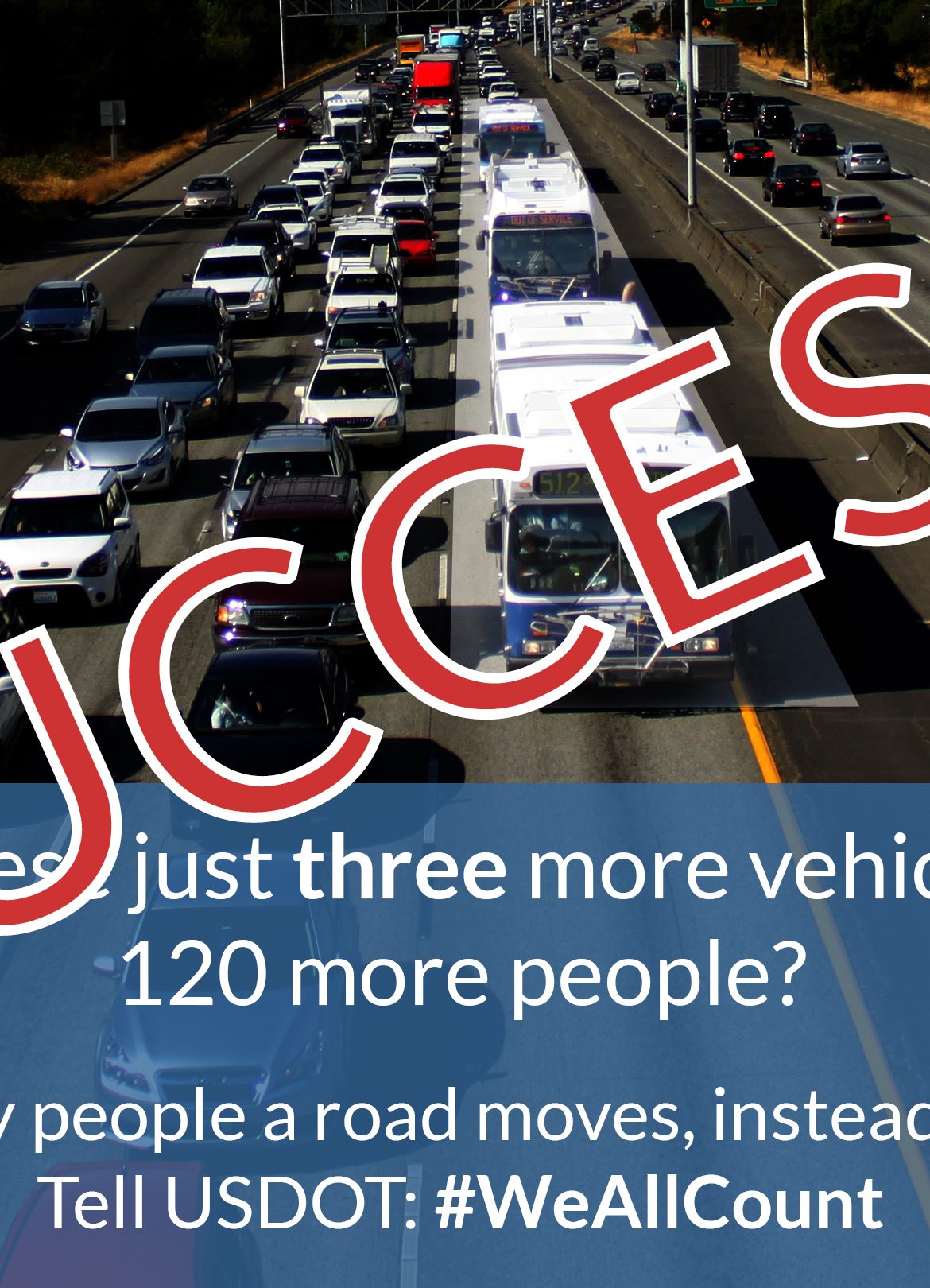
At long last, USDOT has finalized new requirements for how states and metro areas will have to measure traffic congestion and in the final rule — responding to the outpouring of comments they received — they backed away from most of the outdated measures of congestion that were proposed.
USDOT faces widespread opposition to proposed congestion rule

Nearly 5,000 individuals and 150 organizations — including dozens of local chambers of commerce and elected officials — joined with T4America to oppose USDOT’s flawed proposal for measuring traffic congestion and urge them to rethink their approach.
Proposed federal rules for measuring and addressing congestion in states and metro areas generate widespread opposition

Led by Smart Growth America (SGA), Transportation for America and the National Complete Streets Coalition, a broad coalition of business groups, local elected leaders, national and local organizations and thousands of individuals filed formal comments last week urging USDOT not to incentivize transportation projects that would punish cities investing in public transportation, treat main streets like highways, ignore the needs of people walking or biking, and push local communities of all sizes to waste billions of dollars in vain attempts to build their way out of congestion.
Time is running out to tell USDOT to measure more than just vehicles
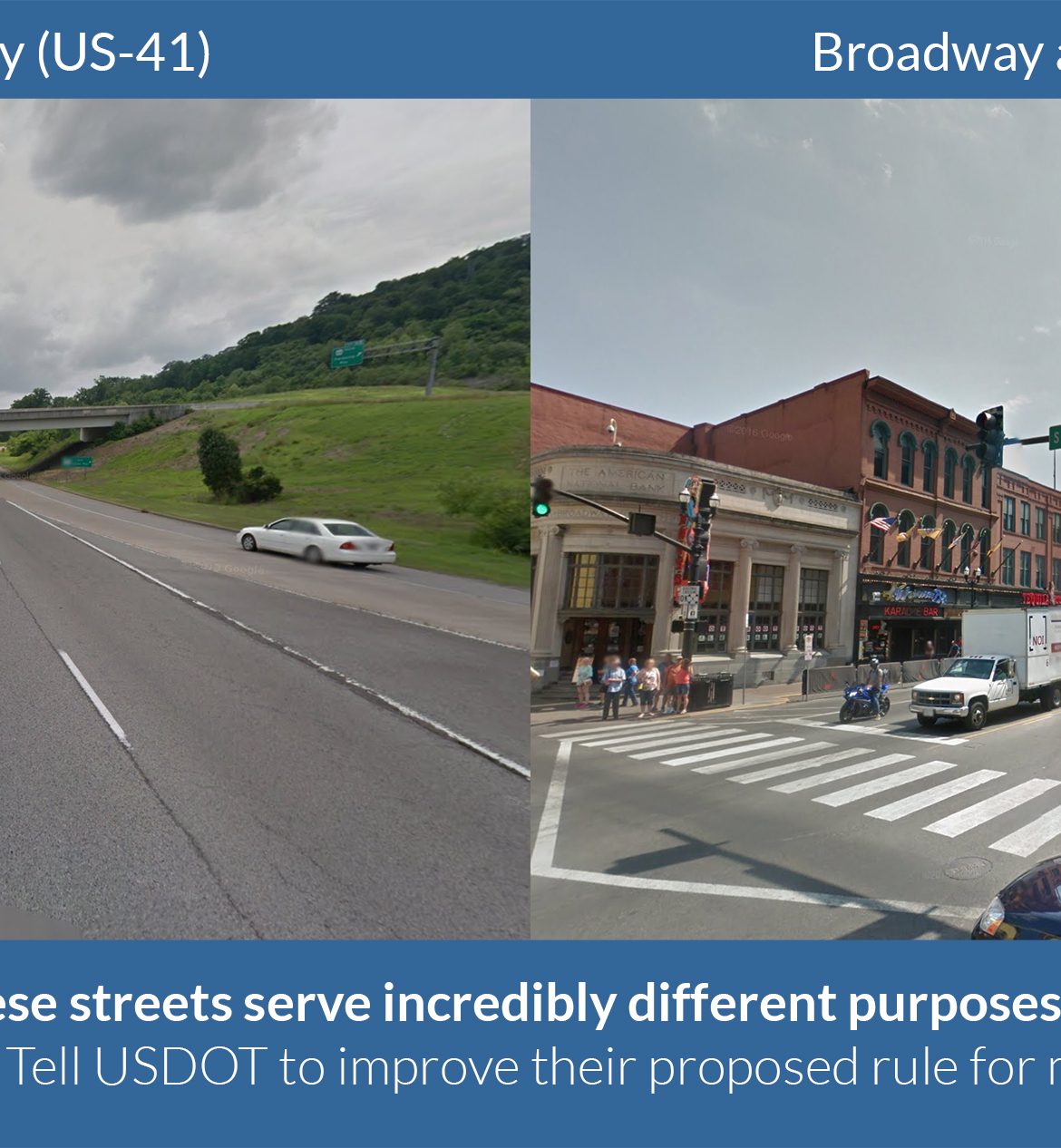
These two streets are very different. Why does the U.S. Department of Transportation want to measure their success the same way?
A large congressional delegation asks USDOT to improve the proposed congestion rule
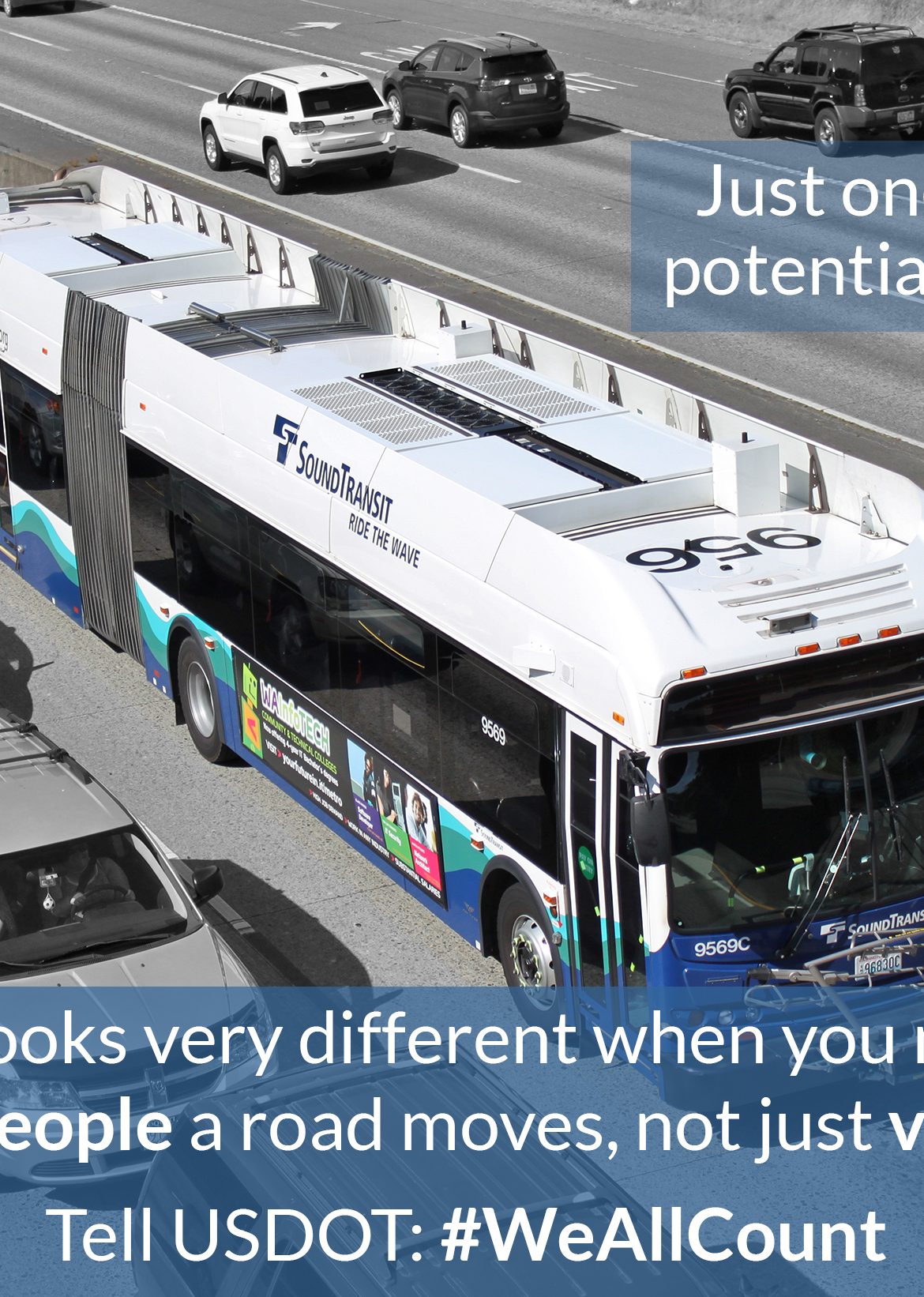
Earlier this week, a large group of senators and representatives sent a letter to USDOT Secretary Foxx, requesting that USDOT change a flawed proposed rule for measuring congestion. They asked that USDOT assess the movement of people, rather than vehicles, as a better measure of congestion and reward the improvements that can come from transit, toll lanes, or encouraging travelers to choose other options like walking or biking.
What would a better measure of congestion look like? Unpacking an alternative
USDOT’s draft rule that will govern how states and metro areas will have to measure and address congestion would define “success” in incredibly outdated ways. In a webinar earlier this week, we discussed better ways to measure congestion and a proposal we’re sending to USDOT.
USDOT’s congestion measure is not good — what would a better one look like?
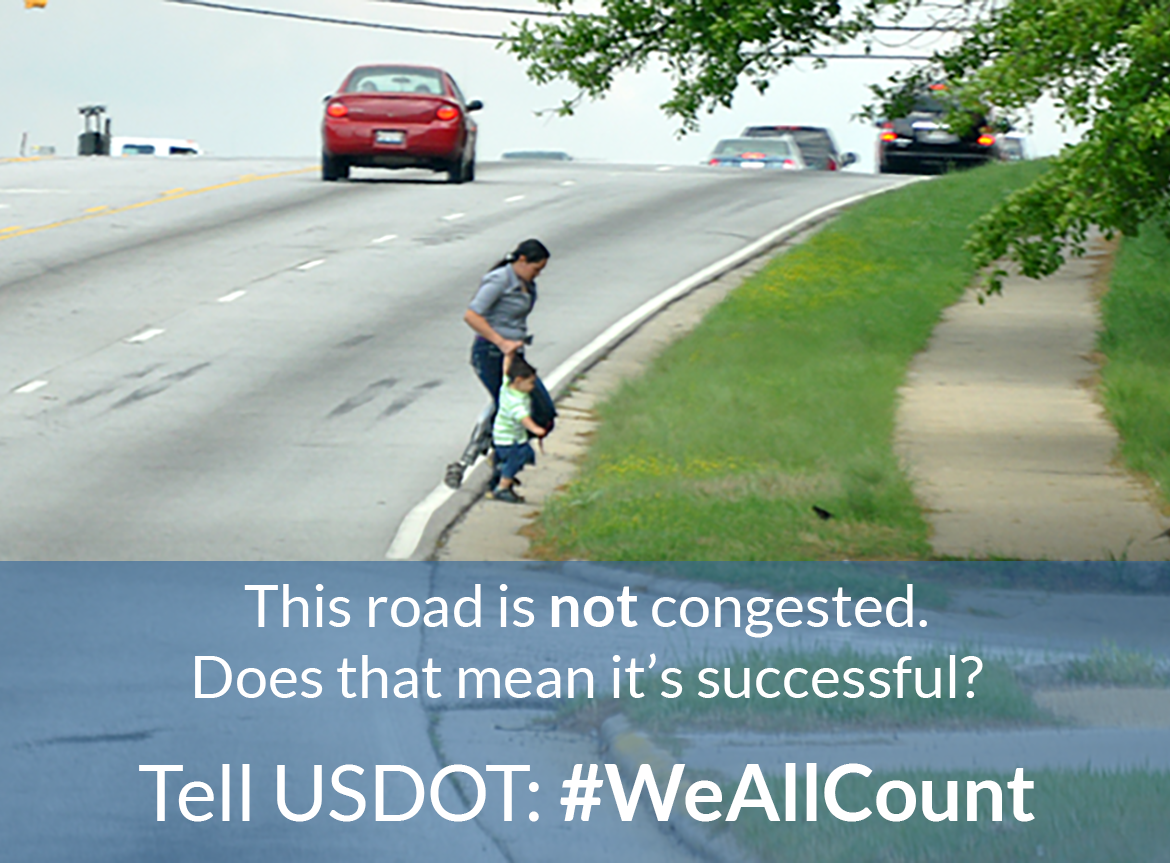
Thousands of you have sent letters to USDOT on their draft rule that will govern how states and metro areas will have to measure and address congestion — a proposal that currently defines “success” in outdated ways. It’s clear that USDOT’s proposed measure doesn’t cut it, but if you want to hear more about a better way to measure congestion, join us next week.
Our three principles
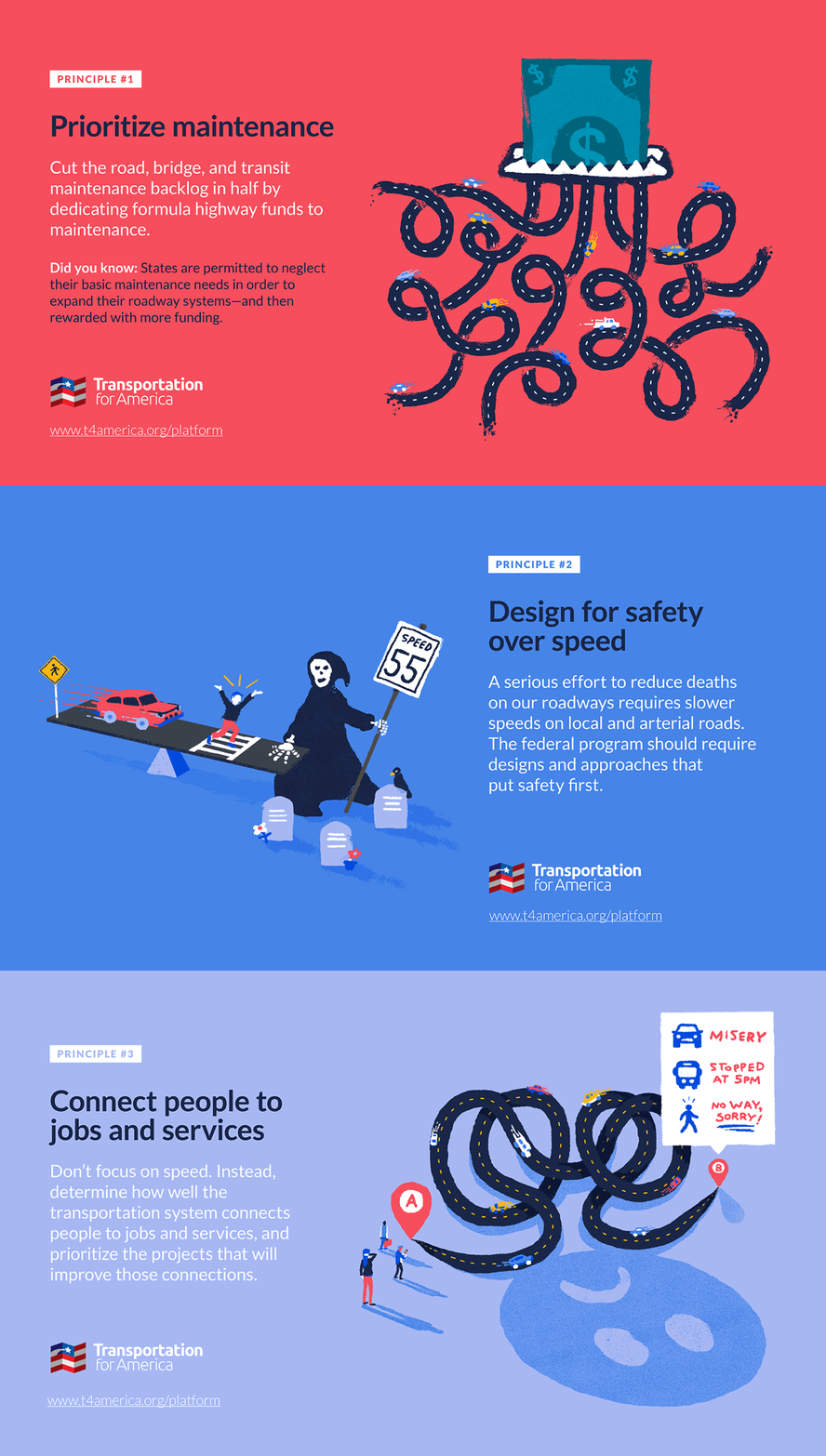
It’s past time to elevate the national conversation about infrastructure beyond just the price tag.
Learn more about our platformLatest From The Blog


There’s a climate cost to America’s freeways, and…
Apr 23rd, 2024


Progress for passenger rail in the South and…
Apr 10th, 2024

I cannot find the zoom link, I registered…
Jan 6th, 2024

A rare look behind the curtain of Transportation…
Jul 28th, 2023

In what Harrison Ford said was his most…
Jul 25th, 2023

Good example, walking to the local taco place…
Jul 24th, 2023