Transit wins at the polls as voters fund new and existing services
This post was written by T4America Policy Associate Yoni Preuss, Senior Policy Associate Braxton Coleman, and 2026 Intern Jim Lam.
Excitement over midterm election results can make it easy to overlook local referendums. With soaring car and gas prices, disappearing federal transit funds, and dwindling pandemic-era support, voter support was more important than ever for agencies trying to save existing transit services or expand affordable travel options. Here’s a look at three ballot measures supporting local transit systems that passed on Election Day 2026.
CoCo is good to go across Colorado’s Front Range
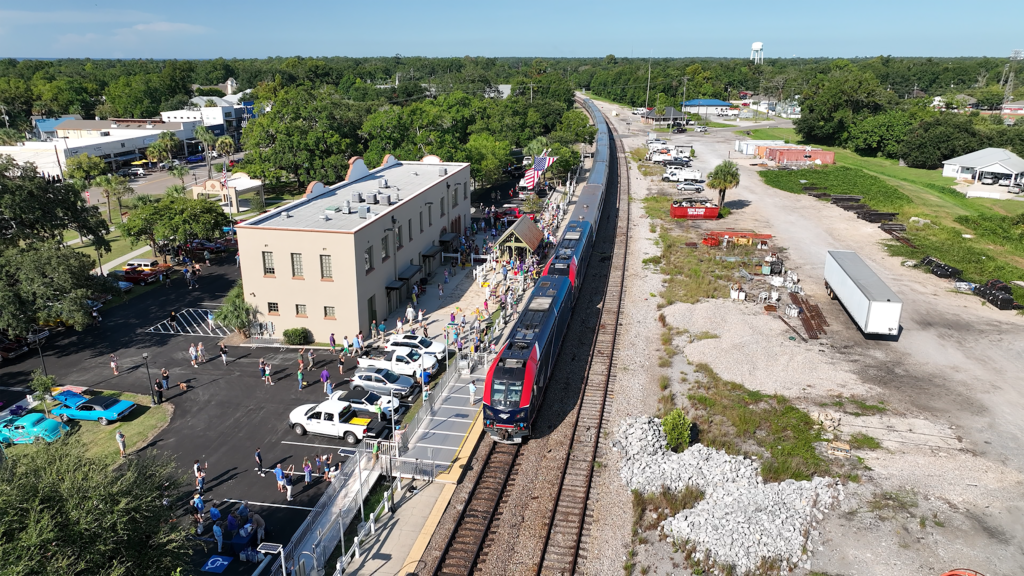
As an organization that knows something about implementing inter-city passenger rail, the Colorado Connector, or “CoCo,” was one of the most exciting transit ballot measures that Transportation for America was watching in 2026. On Election Day, voters up and down Colorado’s Front Range voted to bring inter-city passenger rail to the Mountain West, funded through a sales and use tax that adds 33 cents on every $100 spent. Existing state and Regional Transportation District commitments will also support the service, which will start with three daily round trips along eight stops connecting Fort Collins to Denver by 2029, with travel southbound to Pueblo by 2032.
Advocates, supporters, and everyday Coloradans have pointed out that Interstate 25 between Pueblo and Denver is failing to connect the region while worsening congestion and air quality—and these worse outcomes come as people are paying more at the pump due to rising gas prices. Sal Pace, general manager of the Front Range Passenger Rail District, said that I-25 is “tearing [the] state apart” by limiting economic activity and keeping families and communities apart.
Along with the clear demand for alternative transportation options, the CoCo campaign was successful because of great branding, strong partnerships, and a clear, realistic plan. The Front Range Passenger Rail District has done an impressive amount of prep work to have CoCo ready for its 2029 start date. The agency partnered with freight rail companies, including BNSF and Union Pacific, to ensure tracks would be ready for shared use, as well as Amtrak, the Colorado Department of Transportation, and the Denver Regional Transportation District.
CoCo also received broad public support, including financial and written endorsements from the six Colorado professional sports teams that will see permanent and special-event stops planned near their stadiums. As for the broader public, CoCo’s name and brand were developed through a statewide public contest that received 26,000 votes, which proved to be a great way to strengthen public buy-in.
The entire effort behind CoCo is a great example to study if you are interested in bringing inter-city passenger rail to your area. Make the benefits clear and immediate, build strong coalitions, and bring the public on board with digestible and savvy branding.
Saving services in the Bay Area
One of the biggest transit questions was whether Bay Area voters would vote to save their transportation services. Local transit agencies’ operations funding, which relies on passenger fares, has struggled since Covid-19 due to slow post-pandemic ridership and disappearing federal transit funds. Before the pandemic, Bay Area Rapid Transit (BART)—a rail system serving five counties in the Bay Area—was able to cover 66 percent of its operating expenses through passenger revenues. But post-pandemic ridership made it difficult to maintain services. The other dominant transit agency in the area, the San Francisco Municipal Railway (Muni), has also faced revenue challenges in recent years.
These challenges put two measures on the ballot this year: the Regional Transit Measure, a sales tax for BART and three other Bay Area agencies, and Proposition H, a separate size-based parcel tax in San Francisco supporting Muni. Despite polls suggesting a close race, voters approved both measures, keeping services intact. The Regional Transit Measure is expected to raise $1 billion through a 0.5 percent countywide sales tax and a 1 percent raise in San Francisco. Muni’s measure alone is expected to raise $177 million annually.
To pass both measures, advocates built an unconventional but broad coalition that included support from technology companies, construction, real estate, organized labor, and community groups.
Voters have given transit a vote of confidence, and now it’s up to municipal agencies to prove them right. BART, the San Francisco Municipal Transportation Agency (SFMTA), the Alameda-Contra Costa Transit District (AC Transit), and Caltrain are collectively doing their part by finding $1 billion in operating cost savings over the past five years and rolling out systemwide improvements like contactless payments and taller fare gates, which have likely contributed to early signs of ridership recovery.
When local voters come out to tax themselves, it’s a clear sign that there’s demand for transit. Supporting its future and demanding better management don’t have to be mutually exclusive.
Rebuilding commitment within the community in Canton, Ohio
How does a transit board embattled by scandal rebuild trust within the community to secure critical funding, especially after failing to secure a desperately needed tax increase earlier in the year?
Just sixty miles south of Cleveland, the Stark Area Regional Transit Authority (SARTA) asked voters to approve Issue 9, which renews a sales tax that adds 15 cents on every $100 spent for the next decade to maintain its capacity across the region. This critical line of funding accounts for more than 55 percent of the agency’s revenue. If it lapsed, SARTA “would be out of business in a couple of months,” according to CEO Ralph Lee, leaving its 1.4 million customers served every year by its 24 bus lines and paratransit services stranded in the sprawling suburbs.
This isn’t the first time residents weighed in on transit funding this year. During local primaries back in May, a similar measure was narrowly defeated by less than 3 percentage points. The failed proposal would have increased the sales tax to 35 cents on every $100 spent, raising an additional $8 million annually to restore routes, replace aging vehicles, and meet an increasing fundraising requirement for federal support. But a financial mismanagement scandal and executive shake-up that led to the departures of the CEO and CFO made it difficult to ask voters to support a tax increase, at least not without thorough communication and transparency from SARTA with its constituents.
Following the initial defeat, the SARTA executive board noted the “lack of a solid campaign strategy” and decided to pursue extending the current levy in the general election while building broader community support in the region. Along with narrowing their scope, the board prioritized making the interim CEO permanent, continuing to improve manager-employer relations, and communicating SARTA’s transparency and importance to Canton and its surrounding townships through local media and a stronger online presence.
This strategy, alongside a crop of public support and free election-day bus rides, led to a comfortable victory for the agency in November.
Between 2017 and 2022, 85 percent of transit ballot measures across the country passed, and voters approved 87 percent in 2024 alone. Election Day 2026 demonstrated once again that voters want to maintain and expand transit services, especially with affordability as a top concern.
As local governments move to meet these demands, it’s time for state and federal officials to step up. If you’re looking for concrete next steps they can take to improve transit and transportation outcomes, take a look at our state report cards and briefing books for elected officials.