Explore our scenario for world-class transit where you live
Achieving world-class transit requires major fleet and right-of-way expansion. The interactive tables below show what investments would be required to support world-class transit in your community.
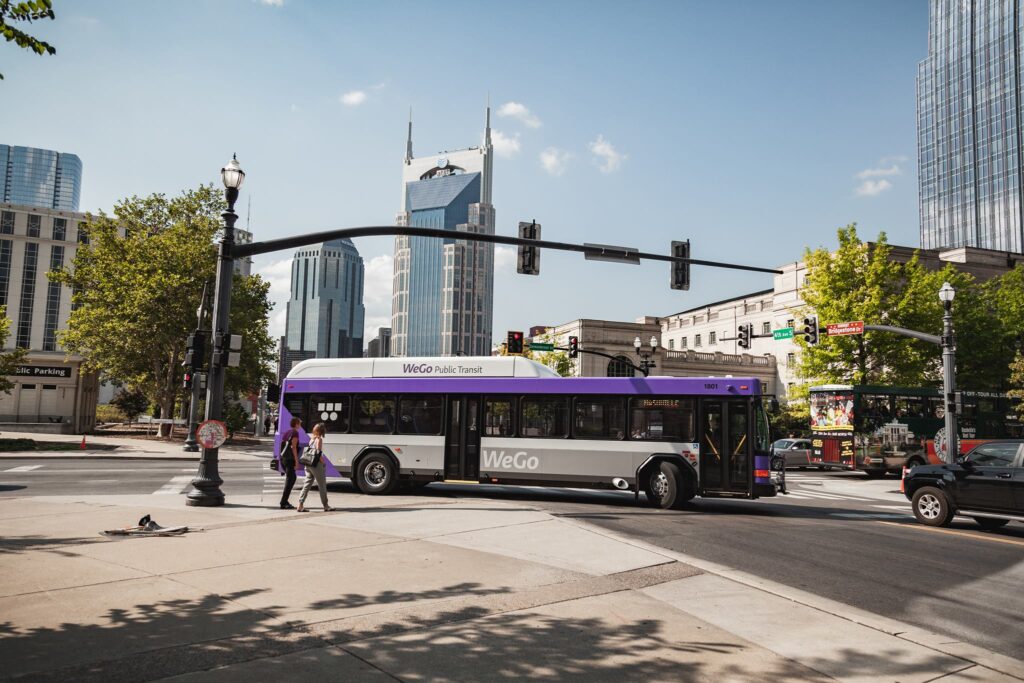
World-Class American Transit
Baseline transit service and spending
America’s transit agencies would need to dramatically expand their vehicle fleets to reach the levels of frequency and coverage required to achieve world-class transit service.
In 2023, there were over 63,000 fixed route transit vehicles operating in maximum service across 452 urbanized areas (UZAs) with over 50,000 residents. In that year, the U.S., across all levels of government, spent approximately $65 billion on transit operations, $20 billion on maintenance, and $7.5 billion on transit service expansion. If we continue to invest at levels comparable to 2020-2024 (and adjust all investments to 2024 dollars) from 2026 through 2045, the U.S. will invest approximately $2.15 trillion on transit, or around $107 billion annually (at all levels of government).
U.S. urbanized areas, sorted by population and reported number of buses (all types), light rail, and heavy rail vehicles in service (excludes vanpool and demand response vehicles).
To achieve a world-class transit in each urban area with over 50,000 residents by hitting our fleet-based targets, the U.S. would need to add nearly 115,000 transit vehicles to the fleet, bringing the total to nearly 180,000 fixed route transit vehicles in 2045.
To achieve that growth between 2026 and 2045, we would need to invest significantly more in transit. (including baseline, anticipated spending) [all dollar figures referenced in this analysis are in 2024 dollars]:
Achieving World-Class American Transit in your community
These investment estimates, derived from national-level project cost estimates, average out capital and operations costs from across the country and would vary in specific regions. Additional estimates of potential regional cost increases are available in our appendix.
Increased investment would result in dramatically improved transit service, resulting in more frequent, faster transit service and more options for people to get where they need to go. Coupling increased transit investment with land use planning and zoning reforms would provide opportunities to use transit oriented development strategies to build out more housing units, amenities, and economic opportunities.
Costs for vehicles
Costs for right-of-way
How much more investment is needed compared to baseline levels today?
How much would we need to spend in total, and on average annually, to achieve world-class transit in the region?
Consumer savings and investments in context
We did not build the interstate system overnight, and it’s not reasonable to expect the same when it comes to transit. Cumulative public spending on public highway infrastructure is nearly 3.5 times that of what has been invested into transit. The investment deficit between today’s service and world-class transit is sizable, but the costs are comprehensible. World-class transit would take an entire generation of public investment, political capital, professional capacity building, improvements to land use and development, and national culture shifts to attain.
While our world-class transit scenario represents a massive increase in spending, it is important to contextualize this increase against the scope of existing transportation spending, of which the highway program has been the largest expense.
According to 2025 data from the Congressional Budget Office, the federal government alone spent $56 billion on highways and roads in 2022. In 2023, even when boosted by significant COVID-era one-time emergency support for transit operations, federal transit spending was about 36 percent of highway spending. Looking at all levels of government, spending on highways outpaced transit by an even larger margin: in 2023, $95 billion was spent on transit, while over $249 billion was spent on roads. Including additional non-capital costs, the Bureau of Transportation Statistics put highway spending in 2023 even higher, at $333 billion. Assuming historic funding policy trends continue, the United States could altogether spend more than $6.3 trillion on highway projects between 2026 and 2045. The $2.9 trillion in new transit capital, operations, and maintenance investments called for in this report constitutes just 36 percent of highway spending over that time.
Meanwhile, at the household level, the cost of car ownership has grown year over year and is becoming a growing strain on families, especially growing ones. Despite this, car ownership remains, in most places, a prerequisite for personal success, constituting what is now essentially a costly fee equivalent to 15 percent or more of the median household income, in order to participate in society. Even assuming the real cost of car ownership stays steady, American households could spend more than $77 trillion on car ownership between 2026 and 2045, if vehicle ownership continues to grow at current rates. Providing an abundance of world-class transit options across America could be a major source of household savings. If new mobility needs are covered by world-class transit such that the rate of vehicles registrations to population is reduced to 2007 levels, American households could save over $5.4 trillion between 2026 and 2045.
Explore the full report
The full content of this report is broken up across these pages. Use this menu to navigate through the full report.
Identifying the scope of investment needed to achieve World-Class American Transit
Examining the status and performance of transit in the United States
Defining what makes global competitors' transit "world-class"
Existing spending levels and the new investments required to achieve world-class transit in your area
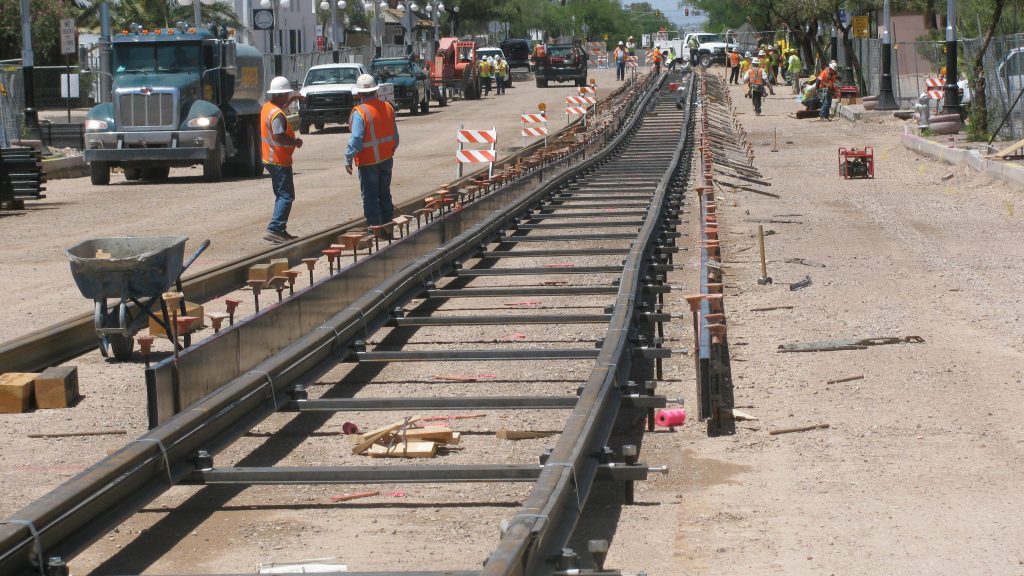
Determining the investment in vehicles, bus lanes, and tracks needed to deliver world-class transit
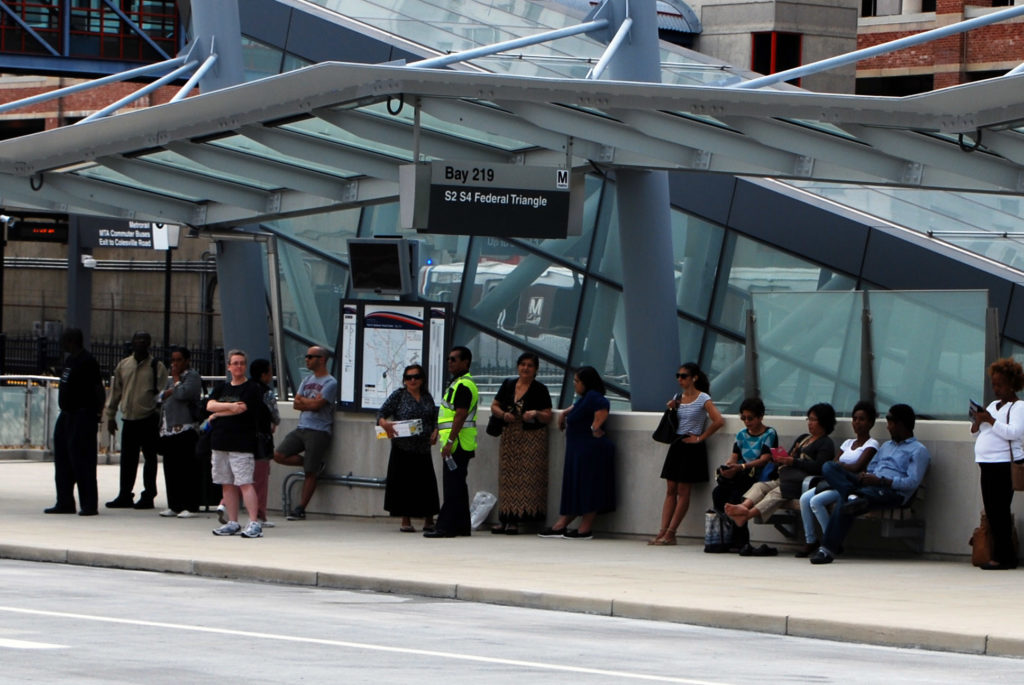
Understanding the funding required to run fast and frequent transit service at world-class standards
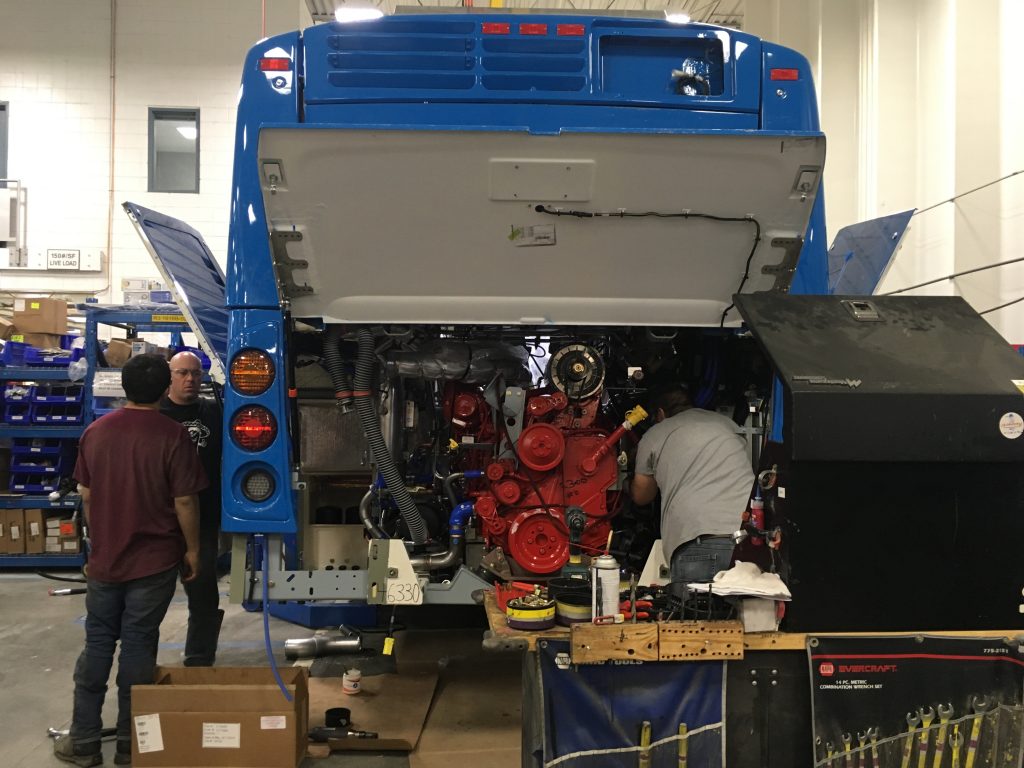
Identifying how much it would cost to maintain a world-class transit fleet and fix the repair backlog