The World Cup put America’s transit systems to the test
This post was written by Jim Lam, a 2026 summer intern with Transportation for America.
At the 2026 FIFA World Cup, sold-out stadiums full of incredible crowds obscured just how expensive, slow, and inefficient it was for them to reach many of those games. In many of the U.S. host cities, the tens of thousands of people attending each game reached their destinations despite our regressive transit options, not because of them.
While this was the highest-attended World Cup in history, it certainly wasn’t the easiest to access for domestic and international travelers alike. One reporter walked for 6 hours in 90-degree weather to get from Penn Station in Manhattan to Met Life Stadium all the way out in the lowlands of New Jersey. 28,000 steps in the sweltering New York and New Jersey heat sounds daunting, but the alternative was purchasing train tickets with 700% markups, totaling $98. Scotland fans saved over $85,000 by paying for 20 school buses to avoid using New Jersey Transit.
To serve existing residents well, which has the by-product of becoming a desirable host country for international events, U.S. policymakers must create world-class transit through sustainable financing mechanisms and land-use reform. Bringing predictable, convenient, and affordable transit services on par with those of other host countries will help future international fans embrace our hospitality and return the United States to the cultural spotlight.
How we got here
Since the U.S. hosted the 1994 World Cup, over 30 years of surface transportation policy have yielded worse transportation outcomes. This year’s transit debacle was as predictable as it was avoidable. Federal policymakers embraced press releases but ignored the hard work of funding, planning, and enhancing transit operations at the state and local levels. While the Trump administration gave $100 million to aid World Cup planning, capital, and operations in 11 host cities in March 2026, that paltry last-second investment could hardly address the overwhelming fan demand or the years of improvements that were needed but neglected.
Since winning hosting rights to this World Cup all the way back in 2018, host-city transit agencies have not received adequate federal support. Outside of emergency funds during the COVID-19 pandemic, the last eight years of federal transit funding have been lackluster. According to our own research in World-Class American Transit, to achieve world-class transit fleets in our 11 host cities by 2045, we would need about $36.22 billion for buses and $27.96 billion for rail.
A better way to travel
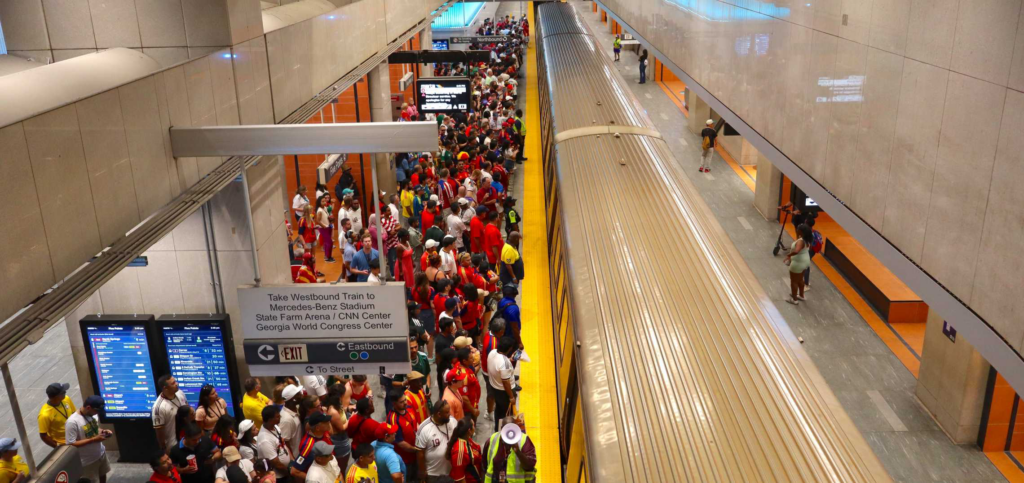
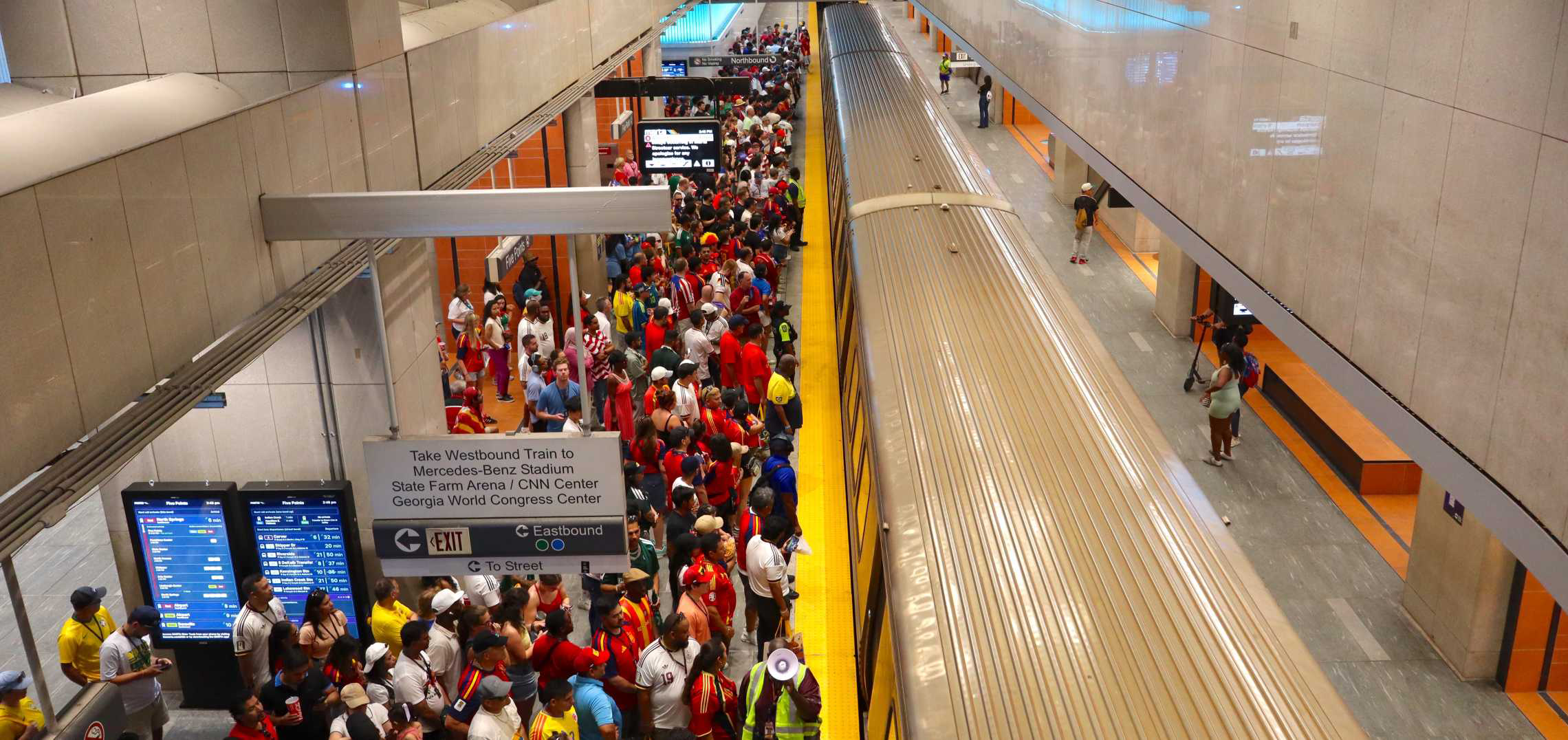
Transit, in many instances, is the first impression of a city, and it is a rare opportunity to showcase technological innovation and shape our guests’ perception. We have seen a glimpse of what could be. Fans in Atlanta took 4.66 million trips on MARTA’s rail system during the World Cup, and Philadelphia saw a 20 percent increase in ridership on the Airport Regional Line before and after a match. Regrettably, challenges in New Jersey, Boston, and other cities overshadow those successes and others, leaving a poor impression on international sports fans.
The Los Angeles (LA) Metro’s story was different, but it started years ago. LA Voters passed 4 sales tax propositions (Prop A in 1980, Prop C in 1990, Measure R in 2008, and Measure M in 2018). Together, these successful measures added 2 cents per dollar to the local sales tax, enabling the financial capital to start building regional transportation projects. In addition, Metro added an independent taxpayer oversight committee and tax receipts for each proposition, enabling community buy-in from key stakeholders. By pairing robust local revenue with federal investments, Los Angeles has laid the foundation for continued improvements long after the Olympics.
The city is finally seeing the return on its investment. While Inglewood isn’t as transit-accessible as Atlanta’s downtown stadium site adjacent to a heavy rail stop, LA created affordable direct transit services to SoFi Stadium, boosting ridership and connecting people to the downtown core. At $3.50, LA Metro provided 212,865 rides directly to and from SoFi Stadium without major disruptions. Fans treated LA Metro as an extension of the stadium experience, releasing collective energy into the air and injecting our nation with vibrancy. However, all of the economic activity and spirited energy wouldn’t have been possible without the transportation connectivity provided by the last few decades of intentional investment and the sound planning for special services for this summer.
A blueprint for the future
The recipe for success is clear: articulating reasonable goals and committing to a world-class experience through multi-year strategic plans and sustained funding. After LA won the 2028 Olympics back in 2017 and the long-term financing mechanisms were in place, city officials had a financially backed master plan to support their international events. Sustainable transit funding at the state and local level is a start, but federal policy and investments must supplement it. Host cities cannot do this alone.
With the 2028 Olympics on the horizon, LA Metro is fast-tracking multimodal expansion projects—though they face the obstacle of capital investment grants that have been completely frozen by the Trump administration, with several of their projects stuck in the pipeline.
While it will take a long time to see visible multimodal improvements, we cannot afford to accept government inaction. In the upcoming reauthorization, Congress can radically shift transportation policy so that both international guests and—most importantly—Americans of all stripes can utilize public transit effectively.
Los Angeles has shown us a successful blueprint: financing long-term infrastructure with voter support, committing to a strategic regional plan, and having federal appropriations rapidly accelerate the process. After the World Cup gets all the headlines, most of the host cities go back to subpar transit service that fails to serve everyone else for the years in between international events. American “football” enthusiasts fell in love with World Cup soccer, and with enough care and investment, Americans will fall in love with public transit, too. If the United States wants to host world-class events, let’s plan to serve our residents’ transit needs each day, and we can have a system that is ready to shine when the world comes to town.