
Dallas’ suburbs show how poor land use harms transit
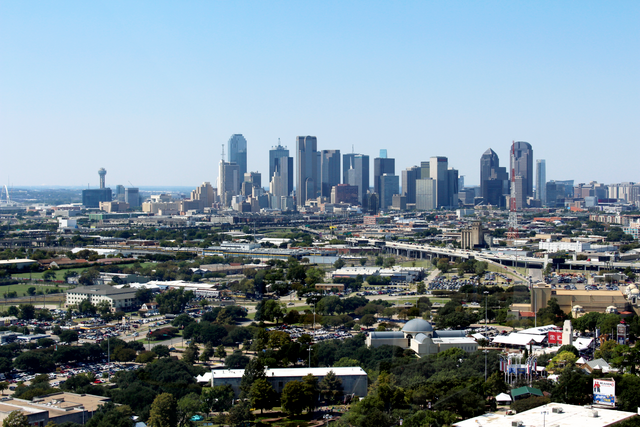
Transit investments are only one piece of the puzzle in a successful transportation system. The North Texas suburbs have forgotten that land-use decisions determine ridership. To make public transportation more useful to residents, the Dallas-Fort Worth (DFW) Metroplex needs to build housing near transit and invest in public transportation so it runs reliably and frequently.
The Dallas Area Rapid Transit (DART) system is in crisis, with six suburban member cities threatening to hold votes to leave the system in the past year. Citing relatively low ridership, local politicians from member cities argued that their investments in DART are not resulting in benefits for their constituents. The DART system is the second-longest light rail system in the United States. It even recently opened a new light rail line, connecting some of the same cities that have threatened to leave it. However, the agency serves one of the most sprawling regions in the U.S., and it lacks the operations funding to increase frequencies and expand service further.
Elected officials from the Dallas suburbs regularly criticize the current value of DART, saying that their residents don’t benefit from the system. They’re not completely off base. DART should increase the frequency of its buses and trains so people can count on transit to take them where they need to go when they need to travel. This will require investment in equipment and personnel using local, state, and federal funding to bring Dallas’ transit to a world-class level. In the meantime, the suburbs are limiting DART ridership by making it difficult for their residents to access stations.
When cities restrict housing around transit stations, they miss out on the economic benefits and increased ridership that come with transit-oriented development (TOD), instead setting transit up for failure. But better land-use decisions that allow more people to live near stations would increase ridership, strengthening the argument for investing in more frequent and reliable public transportation. The DFW Metroplex’s transit struggles show how restricting housing construction and connectivity around transit stations can undermine the entire transportation system by limiting the number of people who can easily use it.
Standard suburban planning hurts ridership
Plano is a suburb north of Dallas with a population of 300,000 people served by multiple DART light-rail stops and bus routes. It’s also a leader in attempting to cut DART funding. All the while, the city has heavily restricted where you can build apartment buildings with four or more units.
In Plano, the land around transit stops—which should be where more missing middle housing is allowed—is zoned almost exclusively for low-density single-family homes, while higher-density developments such as apartments are concentrated near highways.


Take a look at the end of the line: Parker Road Station. It’s Plano’s station with the highest ridership, even though it’s surrounded by parking. The land to the east of the station is zoned for single-family housing. The land north and west of the station is zoned for apartments, but these are primarily designed for highway access. The surrounding streets feed into U.S. 75, which cuts through the city, destroying the possibility of a connected street grid. Coupled with the long and winding roads of the single-family developments, a relatively short walk to the station turns into an unpleasant, indirect hike. Plano’s zoning decisions exacerbate the need to drive and park at the station rather than walk, bike, or take a bus, making it hard to access the station and, in turn, depressing ridership.
If most of the housing is adjacent to a highway, and you have to get into the car to get to a train that’s slower and less reliable than the car and doesn’t take you near your destination, why wouldn’t you just drive? It’s no wonder Plano is disappointed by the service they get. They’ve made the system difficult to use, all the while they demand better results from it.


This story repeats itself in many of the surrounding suburbs. Farmers Branch, another town that just withdrew its referendum on leaving DART, zoned the area around its station to favor car-dependent infrastructure and single-family housing. A highway cuts through the town, the areas north and west of the station are zoned for commercial use, and the station is surrounded by parking. In Farmers Branch, you are not allowed to build apartments around this station, limiting the number of people who can easily access the stop. A walk to the station would be indirect, long, and unpleasant because of roads designed to favor high-speed car traffic. In comparison, a drive is faster and more convenient.
We can still invest in the rest
DART and similar systems around the Sunbelt aren’t destined for failure. Building world-class transit in DFW is possible. By our estimates, this will require an investment of $7.26 billion annually to build up the area’s transit fleet and infrastructure to world-class levels. While increasing the number of transit vehicles alone is not a panacea to DART’s woes, running transit frequently and reliably can catalyze the same type of development that supports transit.
The federal government and localities share responsibility for fostering TOD. Legislation like the Build HUBS Act would improve financing mechanisms for localities to build housing near transit stops. However, without zoning regulations that enable building housing near transit, communities won’t be able to effectively leverage federal funding opportunities.
DART isn’t doomed. Its failures result from choices made by cities, the state, and the federal government every day. And they can choose to fund its operations and build housing nearby to stop a transit death spiral before it starts.