Welcome to elected office: Transportation for America is here to help improve your transportation outcomes

Welcome to elected office! Maybe you’re new to transportation. Maybe you’re a seasoned transportation professional looking for ways to improve what you already know. Maybe you’re somewhere in between, but know that things need to change. Transportation for America (T4A) is here to help state and federal policymakers make decisions that fundamentally improve the transportation outcomes that people care about most.

A strong, modern transportation system supports prosperous communities where businesses thrive, and people of all incomes and ages can live healthy, productive lives. But that’s not what we’re getting from our investments. Despite spending billions of dollars on transportation, we’re not seeing measurable improvements in how the system performs because we’re not making spending decisions based on the results we want to achieve.

Safety, state of repair, and transportation choices are three outcomes that matter most to people who use our transportation system. Whether it’s concerns about traffic around your dinner table or complaints about potholes at your town hall, people are fundamentally unhappy with what they’re getting from our transportation investments. When you consider that we spend billions of dollars a year to maintain this poor performance, it’s clear something needs to change.

Transportation for America has tools to help state and federal policymakers address these essential dinner-table issues. The good news? Our comprehensive policy solutions get to the foundation of why our transportation investments fail to deliver on outcomes, and provide the tools to start making real change. The bad news? Fixing the foundation takes more than throwing money at the problem.

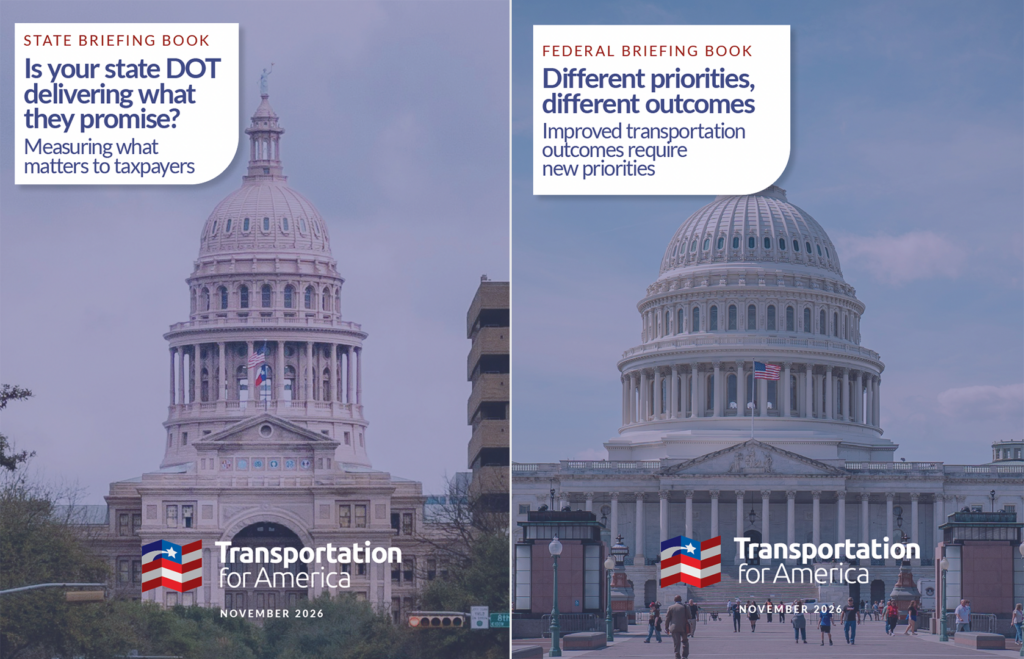
State policymakers can focus their DOT investments on outcomes that matter

Now is the essential time to refocus your DOT on achieving the outcomes you want, rather than throwing more money at the broken transportation system.  It is time to stop asking “how much money should we spend?” and start asking “what are we getting from the money we’re investing?” to improve accountability and prioritize spending on the results promised to taxpayers—and the everyday experience of people across your state. 

Learn more about how to refocus and improve your state DOT through priority setting, removing barriers to innovation, and updating project delivery here >>

Where to start:

  • Look into your state DOT’s ranking and see how their performance measures up (hint: it’s likely failing to meet outcomes).
  • Download the book, review it, distribute it across state offices, and determine paths forward to reform your state DOT.

Federal policymakers can focus their energy on reforming reauthorization

The federal program is failing to deliver on its promises, even with deficit spending of more than $275 billion. Despite spending more than $1.5 trillion since 1991, roadway safety has worsened, infrastructure conditions have stayed about the same, congestion has worsened, and emissions have increased. It’s time to replace the failing, bankrupt federal transportation program with something new and make it more accountable to taxpayers by building a new federal transportation program from the ground up.  

Read more about the need for different federal investments, changing surface transportation reauthorization, and prioritizing performance and accountability here >>>>>

Where to start:

  • Download the book, review it, send it to your newly elected officials, and start the conversation on better transportation outcomes before the new year.

Transportation for America is here to help

Transportation for America, a program of Smart Growth America, is a national non-profit working to create a transportation system that safely, affordably, and accessibly connects everyone to jobs, services, and opportunities. Subscribe to our emails, use our reports, and contact us to ask about our expertise or available support.
Focusing on the positives of dockless bikes and scooters

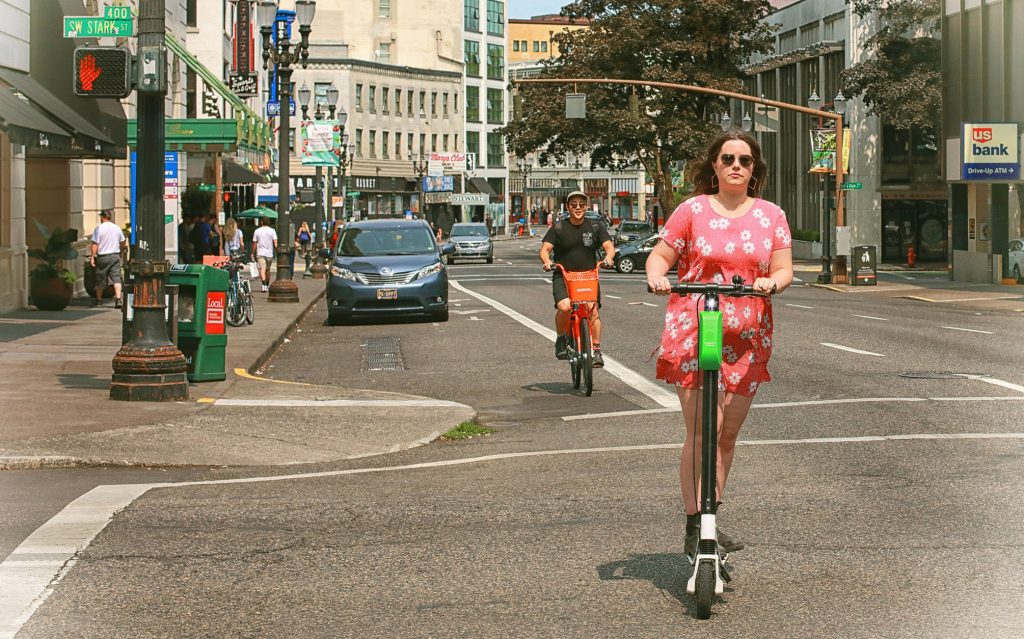
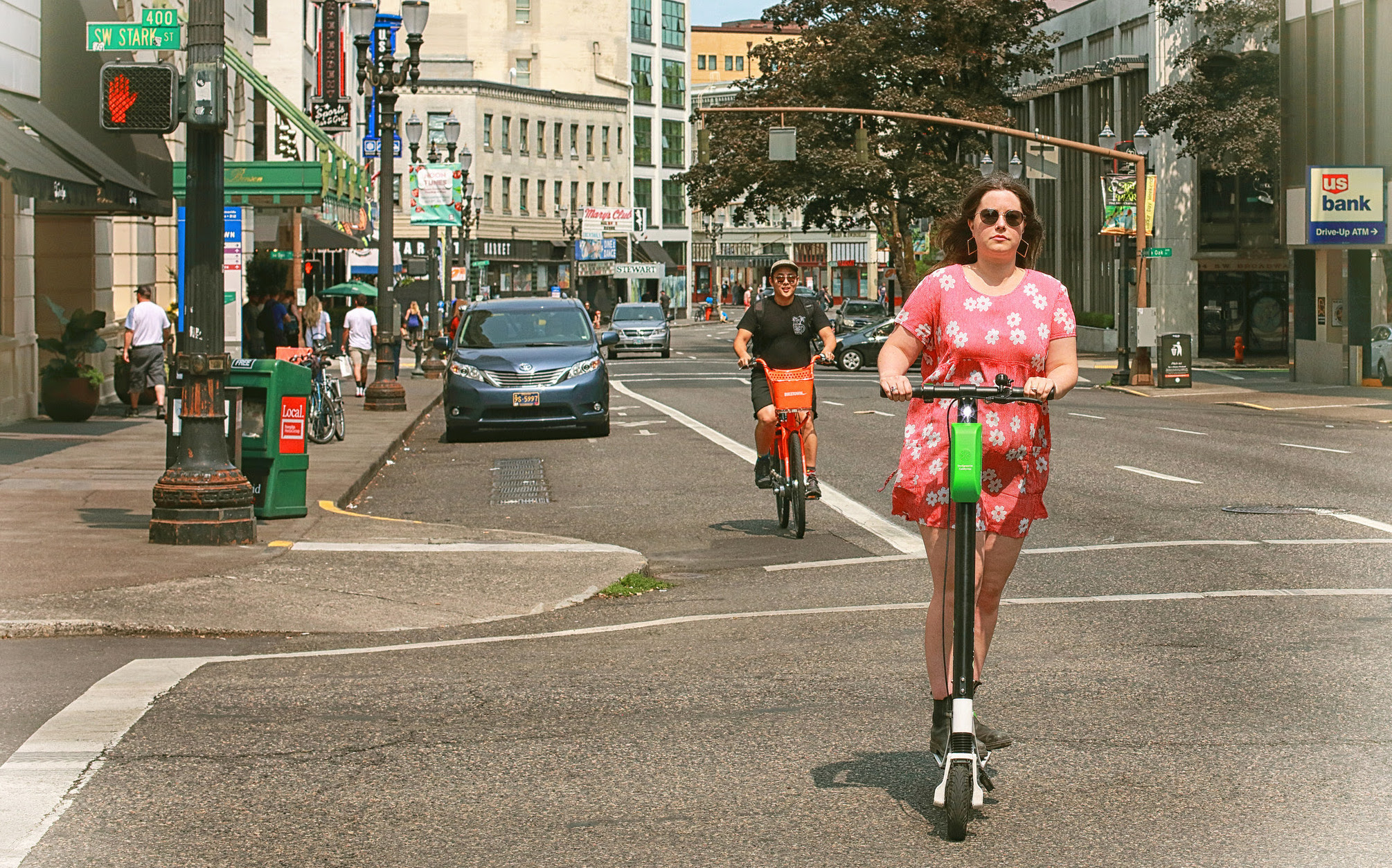
Cities are quickly passing policies to manage the influx of dockless bike share and scooters in their communities. How can they craft policies to achieve the outcomes they want, rather than simply avoiding the ones they don’t?

We’re more than halfway through 2018 and shared active transportation services such as dockless bike share and stand up electric scooters continue to expand, often without warning, to new cities across the country. As a result, cities are beginning to pass policies and regulations to manage the demands and challenges these new services create.

But, instead of shaping these services in a way that maximizes their positive impacts, so far, their policies seem to be more focused on simply preventing potential negative outcomes. In order to unlock the full benefits of these vehicles, they’ll need to craft policies that address both.

One of the starkest examples of this is how cities are allocating space for these vehicles, both when they’re in use and not. To prevent dockless scooters and bikes from blocking sidewalks and creating chaos in the right-of-way, Denver, for example, has passed requirements for operators to install and maintain painted parking zones throughout the city.

Creating parking spaces is a great way to ensure these vehicles aren’t making city streets less safe when they’re not in motion. But, this should be paired with efforts to create a safer environment for these vehicles and their users when they are in motion. In order to foster the adoption of these services and truly make their streets safer, cities should clearly articulate where these vehicles should operate and carve out protected spaces for people to ride.

The need for protected infrastructure has been apparent for years with bicyclists and pedestrians and is quickly becoming clear with scooters as well. Last month, Jenasia Summers, a 21-year-old woman in Cleveland, was struck and killed by a car while riding a scooter in a six-lane road with no dedicated space for active transportation users. Stories like this are far too common and are directly related to the low rates of active transportation users—half of Americans would like to ride bicycles more, but are afraid of interactions with motor vehicles.

To help create additional space and infrastructure for active transportation users, cities could use the fees they receive from private mobility providers to build out new bike and pedestrian infrastructure that will foster the adoption of these services.

But, even as scooter companies such as Bird are offering to give cities $1 per vehicle per day for cities to use for better bike infrastructure and safety measures, cities aren’t actually codifying this in policy.

A city’s budget reflects its priorities. If cities are truly committed to increasing active transportation, they should include provisions to directly allocate revenue from these services toward providing better infrastructure as these vehicles increase in popularity. Even if the total amount of money isn’t much, it’s an opportunity for cities to carve out space for their stated priorities.

A greater focus on the positive impacts of new mobility options can go beyond safety. In its updated Free Floating Bike Share Permit Requirements, the Seattle Department of Transportation (SDOT) has incentivized providers to offer adaptive cycles as part of their fleets. Adaptive cycles include a range of two- or three-wheeled vehicles, such as tricycles, hand-pedaled cycles or recumbent cycles where the rider leans back in their seat, that can be used by individuals who are unable to operate a two-wheeled bicycle. To put more of these on the road, SDOT will allow operators to expand their fleets if they provide a certain share of adaptive cycles.

Additionally, SDOT has specified in their policy that they will allocate $50,000 from permitting fees toward developing and leveraging community partnerships to increase adaptive cycling ridership and access. While it still needs to clarify some of the specifics of how these partnerships will work, SDOT has clearly outlined its priorities to increase access by providing incentives to private mobility providers and has allocated additional resources to engage people with disabilities to increase ridership.

It’s very early in the process of determining how to regulate these new shared active transportation services and there’s still much to learn about how best to utilize these new mobility options in service of our long-term outcomes. But, as cities integrate them into their communities and are generating revenue from their operations, there’s an excellent opportunity to chart a new course and develop regulations in way that truly advances their long-term positive outcomes, rather than simply trying to prevent their negative impacts.

At our next Smart Cities Collaborative meeting in Pittsburgh, we’ll discuss these challenges and explore policy provisions for shared active transportation services that maximize their benefits. Stay tuned for an update on what we learn, what the biggest challenges are, and what a model policy could look like.

Join T4A’s Beth Osborne in Portland and Seattle next week for talks on transportation and economic development

Beth Osborne, Transportation for America’s senior policy advisor, is making three stops in the Pacific Northwest soon to discuss how investing in transportation can help drive economic development. 

The three sessions will focus on how we can plan and develop our roads, transit systems and freight networks to bring the best possible economic returns. You will learn how regions across the country have made investment decisions and the results they achieved with regard to economic development and competitiveness.

Beth Osborne brings five year’s experience from US DOT, including serving as Acting Assistant Secretary for Transportation Policy, and a national perspective on prospects for improvements to transportation policy and funding. Sign up today. T4America members should have already received a promo code for discounted registration.

Find out more about each session and register with the links below.