Posts Tagged "transportation bill"
UPDATED: Senate reaches preliminary agreement on a long-term transportation bill
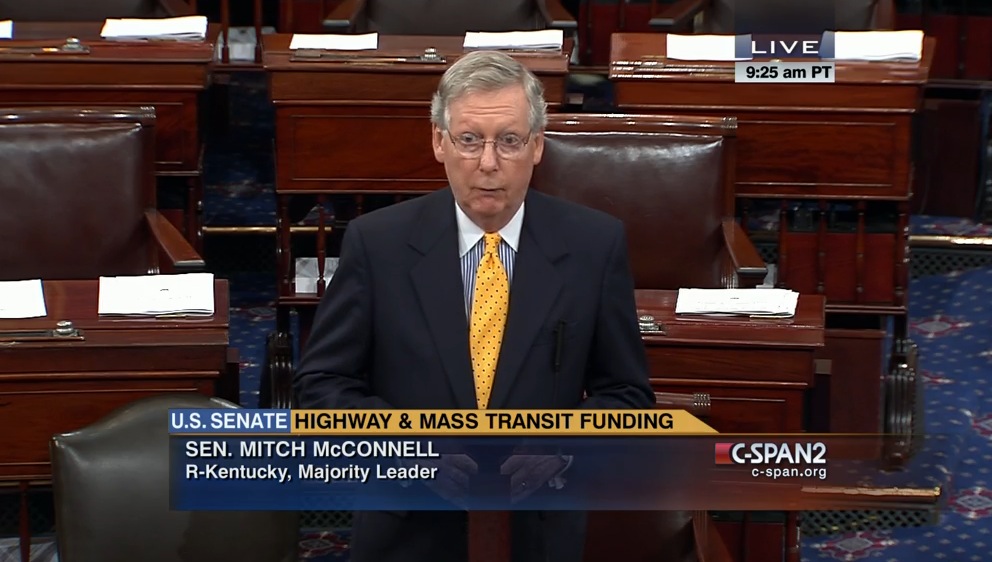
A group of key Senate leaders announced just a few moments ago that they’d reached agreement on a bipartisan six-year transportation bill with three years of guaranteed funding. While it’s encouraging to see this agreement ten days before MAP-21 expires on July 31, forthcoming negotiations over the actual details of the bill will be crucial as most Senators have not yet seen the policy or funding language.
Three changes could dramatically improve the Senate’s draft transportation bill

Ahead of the looming July 31 deadline to pass a new bill (or extend the current law), the Senate Environment and Public Works Committee in late June introduced and marked up a full six-year transportation bill. While we think it’s a good starting point, there are some promising amendments that could improve the bill dramatically as it goes forward in the Senate.
House proposes a trust fund Band-aid through May, 2015, with key differences from Senate
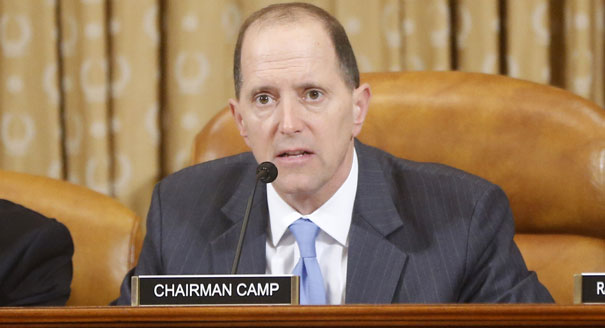
A House proposal to shore up the transportation trust fund through May, 2015, is a good news, not-so-good news proposition. Late yesterday, House Ways and Means Chairman Dave Camp (R-MI) proposed a $10.8 billion infusion to cover a looming deficit in the Highway Trust Fund. The money for the next few months would come mostly […]
U.S. DOT offers great proposals, but the program needs more money to make them real
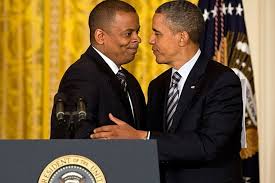
The Obama Administration last week unveiled its bid to save the federal transportation program with only months to spare before most states and metro areas lose the majority of their funding to maintain and improve transportation networks – unless Congress acts. While the Administration foreshadowed its priorities in its March budget request, the proposal – […]
EPW Committee approves transportation bill by voice vote, moves it out of committee
The Senate Environment and Public Works Committee approved its two-year highway reauthorization bill this morning and moved it out of committee by a bipartisan, unanimous 18-0 vote. (Read our statement here.) The committee markup was short, as compared to a typical markup of such a large bill, but that was a testament to the work […]
Transportation for America Response to Senate EPW Reauthorization Bill
After the Senate Environment and Public Works Committee moved their draft transportation bill (MAP-21) out of committee with a successful bipartisan vote this morning, T4 America Director James Corless offered this statement: “The bipartisan passage of the MAP-21 bill in the Senate EPW Committee this morning provides a significant opportunity to move forward on a […]
Summary of the Senate MAP-21 transportation bill proposal
The Senate Environment and Public Works Committee released a draft of the transportation bill late last Friday. We’ve prepared a few pages on what this draft bill propose to do to the federal transportation program. This is a bit on the wonky side, but hopefully you will find it helpful if you’re trying to summarize the 600 pages of bill text. One of the most visible changes MAP-21 makes is to restructure seven core highway programs and 13 formula programs into just five core programs.
Senate EPW Committee releases their bill text
The Senate Environment and Public Works Committee released text of their portion of the transportation bill late last Friday evening. Our staff is still chewing through the details of the 600 pages and we hope to have some sort of analysis and statement ready later today. It’s a good time to remember that this committee […]
700 days since expiration of last transportation bill, Congress urged to pass an extension
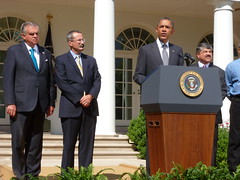 President Obama gave a short speech in the Rose Garden Wednesday calling on Congress to come together quickly to pass a “clean” extension of the federal transportation bill to ensure that there’s no interruption in federal funding for transportation projects while they debate a longer-term reauthorization. The clock starts ticking after Labor Day.
DOT poised to move on a long-term transportation bill in 2011?
When President Obama made his announcement on Labor Day about investing in infrastructure, most media outlets focused in directly on the $50 billion amount that would be spent up front to jumpstart infrastructure investment — something we already noted last week. But he also talked about the need for a reformed long-term transportation reauthorization, the full six-year bill that would provide certainty to job creation and the economy. So the million dollar question has been, when will we see this bill?
Administration releases their principles for an 18-month transportation bill
When DOT Secretary LaHood was on Capitol Hill a few weeks ago discussing the Obama Administration’s plan for a transitional transportation bill, he mentioned that their plan for an 18-month extension would “enact critical reforms” while stopping short of a fundamental overhaul of the program — leaving that for the full six-year bill. A lot of transportation advocates were left wondering what sort of reforms the administration would propose. Today we got a first look at their general proposal.
Chairman releases full transportation bill text
Chairman Jim Oberstar and the House Transportation and Infrastructure Committee have released the full 775-page transportation bill text. Download it here. (pdf) Check back here for details over the coming week.
Sec. LaHood proposes 18-month extension of current transportation bill
This morning on Capitol Hill, DOT Secretary Ray LaHood proposed an 18-month extension of the current SAFETEA-LU transportation authorization bill. Beyond simply extending the current bill, LaHood indicated that he wants to include some reforms in the 18-month extension — including a focus on metro areas, extensive cost-benefit analysis, and a commitment to “livable communities” — but was short on other specifics.
Updated news on the transportation bill outline release
After much back-and-forth on times and dates today, we think this information is pretty solid: Transportation and Infrastructure Committee Chairman James Oberstar is holding an invitation-only press conference Wednesday, June 17th at 11 a.m. to talk with invited media outlets about the white paper and outline for the upcoming transportation bill. 24 hours later, on […]
President Obama: “I would like to see some long-term reforms in how transportation dollars flow…”
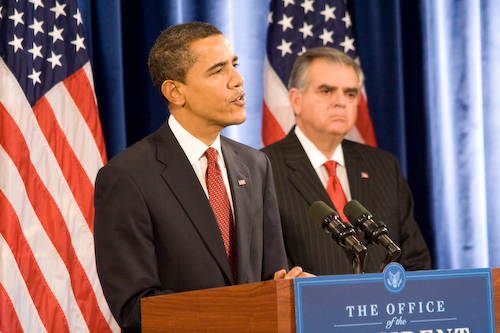 President Obama gave an interview to five columnists aboard Air Force One last week, talking at length about infrastructure, transportation, and the need to make serious reforms in transportation spending — hinting at how proper investments in transportation can help boost the economy while making the downpayment on a 21st Century transportation system we’re all hoping for.
Our three principles
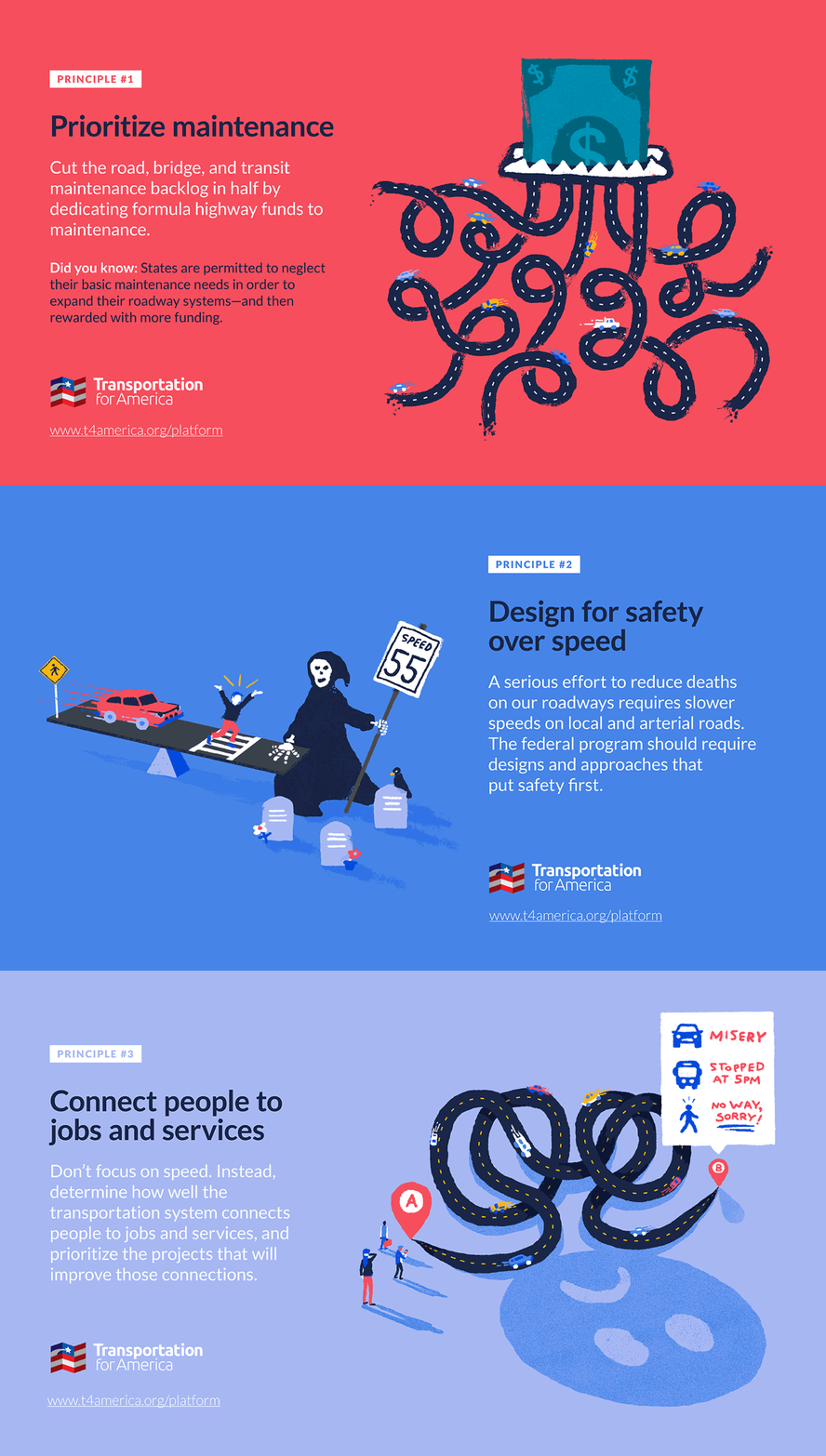
It’s past time to elevate the national conversation about infrastructure beyond just the price tag.
Learn more about our platformLatest From The Blog


Progress for passenger rail in the South and…
Apr 10th, 2024


Building back better: Reflections on the state of…
Apr 9th, 2024

FTA helps deliver more buses for less
Apr 2nd, 2024

I cannot find the zoom link, I registered…
Jan 6th, 2024

A rare look behind the curtain of Transportation…
Jul 28th, 2023

In what Harrison Ford said was his most…
Jul 25th, 2023

Good example, walking to the local taco place…
Jul 24th, 2023