Transportation For America » service cuts

Despite new challenges, Americans continue flocking to public transportation

June 16, 2009
By Andrew Bielak

This week, the American Public Transportation Association released their ridership numbers for the first quarter (January through March) of 2009, and confirmed something that we’ve been suspecting: Despite facing a dismal economy, deep cuts in service, and painful fare increases, Americans are continuing to use public transportation in near record numbers.

As we’ve been documenting on our transit cuts page and interactive map, nearly 100 transit agencies have already cut service, raised fares, laid off workers — or are considering cuts of some kind to cope with the severe budget crises facing counties, towns and cities across the country. Nevertheless, as the new report from APTA shows, total ridership reached 2.6 million in the first three months of 2009 — nearly matching last year’s record numbers — and proving that public transportation is critical to American’s livelihood, even if it has become less accessible and affordable for many.

While these cutbacks have caused many agencies to lose some riders, many others are doing more than just hanging on in these tough times:

  • King County Department of Transportation in Seattle reported a 16.8% increase in light rail ridership, despite increasing fares earlier this year.
  • The Massachusetts Bay Transportation Authority in Boston logged a 5.4% increase in ridership on its commuter rail system, in spite of a budget crisis that is prompting talks of a 15 to 20% fare increase, along with service cuts.
  • The San Diego Metropolitan Transit System experienced a 5.3% jump in ridership on its bus system, despite eliminating numerous bus routes and cutting others earlier this year.

While this crisis is causing extreme hardship for many agencies, most of them (specifically, those that service metro areas with more than 200,000 people) are not allowed to use federal dollars to help run their buses and rail systems. Congress recently approved legislation that allows 10 percent of the stimulus funds to be used on operating assistance, but this will not continue once those recovery funds run out.

U.S. Representative Russ Carnahan of St. Louis — one of the cities hardest hit by transit cuts — is sponsoring a bill that would allow transit agencies to plug the holes in their operating budgets with federal dollars on a permanent basis. Let’s make sure we get behind Rep. Carnahan and the others are working to rebuild our economy with a revitalized transportation system.

Bookmark and Share

“A small group of committed individuals can and often do make a difference.”
April 24, 2009
By Stephen Lee Davis

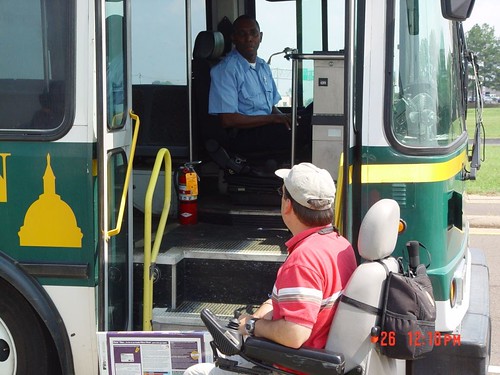
Bus Ride 9_26_07 013 Originally uploaded by Transportation for America
Dr. Scott Crawford being told that he can’t ride a JATRAN bus because the lifts don’t work. (Please credit photos to Dr. Scott Crawford)

Policy may get made here in Washington, but transportation, mobility and safety are truly local issues. The kinds of transportation investments that we’re pushing for aren’t luxuries — they’re essential necessities that enable Americans to get where they need to go, safely and affordably.

It’s high time that we made sure we invested in a transportation system that is safe and accessible for everyone.

So why is access to transportation choices and safe, complete streets so important?

Just a couple of months ago, Dr. Scott Crawford sent us this sobering story about a friend of his in a wheelchair who was struck and killed by the driver of an SUV while in the shoulder of a main highway in Jackson, Mississippi. With no options for a safer way to travel — broken lifts on buses and a lack of sidewalks on main streets — 66 year-old James Smith was riding in his motorized wheelchair in the shoulder of Medgar Evers Boulevard in Jackson.

A collision in the middle of the road resulted in the SUV rolling into the shoulder, where he was crushed underneath the vehicle. (No one was charged.) Dr. Crawford told WAPT that it was only a matter of time due to the conditions of the streets in Jackson.

“I feel very sad for his family. It breaks my heart to see older adults riding in the streets in wheelchairs because they have no alternative.”

Dr. Crawford has been a tireless advocate for complete streets in Jackson, as well as more funding and accessibility compliance for the transit agency there. You may remember his story about the broken bus wheelchair lifts, inadequate transit facilities, and how unsafe and inaccessible most of the thoroughfares are for the handicapped or disabled in Jackson, Mississippi.

He told us in late 2008 that “they recently cut the budget for our transit system by 1.5 million dollars, and they are being sued by a consortium of people with disabilities for violations of civil rights under the Americans with Disabilities Act (me being one of the plaintiffs).”

image004 Originally uploaded by Transportation for America
These are the 5 new paratransit buses that JATRAN ordered, in part due to Dr. Crawford’s efforts. (Please credit photos to Dr. Scott Crawford.

But after several discouraging updates from Dr. Crawford, he sent us this development last week:

I figure you’re ready for some *GOOD* news from Jackson! The class action lawsuit I filed in Federal Court has started to result in some changes for the better: the city just bought 5 new paratransit buses for the JATRAN system, and they should be on the road this week. I’ve enclosed pictures if you are interested in posting them.

The suit is also pressuring the city to buy three new lift vans as “back-up” transportation should people like me be stranded by non-working lifts (but they have yet to arrive). The city also tells me (not yet in writing) that they will buy 13 new fixed route buses by November. It’s a start!

As he told us, “a small group of committed individuals can and often do make a difference.” So things are looking up in Jackson, right? They’ve got 5 new paratransit buses ready to hit the road and serve the estimated 16,000 citizens of Jackson who are physically disabled. Well, almost.

The new buses, while great, are yet to be put on the road due to insurance delays and inefficient paperwork.

Jackson is not alone, and it’s certainly not all their fault.

This is the current state of transit agencies in many of our smaller communities like Jackson. They are chronically underfunded and neglected by city or county governments. And more often than not, woefully ignored by State Departments of Transportation mostly concerned with using their federal transportation dollars to pour new asphalt and open new highways.

Public transportation and safe, complete streets are not just something for big, urban cities. And for people like James Smith and Dr. Scott Crawford in communities big and small, it’s a basic question of equity.

Tell Congress that you’re ready for them to step in to help the more than 11 million people who are facing transit service cuts, fare increases, or job losses in almost 100 communities across the country.

Do you have a story like Dr. Crawford’s you’d like to share? Send it to transitcuts@t4america.org

Bookmark and Share

CNN finds out just how much transit cuts are hurting communities across the U.S.

April 1, 2009
By Andrew Bielak

As painful transit cuts cripple more and more agencies across the country, major national networks are gradually tuning in to the story and seeing just how bad things are. CNN is the latest to cover the transit cuts phenomenon that’s wreaking havoc on the largest and smallest of our public transportation systems.

In a four-minute segment last week, CNN used Transportation for America’s handy map — which we created to document the 85 communities that are being forced to either cut service, increase fares, or lay off workers due to budget crises at the local and state level — and took an in-depth look at some of the impacts of cutting back public transportation at a time when Americans are riding transit in record numbers.

In case you hadn’t heard recently about the story at a local level, check out what’s going on in places like New York and San Francisco, where officials are desperately searching for ways to avoid massive fare increases or eliminations of entire routes, or in cities like St. Louis, which had already suspended service to 2,300 bus stops as of March 30.

If you are being affected by these cuts, know anyone who is, or simply want to push for a more affordable and more effective transportations system, urge Congress to make sure that the next six years of transportation spending charts a course for a bold new direction.

Bookmark and Share

A grim milestone: 80 U.S. transit systems facing cutbacks

February 27, 2009
By Andrew Bielak

Monterey-Salinas Transit Bus
The Monterey-Salinas Transit System in California is one of the 80 systems chronicled on our map facing job cuts, service cuts, or fare increases. Photo submitted by Danny Avina and the MST.

Here at Transportation for America, we’ve spent a lot of time documenting examples across the country of transit agencies cutting service, raising fares, or laying off workers to cope with slashed budgets and growing deficits. In nearly every instance we’ve found, there’s a similar pattern — declining state and federal aid, paired with decreasing revenue, pushes a local transit agency to make cuts, even while ridership remains at all time highs as residents look for cleaner or more affordable ways to get to work or go to the store.

Unfortunately, we’ve hit a grim new milestone in our search for transit cuts. Transportation for America has now documented 80 communities across the United States (even stretching up to Alaska) being hit by these service reduction, fare increases, and layoffs. You can look at all the cuts we’ve found on our transit cuts page. (Continue to let us know if we’re missing any.)

At a time when cash-strapped Americans are continuing to drive less, these harsh cutbacks are hitting people who depend on transit service the most incredibly hard. While the American Recovery and Reinvestment will provide some assistance by feeding $8.4 billion into local transit agencies across the country, the language in the bill does not allow agencies to spend a single cent to help them with keeping their systems running, which would prevent some of these harsh cuts. Agencies might get stimulus money to buy new buses or railcars, but they won’t be able to pay the drivers to operate them or the maintenance workers to keep them running.

People in every corner of the United States are being affected by draconian cuts in a service that connects them to their jobs, their schools, and their communities. Ultimately the lesson here is simple — If we want to provide a down payment on a greener future and stronger economy, we need to provide public transportation with the robust investment it deserves.

If you’d like to see that situations like this become a thing of the past, sign your name onto our Platform urging Congress to make sure that our transportation spending charts a course for a bold new direction.

Bookmark and Share

Update to the Transit Cuts map; 51 systems covered

January 27, 2009
By Stephen Lee Davis

We knew when we put it together that our list of transit agencies facing fiscal crises was not going to be exhaustive. And as soon as it went live, we heard from a number of you with information on other systems that we either didn’t know about or couldn’t find information on.

So thanks to Hugh, Richard, Jef, Randy, and Jeff, we now have 51 systems covered in the map, representing ovevr 20 million daily trips by everyday Americans. If you embedded the map in your site, then it has automatically been updated with the 14 new systems.

Cities Added: Eugene, OR; Cincinatti, OH; Augusta, GA; Clark County (Vancouver), WA; Carbon County, PA; Binghamton, NY; Orlando, FL; Olympia , WA; San Francisco-San Jose-Gilroy, CA (Caltrain); San Mateo, CA; Monterrey, CA; Hollister, CA; Orange County, CA; Western Contra Costa County, CA

I’m sure there are yet more out there we’re unaware of, so if they’re facing cuts of any kind in your area, send information in to us. You can mail information to photos [at] t4america [dot] org. If you have a source you can point us to, then all the better.

Transit Cuts Map OverlayAnother nifty thing we wanted to point out is that you can use a Google map from the Gov Track system to overlay Congressional districts over the transit cuts. Keep in mind that the pin placements are not exact, but you can use this to see which Representatives should unquestionably be fighting for more transit funding in the House bill.

First click on the map link for our Transit Cuts map and then “Save to My Maps” in Google. Then click on this map link from Gov Track and do the same. Check both boxes and you’ll see a picture something like this at right:

More information at http://t4america.org/transitcuts


View Larger Map

Yellow = Service Cuts Green = Fare Increases Purple = Service Cuts and Fare Increases Red = Service Cuts and Job Losses Turquoise = Fare Increases and Job Losses $$ = Service Cuts, Job Losses, and Fare Increases.

Bookmark and Share

Jobs and Pocketbooks Threatened as Transit Agencies Face Cutting Jobs and Service, Raising Fares

January 26, 2009
By Transportation for America

Stimulus funds to preserve public transportation would help communities large and small, new compilation of data shows

Download this Release (.pdf)
Contact:
David Goldberg
202-412-7930
david.goldberg@t4america.org

Ben Grossman-Cohen
202-478-6185
bgrossman-cohen@mrss.com

UPDATED: 14 systems added to the map, bringing the total to 51 transit systems.

WASHINGTON, D.C. — With ridership at record highs, transit agencies across the country are facing unprecedented fiscal crises in this economic downturn, leading to potential job losses, service cuts and fare hikes that are hitting at the worst possible time, a new compilation of nationwide data shows.

To view the map of proposed service cuts nationwide, please visit: http://t4america.org/transitcuts

The widespread nature of the crisis, as mapped by the Transportation for America coalition, underscores the impact of the failure to include service-preservation funds in the economic stimulus bill introduced by the U.S. House leadership last week and proposed today in the Senate.  Emergency assistance to save jobs and service, which had been proposed by House Transportation and Infrastructure Committee Chair James Oberstar (D-Minn.), was removed from the bill without explanation. Funds for rail and other transit construction were cut, as well, while funding levels for highway construction remained intact.

Transportation for America’s informal audit highlights 38 51 communities across the U.S. that are considering eliminating jobs, cutting service, and raising fares, but will receive no assistance under the current recovery proposal to prevent these deep cuts to an essential service.

The far-reaching and broad cuts will directly affect transit employees and riders who are among the most at risk in this time of economic upheaval. These 38 51 systems together are responsible for more than 20 million daily trips by everyday Americans on public transportation.

“Our economy increasingly relies on public transit to function effectively, yet local systems are being forced to lay off workers and make cuts that will slow down economic growth and punish workers — including many low-income households who rely on transit to reach their jobs,” said Geoff Anderson, co-chair of the Transportation For America coalition.

“If we are serious about putting Americans back-to-work with this recovery plan, shouldn’t we also ensure that those who already have jobs don’t lose them?”

Emergency operating assistance in the recovery package will create and save jobs immediately with relatively limited investment. According to the Amalgamated Transit Union, every $1 billion invested in public transit operations generates 60,000 jobs.  Without federal assistance the multibillion dollar transit industry, which employs nearly 400,000 workers will continue to lay off workers at a rapid pace.

The following cities are proposing to reduce service, cut jobs, raise fares, or all of the above due to economy-induced budget shortfalls. View the map at http://t4america.org/transitcuts

(1/27/09) Cities Added: Eugene, OR; Cincinatti, OH; Augusta, GA; Clark County (Vancouver), WA; Carbon County, PA; Binghamton, NY; Orlando, FL; Olympia , WA; San Francisco-San Jose-Gilroy, CA (Caltrain); San Mateo, CA; Monterrey, CA; Hollister, CA; Orange County, CA; Western Contra Costa County, CA

Albuquerque, NM
Atlanta, GA
Augusta, GA
Baltimore, MD
Bay Area, CA
Binghamton, NY
Buffalo, NY
Carbon County, PA
Charlotte, NC
Chicago, IL
Cincinatti, OH
Clark County, WA
Columbia, SC
Denver, CO
Eugene, OR
Gary, IN
Hollister, CA
Jackson, MS
Kansas City, MO
Las Vegas, NV
Long Beach, CA
Long Island, NY
Louisville, KY
Madison, WI
Marshall, MN
Monterey – Salinas, CA
Nashville, TN
New Haven, CT
New York, NY
Olympia, WA
Orange County, CA
Orlando, FL
Peoria, IL
Phoenix, AZ
Providence, Rhode Island
Reno, NV
Sacramento, CA
Salem, OR
San Diego, CA
San Joaquin, CA
San Jose – San Francisco, CA (Caltrain)
San Luis Obispo, CA
San Mateo, CA
Seattle Region, WA
Snowmass Village, CO
St. Louis, MO
Tacoma, WA
Twin Cities, MN
Vallejo, CA
W. Contra Costa, CA
Washington, D.C.

Refer to the map at www.t4america.org/transitcuts for details on each city.

Bookmark and Share

Transit Cuts: Coming soon to a system near you?
January 26, 2009
By Stephen Lee Davis

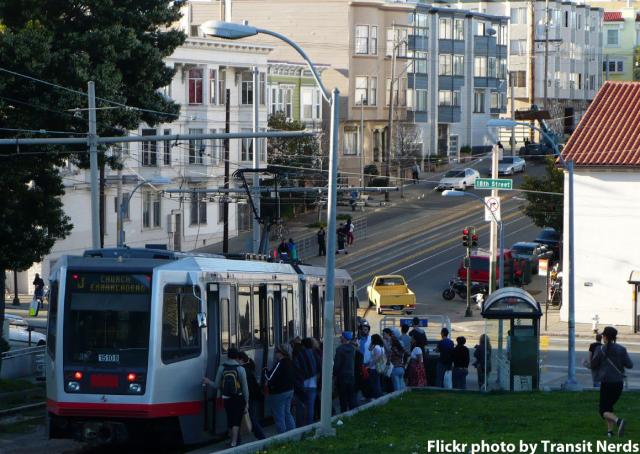
SF TransitUpdated: 14 new systems added to the map, bringing the total to 51. (1/27/09)

Updated: See this post for more information about Rep. DeFazio’s operating assistance House amendment that was withdrawn. (1/26/09)

Perhaps you’ve already seen the news in your local paper. Even as ridership is spiking — perhaps even the highest of all time — your local transit system is talking about having to cut service, raise fares, or even lay off workers to cope with the struggling economy. It sounds like a bad dream, but it’s a reality in many communities across the country.

We’ve created a map compiling the potential and proposed cuts to public transportation systems in 38 communities across the country. View the map and find out more about what can be done to solve the problem at www.t4america.org/transitcuts

The far-reaching and broad cuts will directly affect transit employees and riders who are among the most vulnerable in this time of economic upheaval. More than 20 million trips are taken each day on these 38 51 systems, and the scores of low-income citizens and 1/3 of Americans who are unable to or choose not to drive could find themselves out in the cold.

Emergency assistance to save jobs and protect service, which had been proposed by House Transportation and Infrastructure Committee Chair James Oberstar (D-Minn.), was removed from the House economic recovery bill without explanation. Funds for rail and other transit construction were cut as well, while funding levels for highway construction remained intact.

It’s crucial that the Federal government provide funds to protect existing transit service. An amendment is close to being offered that would provide $2 billion to transit agencies. But we need your help in getting it passed. In a time of such economic struggle, we need to act to preserve the basic services that people depend on each day.

“Our economy increasingly relies on public transit to function effectively, yet local systems are being forced to lay off workers and make cuts that will slow down economic growth and punish workers — including many low-income households who rely on transit to reach their jobs,” said Geoff Anderson, co-chair of Transportation For America.

“If we are serious about putting Americans back-to-work with this recovery plan, shouldn’t we also ensure that those who already have jobs don’t lose them?”

View the full map and learn what you can do today to make a difference at www.t4america.org/transitcuts

Bookmark and Share

Going up, going down — mass transit’s fine mess

October 6, 2008
By Andrew Bielak

The Indianapolis Star looks at the city’s plans to increase bus fares and reduce service, criticizing the fact that “the nation’s 12th-largest city has allowed the core of its mass transit system to dwindle to 99th in size.”

Bookmark and Share

Funding for public transportation is scarce

September 29, 2008
By Andrew Bielak

Budget cuts are hitting transit hard in Vermont, despite the increasing popularity of Amtrak and other public transportation agencies.

Bookmark and Share

Transit takes near billion-dolllar budget hit

September 22, 2008
By Andrew Bielak

For public transportation in California, the hits keep coming — facing overflowing ridership  and record costs, transit agencies must now deal with a $952 million-dollar cut in funding by Governor Arnold Schwarzenegger. The state’s budget for roads and highways does not face a similar cutback. (San Francisco Chronicle — Rachel Gordon)

Bookmark and Share

Older posts »

About Us | Our Partners | Contact Us | For The Media | Become a Partner

Transportation for America
1707 L Street NW Ste. 250
Washington, DC 20036
202-955-5543

Creative Commons License
This site is licensed under a
Creative Commons License
.