Transportation For America » oberstar

Opposition to Senate extension results in looming shutdown of federal transportation programs

February 26, 2010
By Stephen Lee Davis

Do you live in Kentucky? Call Sen. Bunning’s State HQ and tell him to end his roadblock. Click here for more information on making a call.

At a point in history when American trust in Congress is at or near all-time lows, it’s probably not a great time to interrupt regular programming to announce that a single Senator kept the Senate from passing an emergency one-month extension of the current transportation bill before adjourning today, leaving it to expire over the weekend and threatening the flow of money to transportation programs — federal and state.

The transportation bill, which has already been extended four times since its initial expiration in 2009, funds federal and state transportation programs. Which means that come Monday or Tuesday (it’s uncertain which at this point), federal transportation agencies from the Department of Transportation to the Federal Transit Administration will be furloughing employees and in a state of near shutdown.

Perhaps most importantly, and of much greater concern to most people than the fact that federal transportation officials in D.C. might be sent home for a few days, the government checks that go out every two weeks to state departments of transportation to reimburse them for their ongoing contracts for transportation projects will not be sent out on Monday as usual, regardless of what happens Monday, according to several of our sources.

As Elana Schor (@eschor) pointed on Twitter this afternoon, this means “$184 [million] per day in lost transpo reimbursements for road repairs, bridge building, and transit.”

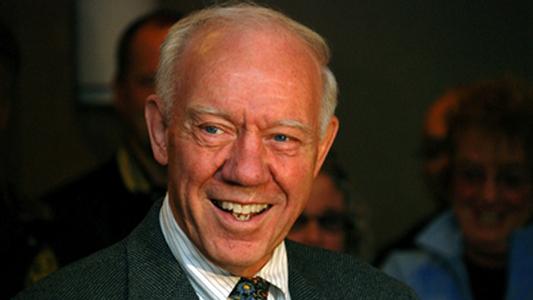
Chairman Jim Oberstar held a press conference to talk about the issue this afternoon, calling Sen. Jim Bunning’s obstruction “astonishing” and comparing it to the government shutdown of 1995. He detailed the specifics of what will happen at federal and state transportation agencies as the flow of money that funds highway and bridge repair, transit agencies and programs will shut off Monday. Later this afternoon, he said in a press release on Facebook that “I find it outrageous that one senator can kill a piece of legislation and cause chaos for our cities and states. Thanks to this one person’s intransigence, Minnesota will not be reimbursed for its federal share of highway projects until we get this mess sorted out.”

He points out that some states may have to suspend work on projects — something that Missouri has already done by announcing that they won’t open up several new projects for bid next week with their funding stream so up in the air.

As usual, Elana Schor at Streetsblog DC has some of the most thorough coverage of the issue, though it is making headlines in Politico, CQ and other outlets.

We’ll have more intel and reaction on Monday, and hopefully news about a solution to the bill’s expiration.

Have you seen an announcement (like Missouri’s) in your state of halted projects, delayed contracts, or furloughed workers? Let us know in the comments.

Bookmark and Share

House Republicans opposing 3-month extension, Senate Republicans possibly supporting it

September 23, 2009
By Stephen Lee Davis

UPDATE #2: The House passed the 3-month extension of the transport bill under suspension of the rules yesterday, with a 335-85 vote in favor of the extension.

UPDATED: The bill will likely be voted on today under suspension of the rules, and there will be at least some GOP opposition to it. Elana Schor at Streetsblog reports that “Brad Dayspring, a spokesman for House Minority Whip Eric Cantor (R-VA) said Cantor would join Minority Leader John Boehner (R-OH) and Rep. John Mica (FL), senior Republican on Oberstar’s committee, in opposing the three-month extension.”

Rep. Jim Oberstar’s plan to introduce and/or pass a 3-month extension of the expiring surface transportation bill has hit a snag. According to the subscription-only email service Transportation Weekly, House Republican leadership has decided to oppose the bill, creating a roadblock for passing it today as planned under suspension of the rules, which requires a 2/3 vote and therefore some Republican support.

The 3-month extension (H.R. 3617) has been removed from the scheduled votes for today according to Transportation Weekly, noting that the reason for opposition isn’t exactly clear just yet:

Republicans have not yet made a public announcement as to what their objections to the three-month extension are, but one GOP staffer said that there should be a longer extension until the Democrats take the issue of a gasoline tax increase to pay for House Transportation and Infrastructure Chairman James Oberstar’s (D-MN) $450 billion, six-year bill off the table.  Therefore, this could represent a real breaking point between Oberstar and his ranking Republican, John Mica (R-FL), who has so far been in lockstep with Oberstar (at least in public)…

To add to the confusion, The Journal Of Commerce reported yesterday that momentum might be building for a a shorter extension in the Senate, where all signs thus far have pointed toward passing the 18-month extension that the Obama administration prefers.

In the face of insistence by leaders in the House of Representatives to extend soon-to-expire federal highway programs by only three months, some senators are beginning to move away from plans for an 18-month extension…

…“There’s some movement, I think, toward a short-term extension” in the Senate, said Sen. John Thune, R-S.D. Thune is not only part of the Senate Republican leadership team as chief deputy whip but also ranking minority member on the surface transportation panel of the Commerce, Science and Transportation Committee.

So to summarize, the Democrats in the House want to pass a 3-month extension. The Republicans in the House are now opposing that, potentially leaning towards an 18-month extension. The Democrats in the Senate want an 18-month extension. The Republicans in the Senate are now leaning towards a shorter extension, possibly 3 months.

There are still several other ways for Rep. Oberstar to get his bill passed in the House without that Republican support, and it’s  not certain at all that House Republicans would actually vote against it if push came to shove. Same goes for the Senate.

Stay tuned.

Bookmark and Share

Rep. Oberstar planning markup on full transportation bill after recess

August 11, 2009
By Stephen Lee Davis

At least that’s what the American Planning Association Transportation Planning Division is reporting on their blog. According to their story, Chairman Oberstar of the House Transportation and Infrastructure Committee is planning a full committee mark-up of the Surface Transportation Authorization Act of 2009 as soon as Congress comes back from the August recess.

Appearing at an economic recovery news conference Wednesday in Minnesota, House Transportation and Infrastructure Committee Chairman James Oberstar said he will hold a full committee mark-up of a $500 billion, six-year federal surface transportation authorization the week of Labor Day, when Congress returns from its summer recess. Oberstar, D-MN, told Minnesota Public Radio that he expects to have the bill on the floor by the third week of September.

Though the Chairman has been promised by leadership that his transportation bill will come to the floor by the third week of September according to the story, the same obstacles to quick passage still remain. The Ways and Means Committee is responsible for determining how to pay for a bill that’s nearly twice as expensive as the last 6-year bill, and to date, they’ve indicated little willingness to think long and hard about transportation revenue while engaged in the health care and climate debates.

As Ken Orski points out, “only 15 of the 41 committee members have gone on record in a letter to committee Chairman Charles Rangel (D-NY) supporting prompt action (i.e. in September) on a revenue package for the bill.” Regardless, we’ll be watching the markup closely come September.

h/t to Twitter user and T4 partner @cwsjd99

Bookmark and Share

What’s the impact of the Highway Trust Fund patch or an extension of the current bill?

July 30, 2009
By Lilly Shoup

UPDATED 7/30: The Senate passed the $7 billion patch late this afternoon by a 79-17 vote. All 4 amendments failed, so the identical bill has been approved by both chambers and now heads to President Obama’s desk for signature.

With the House passing a $7 billion patch for the Highway Trust Fund yesterday afternoon to keep it from running out of money before September, we thought it might be useful to post a brief Q&A about the trust fund patch and how the full six-year transportation authorization bill could be affected. The $7 billion patch now moves to the Senate for a vote, probably this afternoon, before reaching President Obama’s desk. The Highway Trust Fund (HTF) provides funds for the federal portion of transportation projects.

If the patch is approved by the Senate, Congress will then be is now facing a much bigger decision before the current transportation bill expires on September 30th: pass a new six-year transportation bill, or pass a short- or long-term extension of SAFETEA-LU, the existing transportation bill.

What is the short-term patch and who supports it?

The short-term patch would repair the trust fund insolvency through a $7 billion cash infusion into the HTF. The funds would be transferred from the General Fund before Congress goes on recess in August and would ensure that states can continue to obligate transportation funds through September 30th, 2009. The patch would address the funding shortfall due to declining gas tax revenues that are no longer sufficient to cover the federal portion of transportation projects.

House Transportation and Infrastructure Committee Chairman Jim Oberstar supported this option and testified before the House Ways and Means Subcommittee on July 23rd asking for the $3 billion patch. (That patch has since been increased to $7 billion to match the Senate’s preferred amount.)

How does this relate to the upcoming expiration of SAFETEA-LU on September 30th?

With this cash infusion Congress could continue to focus on pushing the authorization of a new 6-year surface transportation bill this September. The original $3 billion figure was based on recent estimates made by DOT but both the White House and DOT officials have expressed concern that $5-7 billion is a more accurate figure needed to keep the HTF solvent through September. (The House passed a $7 billion patch.)

What is the extension and who supports it?

An extension would continue SAFETEA-LU policies and funding guarantees for a specified amount of time to allow Congress and the Administration to continue working on a full 6-year comprehensive bill.  A proposed 18-month extension would extend SAFETEA-LU to March 2011. Numerous Senators have stated their preference for an 18-month extension, which is also currently supported by the White House. On July 23rd the Senate Banking Committee became the third Senate committee to approve an 18-month extension bill. Congress is also considering the possibility of a short-term extension of 3, 6, or 12 months in lieu of a longer-term extension.

How would the extension be funded and how does it address the near-term shortfall in HTF funds?

An extension of SAFETEA-LU for any length of time would be paid through gas taxes and a possible General Fund infusion. (More funding from some source would certainly be required, as gas taxes do not cover the current funding levels.)

The Senate Financing Committee Chairman Max Baucus released a funding proposal (S. 1474) on July 21st that would maintain the HTF’s solvency throughout an 18-month extension.  This provision will transfer $26.8 billion from the General Fund to transportation ($22 billion to HTF, $4.8 billion to the mass transit account).  The fund transfer will begin in time to provide near-term funding (through August) before HTF reaches insolvency.

Any questions? Ask away in the comments and we’ll try to answer.

Bookmark and Share

Wrapping up the Minnesota release of the Blueprint

July 22, 2009
By Christine Goepfert

P1000963 Originally uploaded by Transportation for America

On Monday, June 29th the Minnesota Coalition of Transportation for America welcomed community, city, and state leaders to learn more about the T4 America vision for the next federal transportation bill — and how Minnesotans would benefit from a reformed federal transportation program.

The event, hosted by the McKnight Foundation in Minneapolis, was attended by city officials, state legislators, congressional offices, business leaders, labor groups and advocacy organizations from across the state. The packed room heard from Anne Canby and Mariia Zimmerman, the Washington, D.C. representatives of the T4 America campaign, as they walked through the campaign’s Route to Reform, a detailed blueprint for the transportation bill.

The meeting came on the heels of Chairman Oberstar releasing a draft 775-page transportation bill he hopes to pass before the current federal bill expires in September.  In describing how Oberstar’s bill fits in with the T4 America vision, Anne Canby said that the draft is “on the right track,” and that “Oberstar is full of fire and ready to go. He has filled a vacuum with his leadership.”

Minneapolis Mayor R.T. Rybak, Hennepin County Commissioner Peter McLaughlin and State Representative Frank Hornstein highlighted how Minnesota communities would benefit from sweeping reforms in the transportation bill. In describing the need for new federal transportation policy as proposed by the T4 America campaign, Mayor Rybak indicated that “we shouldn’t strive for less” but that Minneapolis and the State have to be ready for it.  Michael Lander, a developer with many projects around the Twin Cities, also spoke about the need to include land use discussions when planning any transportation project because “transportation has always driven development.” He noted that the T4 America vision is “planning to meet the coming demand” for housing in convenient, walkable locations with access to public transportation.

“The market is changing dramatically, and walkable urbanism is what the market is looking for. …Central to the T4 America reform is planning to meet the coming demand.”
— Michael Lander

In attendance were representatives from Chairman Oberstar’s office, Congressman Ellison and Congresswoman Betty McCollum’s offices.  State legislators, including Rep. Hausman and Rep. Kahn, county commissioners and city staffers from St. Paul and Minneapolis were among the crowd eager to hear about the work being done to create federal transportation policy that would benefit their communities.

It was not a strictly metropolitan affair as the Mayor of Independence and a representative from State Sen. Clark’s office from St. Cloud came to hear about how smaller and more rural communities could also get their transportation needs addressed in the federal bill.

One concern all of the elected officials shared was making sure Minnesota’s roads, highways and bridges were in a state of good repair.  Rep. Hornstein noted that we cannot invest in a “fax machine on the dawn of the internet revolution” indicating that we need to reach what he calls “infrastructure 2.0.”

“Infrastructure 2.0 is what is in this Transportation for America plan.”

Bookmark and Share

Today’s Headlines — 06/29/09

June 29, 2009
By Andrew Bielak

  • Protecting our climate and gaining more energy independence begins, and doesn’t end, with the climate bill making its way through Congress. (Reuters)
  • Transportation and Infrastructure Committee Chairman James Oberstar looks to make his mark with the next transportation bill. (Congressional Quarterly)

Bookmark and Share

Chairman Oberstar’s comments on today’s subcommittee markup

June 24, 2009
By Stephen Lee Davis

h/t Twitter @JimOberstar

Bookmark and Share

How does the new transportation bill draft measure up?

June 24, 2009
By Stephen Lee Davis

“A bill to transform Federal surface transportation to a performance-based framework to reduce fatalities and injuries on our Nation’s highways, address the mobility and access needs of people and goods, improve the condition, performance, and connectivity of the United States intermodal surface transportation system, provide transportation choices for commuters and travelers, promote environmental sustainability, public health, and the livability of communities, support robust investment in surface transportation, and for other purposes.”

That’s how the new 775-page draft of the House Surface Transportation Authorization Act of 2009 opens up. Considering that this is federal legislation here — not literature — that’s a pretty lofty opening to guide the upcoming six-year transportation bill.

But does reality match the rhetoric in the 774 pages that follow?

Read the official T4 America statement on the bill draft

First, Chairman James Oberstar is to be commended for releasing a draft bill that goes beyond just reauthorizing a modified version of the existing transportation law (SAFETEA-LU). There are some real signs of change in this bill and transportation reform advocates across the board are encouraged by the overall language and direction of the bill. Compared with the opening paragraph of the last bill (Wait, there were no opening principles!), STAA is off to a great start.

While there are principles and vision in the introduction about performance, connectivity, environmental sustainability, public health, livability; reading the fine print in the legislation leaves unanswered questions and areas of concern — such as how funding will be allocated among programs. Most obvious, as others have pointed out, is the omission of dollar amounts for specific programs, formulas and sources of funding. A final verdict on this draft won’t be complete without knowing answers to the funding questions.

“Having individual programs that work better is certainly a step in the right direction, but it is absolutely critical to be sure those programs work together towards achieving a set of national objectives.”
— James Corless, T4 America

Once you dig into the fine print, it becomes clear that although individual programs are assigned certain goals and performance measures, there are no clear, cross-cutting, national performance targets for measuring the success or failure overall of such a massive investment.

Though Americans are overwhelmingly supportive of spending money on infrastructure and transportation — and can even get behind increased taxes to do so — that support generally comes with the caveat that they want to know we’re buying something useful, and not just spending twice as much money to do more of the same.

With a price tag between $450 billion and $500 billion for this transportation bill — almost twice the cost of the last bill — it’s more important than ever to have positive answers to some big-picture issues. That’s why we need to ask some critical questions about this legislation: If the bill got passed:

  • Would more Americans have low-cost, convenient travel and living options?
  • Would more Americans have easier access to jobs?
  • Would older Americans have more options for aging in place and low-income households have more affordable transportation choices?
  • Would fewer Americans die or be injured, whether while driving, walking, bicycling or taking transit?
  • Would we be able to reduce emissions and cut energy use while still providing choices for getting from A to B?
  • Would America be able to continue competing economically on the world stage?

Here is a quick look at some of the positive things in the bill, and some that need improvement or are sorely lacking. Keep in mind that these are in flux and can be improved with even small changes to language of the bill. The funding levels that are to be determined will also have a major impact in where these different issues ultimately stack up.

Continue reading below the fold to see a short breakdown of the good, the needs-improvement, and the missing elements.

(Continue Reading)

Bookmark and Share

Transportation bill being considered: Join us for a national call-in day today

June 24, 2009
By Stephen Lee Davis

We need you to make one call to Congress and ensure that transportation spending delivers. Click here for details on making a call.
Or just call the Congressional Switchboard at 202-224-3121 and tell your Representative to support the National Transportation Objectives Act of 2009. (HR 2724)

As we post this, Chairman James Oberstar’s transportation bill draft is being “marked up” in a House subcommittee. As that committee works on the bill and news about the bill is fresh in the minds of House members, we are organizing a national call-in day today to make sure that Congress gets our message loud and clear:

No new money without reforming the system.

Can you help out by calling your Representative today? It will make a real difference, and it only takes about one minute. Information on how to call at right or bottom, or click here

The draft bill has a lot of what Transportation for America, our coalition, and our many supporters have been pushing for, but today, it still falls short. As it stands today, it leaves out something crucial: Clear national priorities for what $450 billion in transportation spending will achieve.

Without over-arching goals and targets — like lower energy consumption, reduced emissions, greater affordability, or expanded access to transportation choices for all Americans — there’s no way to be sure billions of dollars in transportation spending will truly deliver clean, safe and smart transportation. We can definitely do better. We can’t keep pouring our precious tax dollars into the same old flawed transportation system that leaves us stuck without options.

Help us get a real plan that delivers. Call your member of Congress today:

  1. Call the Congressional Switchboard at 202-224-3121 and ask to speak to your representative’s office.
  2. Tell the staff member answering the phone where you’re calling from, and that you’d like to urge the representative to support the National Transportation Objectives Act of 2009 (H.R. 2724). You can add:
    • You are a constituent and a supporter of the Transportation for America coalition.
    • You want to make sure the billions spent on transportation help us cut down on emissions, give us real energy security, and provide us with more affordable options for getting from A to B.
    • No new money for transportation without reforming the system and making it accountable and measurable.
  3. Then let us know you made the call

Bookmark and Share

Tell Congress: No new transportation money without reform

June 22, 2009
By Stephen Lee Davis

We can’t afford to keep throwing money at transportation agencies unable to show progress on the issues that matter to us all: Affordable ways to get around; alternatives to congestion; reducing our oil dependency; protecting the climate; safe and vibrant communities and access to jobs.
Tell your representative to make a stand: no more money without real reform!

Capitol Hill is buzzing with the news. As you may have heard, Chairman James Oberstar and his House Transportation and Infrastructure Committee released the full 775-page transportation bill earlier this afternoon. Rep. Oberstar is poised to get his six-year bill moving this week, and the Obama administration is pushing Congress to pass a (shorter) funding plan quickly. Why the rush?

Because transportation funding is running out.

But we can’t afford to keep throwing money at transportation agencies unable to show progress on the issues that matter to us all: Affordable ways to get around; alternatives to congestion; reducing our oil dependency; protecting the climate; safe and vibrant communities and access to jobs.

Help us tell Congress: No new money for transportation without a real, sustainable plan.

As you may have read here or elsewhere, The National Highway Trust Fund — which pays for road work, bike and pedestrian facilities and transit projects — will run out of money in August.

With funds drying up, the pressure to throw more money at our problems is growing. Some in Congress are poised to take money from other needs to prop up the trust fund, which comes from gas taxes. They would prefer to go on spending our tax dollars without a real plan. But more money with no strings attached is not the answer.

The U.S. hasn’t had a vision for transportation policy in decades. We’ve been trying to build our way out of a congested and inefficient system with no accountability and no actual plan to link our roads, trains, buses, bikeways and pedestrian-friendly streets.

The result? Longer, more frustrating, less safe and increasingly expensive commutes for all of us.

But now we have an opportunity for change. We must ensure that our country’s transportation investments strengthen our economy, our environment and our health. Don’t let Congress make the same mistakes it’s made in the past. We must fund transportation, but we must do it right this time.

Send Congress a message.

Bookmark and Share

Older posts »

About Us | Our Partners | Contact Us | For The Media | Become a Partner

Transportation for America
1707 L Street NW Ste. 250
Washington, DC 20036
202-955-5543

Creative Commons License
This site is licensed under a
Creative Commons License
.