Transportation For America » obama

Obama’s 2011 budget gives a lift to livability and transportation

February 2, 2010
By Sean Barry

BarackObama

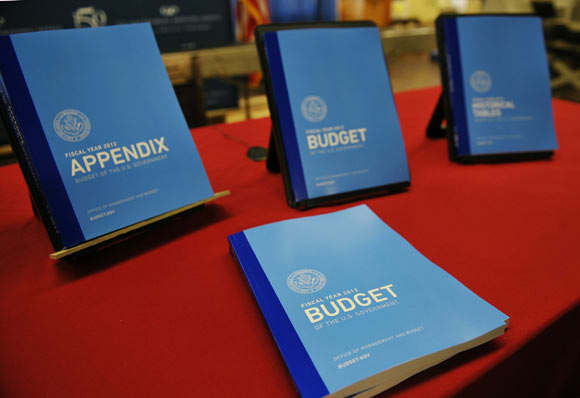
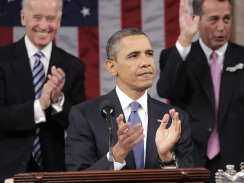
President Obama’s Fiscal Year 2011 budget is a step forward for transportation options and livable communities and contains $1 billion in programs and grants to help turn this positive vision into reality.

In this budget, the President and his advisers attempt to thread a needle between the urgency of unemployment and the longer-term implications of debt. Given these realities, it is gratifying that Obama chose to boost funding on transportation and livability as other programs face cuts. It shows that his team gets it. They understand that investing in the neighborhoods and communities of tomorrow can both create jobs and lay the foundation for future prosperity. Indeed, that dual purpose has been a theme of Obama’s domestic agenda throughout 2009.

The administration had signaled a new path last year with its creation of the Partnership for Sustainable Communities, a joint effort among the Environmental Protection Agency, the Department of Housing and Urban Development and the Department of Transportation. The administration recognized that making transportation choices, affordable housing and economic opportunity available to more Americans requires real collaboration among these key agencies. The partnership is on track to receive $830 million in the FY 2011 budget.

The budget also allocates $1 billion for high-speed rail, on top of the $2.5 billion in the current year’s budget and $8 million in grants from the 2009 American Recovery and Reinvestment Act.

Here are few other programs and pilots worth mentioning:

  • $4 billion for the National Infrastructure Innovation and Finance Fund
  • $150 for the Sustainable Communities Initiative, including an inter-agency research effort on the transportation and housing linkage
  • $150 million for Catalytic Investment Competition Grants, a competitive program to support job-creation and large scale projects in disadvantaged areas
  • $527 million for the Livable Communities Program
  • $32 million for the Healthy Communities Initiative

This is a budget praise-worthy for both the help it delivers today and the investment ushered in for tomorrow. It deserves our support.

Bookmark and Share

President Obama hails high-speed rail as “the infrastructure of tomorrow”
January 28, 2010
By John Robert Smith

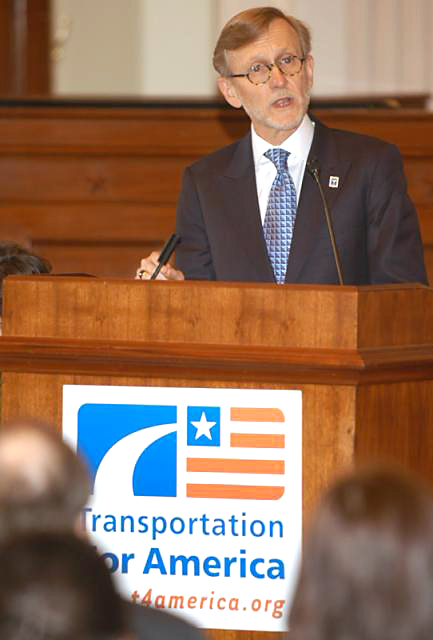
Mayor John Robert Smith
John Robert Smith is co-chair of the Transportation for America campaign and former mayor of Meridian, Mississippi.

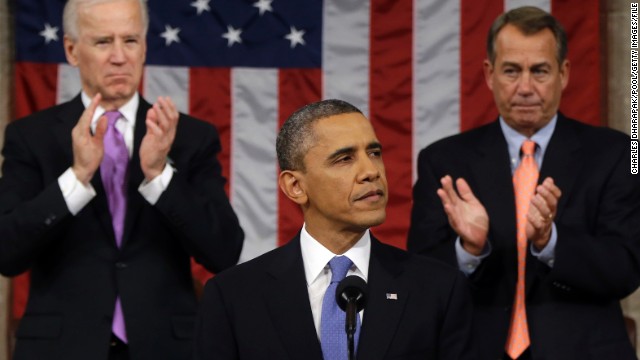
Hearing President Obama call high-speed rail “the infrastructure of tomorrow” gave me great hope. Very rarely has transportation investment made the final cut in a presidential State of the Union address. The fact that it did make the cut this time really speaks to the president’s commitment to making high-speed rail a reality.

I’ve heard critics say over the years that the U.S. is too big for high-speed rail. China is the biggest country in the world and they built over the Himalayas and are now committing an additional $500 billion over the next 20 years. Saudi Arabia too is investing in high-speed rail in preparation for that certain day when oil reserves will no longer sustain the country. If they can do it, we can do it.

High-speed rail investment is about jobs, and not just temporary jobs, but long-term American jobs that cannot be outsourced. These jobs will employ Americans to build both rail networks and passenger rail equipment. This could be a real lifeline for unemployed automotive workers struggling to get and keep a new job. And these Americans will be going to work building a cleaner environment and more sustainable future for all of our children.

I have seen first-hand what investment in rail infrastructure and transit-oriented development can do to lift a mid-sized city like Meridian, Mississippi. Now there are people living in downtown, there’s entertainment downtown and a conference center has been built. It all started with a public sector investment done right. The vibrancy that returns to smaller communities as a result of rail service has improved the quality of life for millions of Americans. This is not about big city versus small, or urban versus rural. Chicago and Los Angeles will surely benefit from rail investment, but so too will places like Minot, North Dakota and Whitefish, Montana. This addresses the needs of our entire country and should be embraced by our representatives in Washington from all corners.

Of all the issues facing Congress, surely high-speed rail investment can transcend partisanship. As a Republican, I have worked with some the most liberal and conservative members of the United States Senate to protect Amtrak for people who depend on it. I see the potential for similar partnerships today and am heartened that we have a president who is leading the way.

Mayor John Robert Smith is co-chair of the T4 America Campaign, president of Reconnecting America, and former mayor of Meridian, Mississippi.

Bookmark and Share

High speed rail grantees awarded, was your state included?

January 28, 2010
By Stephen Lee Davis

As you may have heard by now, President Obama is following up his favorable mention of high speed rail in last night’s State of the Union address with a Tampa event to announce the winners of federal grants for high speed rail service. (In case you missed our official statement about the announcement, read that here.)

The President is due to make his announcement this afternoon, but the list of awardees has already been released. So who were the big winners? Certainly Florida and California, who got the biggest grants, netting $1.25 and $2.3 billion respectively. Although the lion’s share of funding is going toward a handful of corridors, 31 states will receive some portion of funding or benefit from new or improved rail service, according to reporting on the proposal. A few notable bloggers have already done superb analysis of the recipients of the $8 billion, starting with Yonah Freemark’s excellent corridor by corridor breakdown on the Transport Politic:

After months of speculation about which states will get funding from the Federal Railroad Administration to begin construction on new high-speed corridors, the news is in. As has been expected, California, Florida, and Illinois are the big winners, with more than one billion in spending proposed for each. But other states with less visible projects, including Wisconsin, North Carolina, and Washington will also get huge grants and begin offering relatively fast trains on their respective corridors within five years. The distribution of dollars is well thought-out and reasonable: it provides money to regions across the nation and prioritizes states that have made a commitment of their own to a fast train program.

Elana Schor at Streetsblog DC included a quote from Chairman Oberstar, who was certainly delighted at the first small step toward a true nationwide high speed rail network.

House infrastructure committee chairman Jim Oberstar (D-MN) hailed today’s first rail grants as “a transformational moment,” adding: “The development of high-speed rail in the United States is an historic opportunity to create jobs, develop a new domestic manufacturing base, and provide an environmentally-friendly and competitive transportation alternative to the traveling public.”

Information about all the corridors can be found in the White House briefing room online. We hope to post additional reaction and analysis later today or tomorrow.

Bookmark and Share

T4 America: Prioritize Transportation Investments that Keep More People Working in Meeting President’s Call for New Jobs Measure

January 28, 2010
By Transportation for America

Comments to Administration praise high-speed rail initiative, offer key principles for success in preserving, creating infrastructure jobs

Responding to his call for a jobs bill aimed at easing the unemployment crisis, the Transportation for America coalition today wrote to President Obama and cabinet members outlining the transportation investments can put the most Americans back to work, quickly.

The coalition, now with more than 400 members, also applauded the President for moving ahead on his vision for a world-class network of intercity rail. “Our coalition members have worked hard to make the case for just such an investment,” said John Robert Smith, co-chair of T4 America, “so the President’s announcement today of progress on 13 corridors is welcome news, indeed.”

The letter outlines key principles for targeting transportation funding to have the most impact in putting Americans back to work while also laying the groundwork for long-term economic prosperity.

First, Congress can save jobs right now and put laid-off public transit workers back on the job by offering emergency assistance to the hundreds of transit agencies across the country that are facing deep cuts in jobs and service in this economic crisis. This will not only keep bus and train operators working, it also will ensure that other Americans can make it to their jobs. Meanwhile, investments should be made in workforce development training opportunities targeted to workers in greatest need, as well as increases in funding for highway and road programs with the highest job growth potential.

Congress also must recognize that repair, maintenance and upgrades of existing roads and transit systems puts more people to work, faster than building new projects.

“It’s a no-brainer that funding needs to be dedicated to those transportation programs already in place – both to reinstate access to jobs, and provide transit workers with employment,” said James Corless, campaign director for T4 America. “It takes zero time and no red-tape for a transit system to rehire workers or find new employees if given the flexibility to spend funding to reopen cut service lines or repair already existing infrastructure.”

T4 America’s proposal also emphasizes the need to distribute investments towards forward-thinking programs that will begin to advance our nation’s transportation network, including high-speed rail and clean public transportation, both of which can also help to reduce dependence on oil. Crucial to truly revolutionizing the national system is to make sure that this jobs bill is short-term for 2010 only, with a commitment to creating a strong, long-term transportation authorization bill that meets our larger transportation needs.

“If President Obama is serious about another jobs bill that will truly impact job creation and spur economic growth, he and Congress need to allocate investments towards maintenance and operating costs for transit agencies across the country, giving them the ability to decide how best to put the money to use,” said Corless.

Bookmark and Share

President Obama’s jobs speech and plan for infrastructure spending

December 8, 2009
By Stephen Lee Davis

President Obama delivered a speech just a few minutes ago at the Brookings Institution here in Washington, D.C., on his plan for creating jobs and putting America back to work. We’ll add some details later and a link to the full speech, but here is the excerpt on infrastructure spending:

Second, we’re proposing a boost in investment in the nation’s infrastructure beyond what was included in the Recovery Act, to continue modernizing our transportation and communications networks. These are needed public works that engage private sector companies, spurring hiring across the country. Already, more than 10,000 of these projects have been funded through the Recovery Act. And by design, Recovery Act work on roads, bridges, water systems, Superfund sites, broadband networks, and clean energy projects will all be ramping up in the months ahead. It was planned this way for two reasons: so the impact would be felt over a two year period; and, more importantly, because we wanted to do this right. The potential for abuse in a program of this magnitude, while operating at such a fast pace, was enormous. So I asked Vice President Biden and others to make sure – to the extent humanly possible – that the investments were sound, the projects worthy, and the execution efficient. What this means is that we’re going to see even more work – and workers – on Recovery projects in the next six months than we saw in the last six months.

Even so, there are many more worthy projects than there were dollars to fund them. I recognize that by their nature these projects often take time, and will therefore create jobs over time. But the need for jobs will also last beyond next year and the benefits of these investments will last years beyond that. So adding to this initiative to rebuild America’s infrastructure is the right thing to do.

The White House Press Secretary also circulated a document ahead of the speech with details on President Obama’s plan. It outlined three key areas for stimulating job growth; small business, infrastructure, and clean energy and efficiency. Here’s the second point in full detail:

Investing in America’s Roads, Bridges and Infrastructure

Additional investment in highways, transit, rail, aviation and water. The President is calling for new investments in a wide range of infrastructure, designed to get out the door as quickly as possible while continuing a sustained effort at creating jobs and improving America’s productivity.

Support for merit-based infrastructure investment that leverages federal dollars. The Administration supports financing infrastructure investments in new ways, allowing projects to be selected on merit and leveraging money with a combination of grants and loans as was done through the Recovery Act’s TIGER program.

Bookmark and Share

Obama cites transportation’s role in greenhouse gas reduction at UN Climate Change Summit

September 22, 2009
By Sean Barry

Obama and LahoodPresident Barack Obama stressed changes in transportation emissions at the UN climate change summit today.

“We’ve proposed the very first national policy aimed at both increasing fuel economy and reducing greenhouse gas pollution for all new cars and trucks — a standard that will also save consumers money and our nation oil,” Obama said.

The Obama administration should be commended for its bold action on new fuel economy standards for all American cars and trucks. But his transportation policy needs to be even bolder. Americans are yearning for new choices that relieve them at the pump and get them off of our clogged highways. While a measly one percent of the House climate change bill is allocated toward clean transit, Obama has the opportunity to make a strong stand for additional funds in the Senate version.

Obama concluded his remarks by calling for practical solutions and a willingness to put the needs of future generations over the quick-fixes of today.

“For if we are flexible and pragmatic, if we can resolve to work tirelessly in common effort, then we will achieve our common purpose: a world that is safer, cleaner, and healthier than the one we found; and a future that is worthy of our children,” he said.

Bookmark and Share

Administration releases their principles for an 18-month transportation bill

July 1, 2009
By Stephen Lee Davis

When DOT Secretary LaHood was on Capitol Hill a few weeks ago discussing the Obama Administration’s plan for a transitional transportation bill, he mentioned that their plan for an 18-month extension would “enact critical reforms” while stopping short of a fundamental overhaul of the program — leaving that for the full six-year bill.

A lot of transportation advocates were left wondering what sort of reforms the administration would propose. Today we got a first look at their general proposal (via Transportation Weekly.)  Update: Elana Schor @ Streetsblog has the details on the National Infrastructure Bank.

As you may remember, Chairman James Oberstar and his House Transportation and Infrastructure Committee are at odds over the timing of the authorization bill. Oberstar and company want to pass a full six-year authorization bill by September, while the Administration favors an 18-month transitional bill to patch the soon-to-be insolvent Highway Trust Fund.

At the forefront of the administration proposal is a $20 billion transfer from the general fund to keep the Highway and Mass Transit Accounts in the Highway Trust Fund from going bankrupt, keeping them solvent until March 2011. They propose to return the money to the general fund over 10 years.

In a section titled “Downpayment on Reform,” the administration outlines three proposals, including $310 million to help states and metropolitan planning organizations (MPOs) voluntarily improve their project evaluation process, helping them choose worthy projects based on data , preparing them “for improved accountability standards and merit criteria in the long-term reauthorization.”

The second proposal would provide $10 million for “USDOT to develop performance goals and establish guidelines for states and localities on project evaluation.” And in language that sounds similar to the stimulus spending, the third proposal aims to improve the transparency and accountability in transportation spending, to “lay the groundwork for further accountability reforms in the long-term reauthorization.”

Lastly is a section on livable communities and improving regional access:

Livability: developing guidelines for community plans and providing funding for approved projects with special emphasis on convenience of transportation options, reductions in travel times, smart growth, preservation of open space, and more integrated responses to land use and transportation needs.

Chairman Oberstar is still opposed to any extension and it’s worth noting that any 18-month proposal would have to pass through his committee in the House. Read the full memo to Congress below.

(Continue Reading)

Bookmark and Share

More on today’s high speed rail announcement

April 16, 2009
By Stephen Lee Davis

President Obama’s remarks from the press conference this morning have been posted on the White House blog. In his remarks, joined by Vice President Biden and Transportation Secretary LaHood, Obama appealed to our national pride and pointed to the benefits that high-speed rail would bring to all Americans:

There’s no reason why we can’t do this. This is America. There’s no reason why the future of travel should lie somewhere else beyond our borders. Building a new system of high-speed rail in America will be faster, cheaper and easier than building more freeways or adding to an already overburdened aviation system — and everybody stands to benefit.

They also posted some details about the corridors eligible for funding, including this map below, which is very similar to an older Department of Transportation map from several years ago.

White House high speed rail corridor map

According to the information from the White House site, the potential corridors eligible for funding are:

  1. California: San Francisco Bay Area, Sacramento, Los Angeles, San Diego
  2. Pacific Northwest: Eugene, Portland, Tacoma, Seattle, Vancouver, B.C.
  3. South Central: Tulsa, Oklahoma City, Dallas/Fort Worth, Austin, San Antonio, Little Rock
  4. Gulf Coast Corridor: Houston, New Orleans, Mobile, Birmingham, Atlanta
  5. Chicago Hub Network: Chicago, Milwaukee, Minneapolis-St. Paul, St. Louis, Kansas City, Detroit, Toledo, Cleveland, Columbus, Cincinnati, Indianapolis, Louisville
  6. Florida: Orlando, Tampa, Miami
  7. Southeast: Washington, Richmond, Raleigh, Charlotte, Atlanta, Macon, Columbia, Savannah, Jacksonville
  8. Keystone: Philadelphia, Harrisburg, Pittsburgh
  9. Empire: New York, Albany, Buffalo
  10. Northern New England: Boston, Montreal, Portland, Springfield, New Haven, Albany

Transportation for America released a statement this morning from Campaign Director James Corless in support of the President’s initiative:

We applaud President Obama’s leadership, and look forward to working with him to help shape the sustainable transportation solutions that will bring our system into the 21st Century. It is clear that President Obama and his administration are ready to move America in a new direction. Transportation systems have enormous impacts on the lives of the American people – from our pocket books to climate change, from our household expenses to the global economy.

Americans are increasingly rejecting the status quo in favor of more transportation options that will make our communities more walkable, more energy efficient, more equitable and healthier. The President’s commitment to high speed rail is an important piece of what must be a bold new vision for our national transportation program.

You can watch video of the press conference here, via Politico.com

Bookmark and Share

Obama outlines a 21st-Century vision for high-speed rail

April 16, 2009
By Andrew Bielak

Rome Centrale Kenneth Sislak
Are high speed trains no longer just for Europe and Asia? Photo of Rome Centrale Station by T4 supporter Kenneth G. Sislak

Updated: More details and a statement from T4 posted here

President Obama made headlines this morning by presenting a blueprint for creating a high-speed rail network in the United States.

By articulating this vision, the administration has put to rest any doubts that it is ready to connect our cities and regions with a 21st century network of passenger rail that will make us globally competitive and help us rebuild our economy for the long haul.

The new administration has already made the single biggest investment in high-speed rail by committing $8 billion in the recovery bill passed in February. At his press conference today, President Obama let Americans know that building out a technologically advanced rail network isn’t a pipe-dream — it’s a much-needed strategy for making our economy viable and putting us on the level of other developed countries for train travel:

“A major new high-speed rail line will generate many thousands of construction jobs over several years, as well as permanent jobs for rail employees and increased economic activity in the destinations these trains serve,” Obama said in prepared remarks. “High-speed rail is long-overdue, and this plan lets American travelers know that they are not doomed to a future of long lines at the airports or jammed cars on the highways.”

Aside from simply articulating his administration’s commitment to passenger rail, President Obama announced the release of a new report that shows how we can help protect our climate, strengthen our economy, and regain our competitive edge by building on a set of 100 to 600 mile rail corridors across the U.S.

Geoff Anderson, the president of Smart Growth America and co-chair of Transportation for America, has been working at the front lines for years to help us grow smarter and build better transportation systems, and found much to support in Obama’s statements.

“It’s really exciting that this administration, unlike past administrations, is interested in transportation and will play a role,” Anderson said. “From the American public standpoint that’s an exciting thing, particularly when he has an understanding of how transportation affects us, from our pocket books to climate change, and from households to the global community.”

Bookmark and Share

President Obama: “I would like to see some long-term reforms in how transportation dollars flow…”
February 18, 2009
By Stephen Lee Davis

President Obama gave an interview to five columnists aboard Air Force One last week en route to Chicago, and he talked at length about infrastructure, transportation, and the need to make serious reforms in transportation spending this year when the five-year transportation bill is reauthorized. He hinted at how proper investments in transportation and infrastructure can help boost the economy and meet other national goals like reducing energy usage — all while making a downpayment on a 21st Century transportation system we’re all hoping for.

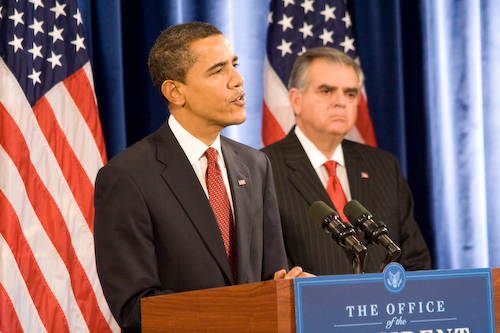
Obama and Lahood
President Obama with his Transportation Secretary Ray LaHood. From the Obama-Biden Transition Project’s Flickr stream (Creative Commons)

An excerpt from the very long interview:

Q. Mr. President, if I could ask you about infrastructure, You’ve got infrastructure spending in the stimulus package. The need is much faster than that and the money is tight. Do you anticipate any significant further additions in federal infrastructure spending in the reasonably near future, and are you making plans to establish an infrastructure bank?

President Obama: Well, number one, we’ve got the transportation reauthorization bill that’s going to be coming up. So one thing to keep some perspective about on the recovery package is this is supposed to provide a jolt to the economy above and beyond what we’re doing already in the federal budget. And so I expect that Secretary LaHood, working with the various transportation committees are going to be moving forward on a transportation bill. I would like to see some long-term reforms in how transportation dollars flow, and I’ll give you just a couple of examples. I think right now we don’t do a lot of effective planning at the regional level when it comes to transportation. That’s hugely inefficient. Not only does it probably consume more money in terms of getting projects done, but it also ends up creating traffic patterns, for example, that are really hugely wasteful when it comes to energy use.

If we can start building in more incentives for more effective planning at the local level, that’s not just good transportation policy, it’s good energy policy. So we’ll be working with transportation committees to see if we can move in that direction.

The idea of an infrastructure bank I think make sense — the idea that we get engineers, and not just elected officials, involved in thinking about and planning how we’re spending these dollars. I may get some objections from my colleagues, Democrat and Republican, on the Hill about that, but I think there should be some way for us to — just think how can we rationalize the process to get the most bang for the buck, because the needs are massive and we can’t do everything, and if it’s estimated that just on infrastructure alone it would cost a couple trillion dollars to get our roads, bridges, sewer systems, et cetera, up to snuff, and we know we’re not going to have that money, then it would be nice if we said here are the 10 most important projects and let’s do those first, instead of maybe doing the 10 least important projects but the ones that have the most political pull.

Bookmark and Share

Older posts »

About Us | Our Partners | Contact Us | For The Media | Become a Partner

Transportation for America
1707 L Street NW Ste. 250
Washington, DC 20036
202-955-5543

Creative Commons License
This site is licensed under a
Creative Commons License
.