Transportation For America » infrastructure

President Obama’s jobs speech and plan for infrastructure spending

December 8, 2009
By Stephen Lee Davis

President Obama delivered a speech just a few minutes ago at the Brookings Institution here in Washington, D.C., on his plan for creating jobs and putting America back to work. We’ll add some details later and a link to the full speech, but here is the excerpt on infrastructure spending:

Second, we’re proposing a boost in investment in the nation’s infrastructure beyond what was included in the Recovery Act, to continue modernizing our transportation and communications networks. These are needed public works that engage private sector companies, spurring hiring across the country. Already, more than 10,000 of these projects have been funded through the Recovery Act. And by design, Recovery Act work on roads, bridges, water systems, Superfund sites, broadband networks, and clean energy projects will all be ramping up in the months ahead. It was planned this way for two reasons: so the impact would be felt over a two year period; and, more importantly, because we wanted to do this right. The potential for abuse in a program of this magnitude, while operating at such a fast pace, was enormous. So I asked Vice President Biden and others to make sure – to the extent humanly possible – that the investments were sound, the projects worthy, and the execution efficient. What this means is that we’re going to see even more work – and workers – on Recovery projects in the next six months than we saw in the last six months.

Even so, there are many more worthy projects than there were dollars to fund them. I recognize that by their nature these projects often take time, and will therefore create jobs over time. But the need for jobs will also last beyond next year and the benefits of these investments will last years beyond that. So adding to this initiative to rebuild America’s infrastructure is the right thing to do.

The White House Press Secretary also circulated a document ahead of the speech with details on President Obama’s plan. It outlined three key areas for stimulating job growth; small business, infrastructure, and clean energy and efficiency. Here’s the second point in full detail:

Investing in America’s Roads, Bridges and Infrastructure

Additional investment in highways, transit, rail, aviation and water. The President is calling for new investments in a wide range of infrastructure, designed to get out the door as quickly as possible while continuing a sustained effort at creating jobs and improving America’s productivity.

Support for merit-based infrastructure investment that leverages federal dollars. The Administration supports financing infrastructure investments in new ways, allowing projects to be selected on merit and leveraging money with a combination of grants and loans as was done through the Recovery Act’s TIGER program.

Bookmark and Share

Rural Senators focus on heartland transit

November 13, 2009
By Sean Barry

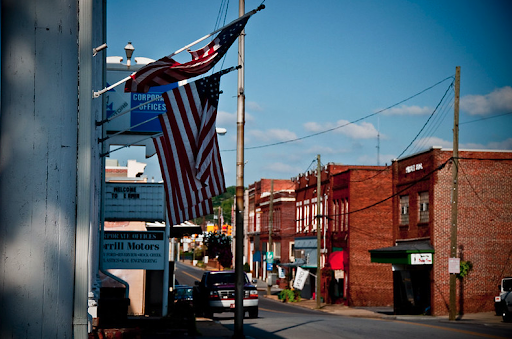
--AmtrakHow could a new transportation bill revitalize rural and small-town America? That was the focus of a Senate Democratic Steering Committee briefing on “Issues and Innovations for Small Towns and Rural Communities” in the Capitol Visitors Center last Friday.

Transportation for America co-chair and former Meridian, Mississippi Mayor John Robert Smith shared his perspective as chief executive of a mid-sized city in a rural area. During his tenure, Smith initiated a renovation of Meridian’s historic train station, sparking growth and economic vitality in the downtown corridor that is now the “life of Meridian.” The improvements that he championed resulted in $135 million in capital investments around the station, and property values quadrupled in an area previously devoid of residents. More importantly, a vital aspect of mobility was restored for all residents of the area. Knowing firsthand how vital Amtrak service was to Mississippians, especially many traveling on fixed budgets, he helped lead the fight to restore the train route between Atlanta and New Orleans, and has continued his advocacy for passenger rail travel ever since.

Rural and small-town residents throughout the country are seeking more transportation options and want to ensure that they’re not left behind. Briefing panelists emphasized that transportation reform, far from leaving the heartland in the dust, can actually encourage growth and improve quality of life.

For one thing, improving rural transportation helps seniors. In 2000, 23 percent of older adults in America lived in rural areas, and as they age, they risk being isolated in their homes in the absence of adequate transportation infrastructure. DSC_0064.JPGBroader accessibility is a challenge as well due to long distances some rural Americans must travel to reach employment, groceries and health services. And, intercity mobility remains limited in many parts of the country, cutting people off from friends, family and economic opportunity. During the briefing, Mayor Smith spoke not only about the economic benefits of revitalizing the area around the train station, but also about the transit service that connected low-income residents in Meridian’s HOPE VI housing development, ensuring their access to essential destinations.

Enhancing transportation safety, relieving highway congestion by shifting goods movement to freight rail, investing in public buses and paratransit services and increasing intercity and multi-modal connectivity are some potential solutions for small cities and rural regions. T4 America staff have partnered with National Association of Counties and the National Association of Development Organizations, both of which were represented at the briefing, to help promote these solutions as vital parts of the upcoming transportation bill.

Far from leaving rural America out, a much-needed overhaul to our nation’s transportation policy can in fact provide a needed lifeline and help rural areas and smaller towns succeed as vital, livable places for all.

Rochelle Carpenter of Transportation for America contributed to this report.

Bookmark and Share

San Francisco-Oakland Bay Bridge Closure an Urgent Reminder to Rebuild America’s Crumbling Infrastructure

October 30, 2009
By Stephen Lee Davis

CONTACT:
Cosabeth Bullock 202-478-6128
cbullock@mrss.com
Paula Chrin 202-478-6138
pchrin@mrss.com

WASHINGTON, D.C. — As the implications of the indefinite closure of the San Francisco-Oakland Bay Bridge sunk in Friday, Americans nationwide were reminded of the urgent need to pass a new transportation law that emphasizes the rehabilitation of America’s crumbling roads, bridges and transit systems.

The crisis also highlights the critical need for transportation options. More than 280,000 vehicles cross the Bay Bridge every day and its closure has resulted in a scramble to accommodate commuters on Bay Area buses, subway lines and ferries. Bay Area Rapid Transit (BART), the area’s underground subway system, posted record passenger usage this week. As Federal Transit Administrator Peter Rogoff noted Friday, “Thank goodness we had that transit option there.”

“The Bay Bridge closure truly validates California’s decision earlier this year to spend stimulus funding on repair, rather than expansion, of our roadways,” said Carli Paine, transportation program director for TransForm, a Bay Area group. “Implementing a ‘Fix It First’ policy at the federal level would bolster our state’s efforts to maintain and upgrade critical infrastructure by prioritizing and funding these projects.”

Congress could go a long way toward that goal by adopting the Critical Asset Investment Program contained in the current draft federal transportation bill. This program, drafted by the House Transportation and Infrastructure Committee, would create a substantial, dedicated funding stream for maintaining roads and bridges, preventing states from diverting those funds to more politically popular highway expansion projects.

“Rebuilding America’s transportation system is not only needed to keep us safe, but it is an economic imperative as well,” said James Corless, director of Transportation for America. T4 America is working closely with its coalition partners, House Transportation Committee Chairman James Oberstar, Ranking Member John Mica, and members of Congress to ensure the next federal transportation bill prioritizes fixing existing infrastructure.

“Americans can’t afford to waste anymore time in traffic jams and detours because we haven’t made the proper investments in maintaining our infrastructure and providing the options that keep people from being stranded, whether by broken facilities or soaring gas prices,” said Corless.

Bookmark and Share

President Obama: “I would like to see some long-term reforms in how transportation dollars flow…”

February 18, 2009
By Stephen Lee Davis

President Obama gave an interview to five columnists aboard Air Force One last week en route to Chicago, and he talked at length about infrastructure, transportation, and the need to make serious reforms in transportation spending this year when the five-year transportation bill is reauthorized. He hinted at how proper investments in transportation and infrastructure can help boost the economy and meet other national goals like reducing energy usage — all while making a downpayment on a 21st Century transportation system we’re all hoping for.

Obama and Lahood
President Obama with his Transportation Secretary Ray LaHood. From the Obama-Biden Transition Project’s Flickr stream (Creative Commons)

An excerpt from the very long interview:

Q. Mr. President, if I could ask you about infrastructure, You’ve got infrastructure spending in the stimulus package. The need is much faster than that and the money is tight. Do you anticipate any significant further additions in federal infrastructure spending in the reasonably near future, and are you making plans to establish an infrastructure bank?

President Obama: Well, number one, we’ve got the transportation reauthorization bill that’s going to be coming up. So one thing to keep some perspective about on the recovery package is this is supposed to provide a jolt to the economy above and beyond what we’re doing already in the federal budget. And so I expect that Secretary LaHood, working with the various transportation committees are going to be moving forward on a transportation bill. I would like to see some long-term reforms in how transportation dollars flow, and I’ll give you just a couple of examples. I think right now we don’t do a lot of effective planning at the regional level when it comes to transportation. That’s hugely inefficient. Not only does it probably consume more money in terms of getting projects done, but it also ends up creating traffic patterns, for example, that are really hugely wasteful when it comes to energy use.

If we can start building in more incentives for more effective planning at the local level, that’s not just good transportation policy, it’s good energy policy. So we’ll be working with transportation committees to see if we can move in that direction.

The idea of an infrastructure bank I think make sense — the idea that we get engineers, and not just elected officials, involved in thinking about and planning how we’re spending these dollars. I may get some objections from my colleagues, Democrat and Republican, on the Hill about that, but I think there should be some way for us to — just think how can we rationalize the process to get the most bang for the buck, because the needs are massive and we can’t do everything, and if it’s estimated that just on infrastructure alone it would cost a couple trillion dollars to get our roads, bridges, sewer systems, et cetera, up to snuff, and we know we’re not going to have that money, then it would be nice if we said here are the 10 most important projects and let’s do those first, instead of maybe doing the 10 least important projects but the ones that have the most political pull.

Bookmark and Share

Transportation For America on economic recovery and infrastructure

December 8, 2008
By Andrew Bielak

With President-elect Barack Obama pledging tens of billions of dollars for infrastructure in the upcoming economic recovery package and Congress preparing for the expiration of the current federal transportation bill next October, there can be little doubt that 2009 is going to be a big year for our roads, bridges, and mass transit systems.

To stay on top of these issues, be sure to check out the National Journal’s new “expert blog” on transportation, an online venue which gives some of nation’s strongest voices on transportation an opportunity to discuss the future of America’s transportation program.

This week, moderator Lisa Caruso has asked contributors to offer their recommendations on how the Obama administration should spend money on infrastructure in next year’s economic stimulus bill. Transportation for America Co-chair Geoff Anderson offered some sound advice in a post this morning:

The key goals of this investment should be to preserve America’s existing highway and transit networks, while giving our growing nation more options for getting around, in turn allowing Americans to use less gasoline. If we spend this money the right way, we should get a three-for-one-return on our investment: A revitalized economy positioned for long-term health; less dependence on oil; and a reduction in climate-damaging emissions.

We can get there by investing $100 billion to repair and preserve highways, bridges and existing public transportation service; build modern rail and rapid bus lines and upgrading all forms of service in cities large and small; develop high-speed and other forms of inter-city rail; and make streets safe for walking and biking.

With nationally prominent politicians like Pennsylvania Governor Ed Rendell and prominent industry members like outgoing transportation secretary Mary Peters signed up to contribute, expect to see plenty of robust debate — along with some fresh perspective from Transportation For America’s coalition — at the expert blog in the upcoming months.

Bookmark and Share

Ending a Vicious Cycle

December 1, 2008
By Andrew Bielak

In an interview last month, President-elect Barack Obama described America’s addiction to oil as a ‘shock and trance‘ cycle, in which increasing oil consumption creates skyrocketing energy prices, leading to calls to for bold solutions and energy independence — that is, until prices temporarily drop and our political leaders conveniently avoid tough issues like energy security and climate change.

After oil prices hovered at record levels throughout the summer, it’s not altogether surprising that as the price of oil has plummeted alongside our economy, some are looking for new excuses to avoid our most pressing global issues. For influential players in this debate, it’s an easy time to argue that an economic recessions give us little leverage to create bold alternative energy plans or fight climate change with investment in new technologies.

As president Obama indicated, we have to break down the illogical notion that our efforts on energy security and climate change should come to a halt in order to rebuild our economy. Fortunately, the most obvious answer here is also the simplest: We can do both.

Policy insiders, political pundits, and top administration members have all argued that making the right investments in modern, green infrastructure — repaired highways and bridges, expanded mass transit capacity, new bicycle and pedestrians paths, improved freight and passenger rail –- would support millions of sustainable jobs and help us transition to a more sustainable, energy independent, 21st-century economy. If we can absorb that lesson, we might be able get something big done with an economic recovery package next year — and help kill our ’shock and trance’ mentality for good.

Bookmark and Share

Getting Results on Transportation

November 21, 2008
By Andrew Bielak

With the ripple effects of our economic downturn putting state departments of transportation and local transit agencies in serious financial trouble, our federal government needs to make a firm commitment to investing in our crumbling infrastructure and providing Americans with affordable, efficient transportation options.

In an excellent article in this week’s New York Times, writer David Leonhardt reminds us that we can’t simply face these challenges by throwing billions of dollars at new highway construction projects without a coherent set of goals or a system for measuring gains. We need to look at what we’re getting with the money we already spend — and then ask ourselves why the results aren’t better.

A lack of adequate financing is part of the problem, without doubt. But the bigger problem has been an utter lack of seriousness in deciding how that money gets spent. And as long as we’re going to stimulate the economy by spending money on roads, bridges and the like, we may as well do it right.

It’s hard to exaggerate how scattershot the current system is. Government agencies usually don’t even have to do a rigorous analysis of a project or how it would affect traffic and the environment, relative to its cost and to the alternatives — before deciding whether to proceed. In one recent survey of local officials, almost 80 percent said they had based their decisions largely on politics, while fewer than 20 percent cited a project’s potential benefits.

Without accountability at the state, local, or federal level, rigorous data collection to prove results, or coherent national goals that articulate the purpose of our investments, it comes as little surprise that Americans are faced with endless traffic jams, overburdened mass transit systems, and rising costs of transportation.

As Rob Puentes, a transportation expert at Washington D.C. think tank The Brookings Institution, makes clear, the system is broken in part because we don’t think about what benefits our transportation program brings; we just “send a blank check and kind of hope for the best.”

Bookmark and Share

President-elect Obama responds to Transportation For America

November 19, 2008
By Stephen Lee Davis

Obama MugshotBefore the last presidential debate Oct. 15, Transportation For America asked our supporters to sign a petition urging Sen. McCain and then Sen. Obama to tell us their plans for keeping America moving and creating new jobs by investing in our critical transportation system and infrastructure.

If you signed that petition, you sent the candidates this message:

America’s transportation system is half a century behind and the increasing costs of moving around – paid for in dollars at the pump and hours lost sitting on congested, crumbling roads – are taking a real toll on American families.

We need our next president to lead an initiative to invest in public transit, high-speed trains, places to bike and walk, and green innovation. We need a president with a plan that can put millions to work in jobs that can’t be outsourced, bring down the costs of travel, and create a sustainable infrastructure that will keep America on the cutting edge.

I hope you will take the opportunity presented by your final debate to discuss your plans to build a 21st Century transportation system.

More than 3,300 of you signed your names to that petition we delivered to the candidates just before that last crucial debate.

President-elect Barack Obama heard you and responded to the campaign with a two-page thank-you letter outlining his thoughts on transportation and infrastructure that we would like to share with you. Hit the jump to read the full letter:

(Continue Reading)

Bookmark and Share

Campaign responds to David Brooks’ “National Mobility Project”

November 17, 2008
By Stephen Lee Davis

Two weeks ago, New York Times columnist David Brooks joined the chorus of those lamenting the sorry state of our nation’s infrastructure and yearning for investment in that arena as an economic stimulus.

While the bulk of his column detailed his skepticism regarding the positive effects that bailouts or stimulus packages have on the short-term economy, he praises the value of investing in infrastructure as a way to aid the nation over the long-term by investing in useful, tangible projects that can help us remain economically competitive and get us where we need to go.

The problem lies mostly in his 1950’s thoughts about where transportation investments should be targeted. Transportation For America communications director David Goldberg shared his praise and critique with The New York Times, who published his letter here. Read it in full below:

David Brooks is spot-on with his call for major investment in transportation infrastructure, both for near-term economic stimulus and for a sustainable recovery. His recommendations of what to build are outdated, however.

As he notes, a way to put people to work would be to repair and maintain our existing highways, bridges and transit systems. But building new highways was the project for an earlier era, the 1950s, when gas was cheap and President Dwight D. Eisenhower created the Interstate System.

Today we urgently need to build the infrastructure for a clean-energy economy and reduced dependency on oil. Soaring gas prices made our vulnerability clear: Americans flocked to public transportation or took to their bicycles only to find the transit systems underfinanced and the roads dangerous and inhospitable. Half of our urban-dwelling citizens found they had no transit at all.

If we’re going to go into debt to build for the future, we must do so to complete our transportation network with high-speed rail, modern public transit, streets that support safe biking and walking, and, yes, well-maintained highways.

Bookmark and Share

Priming the pump

October 16, 2008
By Andrew Bielak

The Baltimore Sun endorses Congressional Democrats’ plan to jolt the economy with a second stimulus package directed towards job-creating transportation projects.

Bookmark and Share

Older posts »

About Us | Our Partners | Contact Us | For The Media | Become a Partner

Transportation for America
1707 L Street NW Ste. 250
Washington, DC 20036
202-955-5543

Creative Commons License
This site is licensed under a
Creative Commons License
.