Rural Senators focus on heartland transit
November 13, 2009By Sean Barry
How could a new transportation bill revitalize rural and small-town America? That was the focus of a Senate Democratic Steering Committee briefing on “Issues and Innovations for Small Towns and Rural Communities” in the Capitol Visitors Center last Friday.
Transportation for America co-chair and former Meridian, Mississippi Mayor John Robert Smith shared his perspective as chief executive of a mid-sized city in a rural area. During his tenure, Smith initiated a renovation of Meridian’s historic train station, sparking growth and economic vitality in the downtown corridor that is now the “life of Meridian.” The improvements that he championed resulted in $135 million in capital investments around the station, and property values quadrupled in an area previously devoid of residents. More importantly, a vital aspect of mobility was restored for all residents of the area. Knowing firsthand how vital Amtrak service was to Mississippians, especially many traveling on fixed budgets, he helped lead the fight to restore the train route between Atlanta and New Orleans, and has continued his advocacy for passenger rail travel ever since.
Rural and small-town residents throughout the country are seeking more transportation options and want to ensure that they’re not left behind. Briefing panelists emphasized that transportation reform, far from leaving the heartland in the dust, can actually encourage growth and improve quality of life.
For one thing, improving rural transportation helps seniors. In 2000, 23 percent of older adults in America lived in rural areas, and as they age, they risk being isolated in their homes in the absence of adequate transportation infrastructure.
Broader accessibility is a challenge as well due to long distances some rural Americans must travel to reach employment, groceries and health services. And, intercity mobility remains limited in many parts of the country, cutting people off from friends, family and economic opportunity. During the briefing, Mayor Smith spoke not only about the economic benefits of revitalizing the area around the train station, but also about the transit service that connected low-income residents in Meridian’s HOPE VI housing development, ensuring their access to essential destinations.
Enhancing transportation safety, relieving highway congestion by shifting goods movement to freight rail, investing in public buses and paratransit services and increasing intercity and multi-modal connectivity are some potential solutions for small cities and rural regions. T4 America staff have partnered with National Association of Counties and the National Association of Development Organizations, both of which were represented at the briefing, to help promote these solutions as vital parts of the upcoming transportation bill.
Far from leaving rural America out, a much-needed overhaul to our nation’s transportation policy can in fact provide a needed lifeline and help rural areas and smaller towns succeed as vital, livable places for all.
Rochelle Carpenter of Transportation for America contributed to this report.
Bay Area bridge shutdown puts transportation network in the spotlight
October 30, 2009By Sean Barry
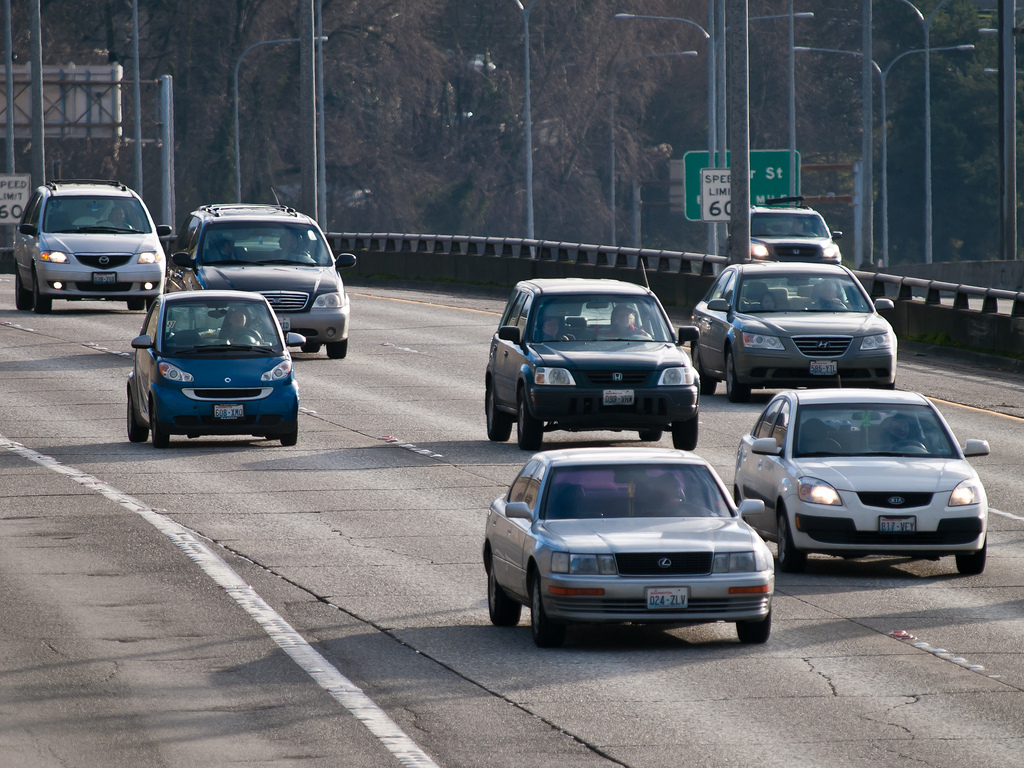
Even in the San Francisco Bay Area, a renowned transit hub with higher than average rates of walking, biking and transit ridership, more than 280,000 vehicles cross the San Francisco-Oakland Bay Bridge every day. It’s a critical artery connecting downtown San Francisco with the thousands of residents who live in Oakland and the surrounding suburbs.
It is thus understandable that panic ensued after a part snapped off in high winds and fell onto the roadway, resulting in a complete shutdown of the Bay Bridge early Tuesday. Thankfully, though at least two vehicles either ran into or hit the fallen part, no injuries resulted. As of this morning, the bridge remains closed without a date certain for re-opening.
The Bay Bridge was last closed down over Labor Day weekend, during which engineers discovered an unexpected crack. This structural flaw nearly delayed the bridge from reopening on-time, but crews received the needed materials in just enough time for the post-weekend morning commute.
It was one of those last minute repair pieces that broke off Tuesday, although engineers could not say whether the Labor Day rush had anything to do with it. Heavy winds are another potential culprit — hardly an uncommon occurrence in the Bay Area, however.
Once the bridge was closed, the immediate focus shifted to the Wednesday morning commute. Prognosticators were predicting mass chaos and never-ending gridlock as far as the eye could see on Wednesday morning.
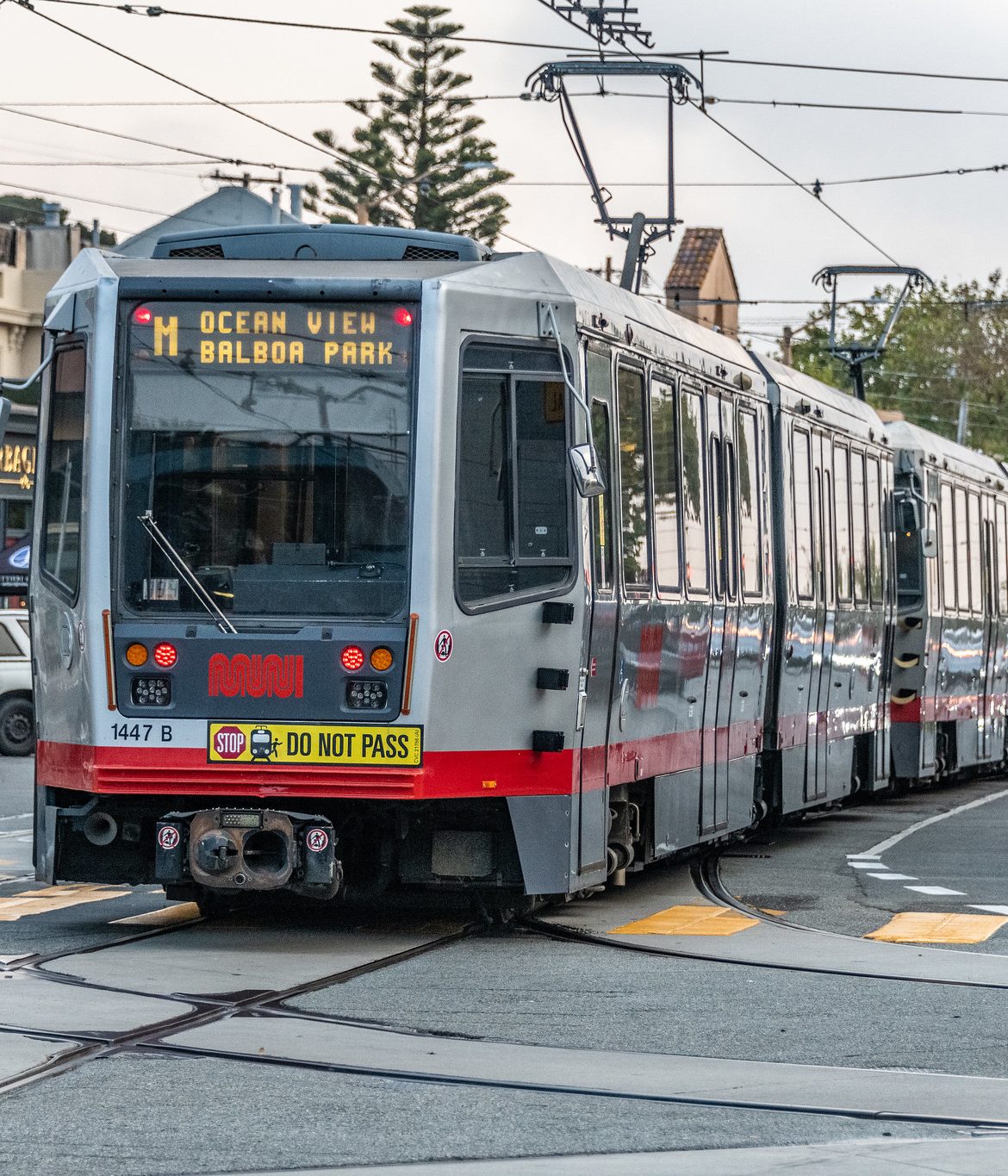
Officials with the BART subway system arranged for extra train cars and personnel to accommodate the expected surge in passengers, leading to a record day of ridership that crushed the previous high water mark. Ferry agencies across the Bay ramped up service and Amtrak is providing a shuttle. MUNI, AC Transit, and other local agencies also stepped up rates of service and frequency to meet the demand.
| “When the Bay Bridge closed we saw a 49 percent spike in transit use. Thank goodness we had that transit option there.” |
| - Federal Transit Adminstration Administrator Peter Rogoff today at the Rail~Volution Conference |
Despite similar predictions of chaos and gridlock, commuters, transit agencies and officials effectively coped with the collapse of a major overpass near the Bay Bridge in April 2007. Many drivers quickly developed alternate routes or shifted their schedule, BART was effective at expanding capacity and major thoroughfares were crowded, but not gridlocked.
Media accounts accounts for this week indicate Bay Area officials have handled the shutdown relatively smoothly, especially considering how many vehicles use this bridge every day. BART trains were filled to capacity and the Richmond-San Rafael and San Mateo-Hayward bridges — both adjacent to the Bay Bridge — were jammed with cars but still moving, albeit at a sluggish pace.
As far as we can tell, California Department of Transportation officials have been responsive and responsible about safety and structural integrity. It is important they be given the time to get this right.
But even if the time crunch during Labor Day weekend did not contribute to the problem, it should be cause for concern. In too many transportation projects, safety is shelved in favor of speed and grandeur. Part of the Bay Area’s ability to cope is the investment they’ve made in a variety of transportation options and modes. Which begs the question, how would metropolitan areas that lack these alternatives fare if a similar incident occurred?
Diversity of options isn’t just about cutting emissions or reducing fuel consumption. A complete network is one that can continue functioning when a few parts go down. A city dependent completely on cars and interstates (or 1 or 2 transit lines) is a vulnerable city.
Across America, children, seniors, the disabled and people who do not or cannot drive are at risk due to unsafe streets and crumbling sidewalks. We cannot afford to spend untold billions on new projects if we cannot keep old ones from crumbling. Including strong “fix-it first” language in the transportation bill re-authorization would ensure that existing roads and bridges get the upgrades they need to keep commuters and all users safe.
In addition, the Critical Asset Investment Program proposed in Chairman Oberstar’s transportation bill would create a substantial, dedicated funding stream for maintaining roads and bridges, preventing states from diverting those funds to more political popular highway expansion projects. This program would also require transit agencies to show how they are maintaining their systems and keeping them in “a state of good repair.”
The Bay Area will get through this. But the incident is a reminder that transportation policy cannot be a piecemeal, crisis-to-crisis endeavor.
It’s time to make the link between health and transportation
October 13, 2009By Sean Barry
Most of the news coverage about what is happening in Washington compartmentalizes health and transportation, missing key connections between the two.
This week, Americans from around the country will speak to their representatives, seeking to emphasize those links. The “health fly-in” will commence Thursday and is sponsored by Transportation for America, the American Public Health Association, the Complete Streets campaign and PolicyLink, a research institute specializing in social equity.
The U.S. transportation system – our roads, bridges and highways, as well as bicycle and pedestrian paths – propels our social and economic lives. Unfortunately, the system we have takes a significant toll on our health and safety.
By building neighborhoods, towns and cities that require a car trip for nearly every move we make, we have literally engineered physical activity out of our daily lives. In many sprawling communities, driving is the only option for getting to school, work and recreation, and new road projects tend to favor speeding cars over the people who cross the street.
Poor air quality resulting from pollution contributes between $40 billion and $60 billion to U.S. health care costs annually. Each hour spent in the car increases the risk of obesity. And further, the lack of emphasis on transit, walking and biking lowers mobility for disadvantaged Americans and makes our streets less safe for people both behind the wheel and on foot.
Transportation policy can no longer be viewed in isolation. That is why groups like the American Public Health Association are educating people about the links between the built environment and our personal well-being and organizations from different policy arenas that never saw the need to work with each other before are joining hands.
This week has been all about making the health and transportation link more concrete, and there is more to come.
USA Today article cites new data showing drop in auto commuting
September 23, 2009By Sean Barry
A yearly census survey released Monday illustrates the continuation of a trend that started well before the recession: Americans are taking steps to reduce their dependence on cars, and are looking for other options for getting around. Rates of solo driving and car ownership are dropping, according to this story in the USA Today about new census data. The paper cites a census report showing drops in both Americans who drove alone to work and in overall car ownership.
Transportation for America communications director David Goldberg was quoted prominently in the article, a sign of the campaign’s growing influence in transportation policy. In the report, Goldberg points out that these trends cannot be explained by the recession alone.
Environmental consciousness and the appeal of living in urban centers also play a role, says David Goldberg, spokesman for Transportation for America, a national coalition that advocates reduced dependence on cars. “There have been trends of leveling rates of driving and increased use of public transportation which predate the economic downturn,” he says.
Younger Americans are also changing their perceptions – and the behavior – surrounding automobile use.
Some of the decline in car ownership may be driven by younger people putting off getting their driver’s licenses or buying their first cars, Goldberg says. “We’ve seen a cultural shift.”
Cellphones and texting pose great risks behind the wheel
July 28, 2009By Stephen Lee Davis
Last week, the New York Times covered the news that the National Highway Transportation Safety Administration decided in 2003 not to release preliminary data showing that talking on cellphones while driving — whether using a hands-free device or not — posed a safety risk nearly equivalent to drunk driving. Researchers at the NHTSA were pushing for a more extensive research program to follow their preliminary research, but due to what the Times cited as “political considerations,” not only was the extra study and research not ordered, but the existing findings were essentially buried.
The memos, research and draft letter to Department of Transportation Secretary Norman Mineta were released to The Center for Auto Safety and Public Citizen via a Freedom of Information request, who sent them to the Times.
The NHTSA officials were encouraged to stick to their mission of information-gathering and to avoid lobbying states to pass laws restricting cellphones in any way. But what good is information gathering when the results don’t leave the agency, much less find their way into the hands of lawmakers or state legislators?
The news in the Times‘ Driven to Distraction series only got worse yesterday.
The Virginia Tech Transportation Institute is releasing a peer-reviewed report showing that truckers who text message while driving were 23 times more likely to crash. The study outfitted tractor-trailer drivers with cameras to study their behavior and found that “in the moments before a crash or near crash, drivers typically spent nearly five seconds looking at their devices — enough time at typical highway speeds to cover more than the length of a football field.”
Tom Dingus, director of the Virginia Tech institute, one of the world’s largest vehicle safety research organizations, said the study’s message was clear.
“You should never do this,” he said of texting while driving. “It should be illegal.”
Most shocking perhaps was the closing story. If you happen to live near Windham, Maine, you might want to keep an eye out, though this sort of behavior is more common than one might think. According to a survey of 2,501 drivers in the story, “21 percent of drivers said they had recently texted or e-mailed while driving,”
“It’s convenient,” said Robert Smith, 22, a recent college graduate in Windham, Me., who says he regularly texts and drives even though he recognizes that it is a serious risk. He would rather text, he said, than take time on a phone call.
“I put the phone on top of the steering wheel and text with both thumbs,” he said, adding that he often has exchanges of 10 messages or more. Sometimes, “I’ll look up and realize there’s a car sitting there and swerve around it.”
Mr. Smith, who was not part of the AAA survey, said he was surprised by the findings in the new research about texting.
“I’m pretty sure that someday it’s going to come back to bite me,” he said of his behavior.
Daily Headlines — 06/26/09
June 26, 2009By Andrew Bielak
- In the aftermath of Washington DC’s Metro crash, Time magazine looks America’s aging transit systems.
- Members of the Senate’s Environment and Public Works Committee argue against looking at immediate transportation reform. (Streetsblog)
- House Rep. Edward Markey sees the climate bill getting signed before 2010. (National Journal)
- Driving numbers could be low again for the summer of 2009. (Wall Street Journal)
Today’s Headlines — 06/16/09
June 16, 2009By Andrew Bielak
- The Baltimore Sun editorial board calls for a fresh start for our transportation system.
- Train executives see the link between climate change, energy, and transportation. (CNN)
- Zipcar founder Robin Chase speaks about ride sharing, transportation costs, and infrastructure. (Infrastructurist)
- A look at the worst cities for angry drivers. (Reuters)
Daily Headlines — 05/21/09
May 21, 2009By Andrew Bielak
- Cities across the world continue their astronomical growth rate. (New York Times)
- Along with the drop in driving, U.S. carbon emissions see their sharpest drop in more than 25 years. (Washington Post)
- Memorial Day driving levels are expected to rise over last year. (New York Times)
Transit reaches new heights in 2008
March 9, 2009By Andrew Bielak
![]() Minneapolis, MN light rail photo by Metro Transit |
For the millions of Americans who waited for a bus last year to find it filled to capacity or boarded the subway train and saw it packed with fellow commuters, one thing should come as no surprise: 2008 was an incredible year for public transportation.
The American Public Transportation Association now has the numbers to prove it, and if anyone is doubting that people across the country are looking for cleaner, cheaper, and more efficient ways to get around their communities, they should probably take a look at these figures:
- Americans took nearly 10.7 billion trips on public transportation in 2008, a four percent increase over 2007 and the highest level since 1956.
- Public transportation use increased 38 percent since 1995 — nearly triple the growth rate of the population of the United States.
- Total vehicle-miles traveled dropped in 2008 by 3.6 percent, according to the U.S. DOT.
Incredibly, these record numbers are being met with one trend at transit agencies across the country — service cuts, layoffs, and fare increases — that’s hitting Americans in their pocketbooks as they look to lead the way on creating a 21st century transportation program. When tied to our preferences for more and better options and recent growth in the urban cores of our large metropolitan regions, the surge in transit ridership should sends an overwhelmingly powerful message to Congress and the Obama Administration.
David Goldberg, the communications director for the Transportation for America campaign, gave us a clear idea of what that message should be in a statement to the New York Times:
“This is the leading edge,” Mr. Goldberg said, “of a continuing surge in demand for public transportation and more walkable neighborhoods as the population ages, convenience and access become more critical and gas prices remain volatile.”
While heightened investment in our transportation system is absolutely critical to help us rebuild our economy and our infrastructure, money alone will not solve our problems. We need a commitment — from Congress and the White House — to move beyond the current, 1950s-era federal transportation program and build an American transportation system that will help us compete and thrive today and tomorrow.
20th Century Transportation System, 21st Century Driving Habits
December 17, 2008By Andrew Bielak
When gas prices exploded this summer, it wasn’t hard to notice that Americans were changing their habits. Our streets were dominated with bikers and pedestrians; our mass transit systems packed with commuters looking to save time and money; and our driveways were full with unused cars as millions of us found easier, cheaper ways to get to work or go to the grocery store.
But if you know anyone who still has their doubts about just how much our country has cut back on driving — and just how long we’ve been doing it for — be sure to show them this new report from the Washington, D.C. think tank The Brookings Institution.
There’s a whole lot of data and analysis available if you want to read the whole report, but for someone looking to get a general idea of what’s happening on our roads, this first sentence really says it all:
Driving, as measured by national VMT[vehicle miles traveled], began to plateau as far back as 2004 and dropped in 2007 for the first time since 1980. Per capita driving followed a similar pattern, with flat-lining growth after 2000 and falling rates since 2005. These recent declines in driving predated the steady hikes in gas prices during 2007 and 2008. Moreover, the recent drops in VMT (90 billion miles) and VMT per capita (388 miles) are the largest annualized drops since World War II.
Combine those numbers with our skyrocketing demand for transit, and it seems pretty clear what Americans want — clean, green infrastructure, and a complete transportation system that gives us plenty of options for getting around.